There is a moment, maybe four hours into Aphelion, where the game stops and quietly reminds you what it is actually about. Ariane is alone on a ridge of windblown ice, the wreck of the Hyperion glittering on the horizon behind her like a shipwreck on a black sea. Thomas's voice crackles in her ear, halfway between exhaustion and disbelief at the sheer fact of being alive. Snow drifts down between them in long, unhurried curtains. A solar storm rolls across the planet's pale sun, dimming the light from gold to the colour of an old photograph. Nobody is shooting at anyone. Nothing is exploding. There are no objective markers, no quick-time prompts, no ledge to climb. There is only a man and a woman, separated by more time and distance than any couple in human history, talking quietly about what comes next. It is one of the most beautiful sequences I have played all year.
It is also, frustratingly, the kind of moment Aphelion only earns about half the time it tries for it.
Don't Nod's latest is a game with extraordinary highs and unmistakable lows, and the ratio between them is going to determine how much you love it. As a sci-fi story, it is one of the year's most quietly affecting. As a piece of action-adventure design, it is a few generations behind where this kind of game lives in 2026. Both of those things are true, simultaneously, for every minute of the roughly ten hours it asks of you. The trick is figuring out whether the story side of that ledger weighs heavily enough to forgive the gameplay side. For me, it mostly does. For some players — especially anyone coming in expecting a polished prestige action-adventure in the modern Uncharted or A Plague Tale mould — it absolutely won't.
Two Astronauts, One Frozen World, and the Long Quiet Between Them
Aphelion is set in the late 2060s, in a near-future that feels meaningfully real because Don't Nod actually went to the European Space Agency to ground it. You can feel that work in everything from the design of the suits to the way Thomas talks about life support, and it pays off. This isn't space opera. There are no aliens, no warp drives, no convenient artificial gravity for the sake of cinematography. Aphelion is a planet at the very edge of the inhabitable zone, just close enough to its star to thaw a thin sliver of atmosphere and just far enough to lock most of its surface beneath frost so old it remembers when life on Earth was still single-celled. The Hyperion mission was meant to be humanity's first extrasolar foothold. Within the first hour of the game, that mission is in pieces, and so are most of the people on it.
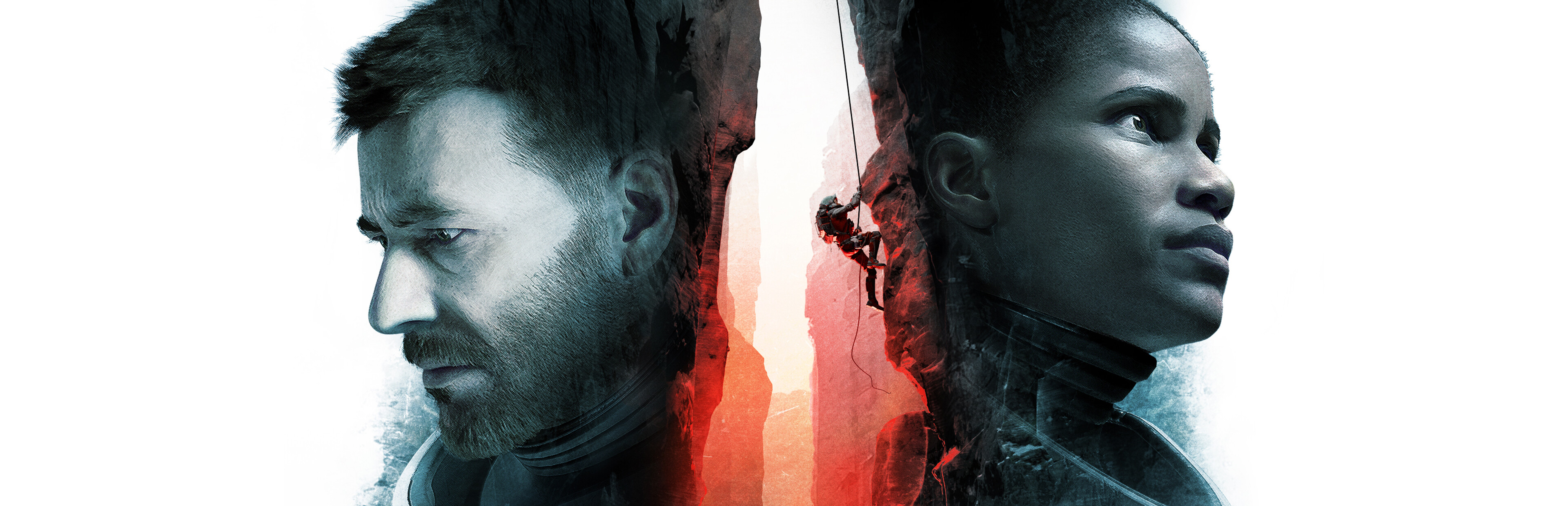
You play as both Ariane Bouchard and Thomas Reyes, the two astronauts who survive. They are also lovers, separated by a planetary crash and a series of cascading equipment failures that pin them on opposite sides of a continent. Ariane is on the surface, working through ravines and ridgelines and the carcasses of crashed habitats with little more than a climbing kit and a flickering radio. Thomas is in the dying skeleton of the colony's central hub, navigating its corridors in stealth as autonomous defence systems treat him like an intruder. The story alternates between them across chapters, and the central pleasure of the writing is in how their voices on the radio come to feel like the only solid thing left in either of their lives.
The performances carry a tremendous amount of this. Don't Nod has been quietly building one of the most consistent voice-direction houses in games since Life Is Strange, and Aphelion's leads are some of their best work. Ariane is brittle in the right places, defiant where she has to be, and never lapses into the wisecracking action-hero default that this kind of role usually slips toward. Thomas is exhausted from the first scene, and his exhaustion isn't a costume — it's structural. You hear it in the gaps between his sentences, in the way he asks questions he already knows the answer to because hearing Ariane's voice respond is more important than the information itself. The whole game lives or dies on the believability of these two people, and the believability lands.
Where the story stumbles is in the broader scaffolding around them. Aphelion's themes are big and ambitious — the loneliness of the cosmos, the insignificance of human time against geological time, the weight of being the last people of your kind anywhere within reach — but the script is content to articulate them through familiar shapes. There is a captain's log full of pre-disaster optimism. There is an AI wrestling with directives. There is a scene about a child's drawing left taped inside a locker. None of these tropes are bad, exactly, but Aphelion treats them as foundational rather than as starting points. By hour seven I could see the silhouette of every emotional beat coming a chapter ahead, and the game never quite earned the privilege of telling me a story I had heard before. The result is a narrative that is genuinely moving in its quiet character moments and disappointingly conventional in its big swings.
Ariane's World — A Climbing Game That Stopped Improving in 2014
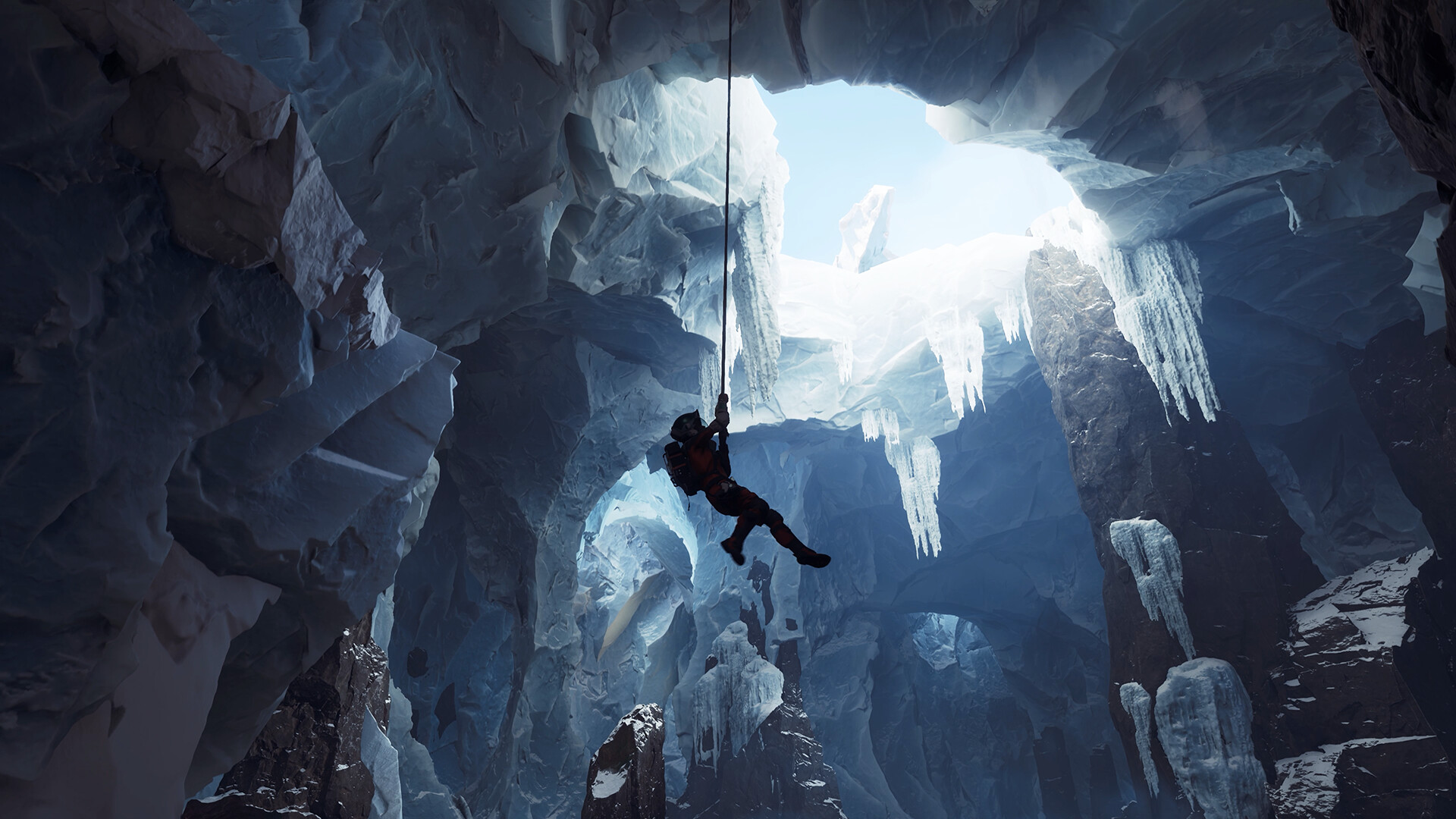
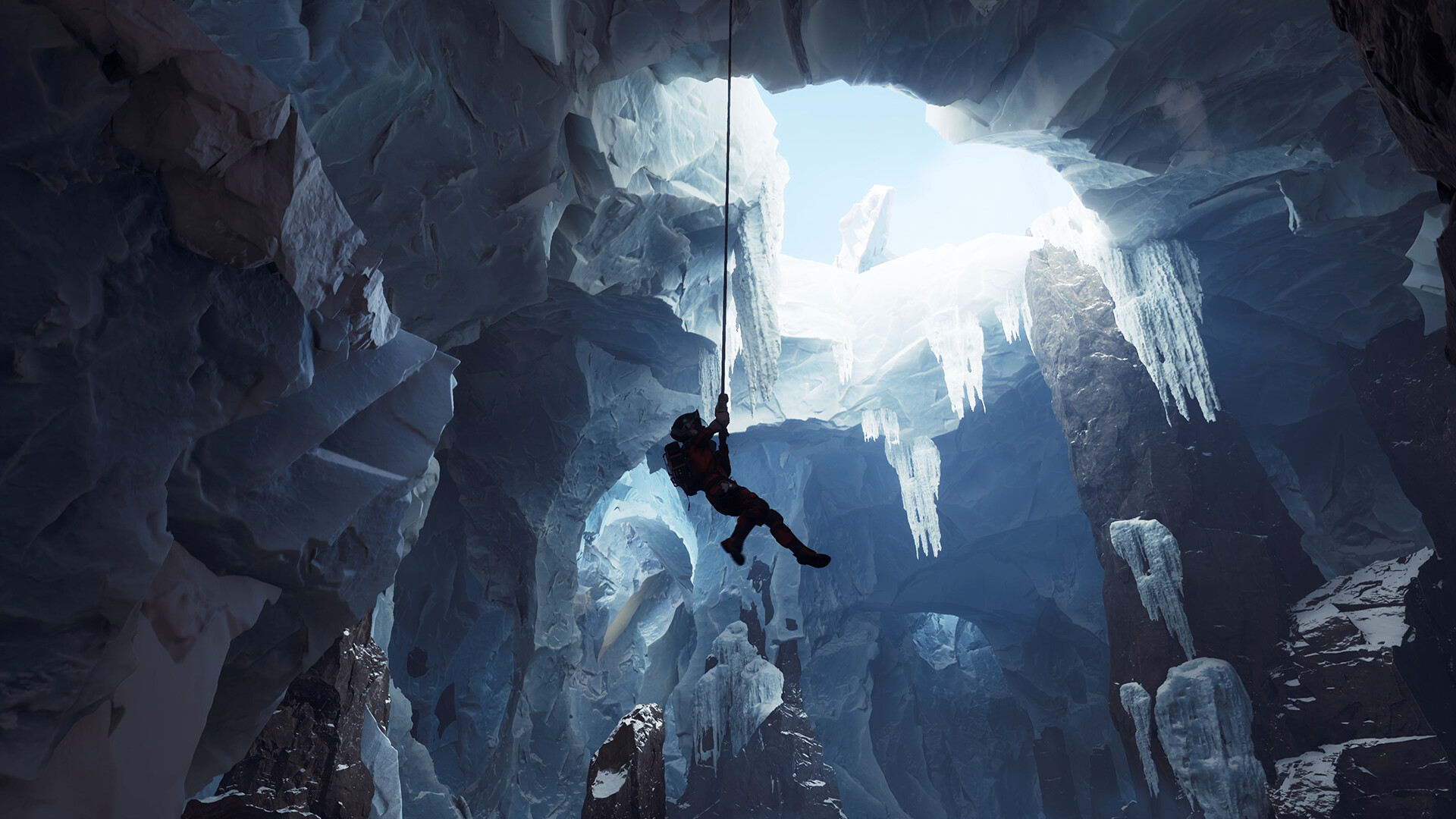
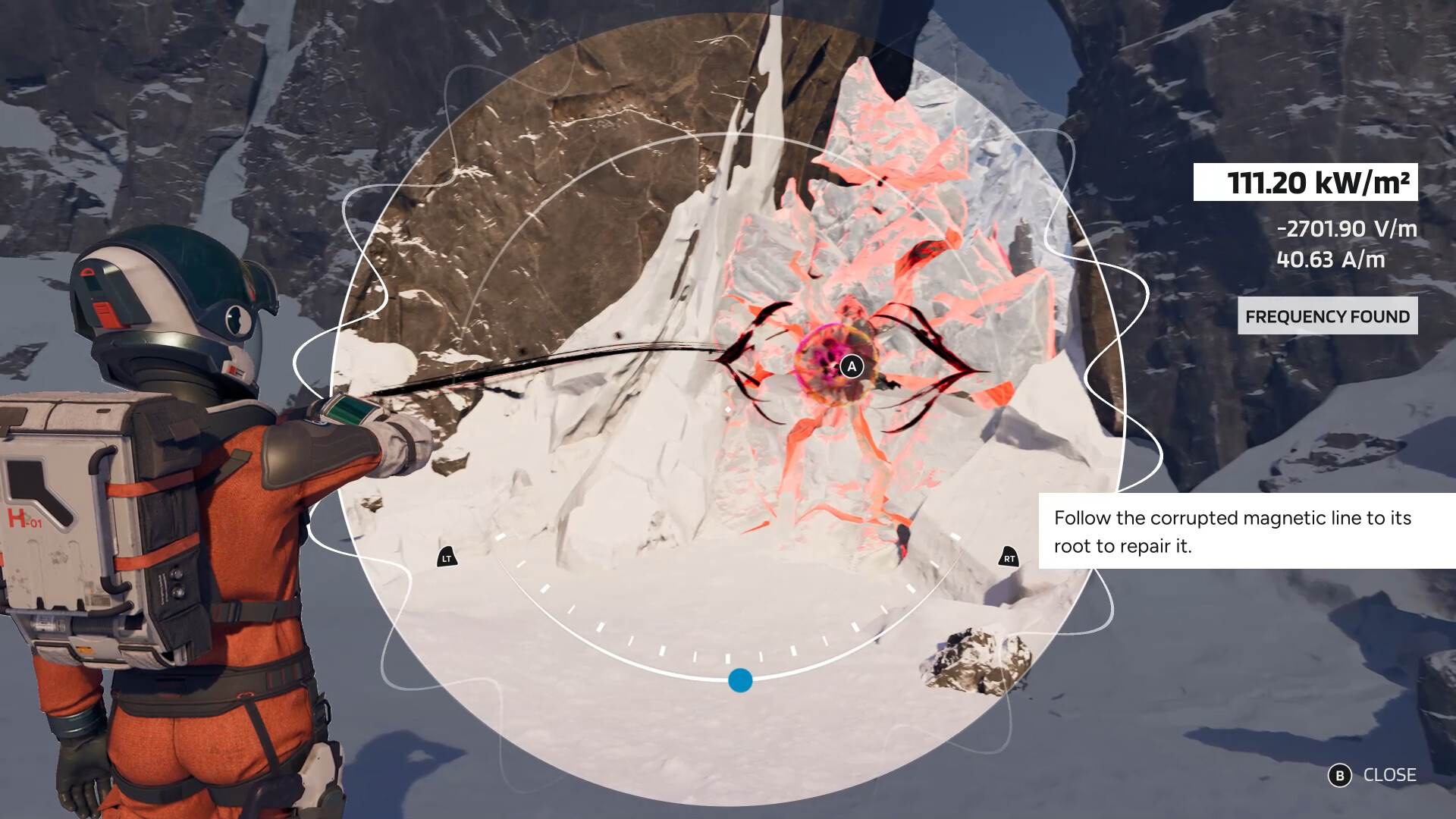
For about half its runtime, Aphelion is a third-person climbing-and-traversal game. Ariane works her way across canyons, frozen rivers, derelict spacecraft, and crumbling cliffsides using a kit that is functionally identical to the one Nathan Drake brought home in Uncharted 4. There is a button to grab, a button to jump between handholds, a stamina mechanic that nudges you to keep moving, and a small set of contextual interactions for ropes, pitons, and ice axes. The animation is good. The framing of vistas, especially when Ariane crests a ridge and the planet opens up beneath her, is genuinely cinematic.
And it doesn't go any further than that.
This is the part of Aphelion that has drawn the most heat in reviews, and the criticism is fair. Don't Nod's climbing is built almost entirely on top of design conventions that have not meaningfully evolved since Naughty Dog and Eidos Montreal made them industry standard a decade ago. There is no improvisation. There is no real route choice. The yellow paint of older AAA games is gone, replaced by subtler environmental cueing — a slightly brighter rock, a mound of snow with a suspiciously flat ledge — but the underlying structure is the same. You are looking for the route the developer wants you to take, and you are taking it, and the only thing standing between you and the next vista is whether your collisions register on the way up.
Sometimes they don't. Aphelion's ledge detection is its biggest single technical weakness. There are moments — not many, but enough — where Ariane visibly makes contact with a handhold and simply doesn't grab it, sending her into a ragdoll plummet that the game treats as a death state. The first time it happens it's almost funny in a kinetic, slapstick way. The fifth time it happens during a multi-stage climb you have to restart from a checkpoint, the comedy curdles. None of these moments are ruinous on their own, but they erode the thing that climbing games live or die on, which is the feeling that your character is reliably an extension of your inputs.
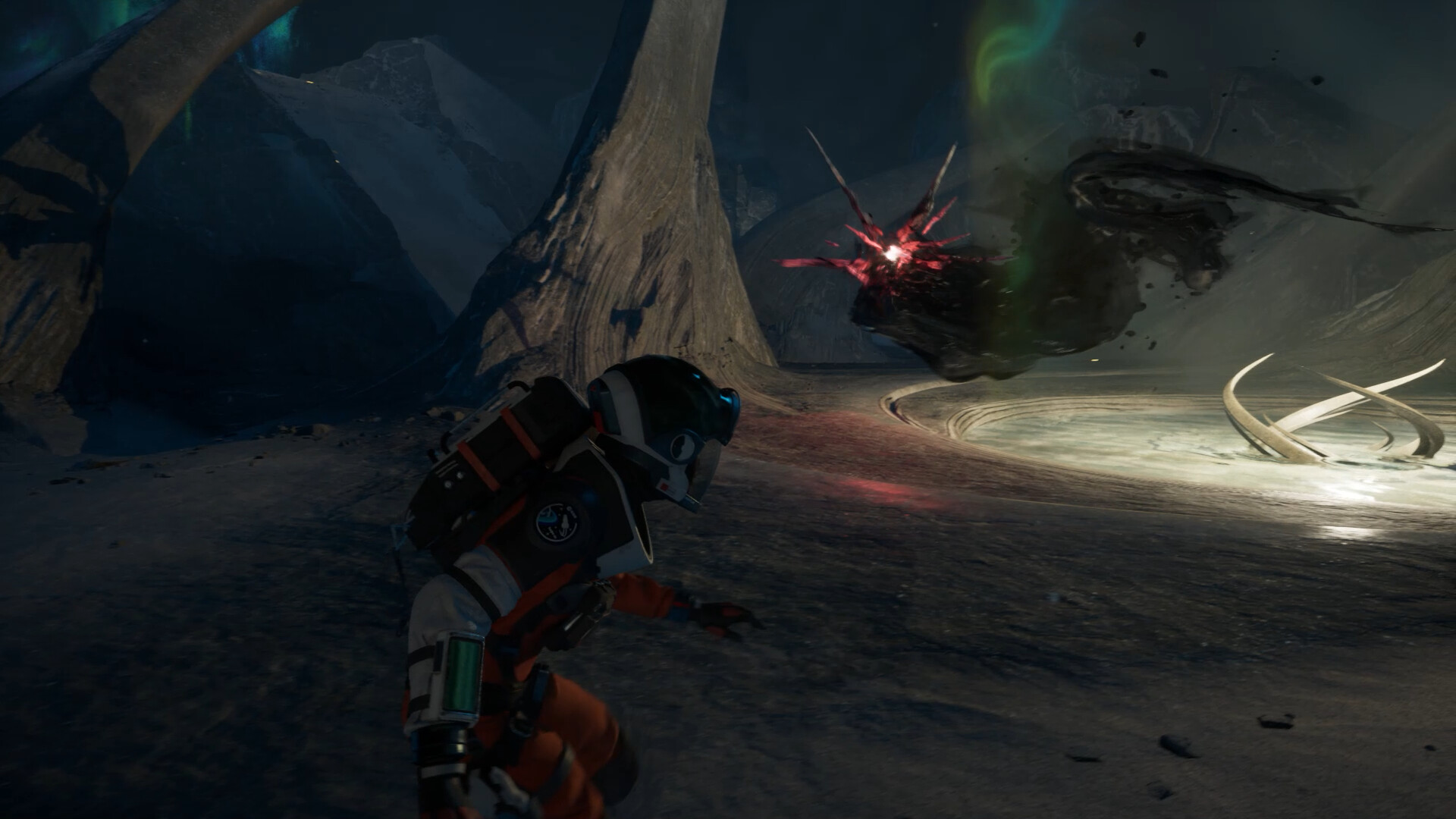
Set against that, the route design itself is competent rather than inspired. There are a handful of standout sections — a descent down the inside of a fractured atmospheric processor about six hours in, a horizontal traverse along a glacier ledge during a whiteout, a scripted slide down a ravine that recalls the avalanche set piece from Tomb Raider — that show what the team is capable of when they are pushing themselves. There are also long stretches in the middle of the game where Ariane essentially walks up a series of corridors disguised as cliffs, hitting jump prompts in approximately the order the level designer intended them. If you are coming to Aphelion expecting the punishing, rewarding climbing of Jusant or the kinetic flow of a modern Tomb Raider, it will feel ungenerous. If you are coming to it as a vehicle for atmosphere, it will mostly do its job.
One thing the game does deserve credit for: it does not cheat the planet. Ariane's climbs feel like they take place on a real geography. Routes between locations are consistent. You can look back from a ridge and recognize the wreck you climbed out of two hours ago, still glittering on the horizon, and the game is honest about how far you have actually travelled. That sense of place — of being on a planet rather than a series of disconnected levels — is one of Aphelion's great strengths, and it is almost entirely a property of the level design and lighting rather than any specific mechanic.
Thomas's World — Stealth That Knows It Has Nowhere New to Go
Thomas's chapters are the half of Aphelion that have drawn the harshest reviews, and unlike Ariane's climbing — which I think is more unfairly maligned than the consensus suggests — I find it harder to defend the stealth half of this game. Trapped inside the central colony hub, Thomas has to navigate corridors patrolled by autonomous security drones, manage a slowly depleting oxygen supply, and occasionally perform light environmental puzzles to bypass locked doors. Mechanically, that's it.
The stealth is the kind of stealth that exists because the designers needed something to put in the corridors. Drones patrol on visible cones. They have predictable patrol patterns. They cannot be killed, only slipped past, and the toolkit you have for slipping past them is limited to a single distraction throwable, the ability to crouch, and an environment that occasionally offers a vent or a low desk to hide behind. There is no proper takedown system, no escalation of enemy types, no boss-style stealth encounter that reframes what you've learned. Once you understand a single drone patrol, you understand all of them, and the rest is just patience and pattern memorization.
Pattern memorization isn't inherently bad — Metal Gear has been built on it for thirty years — but Aphelion's pattern memorization is also load-bearing for tension that the game can't quite deliver. The drones are designed to feel threatening, and they don't, because the consequences of being caught are too small. Most of the time, getting spotted means a brief chase and a respawn at a generous checkpoint a few rooms back. The oxygen mechanic is meant to layer urgency over the stealth, but it is calibrated so loosely that I almost never felt pressured by it across the entire campaign. There are oxygen refill stations everywhere, in obvious places, and they are usually placed close enough together that you can play very inefficiently and still finish each section with breathing room. The result is a stealth layer that has the rhythm of a stealth game without any of the bite.
Thomas's puzzles fare slightly better, because they are more honest about being light. Most of them are basic environmental logic — power down a circuit by rerouting through three nodes, line up a series of mirrors to direct an optical signal, reorient a ventilation grid by manipulating valve positions — and they are paced well enough that they break up the stealth without ever overstaying. None of them are memorable. None of them require any real thought once you have spent thirty seconds reading the room. But after fifteen minutes of crouching behind crates, even a fairly thin pipe-rotation puzzle starts to feel like a relief.
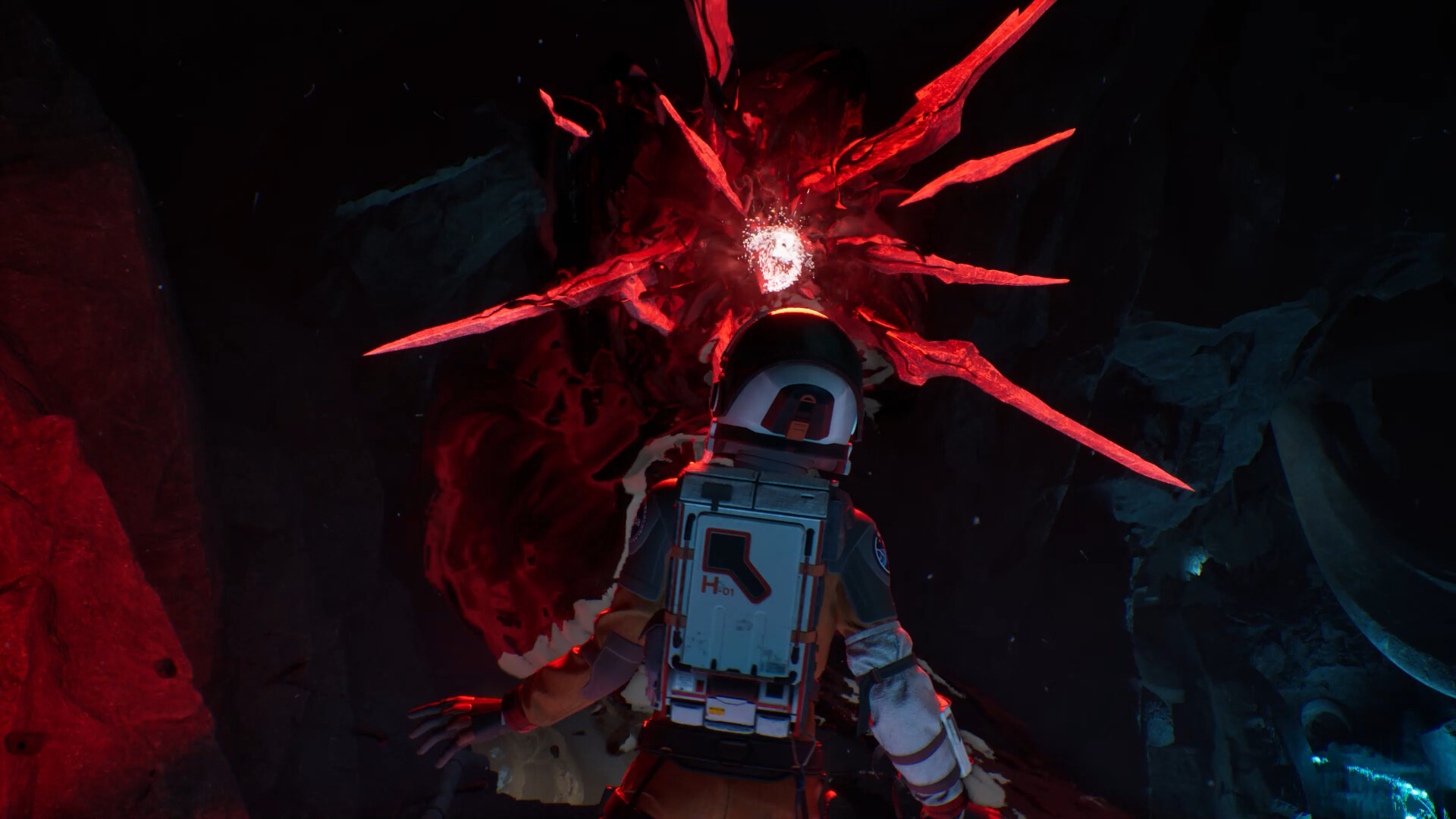
The kindest reading of Thomas's chapters is that they are deliberately understated to keep the spotlight on the writing. He has more dialogue, more time in cutscenes, and more of the game's emotional centre of gravity than Ariane does. The mechanical thinness is, on this reading, intentional — a choice to keep the player in the headspace of a man who is dying slowly, alone, in the dark, talking to the only person left who knows him. I want to believe that. I think the game would have been stronger if its mechanical layer had collaborated with its narrative layer instead of getting out of the way for it. But I can see the design logic, and there are moments — a long, almost wordless sequence where Thomas walks through a flooded research wing and finds the suit of someone he used to know — where the choice to keep gameplay simple absolutely pays off.
The Look of a Cold Place
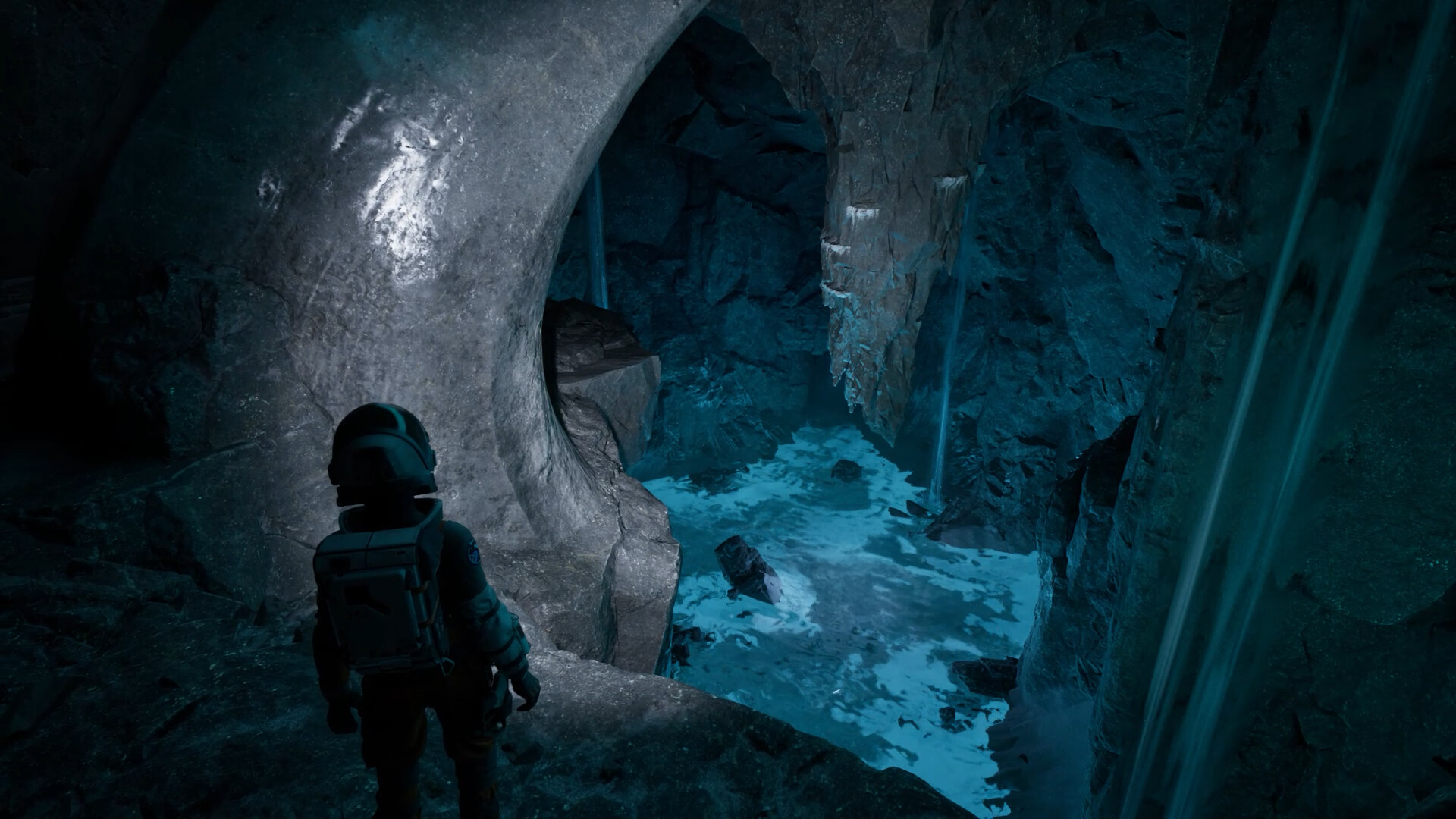
Here is where Aphelion is genuinely, unambiguously brilliant: it looks and sounds like nothing else released this year. The art direction commits, hard, to the idea that you are on a planet where the dominant emotion is cold. Not the picturesque cold of a Skyrim winter or the candy-coloured cold of a Christmas-themed seasonal event. The actual cold of a place where breath fogs every visor, where ice creaks under each step, where the wind has been blowing for so long across so much empty rock that it has worn the geometry of the world into smooth, hostile curves. There are stretches of Aphelion where I just stopped moving and looked.
The lighting work is the obvious standout. Aphelion's planet rotates slowly enough that the sun, when it is up, is a long pale streak rather than a fixed disc, and Don't Nod sells that with extraordinary care. Shadows shift over the course of a chapter. A traversal section that started in cold blue twilight ends in coppery, almost warm light by the time you crest the ridge. Solar storms wash the world out into something that looks like an old polaroid. None of this is gameplay-relevant. All of it is the kind of detail that gives the planet its weight as a character in the story.
The sound design is, if anything, even better. Aphelion's wind is one of the year's great audio performances. It moves around you in a way that makes you instinctively pull your shoulders in. Ice cracks in the distance and sometimes underfoot. Thomas's air recycler hisses every time he turns his head, a small mechanical heartbeat that you stop noticing for ten minutes and then suddenly hear again when the room goes quiet. Suit alarms are designed to be quiet enough that you have to listen for them, which means you start listening for them all the time. The score, when it is there, is restrained and orchestral — strings and a few sparse synths, leaning hard into long sustained notes — but the design is unafraid to leave huge stretches of the game scored only by environmental sound, and that confidence is what makes the music land when it does arrive.
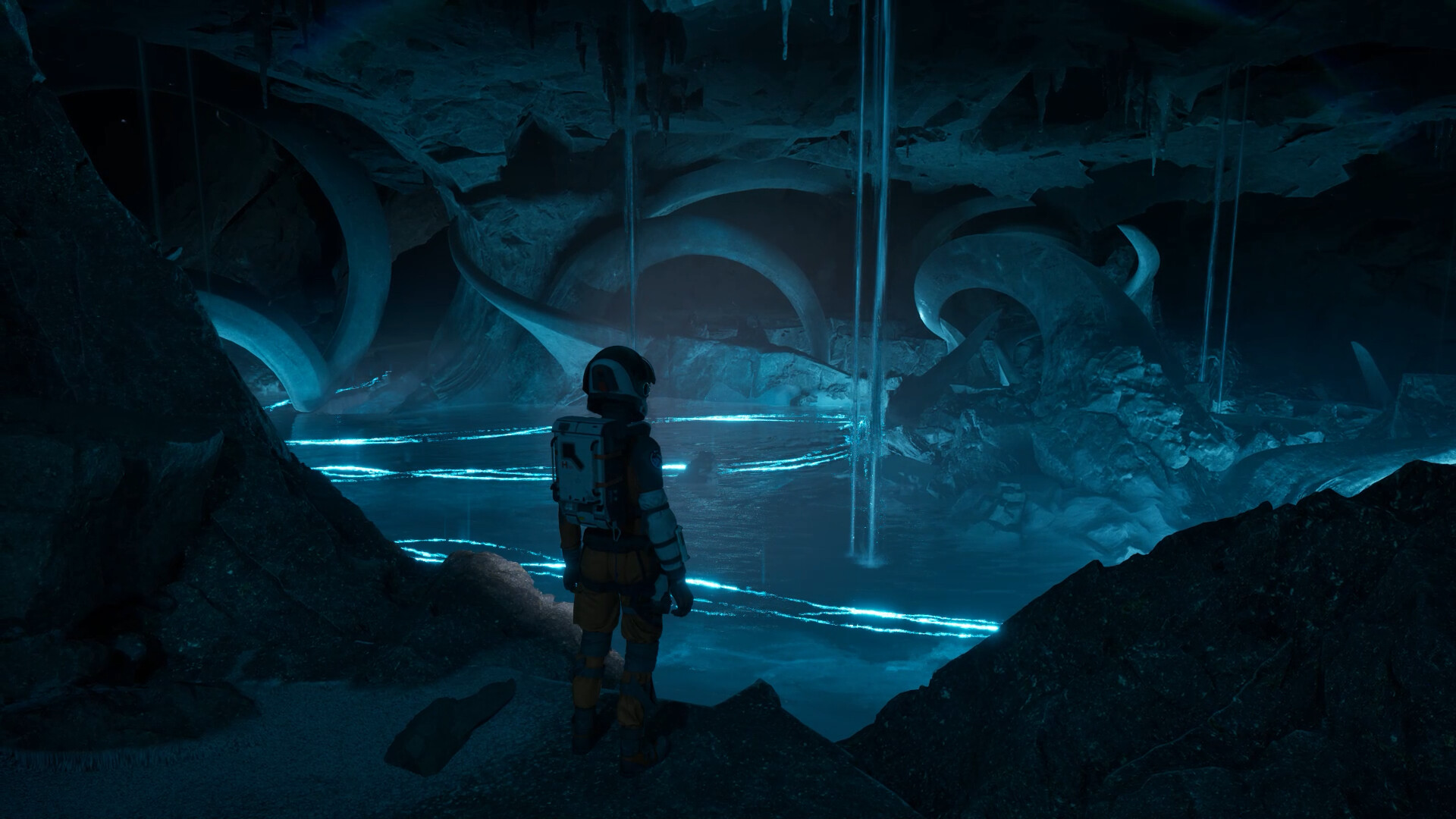
Performance, on PC and on Xbox Series X (the platforms I tested), is solid for a game with this much ambient detail. There is a 60fps performance mode and a 30fps fidelity mode on Xbox; the fidelity mode is the one to play if you can stomach the lower framerate, because the upgraded fog volumetrics and longer shadow cascades do meaningful work for the atmosphere. PC scaling is reasonable on mid-range hardware. There are some traversal stutters during the largest open vistas — common to most modern Unreal Engine 5 titles — and a couple of hard hitches around heavier cutscene transitions, but nothing I would call a deal-breaker. I encountered one bug across my playthrough: a save reload that placed Ariane outside the world geometry, which I resolved by reloading to a previous checkpoint without losing meaningful progress.
Length and Pacing — Ten Hours That Feel Like the Right Number
Aphelion is not a long game by 2026 standards. My run, with deliberate exploration and a fair amount of stopping to take screenshots, came in at just under eleven hours. A more focused player could finish it in eight. There is no meaningful side content, no upgrade tree, no collectible system that gates rewards behind exploration. There are environmental story logs — voice notes, mostly — that flesh out the Hyperion mission and the lives of its crew, but you can ignore them entirely without missing any mechanical reward.
This is, I would argue, exactly the right length for what the game is. Aphelion's mechanical toolkit isn't deep enough to sustain twenty or thirty hours, and its story doesn't need that much room to breathe. At ten hours, the climbing's repetitiveness never quite calcifies into tedium, the stealth's thinness never quite curdles into resentment, and the central love story has time to develop both characters and arrive at its ending without padding. The pacing of chapter transitions is also notably good. Aphelion alternates between Ariane and Thomas in chunks of roughly an hour to ninety minutes each, and the rhythm of switching means you are rarely deep enough into either character's mechanical limitations to feel them grind.
What's missing is anything to come back to. Once the credits roll, there is a chapter select and that's about it. No new game plus. No additional ending paths beyond the one binary choice in the final twenty minutes (which, to its credit, the game treats with weight). No challenges, no leaderboards, no developer commentary track. For some players, especially those measuring value strictly in hours per dollar, that's going to feel thin at the full sixty-dollar asking price. The Game Pass day-one availability blunts that complaint considerably — if you are subscribed to Ultimate or PC Game Pass, Aphelion is functionally a free-to-try ten-hour cinematic, which is exactly the kind of thing the service exists for.
The Don't Nod Question
Aphelion arrives at a strange moment in Don't Nod's history. The studio that made Life Is Strange has spent the last several years trying to build a portfolio of mid-budget narrative games — Tell Me Why, Twin Mirror, Banishers: Ghosts of New Eden, Lost Records: Bloom and Rage, Harmony: The Fall of Reverie — with mixed commercial results. Aphelion is, on paper, the studio's biggest swing yet at a genuinely AAA action-adventure: a third-person, dual-protagonist, set-piece-driven sci-fi epic that wants to compete in the same space as Naughty Dog's biggest releases.
The good news is that Don't Nod's narrative DNA is intact. The writing rhythms — long quiet character beats, conversations that resolve in pauses rather than punchlines, an emotional palette that prefers ache to catharsis — are all here, and they are all working. The bad news is that the rest of the game has not quite caught up to what those rhythms need. A Naughty Dog set piece works because the studio has spent thirty years polishing the connective tissue between cinematic moments to a mirror finish. Aphelion has not had that time, and it shows. The set pieces land, but the connective tissue between them is where the game audibly creaks.
This isn't a damning observation, just a structural one. Don't Nod is a studio of around three hundred people. Naughty Dog is a studio of around four hundred with a considerably larger budget per project. The fact that Aphelion is in the conversation at all is, in some ways, a credit to how far Don't Nod has come. The fact that it cannot quite finish the conversation is the cost of where they currently are.
Where Aphelion succeeds beyond Don't Nod's previous work is in scope. This is unmistakably a more ambitious game than Banishers, which itself was a step up from Tell Me Why. The dual-protagonist structure, the cinematic set pieces, the orchestral score, the ESA-grounded worldbuilding — all of it represents the studio reaching for a tier of production it has not previously occupied. The reach is admirable. The grasp is partial. Whatever comes next from Don't Nod is going to benefit from what they learned making this game, and I suspect that game is going to be much better for it.
What Aphelion Is, and Isn't, On Game Pass
One question worth addressing directly: should you play this on Game Pass? The honest answer is yes, with caveats. Aphelion is a great Game Pass game and a more complicated proposition at full price. On the service, it is exactly the kind of mid-length, emotionally invested cinematic experience that Game Pass is built around. You can finish it in a long weekend, you don't have to commit to any external systems beyond the campaign, and you can leave it with a strong, specific memory of the central relationship that justifies the time you put in.
At sixty dollars, the calculus is harder. Aphelion's mechanical layer is not strong enough to carry a recommendation against the kind of competition you can find at the same price point — Indiana Jones and the Great Circle, A Plague Tale: Requiem, the recent Tomb Raider remasters, even Don't Nod's own Banishers if you missed it last year. None of those games have a story I would put above Aphelion's best moments, but all of them are more reliable on the pure-fundamentals layer that an action-adventure needs. If you are paying full price, you are paying primarily for the story, and you should be sure you want that specific story before doing it.
The PlayStation 5 audience has a slightly different equation. Without Game Pass on PS5, full price is your only option, and the technical performance is comparable to Xbox. The Steam version offers a 10% launch discount and is the most flexible platform if you care about ultrawide support, custom field of view, or graphics modding. There is no Mac or Linux build, and there is no native Steam Deck verification yet, though the game runs reasonably on Deck through Proton with medium settings.
The Heart of It
I keep coming back to that moment on the ridge. Ariane and Thomas are not having an important conversation. They are having a conversation that has nothing to do with the mission, the planet, or the looming question of whether either of them is going to make it home. They are talking about a restaurant they used to go to in Toulouse before launch, the one with the bad jukebox and the good wine, and Ariane is laughing about a particular night they had there, and Thomas is correcting a small detail of her memory, and the laughing turns into the kind of long quiet that only happens between two people who know each other completely. The wind moves over the ridge. The solar storm rolls past. Nothing happens.
Aphelion is at its best in moments like these, and the moments like these are the reason to play it. They are spread unevenly through a game whose mechanical surface is, frankly, not always doing them justice. But they are there, and they are real, and they are the kind of writing-and-performance work that you do not see often in this medium at this scale. If you can meet Aphelion where it lives — patient, atmospheric, more interested in feeling than in friction — you are going to find a quietly extraordinary piece of science fiction. If you cannot, you are going to find a third-person adventure that doesn't quite hold its own against the games it is trying to stand next to.
Both reactions are legitimate. The reviews bouncing between 8.5 and 4 out of 10 reflect a real divide in what different players want from this kind of game, and Aphelion is rarely going to convince anyone who arrived expecting the other thing. What I can say is that I finished it, sat through the credits, and then sat for a few minutes longer in the quiet. That doesn't happen with every game I review, and it counts for more than I am comfortable explaining in a star rating.
Verdict
Aphelion is a beautifully written, gorgeously realized sci-fi adventure that is also, simultaneously, a mechanically dated third-person action game. The story, the performances, the art direction, and the sound design are doing the kind of prestige-tier work the medium reserves for its best, and they make the experience genuinely worth your time — especially at the cost of a Game Pass subscription you probably already pay for. The climbing is competent, the stealth is thin, and the bug-prone collisions are going to lose Don't Nod a couple of review points they would otherwise have earned. None of that erases the fact that this is, in its quiet final hour, one of the most affecting endings I have played in a year of strong endings. Don't Nod has not yet built the studio capable of finishing the kind of game Aphelion wants to be. They have, however, built the studio capable of starting one, and starting one this well is rarer than it sounds.
Play it on Game Pass. Buy it at a discount. Either way, give it the patience it asks for. The good parts are very, very good.