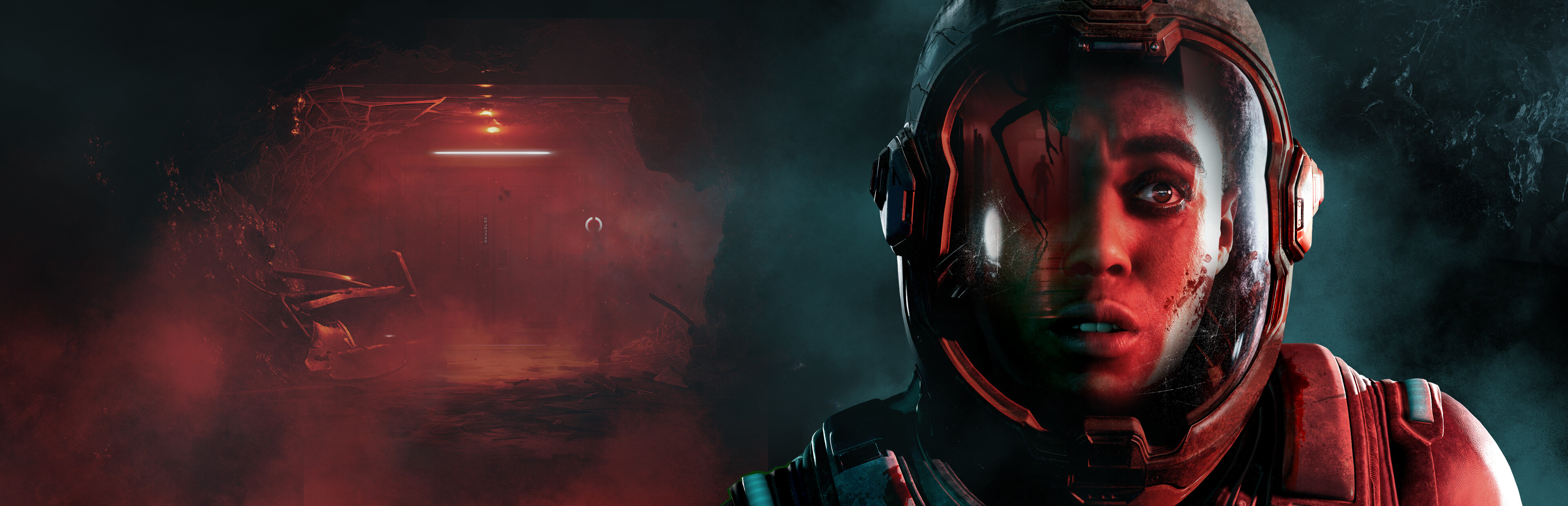
Directive 8020 arrives at a strange inflection point for Supermassive Games. The studio that put Hollywood faces into B-movie scares with Until Dawn, and then quietly built one of the most ambitious horror anthologies in modern gaming with The Dark Pictures, has been a victim of its own format for years. Eight games in five years means audiences have started to feel the seams: the same hub interludes, the same QTE rhythm, the same handful of branching deaths shuffled into a new period costume. Directive 8020 is the explicit reset. It is the opening of Season Two, a season-long arc that ditches the historical horror angle for stories rooted in sci-fi, dystopia and what Supermassive's curator-narrator calls "the futures we make for ourselves." It is also the first Dark Pictures game built primarily for PlayStation 5, Xbox Series X|S and PC, with the previous-gen versions left behind. That hardware leap is felt in nearly every frame.
On the surface, the elevator pitch is irresistible. Earth is dying. Humanity has 11 light-second buffers between extinction events. The interstellar colony ship Cassiopeia is, with grim symbolism, our last vessel of consequence, and on a final-approach manoeuvre to the candidate world Tau Ceti f, it strikes something it should not have struck. The ship crashes. Some of the crew survives. And almost immediately, the survivors discover that whatever wrecked their ship is now wearing one of their faces. Alien, The Thing, Event Horizon and even a little bit of Pandorum are written into the DNA of every corridor and every cracked airlock. The question that hangs over the whole game is whether Supermassive can play in that league with the structure it has used for nearly a decade, or whether the cinematic horror anthology format runs out of oxygen the further from Earth it gets.
The short answer is that the format mostly holds. Directive 8020 is the most stylistically confident, mechanically ambitious and emotionally serious game Supermassive has shipped since Until Dawn. It is also occasionally exhausting, uneven in its character work, and built around stealth segments that are easily its weakest material. The result is a game that aims for the genre's heaviest hitters, gets within reaching distance more often than you might expect, and then very visibly stumbles in the spaces between the highlight reel. It is a 60, in our book.
Tau Ceti f and the politics of last hope
The opening hour of Directive 8020 is the slowest, and that is by design. The game wants you to know the Cassiopeia. You spend it walking the residential ring while Brianna Young, played by Lashana Lynch in a turn that is somewhere between her work in No Time To Die and her quieter material in The Woman King, runs through her psychological evaluation with the ship's AI. The interface is interrogation, not exposition: each piece of backstory is a multiple-choice question, each multiple-choice question feeds the relationship matrices that will later decide who survives. There is no dialogue wheel in the modern sense. There are decisions that the script then folds into character behaviour with enough finesse that you start to wonder if Brianna's calm tone in a later argument is the AI's bias or your own.
That opening conceit, which is genuinely well-written, also exposes the format's biggest problem. There is too much of it. Supermassive has never been better at building character, and the studio's writers, led by Hayden Davenport, are clearly proud of the world-building they put into the Cassiopeia: 14,000 colonists in cryo, a hand-picked crew of 64, a recently-discovered second candidate world that has split mission command into two political factions, and a captain whose final pre-launch interview reads less like leadership and more like grief management. The crew of the Cassiopeia are not just an away team for an alien encounter; they are the human seed of whatever comes next, and the game wants you to feel the weight of that. Unfortunately, it spends nearly 90 minutes telling you so before the dread starts.
When the dread does start, it does not arrive as a scream. It arrives as a frequency. Maintenance engineer Caleb Murphy, the player's first stealth-perspective character, is sent to investigate an unscheduled venting cycle in the rec hub. The sound design at this point is a master class. The hum of the Cassiopeia's plumbing changes register from baseline white noise to something almost musical, a low pulse that you start to expect even when the visual track is normal. By the time Caleb's torch picks out the first body, you have been listening to the alien for ten minutes without knowing it. That is the first real promise of Directive 8020: when it commits to atmospheric horror, it can do it with anyone in the genre right now.
The mimic, and what Supermassive learned from Carpenter
The shapeshifter is the heart of the game and, on balance, the most ambitious mechanic Supermassive has tried in any of its titles to date. Lore-wise, the organism is referred to as a "phenotype-thief" by the eggheads on Brianna's team. Mechanically, it works on a hidden trust meter that the writers and designers seem to have built around the same axis Carpenter's The Thing uses for its third act: every conversation you have with another crew member moves a slider in one of two directions, and the slider eventually determines whether the person you are talking to is themselves at all. It is the cleanest piece of design in the game, and the moment it clicks is unforgettable. You will catch yourself rewatching previous cutscenes for tells you missed, in a way no Supermassive game has ever earned before.
The genius of how this is implemented is that it never tells you the meter exists. The first run is necessarily paranoid because you start treating the cast as suspects, but the second run is much more interesting, because you start to see the rhythm of the encounters. There are roughly nine major mimic checkpoints in a full playthrough. At each of them, you can be wrong. You can mistakenly accuse a real crew member of being the thing, you can be talked into letting a thing convince you it is not the thing, and most chillingly, you can sometimes be right and powerless to act, because the moment is structured so that the action you would take cannot be taken. Hostage scenarios, airlock cycles, decisions made by committee. The game is constantly asking what you would actually do, not just what you wish you could.
This is also where the writing is at its best. The mimic's mimicry is never quite right, but it is rarely outright wrong. The thing wearing the medical officer's face will quote her favourite poem perfectly, but flinch when offered her favourite tea. The thing wearing the ship's mechanic will remember the precise spec of every coolant valve on the deck, but never use his nickname for his husband. Some of these tells you have to actively dig for in dialogue branches. Some of them, on a second playthrough, are impossible to unsee. Supermassive's writers have hidden astonishing amounts of detail in the supporting characters specifically so that the mimic mechanic has somewhere to live.
Brianna Young and the case for Lashana Lynch
Lashana Lynch is the best thing in Directive 8020, and it is not particularly close. Casting a leading actor of her current weight is a big swing for what is, ultimately, a $40 cinematic horror game, and the studio gives her the material to justify the line item. Brianna Young is not a hero. She is the second-in-command of a mission that has already failed, and the script forces her into impossible positions roughly every fifteen minutes. Lynch plays the role almost entirely through micro-expression. Her dialogue choices can feel small to the point of insignificance, only to land in a major beat thirty minutes later as the only thing that makes another character survive.
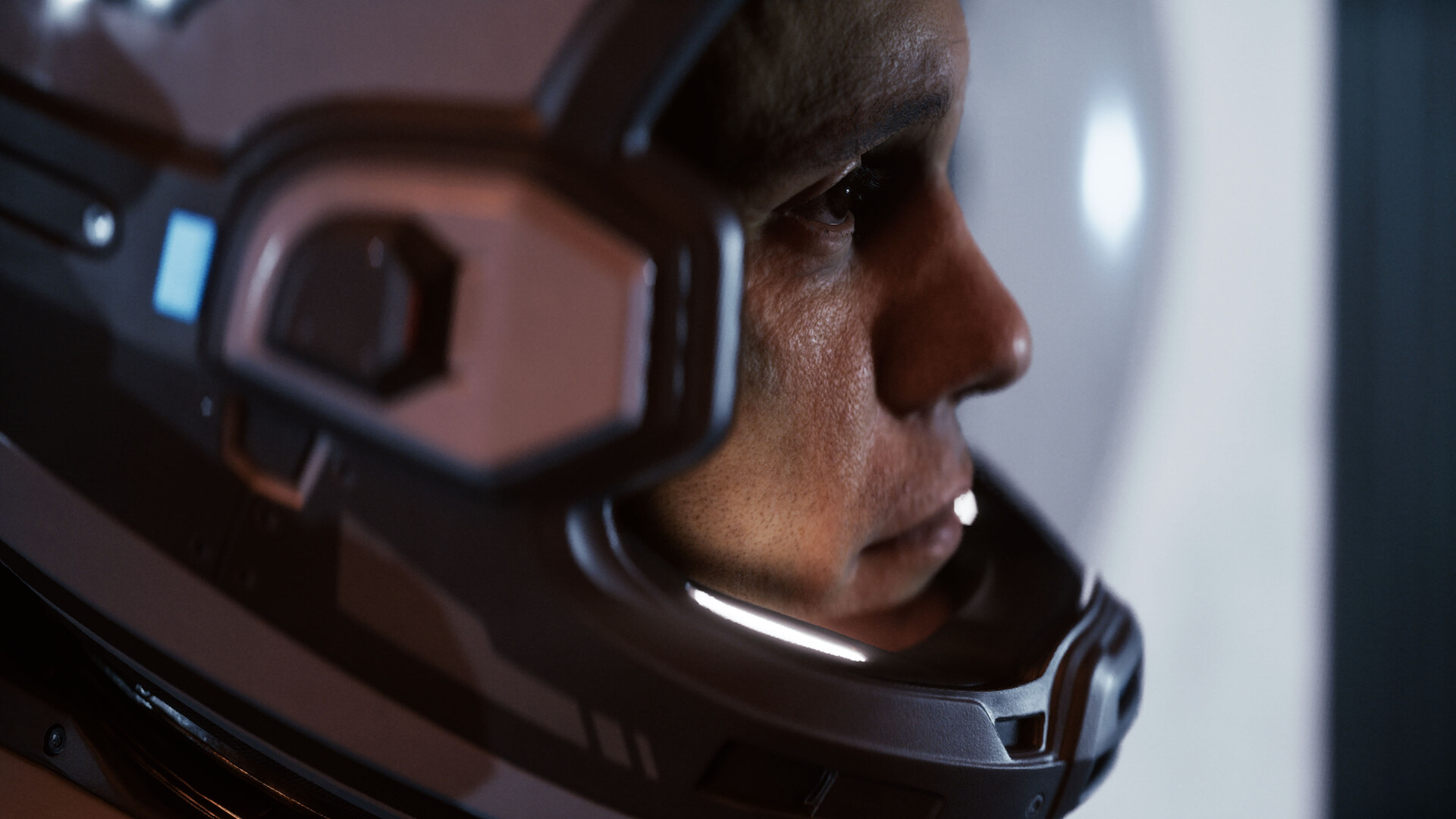
It is, frankly, the kind of performance that the cinematic horror genre has been chasing since David Cage cast Ellen Page. Lynch has worked in motion capture before, and her command of the medium is enormous. Watch the scene roughly four hours in, where Brianna negotiates with another survivor on the other side of a sealed door, knowing one of them is wearing somebody else's face. The performance does not project. It does not lean into the camera. It just sits there, breathing, and you can read the calculations in her eyes. Supermassive has worked with great actors before. It has rarely shot them this well.
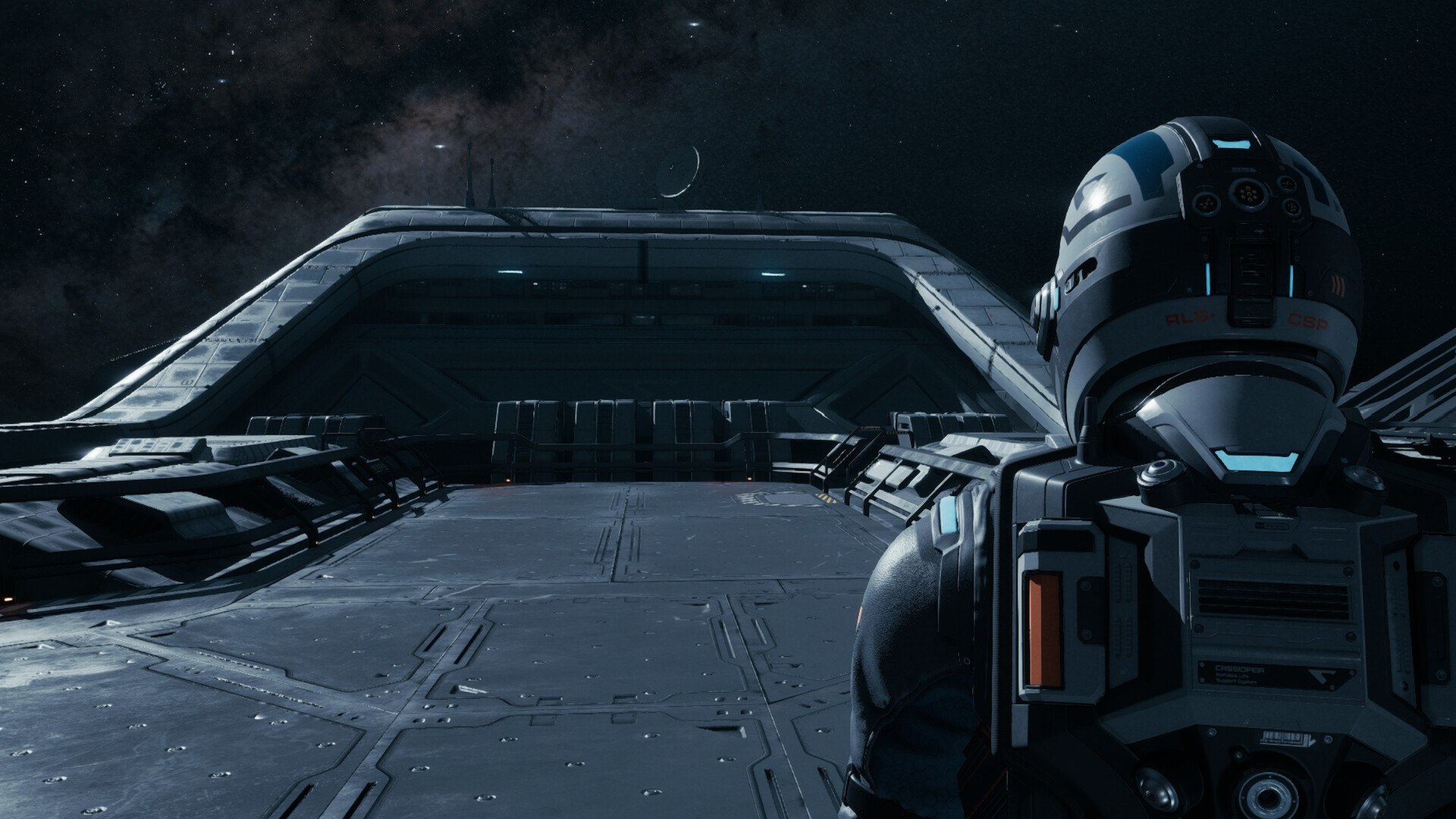
The trouble is that the supporting cast cannot keep up. Eight playable characters cycle through the runtime, and only four of them ever feel like full people. The mission's pilot, Aleksei, has perhaps three meaningful conversations in the entire game, despite being playable in two stealth sequences. The botanist, Isabel, is given a beautiful introductory monologue about hydroponic redundancy as a metaphor for loss and then more or less disappears for half of act two. The thing that makes this hurt is that the moments where the writing slows down and lets the side characters breathe are uniformly strong; there are just not enough of them. The mimic plot works in part because it sows distrust about people you barely know. That choice cuts both ways. When a side character dies, you should feel something. Sometimes you don't.
Stealth, the millstone
If Directive 8020 has a single weak system, it is the dedicated stealth segments. There are eight of them, scattered through the game's three acts, in which a playable character without combat options has to traverse a maintenance corridor, a cargo hold, or a derelict deck while the mimic prowls within line of sight. The fundamental mechanics are competent. There is a torch with a battery meter, a sound footprint represented by an HUD ring that grows when you run, and a sparing set of distractions in the environment. The mimic has an audio cue that crescendos as it approaches and a fail-state that is rarely instant; you almost always get a chase sequence with a QTE before the screen goes black.
The problem is rhythm. Each stealth segment is roughly seven to twelve minutes, which is two to four minutes too long. The pacing assumes you will need three attempts at each room, and on a first playthrough you often do, but the failure state is so generous that the tension drains out by the third try. Worse, the segments often interrupt momentum from much stronger character work. There is a moment about six hours in where Brianna has just made a major decision involving the captain, and the game cuts immediately to a Caleb stealth segment in a cargo hold that has nothing to do with anything that just happened. The game does not need it.
To be fair, the stealth design improves dramatically in act three, where the mimic's behaviours start to be modulated by your earlier decisions. By that point, the segments feel earned. They are also shorter, faster, and visibly higher-budget. If Supermassive shipped the equivalent of act three's stealth across the whole game, this would be a different review. The studio is so close to nailing this part of the design that the long gap between "what we got" and "what's possible" is the single most frustrating thing about Directive 8020.
Visuals and audio
Technically, this is the best-looking thing Supermassive has ever made. The studio has openly said that Directive 8020 was built on a heavily customised internal engine that incorporates a new lighting solution and a tighter integration with PlayStation's PSSR 2 upscaler on PS5 Pro. The results show. Subsurface scattering on the cast's faces is the new bar for the genre on console; Brianna's reaction shots in the third act, in particular, have a fidelity that comes very close to the high-end cinematic standards The Quarry tried for in 2022. The decision to anchor most of the game's interior environments in real-time area lighting rather than pre-baked spotlight gives the Cassiopeia a sense of architecture; it feels like a place that exists and continues to exist when you leave the room.
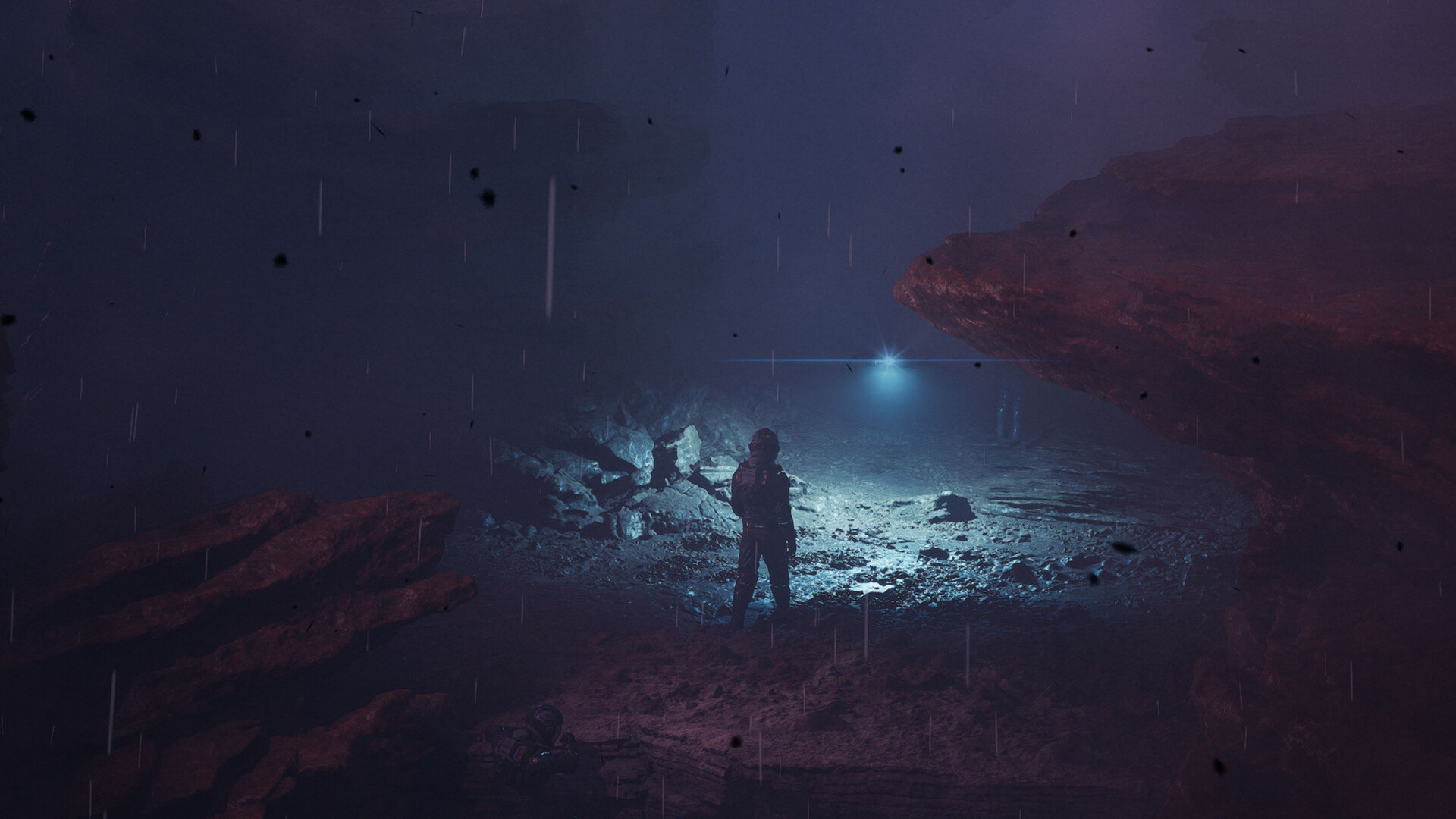
Tau Ceti f, when you reach it in act two, is a tonal shift the visual team handles with confidence. The planet's surface is shot in a sodium-orange palette that recalls Alien: Isolation's Sevastopol and Dead Space's Aegis VII without copying either. Volumetric dust effects are doing real work in the player's visibility, not just window dressing, and there are several extended sequences on the surface where the lack of vegetation against the unfamiliar geology produces a sense of scale that is genuinely uncomfortable.
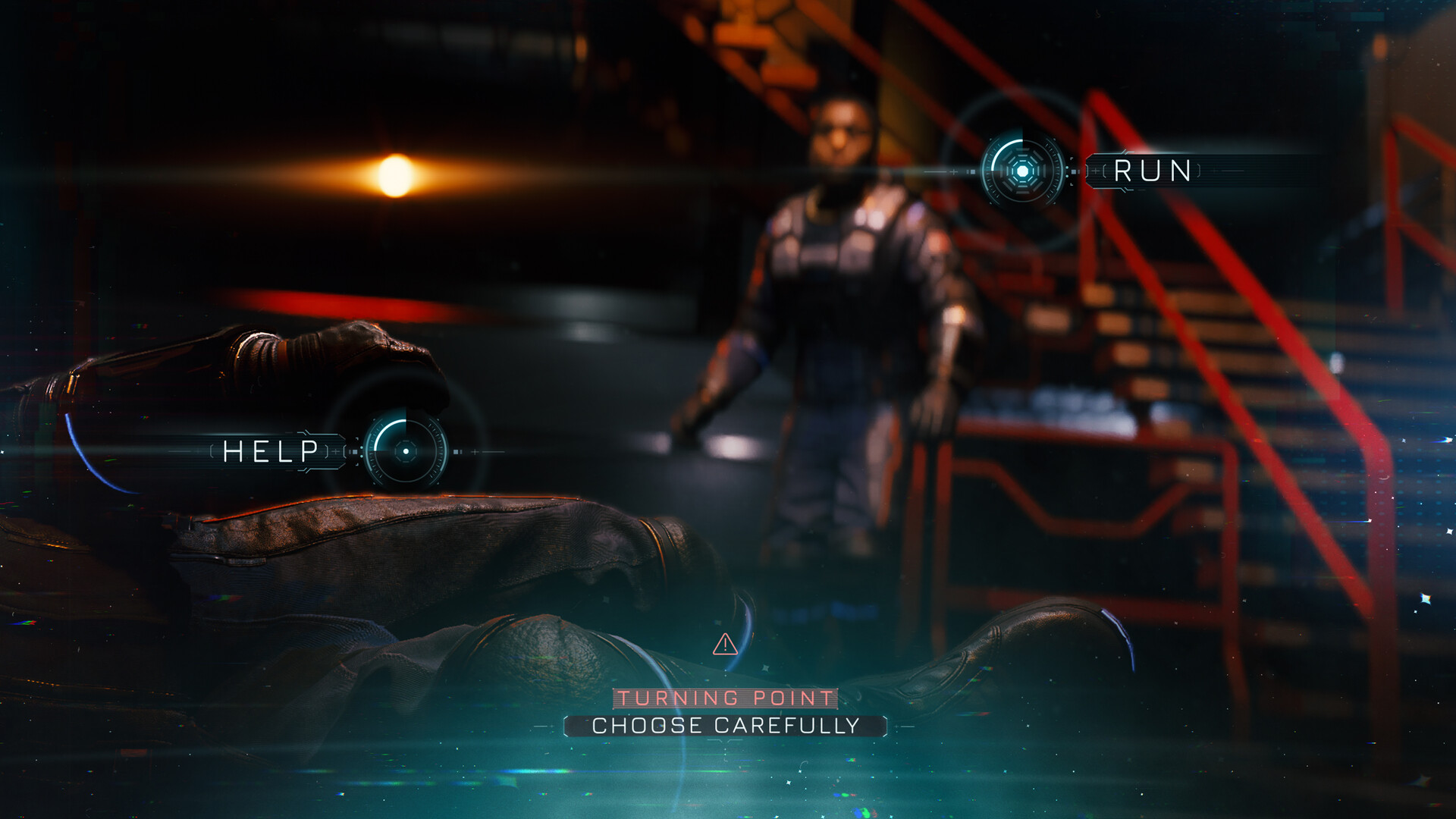
Audio is, if anything, even better. Directive 8020 is built around a soundscape that mixes diegetic ship audio with a partly orchestral, partly synthesised score from Jason Graves (the Dead Space series) that knows exactly when to disappear. The first time the score actually swells in the game is more than two hours in, and the restraint pays off. Plenty of horror games use the absence of music as a tension tool. Few games use the eventual presence of music as a relief mechanism. Directive 8020 does, and it is a small thing that makes a huge difference. Played in a dark room with even passable headphones, the game's mix is among the best in modern horror.
Branching, replayability, and Shared Story
Supermassive's most ambitious feature, mechanically, has always been its branching narrative tree, and Directive 8020 is its most expansive yet. Supermassive says there are more than 250 unique character permutations and at least nine distinct major endings. The differences between them are not cosmetic. One ending involves a single survivor reaching a specific environmental control room and is functionally a horror-tragedy; another involves successfully sealing the threat aboard the wreck and is, somehow, the most hopeful ending in a Supermassive game in years. Whatever Supermassive learned about branching from The Devil in Me and The Casting of Frank Stone, it deployed here with the volume turned up.
The headline replayability feature, though, is Shared Story online co-op. Two players play through the game together, each piloting different characters at different times, with critical decisions distributed between them in ways neither player controls in advance. The implementation is much smoother than it was in earlier Dark Pictures games, and the mimic mechanic is unexpectedly more tense in co-op because you can sometimes see the other player's choices but cannot always understand why they made them. Shared Story is meaningfully different from solo play, a genuine alternative way to consume the story rather than a gimmick.
Movie Night mode, the couch-share format where multiple players take turns making decisions for individual characters, is also back and benefits enormously from the new branching depth. With four or five people in the room, the game becomes a kind of cinematic dinner-party experience, and the runtime is short enough to do in two sittings. There is a reason this format put Supermassive on the map a decade ago, and Directive 8020 demonstrates that the format has aged well.
What does not work
To list what does not work without burying it: the early pacing, the uneven supporting cast, the stealth detours, and a small handful of QTE failures that feel arbitrary. The early pacing problem is the most damaging because it is the first thing prospective players experience. The game's first ninety minutes are the most laborious thing Supermassive has shipped since the slow opening of House of Ashes, and players who walk away in the first hour will not see any of the systems that make the rest of the game compelling. We would have killed for a streamlined editor's cut of the prologue that buys back twenty minutes for the act-three character work, which currently has to do twice the dramatic load to compensate.
The QTE failure problem is smaller in volume but consistent. The genre's hardest design problem has always been the difference between a death that feels earned and a death that feels arbitrary, and Supermassive has historically erred on the arbitrary side. Directive 8020 mostly does better, but mostly is not always.
The supporting cast issue is harder to dismiss because it is structural. Eight playable characters is a lot of cast for a nine-hour game, and the math is unforgiving. If you give Brianna and one or two close foils most of the emotional runtime, the other five characters end up as scenery. The game does its best to handle this with the relationship system, which dynamically promotes characters who have positive trust meters with Brianna into more screen time, but it cannot fully solve the underlying budget problem. We would rather have had six characters with deeper writing than eight characters with this kind of variance.
The Curator, season two, and where this leaves the anthology
Pip Torrens returns as the Curator, this time recontextualised as a kind of cosmic archivist looking at the future rather than the past. The framing-device segments between major chapters are noticeably better-written than in the first season, partly because there is less of them, and partly because Torrens is given material that lands. The Curator's monologue about the difference between fate and choice on the surface of an unfamiliar planet may be the single best thing he has been asked to deliver in any Dark Pictures game. He even gets a small interaction with a new framing figure who is not named here for spoiler reasons, which broadens the season-two metanarrative in a way that suggests the next four games are going to be more tightly bound than the first season's were.
This is a meaningful pivot for the series. The original anthology, eight games across five years, suffered from a sense that the framing was vestigial; the Curator's interludes felt like a logo bumper between unrelated stories. Directive 8020 places its season-two flag on the proposition that the framing is the substance now. If the next four games maintain this level of meta-coherence, the second season of The Dark Pictures might well end up being the first thing in the cinematic horror space to actually use its format the way television uses an anthology series.
Comparisons, and where this sits in the genre right now
Comparison is unfair to Directive 8020, but it is unavoidable. The two giants in its weight class are Alien: Isolation, still the high water mark of sci-fi survival horror twelve years on, and the Dead Space remake, the genre's most recent prestige release. Directive 8020 is not at that level. It is not really trying to be. It has nothing like Isolation's emergent AI threat, and it has nothing like Dead Space's mastery of strategic dismemberment combat. What it has is its branching, its mimic system, and its cinematic performances, and in those three columns it is doing things neither of those touchstone games is built to do.
The fairer comparison is to Supermassive's own catalogue. By that measure, Directive 8020 is comfortably the best Dark Pictures entry yet and arguably the studio's best work since Until Dawn. It is more confident than The Devil in Me, more emotionally legible than House of Ashes, and more mechanically interesting than The Quarry. The studio's distinctive identity, which used to be summarised as "Hollywood-faces in B-movie scares," has matured into something more like a directorial voice. There is recognisable craft here that you do not get from competitors, and the lower notes of the game make the higher notes hit harder.
Audio and accessibility in brief
Audio is excellent. Closed-captioning support is present and configurable in some detail, including separate volume sliders for environmental audio and dialogue, which is a nice quality-of-life touch.
Final verdict
There is a much better game inside Directive 8020, and that is the most frustrating thing about it. The mimic mechanic is the most original idea in cinematic horror in years. Lashana Lynch is operating at a level the format has rarely seen. The visuals are the genre standard. And yet, you spend the first two hours waiting for the game to start, the middle act fighting padded stealth sections that nobody asked for, and the third act asking why most of the supporting cast did not get the writing budget the main thread received. The peaks are extraordinary. The valleys are wider than they should be. The average lands lower than the premise promises.
This is a game we can recommend, with caveats, to long-time Supermassive fans who already know what the cinematic format does and does not do. It is harder to recommend to anyone who bounced off the studio's previous output, because almost every weakness from earlier Dark Pictures entries is still here. The stealth and the slow opening, in particular, are the kind of design choices that would have been cut by a more disciplined studio. We hope the rest of season two answers the question of whether Supermassive can hold its highs across a complete game; right now, on its own, Directive 8020 only manages it for stretches.
Score: 60/100. Recommended on subscription or sale for cinematic horror fans willing to push past a slow opening. Hard to recommend at $40 unless the mimic premise and Lashana Lynch's performance are reason enough on their own. Not recommended for players who want consistent pacing or who never connected with the studio's previous work.