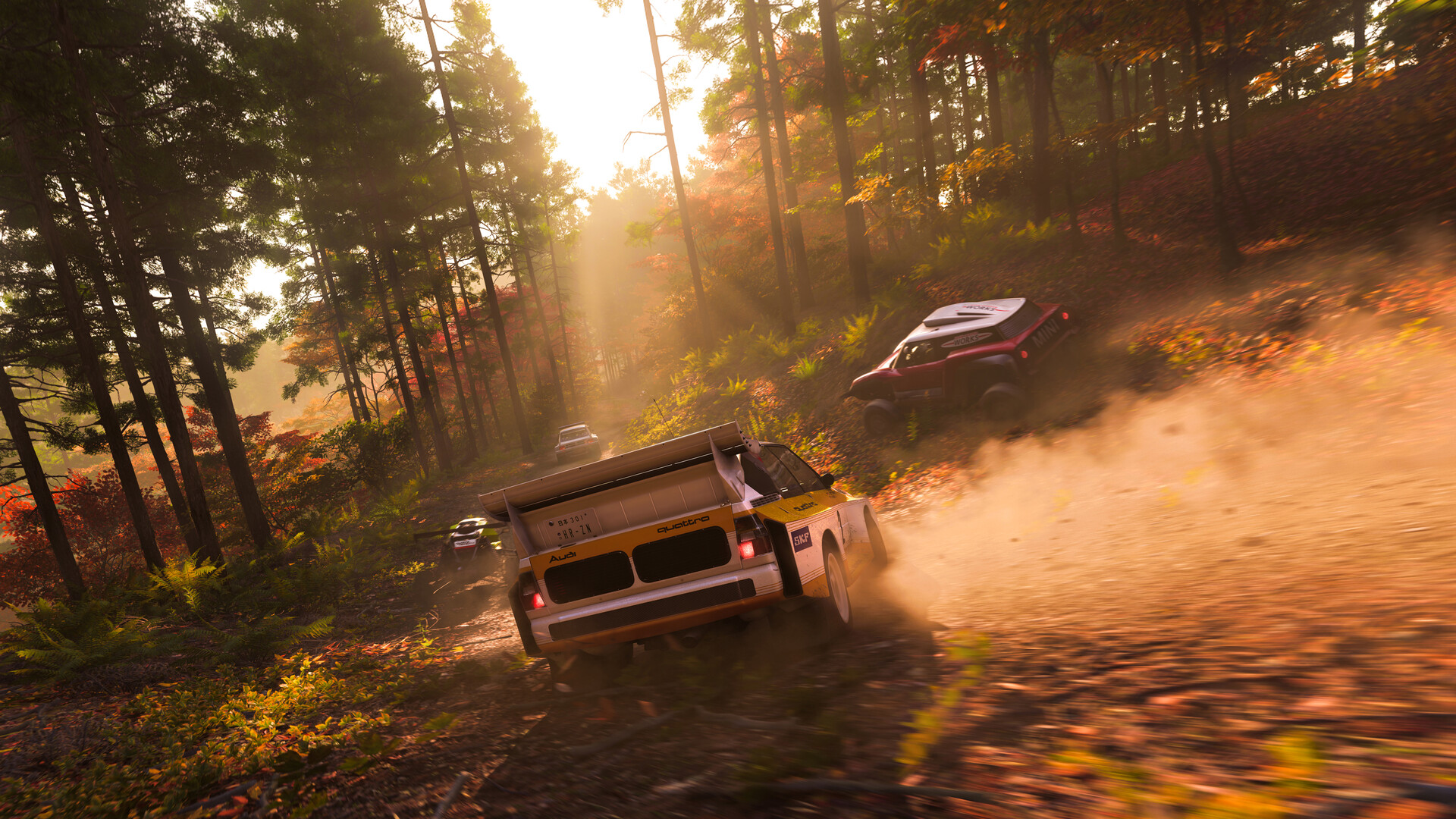
Forza Horizon 6 is the rarest kind of sequel — the one that justifies every promise its marketing made. Playground Games has spent five years between this release and Forza Horizon 5, and the wait shows. Japan is not a re-skin. Tokyo is not a token urban set piece. The car list is not a small bump. This is a generational rebuild of the Horizon Festival in a setting that finally gives the studio the contrast it has been chasing since the original Colorado map — mountain switchbacks, neon city blocks, paddy fields, and seaside docks all stitched together by a road network that respects how cars actually move.
We are at 95. That is an enthusiastic, considered grade for a game that is doing the most ambitious work in the franchise's history while still leaving a handful of late-stage edges that hold it back from a perfect score.
The review below digs into the map, the driving, the car list, the festival progression, the online layer, the visual and performance profile across PC and Xbox Series X, the soundtrack, and the post-launch roadmap. By the time you finish reading, you will have a clear sense of what Playground Games actually changed, what has stayed the same since Mexico, and where the real edges sit.
The state of the franchise heading into Forza Horizon 6
Forza Horizon as a series sits at a strange place in 2026. The franchise has been the gold standard for arcade open world racers since Horizon 3 made Australia the first map that felt like a real region rather than a curated highlight reel. Each subsequent entry has tightened the loop and broadened the audience, with Horizon 5's Mexico setting hitting the kind of crossover popularity that helped lock Game Pass subscriber numbers in the years that followed.
But the formula has aged. The festival framing, the seasonal cadence, the wheelspin reward economy, the same broad event categories — all of it has shipped in three previous games. Coming into Forza Horizon 6, the genuine question was whether Playground Games could justify another full sequel rather than another live-service expansion. The answer is yes. Japan is not just a new map — it is the first setting that actually demands the franchise rethink its driving design, its visual language, and its event structure to match.
This is also the first Forza Horizon to launch with day-one PC parity on both Microsoft Store and Steam, plus a confirmed PlayStation 5 release later in 2026. The platform politics around the launch are part of the story, and they shape how Playground Games is presenting the game — not as an Xbox marquee, but as a flagship that runs everywhere.
The map: Japan is the best setting this series has ever shipped
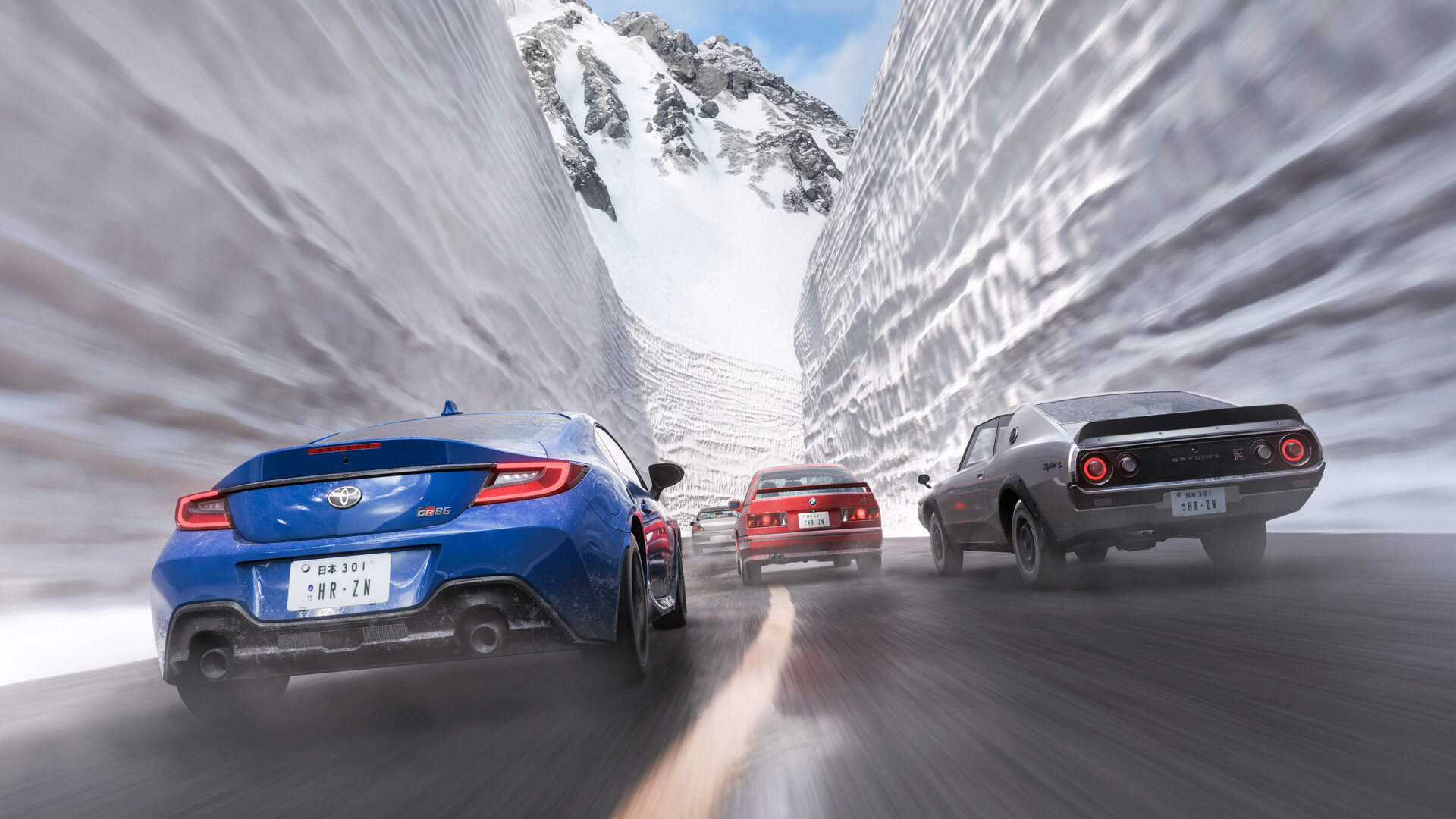
Japan is the headline. The map is denser than any previous Forza Horizon, with more sub-regions packed into a smaller geographical footprint than Mexico had to play with. That density is the trick — Mexico stretched the map thin between landmarks, and Japan deliberately swings the other way. You are never more than two minutes from a meaningful transition. A coastal road becomes a mountain switchback becomes a paddy-field straight becomes a tunnel into an urban arterial. The pacing is constant.
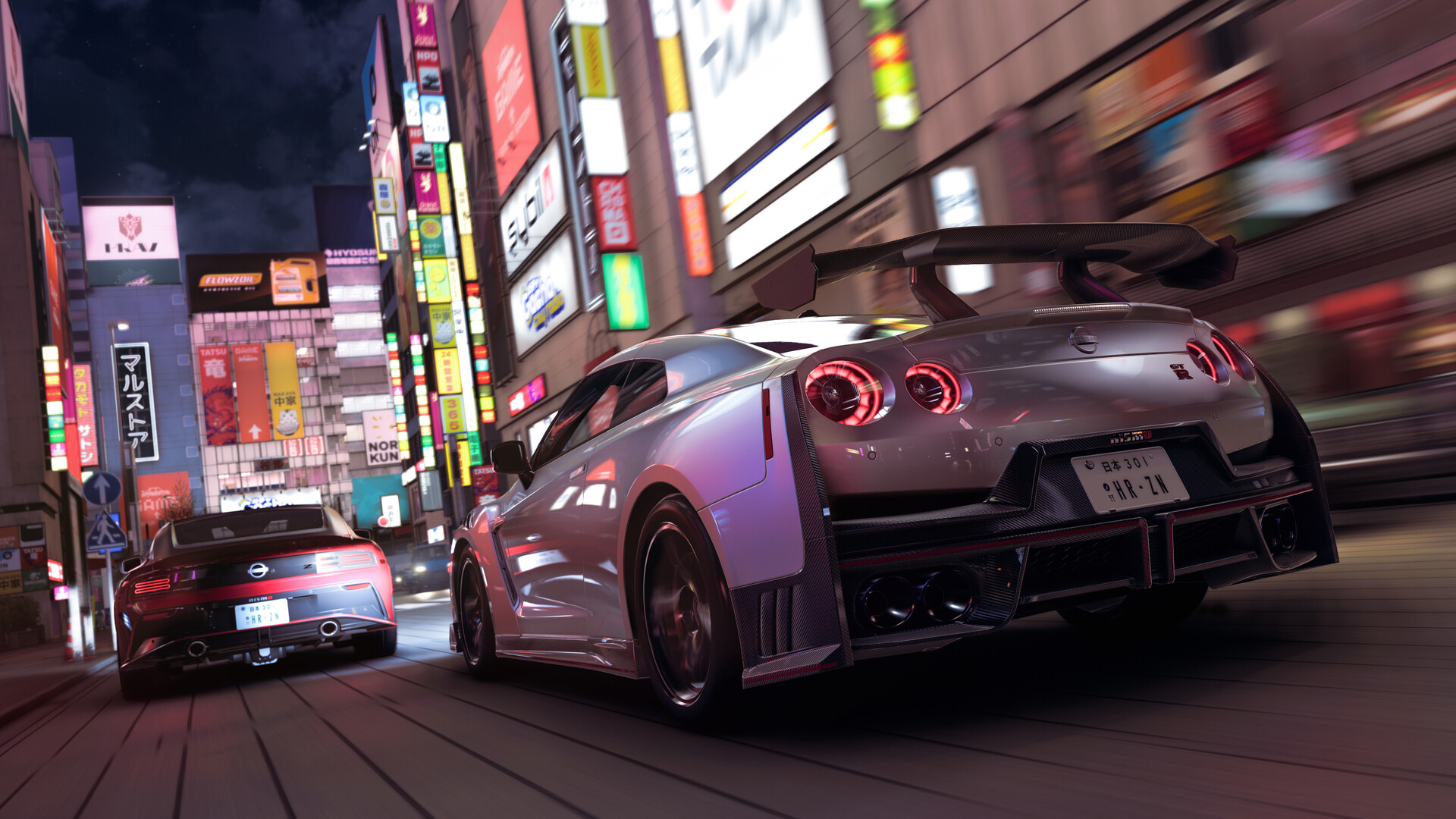
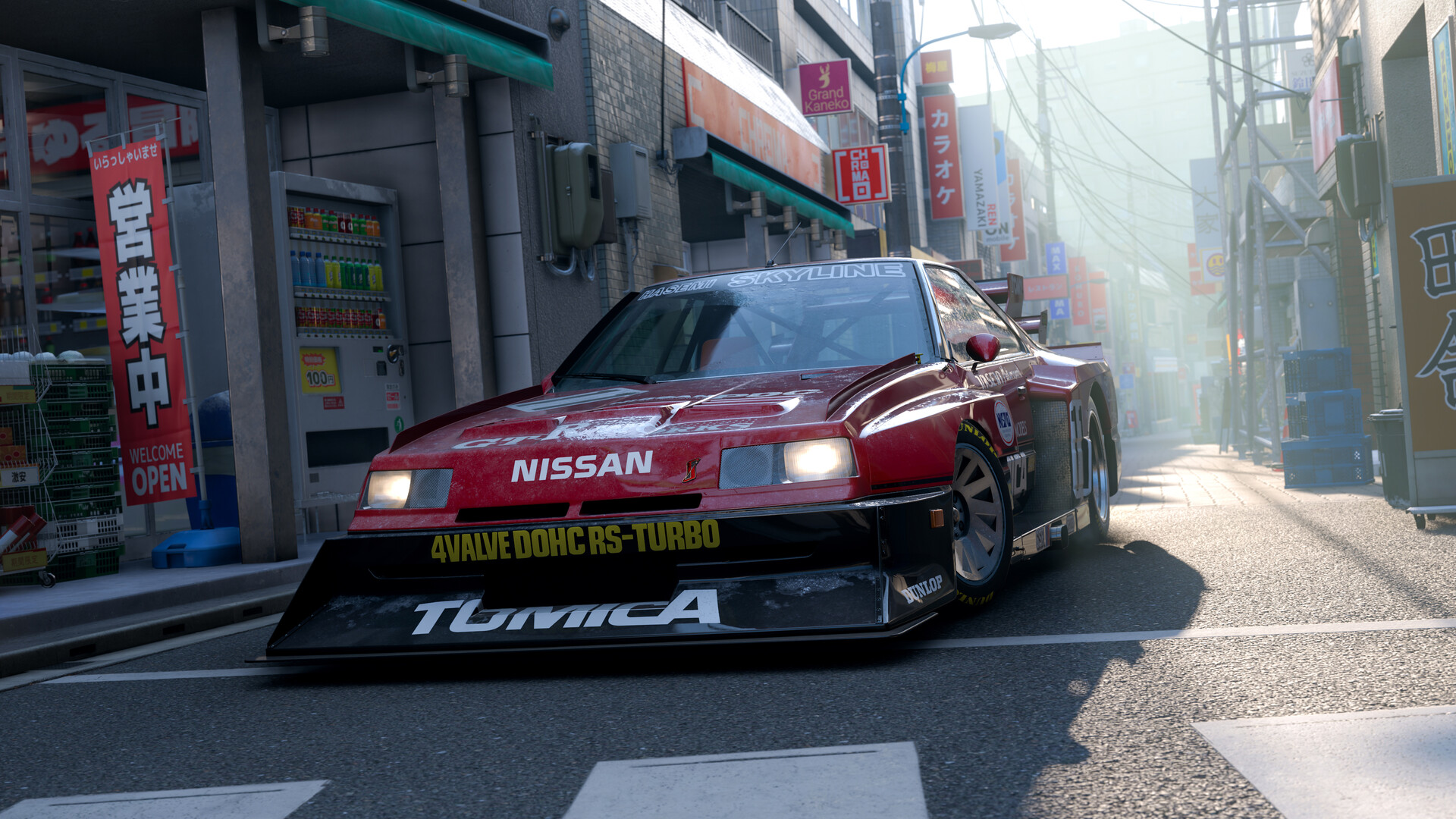
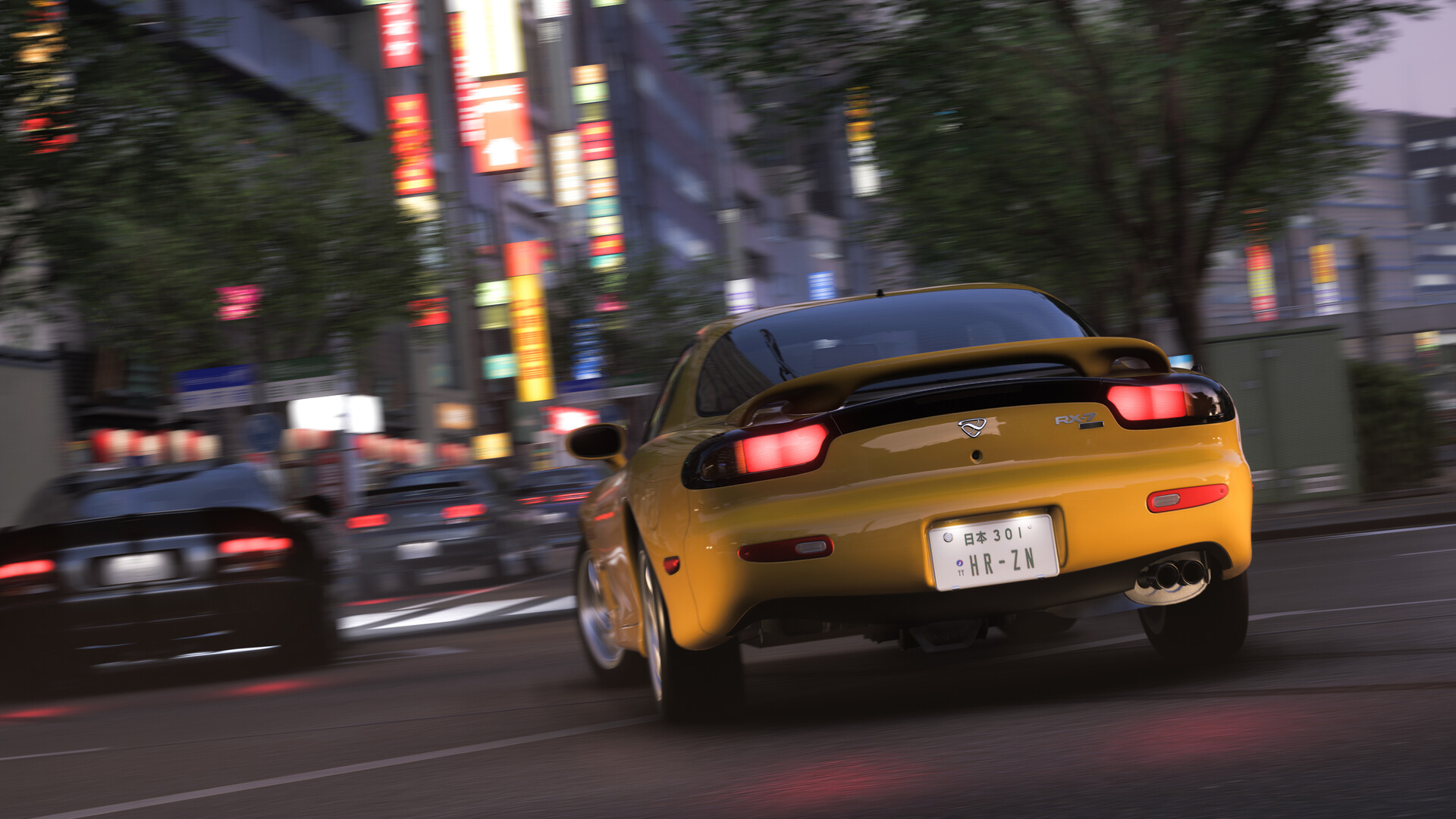
Tokyo is the centerpiece, and it is the largest urban area in series history by a substantial margin. Playground Games has been transparent that the city was modeled with cooperation from regional partners, and it shows in the layering — Shibuya, Akihabara, Shinjuku, and Roppongi are not literal recreations, but they are recognizable. Crossing Shibuya Crossing in a 1969 Skyline GT-R at 2 AM in a thunderstorm is genuinely one of the most atmospheric moments the franchise has ever produced. The city is dense enough that the studio's traffic AI has to do real work to make the streets feel populated without being unfightable, and most of the time it succeeds. There are moments where late-night Tokyo cars over-correct on lane changes in ways that feel scripted, but the overall flow is the best urban driving in any Horizon to date.
Outside Tokyo, the map's biome variety is the strongest in the series. The southern coastline gives you long sweeping seaside roads with the kind of cliff backdrops Spain provided in Forza Horizon 2. The central regions cycle through dense forest, terraced farmland, and mountain passes that genuinely require corner-by-corner precision rather than power slides. The northern stretches lean into snow biomes during the winter season, with road surfaces that change predictably and rewardingly under powder. Mount Fuji is on the map as the major elevation set piece, and the road to its summit is a multi-segment switchback that doubles as the climax of several main festival routes.
The density is bought with real design work. Playground Games has talked about reducing the size of the playable area by roughly 15 percent from Mexico while increasing the number of unique points of interest by closer to 40 percent. In practice that means smaller chunks of empty driving between meaningful environmental beats. The trade-off is a map that feels intimate rather than vast, and for the first time since Horizon 3, the franchise has a setting where the route from a roadside ramen shop to a festival outpost can actually be memorized after a few hours.
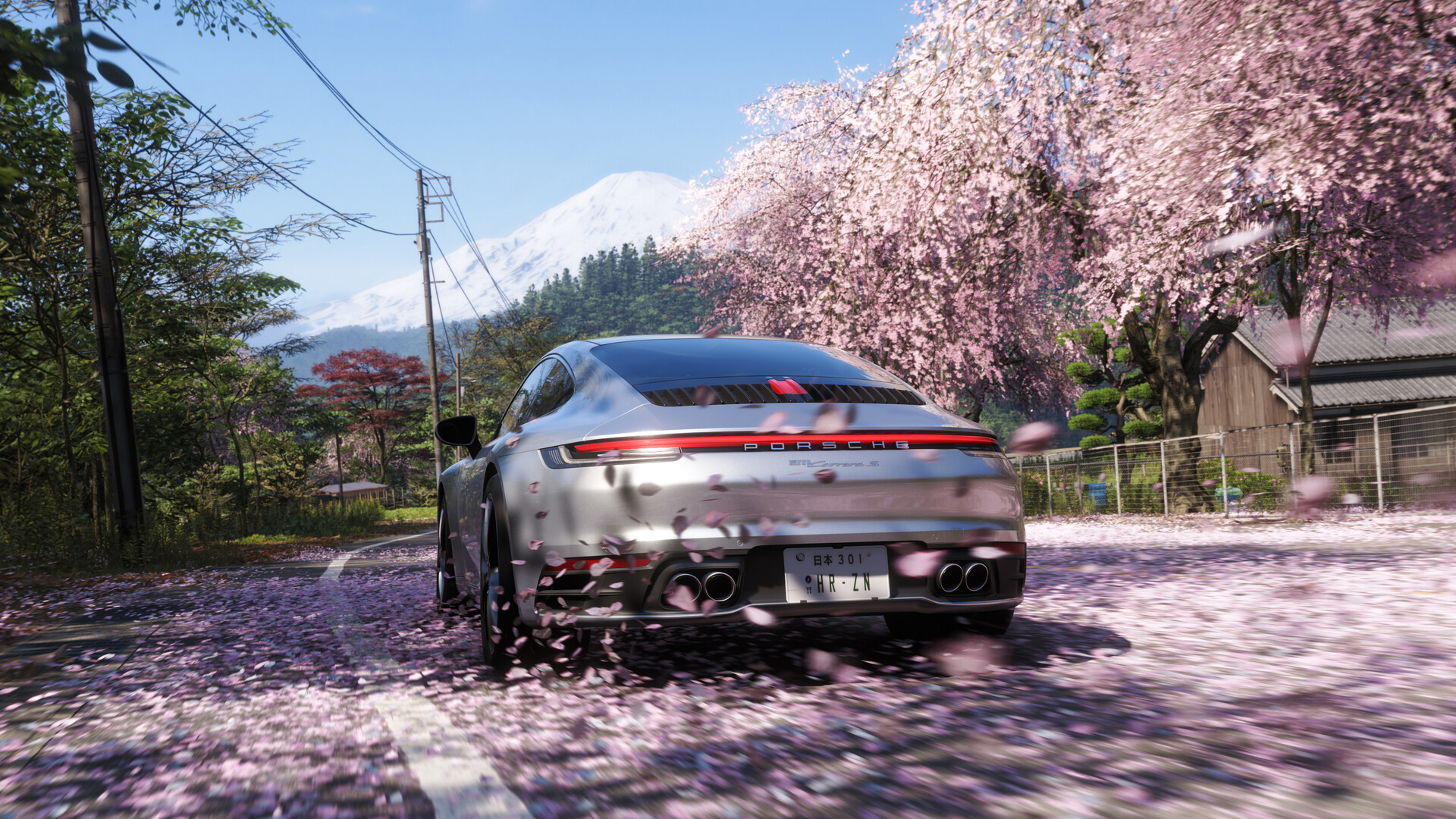
Weather and seasonal cycling continue to be the most visually impressive part of the Horizon series, and Japan gives them the best canvas yet. Cherry blossom petals drifting across Tokyo arterials in spring, monsoon rain pounding through a mountain pass in summer, snowfall reshaping a coastal road in winter — the season system finally feels like it is doing meaningful work on the environment rather than just shifting palette swaps. The studio has confirmed that the season transitions are still weekly, but the biome variation within each season is much more substantial than what Mexico shipped with.
Driving feel and physics: Playground Games' quiet rework
The driving model is the quietest big change in the launch. Playground Games has not announced a rewrite of the physics engine, and at a surface level the cars handle the way long-time Horizon players will recognize — arcade with simulation underpinnings, biased toward the spectacular rather than the technically accurate. But the underlying suspension behavior has been substantially overhauled. Cars now react more credibly to surface transitions, weight transfer feels more pronounced through long corners, and tire grip drops off in a more readable curve when you push past adhesion limits.
The change is most visible in two scenarios. The first is mountain driving — switchbacks with elevation changes now reward proper trail-braking and weight management in a way Mexico's mountain regions did not. You can feel a car's nose dive on entry, the rear settle through apex, and the chassis load up under power on exit. The second is wet driving. Rain in Forza Horizon 6 is no longer cosmetic — surface grip drops meaningfully, hydroplaning is a real risk at speed in standing water, and the cars that handle the rain well are not the same cars that handle dry tarmac well. This is the closest the franchise has ever come to forcing players to think about conditions before picking a car for an event.
The wheel support is also notably better. Forza Horizon 5 shipped with a wheel implementation that could best be described as serviceable; Forza Horizon 6 ships with a meaningfully more nuanced force feedback profile that actually communicates surface texture, weight transfer, and grip loss through the wheel. It is still an arcade racer at its core — you are not getting a Gran Turismo or Assetto Corsa-tier wheel feel — but for the substantial Logitech and Fanatec community Playground Games has been quietly courting since Horizon 4, the launch implementation is a real step forward.
Controller play remains the focus, and the controller layout is back to the studio's best-in-class baseline. Trigger sensitivity feels tuned for high-precision throttle modulation, the steering deadzone is appropriately tight, and the rumble implementation through the new vibration profile gives you a credible sense of road surface without becoming distracting. The Series X|S impulse triggers in particular do meaningful work communicating ABS engagement and tire slip.
The 550-car list and the customization depth
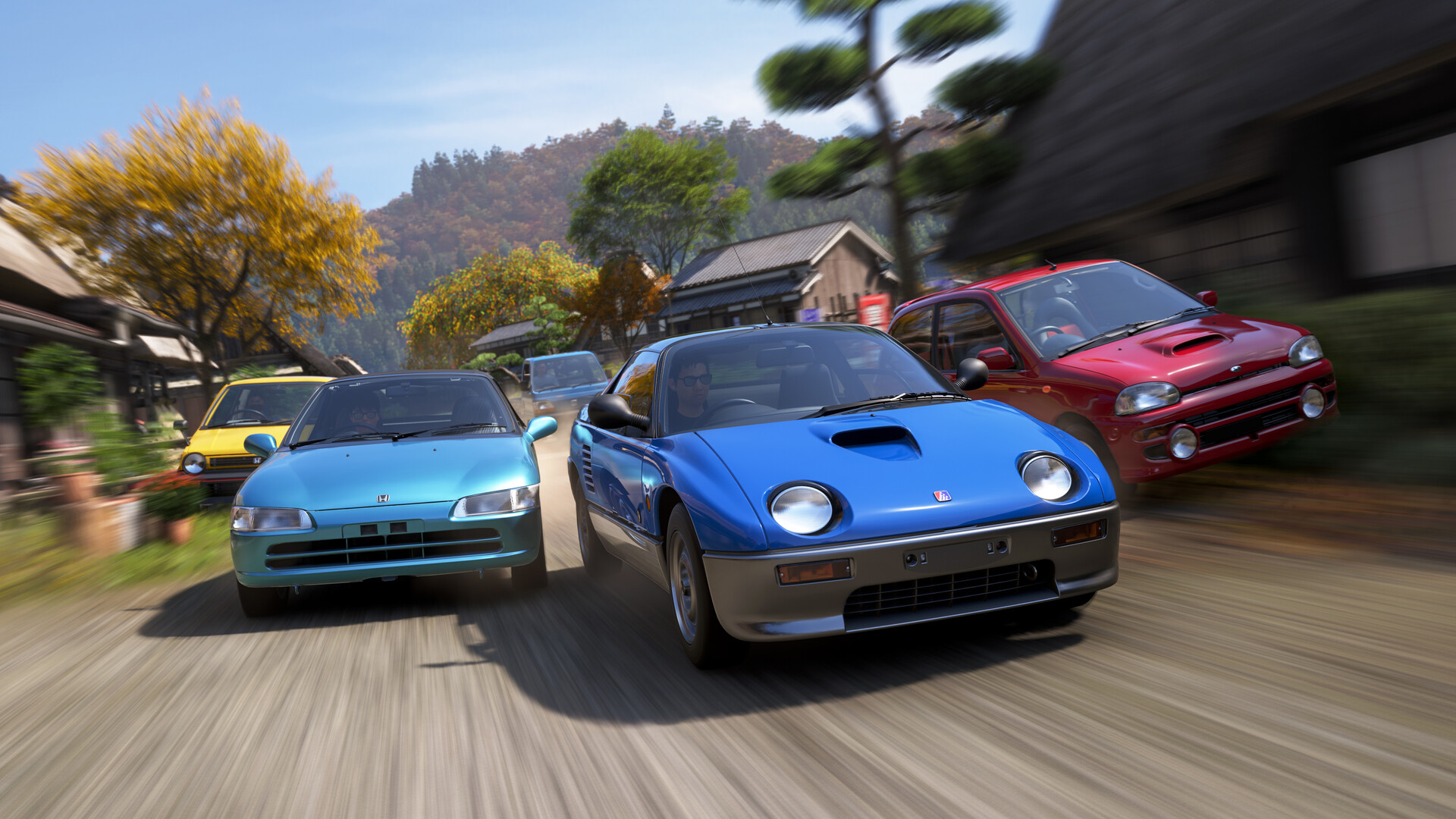
The launch car list sits at over 550 entries, with the studio committing to a regular Car Pass cadence to push it well past 700 over the first year. The mix leans more aggressively into Japanese domestic market cars than any previous Forza Horizon, which is the obvious move given the setting but is also the right one. Skyline GT-Rs across multiple generations, the entire RX-7 lineage, the NSX in both first-and-second-generation configurations, the Lancer Evolution and Impreza WRX rivalry across their full production runs, and a properly stocked AE86 stable mean that Initial D-aware players will spend their first ten hours just buying cars they have wanted to drive on a Japanese road since they first watched the anime.
Outside the JDM core, the list keeps the breadth the series is known for. European supercars are well-represented, with the Ferrari, Lamborghini, McLaren, and Pagani rosters substantially updated from Horizon 5. American muscle is present but not overrepresented — the Camaro, Mustang, and Challenger lines are all there, with the late-2025 Boss 302 Mustang as a notable late add. Hypercars are appropriately rare, gated behind achievement chains rather than wheelspins, which is a quietly important change for the kind of player who wants to feel like a car was earned rather than rolled.
The tuning system has been broadened. Suspension, transmission, drivetrain, and engine modifications all retain the depth that the series has had since Horizon 3, but the visual customization layer has been expanded with new body kit options, new wheel sets, and a redesigned livery editor that finally adds layered blend modes and a more powerful vector editing toolkit.
The wheelspin economy remains, and it is the part of the structural design that has aged worst. Playing the festival rewards you with super wheelspins that can drop a Bugatti Chiron or a stack of credits or a horn that says good morning in Japanese, and the randomization is fundamentally the same loop the franchise has run for three games. Playground Games has at least made the early-game credit curve substantially less stingy than Horizon 5 shipped with — players are not waiting twenty hours to afford their first proper supercar — but the wheelspin design itself feels like a relic the studio is reluctant to retire.
Festival progression, events, and the showcase moments
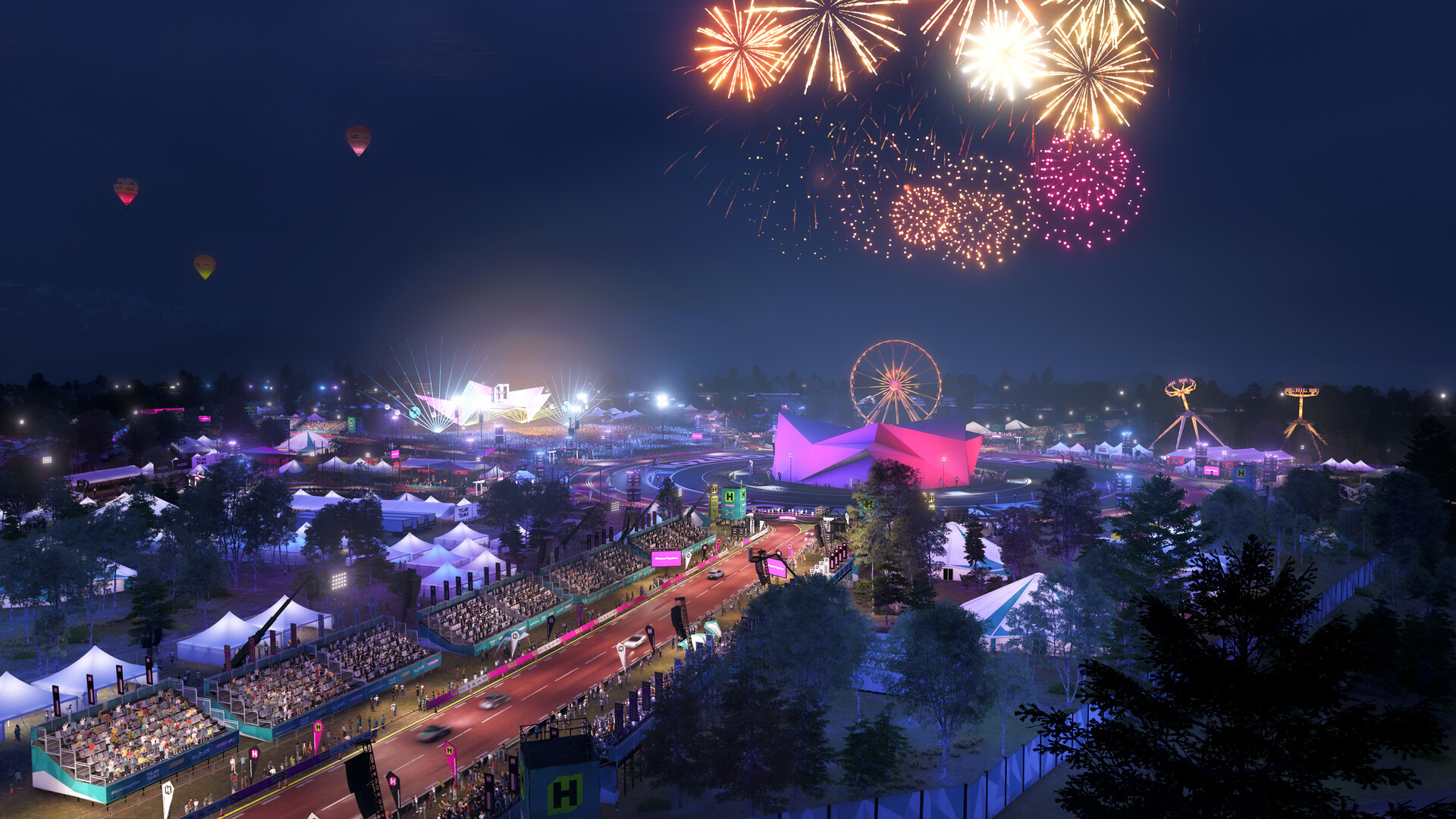
The Horizon Festival progression is the spine of the single-player experience, and Forza Horizon 6's version is the most thoughtfully paced the franchise has shipped. The four festival sites — Tokyo, the Coastal Outpost in the south, the Mountain Outpost near Fuji, and the Forest Outpost in central Japan — each anchor a regional event chain with its own theme, its own car culture identity, and its own showcase moments.
The showcase moments are the franchise's signature, and Forza Horizon 6 leans into them harder than any prior entry. Without spoiling the specifics, the launch build includes a showcase race against a Tokyo monorail train through the city's elevated arterials, a snow showcase chasing a freight train through a northern pass, a mountain showcase against a rally helicopter that escalates into the genuinely best driving sequence Playground Games has ever staged, and a cherry-blossom duel best left undescribed, because experiencing it cold is the entire point. The studio has been ambitious about staging these as set pieces with cinematic camerawork, and the technical work to make a 550-vehicle traffic simulation, a season change, and a scripted showcase encounter coexist without seams is the kind of engineering polish that elevates the launch.
Outside the showcases, the event categories are familiar — road races, dirt races, cross-country events, street races, drift zones, danger signs, speed traps, the trial — with one substantial new category called Touge Battles that pits the player against AI rivals in 1v1 head-to-head mountain pass duels with elimination consequences. Touge Battles are the best new event type the franchise has shipped since the Horizon Cup — tight, intimate, technically demanding, and culturally specific to Japan in a way that feels considered rather than tacked on.
The Horizon Story missions return with a much improved narrative framing this time. Each story chain is anchored by a real-world figure from Japanese car culture — some racing legends, some tuner shop owners, some manga creators, all loosely fictionalized but recognizable to anyone who has spent time in the JDM community. The stories themselves are still pretty thin, and the franchise still has the structural problem of trying to bolt narrative onto an open world racer that genuinely does not need one, but the cultural framing gives the stories more weight than the often-disposable Horizon 5 equivalents.
The story missions are still the weakest part of the package. They are not bad — they are simply small. You will not remember most of them an hour after finishing them. If Playground Games ever decides to genuinely commit to narrative in this franchise, Japan is the setting that could support it. They have not committed to it yet.
Online: Horizon Open, Convoy, EventLab 3.0, and the PvP situation
The online layer is where Forza Horizon 6 makes its most concrete improvements over Horizon 5, and also where it makes its most frustrating compromise. The good news first. Horizon Open, the franchise's drop-in multiplayer, has been redesigned to feel less arbitrary and more rewarding. The matchmaking now factors in performance index, car class, and approximate skill ranking, which means you are no longer being instantly bullied by a Bugatti Chiron full-tune driver in your starter car. Convoys — the franchise's persistent multiplayer party system — now support cross-platform play out of the box on PC and Xbox Series X|S, with PlayStation 5 cross-play arriving alongside the PS5 launch later in the year.
EventLab 3.0 is the most player-facing creation toolkit the franchise has ever shipped. The system has been redesigned to support more complex scripting, a deeper trigger and action library, persistent property objects, and most importantly, a substantially better discovery layer for community-created events.
The compromise is the PvP situation on Steam. Playground Games has not enabled full PvP cross-platform play on Steam at launch — Steam players can participate in Horizon Open, can join Convoys with PC and Xbox players, but cannot enter ranked PvP playlists until a future update the studio has only vaguely committed to. The official explanation involves anti-cheat infrastructure not yet being validated on Steam's environment, which is a real concern, but it is also the kind of platform compromise that will frustrate Steam-first players who specifically waited for the Steam release.
Visuals and performance: PC, Xbox Series X, and the Steam Deck story
Forza Horizon 6 is one of the most technically accomplished launches of the generation. On Xbox Series X, the game ships with a 4K 30 fps Quality mode and a dynamic-resolution 60 fps Performance mode, and the Performance mode is rock-solid. Series S targets 1080p 30 in Quality and 60 in Performance with reduced shadow and crowd density, and it holds up cleanly.
On PC, the launch supports DLSS 4 with frame generation, FSR 4, XeSS, and a thorough graphics settings menu with the kind of granular control PC players have been asking for. The optimization work shows — this is not a port that needed a month of patches to land at acceptable performance.
Steam Deck deserves a dedicated note. Forza Horizon 6 is Steam Deck Verified at launch, the first mainline Forza Horizon to launch with that status. For handheld racing, it is the best Forza Horizon experience that has ever existed on a portable.
Loading times are negligible across the board. The streaming system that lets the open world stay coherent across season transitions and weather changes is rock-solid.
Audio and soundtrack
The soundtrack is, characteristically for Forza Horizon, one of the strongest game soundtracks of the year. The studio has worked to broaden the playlist beyond the Horizon-EDM-and-rock template the franchise has leaned on, and the Japanese setting gives them room to include genuine Japanese artists alongside the international roster. City pop, Japanese hip-hop, J-rock, and modern Tokyo electronic music sit alongside the Horizon Pulse and Bass Arena radio stations the franchise's existing audience expects. The radio host commentary — long a contested element of the series — has been substantially tightened, with shorter, less intrusive between-song breaks.
Engine and tire audio is excellent. Playground Games has been refining its audio capture pipeline for years, and Forza Horizon 6 ships with the most detailed engine sample library in the series. Each car has multiple capture sources — intake, exhaust, transmission whine, turbo spool — mixed in real time based on RPM, load, and atmospheric conditions. Driving a tuned 2JZ-swapped Supra through a rainy Tokyo arterial with the radio off is one of the more meditative experiences in the medium right now.
Spatial audio support is best-in-class. The Dolby Atmos implementation on Series X and the equivalent positional audio on PC genuinely improve gameplay — opponent positioning in Horizon Open races can be tracked audibly, weather direction is communicated through ambient sound, and the city's audio landscape gives Tokyo's neighborhoods distinct sonic identities.
Live-service rhythm and the year-one roadmap
Forza Horizon 6 is shipping as a live-service open world with a roadmap that runs through at least mid-2027. The festival season system is back, with weekly content drops that include new events, time-limited series, festival playlist challenges, and seasonal reward cars. The studio has committed to two Premium Expansions in the launch year — one confirmed in trailers and one teased — with the expectation that the first will land roughly six months into the lifecycle and the second in the year-two window.
The Premium Edition pricing is the hardest part of the launch to call. The $120 Premium Edition gives buyers four-day early access starting May 15, VIP membership, the Welcome Pack, the Time Attack Car Pack, the Car Pass with 30 cars delivered weekly through year one, the Italian Passion Car Pack, and access to both confirmed Premium Expansions as they release. For players who plan to spend the next two years inside the game, the math works. For everyone else, the $60 Standard Edition is the right buy, and it lands on Game Pass on May 19.
The Car Pass delivery model is unchanged from previous Horizon launches — one car a week through the first 30 weeks. The car selection for year one leans hard into Japanese performance heritage with confirmed entries including the Lexus LFA, the Mazda Cosmo Sport, the Nissan R34 Skyline GT-R V-Spec II, and several vintage Honda S-series convertibles. The Italian Passion Car Pack covers six high-end Italian performance cars with weekly delivery during the early festival.
The micro-transaction layer remains exactly what the franchise has shipped for the past three games. The economy is generous enough that players who do not buy anything beyond the base game will have full access to the festival, all event types, and a substantial portion of the car list within their first twenty hours. The Premium Edition and Car Pass are conveniences, not gates.
What is holding it back from a 100
The case for a 100 is real. Japan is the best Forza Horizon map ever produced. The driving feel is the most credible the franchise has shipped. The car list, the customization, and the EventLab toolkit are at series highs. The visual and performance profile across platforms is among the strongest of the generation, and the audio and soundtrack work is exceptional.
The case against the 100 is what holds us at 95. The Horizon festival framing — the wheelspin economy, the showcase cadence, the seasonal-content treadmill — is starting to feel formulaic across four sequels. The story missions remain the weakest part of the package and have not meaningfully evolved since Horizon 4. The Premium Edition pricing is steep enough to be a real cost-of-entry concern for the most committed audience. The Steam PvP gating is a meaningful compromise that the Steam release should not have shipped with. And there are small frustrations — late-night Tokyo traffic AI occasionally over-reacting, the wheelspin reward economy still feeling random in a way that has aged poorly, the Horizon Story missions feeling like a checklist — that collectively keep the game from being a perfect launch.
None of those are fatal. None of them undo the work Playground Games has done in Japan. But they are the small, real edges that separate a 95 from a 100 for us.
Accessibility, settings, and quality-of-life
Forza Horizon 6 is the most accessible game the franchise has ever shipped, and the work is meaningful enough to call out separately. The driving assists ladder is broader than Horizon 5's — players can dial in everything from a fully arcade configuration with auto-braking, racing line, traction control, and stability assists all active, down to a simulation-leaning setup with rewind disabled and every assist off. Each assist toggle now displays a credits multiplier in real time so players can see exactly what every adjustment costs or earns, which is the kind of clarity the franchise has needed for years.
Beyond difficulty, the accessibility menu has been substantially expanded. Configurable subtitle sizing, colorblind palette options across three modes, full button remapping on controller, photosensitivity warnings before showcase events, and a low-flash visual mode that softens neon and lightning effects in Tokyo all ship at launch. The studio also added a quieter audio mix preset that compresses the dynamic range for players who prefer headphones in less-than-ideal listening environments. None of this is revolutionary, but the consistency of the work signals that accessibility has finally moved from a checklist item to a real design pillar at Playground Games.
Quality-of-life touches throughout the festival are equally welcome. Auction House queries are now persistent across sessions, so a saved search will continue to alert you to new listings. The garage filter system has been redesigned with stronger sorting and tagging, including custom tag support for players who want to organize their collections by car culture, by era, or by build philosophy. Photo Mode has been extended with depth-of-field controls, motion blur sliders, and a free-camera mode that finally lets photographers capture cars at the angles the franchise has been gesturing at since Horizon 4.
The Forzavista mode, the franchise's car-inspection feature, has been substantially expanded for Japan. Each car now has a deeper bio with cultural context, racing history, and developer notes, plus a redesigned audio playback option that lets you listen to engine notes at different RPM ranges before buying. For the kind of player who buys cars for their history rather than their performance index, the new Forzavista is a quietly excellent addition.
How Forza Horizon 6 compares to Forza Horizon 5
The comparison to Horizon 5 is the obvious one for any returning player, and the honest answer is that Forza Horizon 6 improves on its predecessor in every meaningful dimension. Mexico was a beautiful map with a real pacing problem — the regions outside the central festival hub felt thinly populated, and many of the event types repeated themselves with minimal variation. Japan addresses both criticisms directly. The map is denser, the regional identity is stronger, and the event categories — particularly Touge Battles and the redesigned Horizon Story missions — feel more deliberate.
The driving feel is the biggest single improvement. Horizon 5 shipped with a physics model that could fairly be described as Horizon 4 with minor refinements; Forza Horizon 6 actually reworks the underlying suspension and grip-loss behavior in ways that long-time players will feel within the first ten minutes. Cars communicate their behavior more credibly, surface transitions matter more, and the gap between a tuned car and a stock one is more readable through the controller than it has ever been.
Visual fidelity is also a generational leap. Horizon 5 looked excellent at launch, and the gap to Forza Horizon 6 is the biggest visual jump the franchise has produced between sequels since Horizon 3 to Horizon 4. The lighting model in particular has been overhauled, with real-time global illumination, vastly improved volumetric weather effects, and a substantially more nuanced material rendering pipeline for the cars themselves. Tokyo at night with full Atmos audio is the franchise's new technical demo, and it earns the comparison to the most visually impressive open worlds of the generation.
The online layer has been broadened. Horizon 5 launched with a Horizon Open implementation that worked but felt cobbled together — matchmaking was inconsistent, party persistence was limited, and EventLab 2.0 was a frustrating creation toolkit hampered by performance and discovery problems. Forza Horizon 6's online layer is a deliberate redesign rather than an iteration. Cross-platform Convoys, ranked PvP playlists with skill-aware matchmaking, and EventLab 3.0's expanded scripting toolkit all represent the work Horizon 5 never quite got to.
The one area where Horizon 5 still has an edge is its post-launch DLC. The Hot Wheels and Rally Adventure expansions ended up being among the franchise's most beloved DLC packs, and Forza Horizon 6's first Premium Expansion is still six months away. Returning players who loved those expansions will need to wait to see what Playground Games has planned for Japan's expansion content, and the studio has been deliberately vague about the specifics so far.
Who is this game actually for in 2026?
Forza Horizon 6 is a near-universal recommendation, but it is worth being precise about which audiences will get the most out of the launch. For franchise veterans, this is the most ambitious sequel the series has produced, and the answer is unambiguous — play it. For lapsed players who bounced off Horizon 5 or 4, the density, pacing, and physics rework are doing exactly the work that was missing from those launches; this is the entry point back in.
For genre-curious players who have never touched a Horizon game, the May 19 Game Pass launch is the easiest way the franchise has ever offered. The onboarding has been refined, the early-game credit curve is more generous, the difficulty scaling for new players is well-tuned, and the open world is dense enough that there is always a meaningful event or showcase moment within driving distance. The accessibility work makes the game approachable for players who would have bounced off a more demanding simulation racer.
For car enthusiasts and Japanese performance car culture fans specifically, Forza Horizon 6 is the most respectful and best-researched depiction the medium has produced. The cultural touchpoints — the touge mountain pass tradition, the wangan highway scene, the late-night Daikoku PA meet culture, the regional Mazda Cosmo and Toyota 2000GT museum stops — are not just window dressing. The studio worked with cultural consultants throughout development, and the result is a setting that feels considered rather than themed. Players who came to car culture through Initial D, Wangan Midnight, or the broader JDM scene will find more love letters than they expect.
For competitive racers and serious online players, the launch is strong but incomplete on Steam. The ranked PvP gap is real and frustrating, and there is no committed timeline yet for when Steam players will get equivalent access. Xbox and Microsoft Store PC players have full ranked play from day one, and the matchmaking quality has been substantially improved over Horizon 5. If competitive online is your primary reason for playing, the Xbox or Microsoft Store version is the safer pick for the moment.
For wheel and sim-racing-adjacent players, the implementation is the best the franchise has shipped but still distinctly arcade. If you want a wheel-led experience that actually communicates surface texture and grip loss, Forza Horizon 6 is a real step up from Horizon 5 and a credible recommendation. If you want a wheel-led experience that approaches simulation depth, you are still better served by Gran Turismo 7 or one of the dedicated simulation platforms.
For players who care about the social and community side of open world racing, EventLab 3.0 is the headline feature. The toolkit is deep enough to support genuinely creative community work, and the discovery layer has been substantially improved. If your favorite part of Horizon has historically been the community paint shops, livery editor, and EventLab creators, this launch is going to consume a meaningful portion of your year.
Final notes on the launch-window experience
The post-launch plan matters. Playground Games has confirmed weekly festival series content from day one, with the first major content drop — called the Spring Touge Series — arriving on May 22. The Car Pass deliveries start the same week. The first community EventLab features will be highlighted by the studio in a curated Hot This Week section starting in late May. The live-service rhythm is locked in, and the early roadmap is the kind of post-launch commitment that reassures players this is not going to be a sequel that gets quietly de-emphasized in favor of a Horizon 7 announcement.
Verdict
Forza Horizon 6 is one of the easiest game recommendations of 2026 and one of the most accomplished arcade open world racers of the generation. Japan delivers the contrast, density, and cultural specificity the franchise has needed for years. The driving feel rewards engagement rather than just spectacle. The car list, the customization, the EventLab toolkit, and the visual and performance work all sit at series highs. The launch-window roadmap respects long-term players, and the cross-platform launch on PC Game Pass, Microsoft Store, and Steam broadens the audience entry points without compromising the experience.
If you have been a Forza Horizon player since the franchise's Australia entry, this is the sequel you have been waiting for. If you have never touched a Horizon game before, this is the easiest place to start. If you are a returning lapsed player who bounced off Mexico's pacing, Japan's density is going to bring you back. The Premium Edition is for the players who plan to live in this game for two years. For everyone else, the May 19 Game Pass day-one release is the right path in.
A 95 is a real number. Playground Games has built one of the very best games of the generation. Our 95 is enthusiastic, but Forza Horizon 6 is not without its edges. It is the rare sequel that earns every word of the hype and still leaves the studio with somewhere to go in Forza Horizon 7. That is, on its own, a remarkable achievement.
