Luna Abyss took a long time to surface. Bonsai Collective announced the first-person bullet-hell shooter back in 2021, ran it through the UK Games Fund development cycle, kept the studio remote-first through a five-year build, and watched the genre around it explode in different directions while they quietly soldered together their own answer to what a movement-first FPS could look like when the bullet patterns came from a Cave and Treasure school rather than a Halo school. The full game launched on May 21, 2026 for PC, PlayStation 5, Xbox Series X|S, and Xbox Game Pass at the same time, with Kwalee handling publishing. Five years of build. One calendar day on every platform. The wait is over.
The pitch is straightforward in a way that the actual experience absolutely is not. You are Fawkes, a prisoner sentenced to ten thousand years inside the Abyss - a derelict structure deep beneath the lunar surface, threaded through with industrial geometry and rotting cosmic-horror infrastructure that does not want you here and does not want you to leave. You have a gun. You have legs. You have the ability to grapple, to swing, to summon temporary platforms in mid-air, to commandeer mecha-suits when the encounter demands more firepower than your body can carry. The Abyss has a thousand things that want you dead. The thousand things have bullet patterns. You learn the patterns. You move.
That sentence - you learn the patterns, you move - is doing more work than it looks like. Luna Abyss is not a cover shooter. It is not a tactical shooter. It is not even quite an arena shooter in the Doom Eternal sense, where the geometry of the room is the tool. Luna Abyss is a bullet-hell game first and a shooter second, where the rooms are designed around the patterns the enemies are going to throw at you, where the platforming is designed to break the patterns, and where every fight is a question of whether you can read the screen fast enough to dodge through the right gap at the right moment while putting your own rounds back into the source. The first hour is overwhelming. The fifth hour is balletic. The eighth hour, when the credits start rolling, is when you realize Bonsai Collective have built something tighter and more deliberate than the indie-FPS pitch usually delivers.
What Luna Abyss is asking for is patience and trust. The opening sequence does not show its full hand. The combat layer takes an hour to open up. The movement layer takes two. The narrative does not announce itself with a 20-minute cinematic - it leaks out across audiologs, fragmentary radio chatter, and the rare cinematic that ends before you expected it to. None of that is a flaw. It is the design philosophy. Bonsai have made a game where every system rewards a player who pays attention, and the back half of the runtime is the payoff for the first half's slower reveal. The question this review is going to answer is whether that payoff lands. It does.
The Abyss is the best level Bonsai had to draw
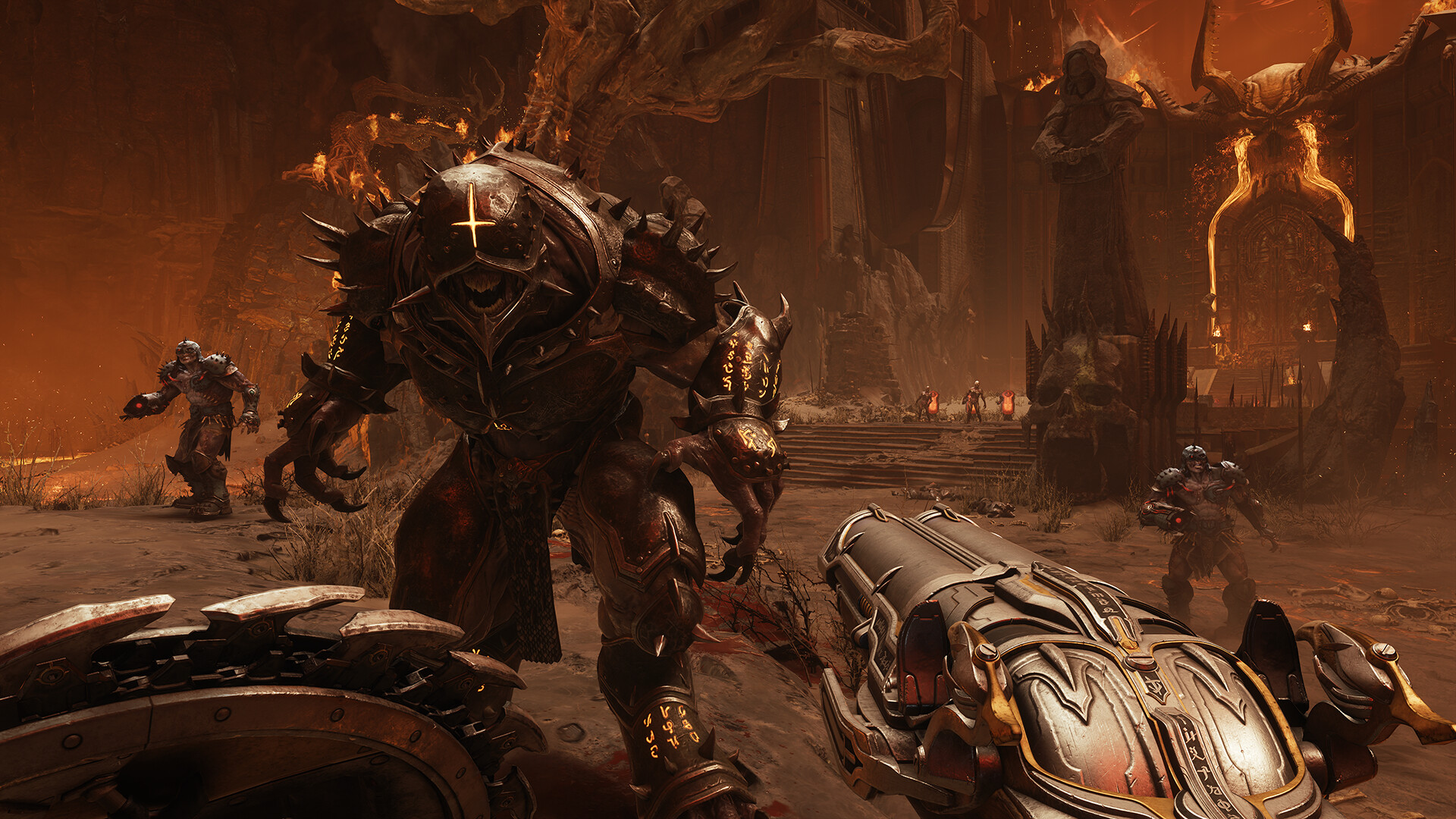
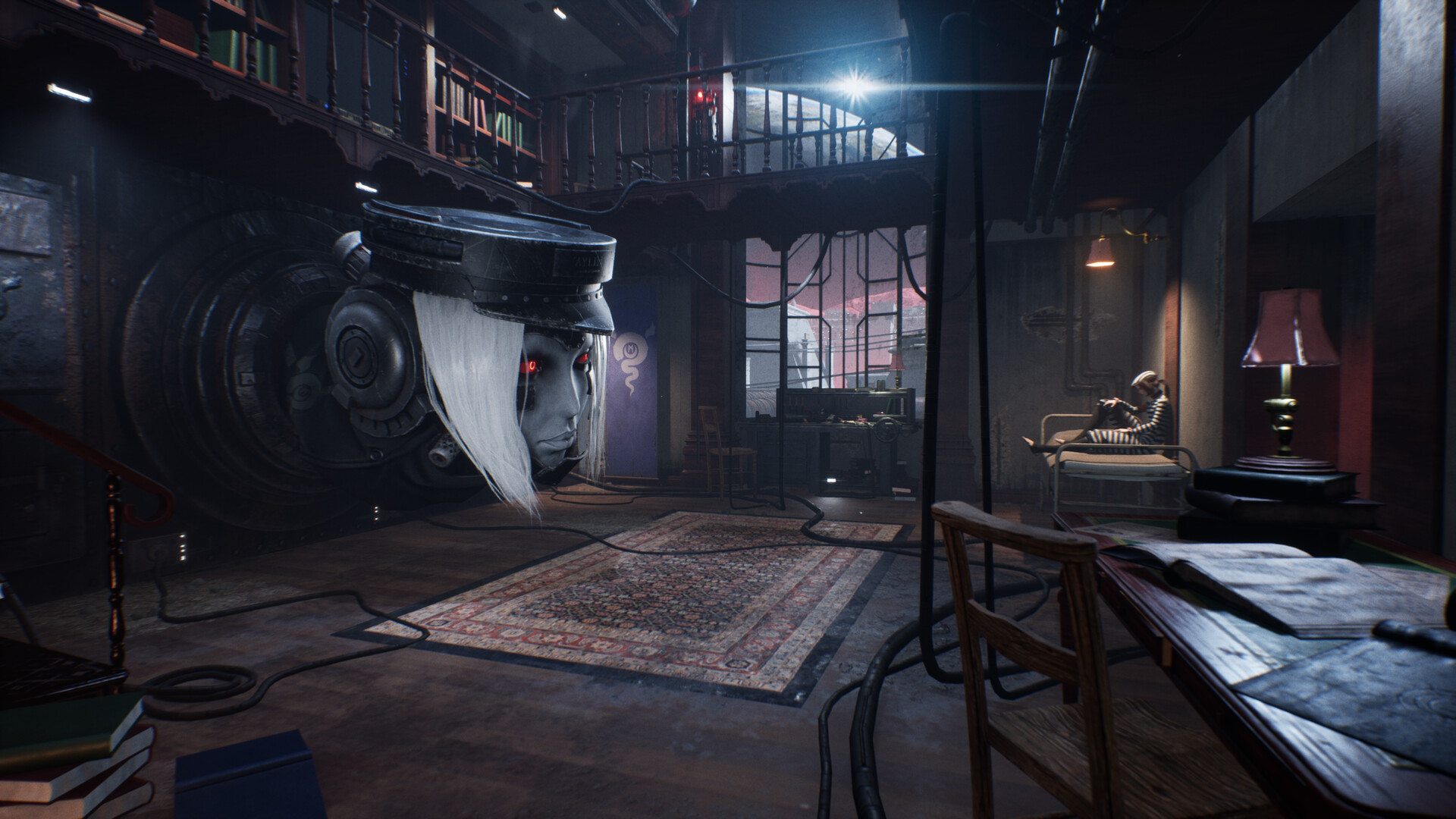
The setting is the first thing that lands. Luna's surface gets about three minutes of screen time before Fawkes is dropped into the Abyss and the game settles into the world it actually wants to live in - a deep-vertical labyrinth of metal walkways, industrial maintenance shafts, ceremonial halls that feel half-cathedral and half-mining facility, and stretches of brutalist architecture that would not be out of place in a Yoko Taro mood board. The art direction is the highest-confidence thing in the game. The colour palette is dominated by deep cyans, oppressive blacks, and bursts of fuchsia and amber that exist almost entirely to telegraph incoming bullet patterns against the surrounding architecture. Nothing in the visual language is incidental. Every glow, every accent, every pulse of colour means something specific in the combat grammar Bonsai are teaching you.
It is, in every sense, a constructed environment. There are no procedurally generated rooms in Luna Abyss. Every encounter happens in a hand-built space that has been authored around the patterns the encounter is going to throw at you, with cover positions that mean something, with grapple anchors placed exactly where the designer wants you to swing from, with mid-fight platforming routes that exist because the bullet patterns from one specific enemy require you to vault over one specific railing at one specific moment to survive. The level design is one of the strongest things in the game and one of the easiest to undersell. It does not feel showy. It feels purposeful.
The Abyss is also where the cosmic-horror tone gets to breathe. Bonsai's worldbuilding leans heavy on Brutalist sci-fi imagery shot through with religious-industrial mysticism - Bioshock fans will recognize the texture, Nier Automata fans will recognize the philosophy, Control fans will recognize the geometry. There are giant ceremonial doors that take a full minute to open. There are murals you can stop and read. There are scattered audiologs that fill in the slow drip of backstory. There is an antagonist - The Eye - whose presence is mostly architectural and atmospheric for most of the runtime, with direct contact reserved for a handful of pivotal moments. The story is told environmentally, the cinematics are tightened to under three minutes whenever they appear, and the script's heavy lifting is done by lore breadcrumbs and brief encounters with characters who all sound like they have somewhere else to be.
What the level design accomplishes that the writing is then free to support is a sense of place. The Abyss is not a series of corridors. The Abyss is a structure with internal logic. You descend through it. You learn its districts. You start to recognize architectural styles from earlier zones when they reappear three biomes later under different lighting. It is the kind of worldbuilding that does not announce itself, and the kind of worldbuilding that the back half of the game then exploits when the geography becomes the puzzle.

Movement is the entire game
The movement kit is where Luna Abyss decides what kind of shooter it wants to be. Fawkes can sprint, slide, double-jump, dash in eight directions on the ground or in mid-air, grapple to anchor points in the environment, summon temporary platforms beneath her feet for additional vertical play, and possess specific mecha-class enemies for short windows of heavy-armor combat. The platforming and the combat are not separated. Most of the game's encounters require you to be using all of those verbs simultaneously - dashing to break a bullet pattern, grappling to relocate to a flanking position, summoning a platform to reach a vertical sight line, then unloading the right weapon at the right window of opportunity, then resetting.
It is fast. The decision space inside a single encounter is enormous, and the encounter timers in the late game are short enough that you cannot afford to think about your inputs - you have to feel them. Bonsai have tuned the movement to be readable from the first hour, but the skill ceiling is genuinely high. The same arena that takes ninety seconds to clear on a first attempt can be cleared in under twenty seconds by an experienced player using grapple chains and dash cancels to never touch the ground. The game does not gate progression behind that kind of mastery. The reward for mastering it is that the game starts to feel like flying.
The closest comparison, mechanically, is Returnal. Both games put protagonists - Fawkes here, Selene there - inside dense bullet patterns and ask the player to read, dodge, and counterattack on the same input cycle. Luna Abyss leans further into the platforming layer than Returnal did, and it has a much more aggressive vertical play space, but the moment-to-moment rhythm - read, dodge, fire, reposition - is the same beat. The other comparison everyone is going to make is Doom Eternal, and that one is less accurate. Doom Eternal is a resource-management arena game where the room is a tool kit. Luna Abyss is a pattern-recognition flow game where the room is a stage. They sit closer than you would think but they are doing different things.
The mecha possession deserves a paragraph of its own. Fawkes' kit includes a tether ability that lets her commandeer specific suit-enemies in the world - typically the largest, slowest, most heavily armoured opponents in any given encounter. Once tethered, the mecha becomes a temporary armoured exoskeleton with a different weapon set and a different movement profile (heavier, slower, but with bullet-absorbing plating that lets you walk into patterns you would normally have to dodge). The system is not optional in the late game. Several late encounters are tuned around the assumption that Fawkes will commandeer a specific mecha at a specific moment to break a specific phase of the fight. It is the most distinctive verb in the movement kit, and it is the one that takes the longest to feel intuitive.
The bullet hell is what you came here for
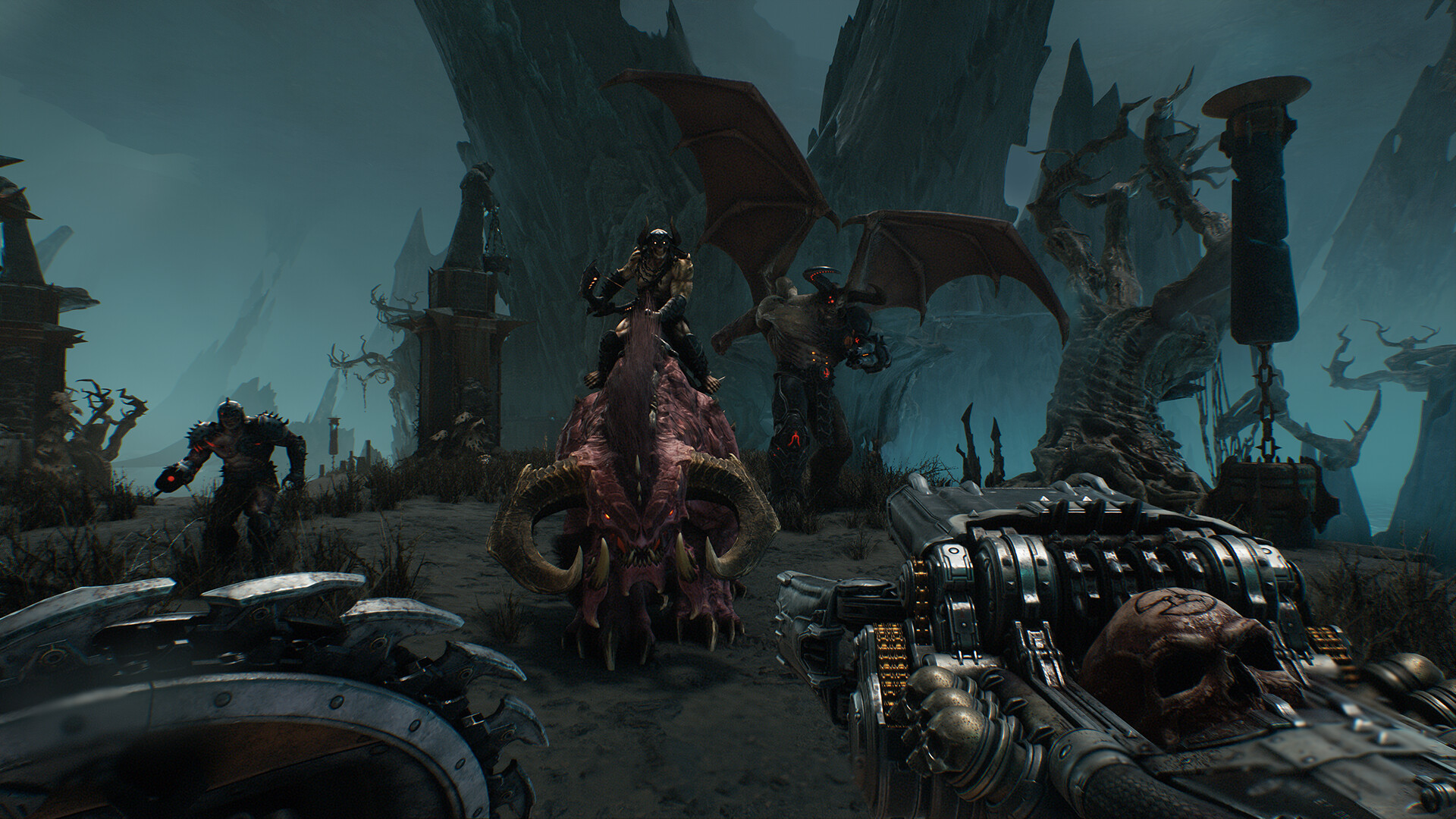
The bullet patterns are the soul of the game. Every enemy has a kit. Every kit is built around a small library of bullet patterns - the wide cone, the sweeping arc, the spiraling cluster, the homing burst - and the patterns are designed to interact with each other in groups. A single Sentinel firing a sweep is trivial. A Sentinel and a Caster firing a sweep and a homing cluster at the same time means you have to dash through the gap in the sweep while staying inside the line where the homing cluster will not connect, which means you have to plan two seconds ahead while putting your own shots back into the Caster because the Caster is the higher-priority threat. That equation runs in your head, constantly, for most of the runtime.
What Luna Abyss does that the more famous bullet-hell games do not is anchor the patterns to a first-person camera. You do not see the patterns from above. You see them coming at you, which means you have to read them with depth - which projectiles are at your level, which are passing over your head, which are arcing down from above. The depth reading is its own learned skill. It is what makes the first hour feel impossible and the fifth hour feel intuitive. By the time the game's late-act encounters start layering three and four pattern types simultaneously, you have built up enough of a vocabulary to triage threats by silhouette rather than by trajectory - which projectiles are slow homing missiles you can outrun, which are fast straight shots you can sidestep, which are the slow heavy rounds you absolutely cannot let touch you under any circumstances.
The enemy roster is the place where the game is most open to criticism. There are about a dozen distinct enemy archetypes across the campaign, and the variety thins out in the back half. Bonsai introduce new patterns and new combinations through the runtime, but the actual silhouettes of the enemies stop feeling new about two thirds of the way in. Luna Abyss could have used another four to six enemy archetypes spread across the campaign, and that is a fair note. The patterns stay interesting. The pattern delivery vehicles get repetitive.
The difficulty curve is steep but fair, and Bonsai have built a meaningful set of accessibility options into the launch build. There is a difficulty slider with four tiers, each adjusting damage taken, damage dealt, and pattern density independently. There is a separate aim-assist option for controller players that operates as a sticky-target adjustment rather than full auto-aim. There is a colour-blindness toggle that re-tints incoming projectiles into high-contrast palettes specifically tuned for protanopia, deuteranopia, and tritanopia. There is a no-fail mode for players who want to experience the story without the combat pressure. None of these gate the main runtime's structure. All of them work cleanly. It is one of the most considered accessibility passes in a 2026 indie launch, and it deserves the credit.
Weapons that earn their place
Fawkes carries four weapons at once - a primary, a secondary, a heavy, and a special - and the loadout is the place where the game's strategic depth opens up. Each weapon has a defined role. The primary is a high-rate, low-damage rapid-fire built for sustained pressure. The secondary is the precision option, a charge-shot rifle that one-taps lighter enemies if you land the head. The heavy is the area-clear weapon, switching between a shotgun-class spread and a missile-class lock-on depending on the variant Bonsai has slotted into your loadout. The special is the mecha tether - the weapon you use to commandeer suit enemies and turn their kit against the rest of the room.
The weapon-switching is not optional. The game's encounter design assumes you are cycling through all four during a single fight, with most encounters tuned so that no single weapon will get you through cleanly. The shotgun deals with the close-range threats while you charge the rifle to one-shot the priority target while you reload the primary for the swarm in the back of the arena. It is a beat-driven loop, and Bonsai have been deliberate about pacing it so that the player is making a meaningful loadout decision every five to ten seconds. The weapon-switch animation is fast, the wheel-style HUD is clean, and the muscle memory is intuitive enough that by hour three you are switching without thinking about it.
What it does not have is a deep upgrade tree. The weapons feel good out of the gate, and Bonsai have chosen to keep the weapon-upgrade layer light - a small number of modifiers per weapon, gated behind exploration rather than purchase, with no separate weapon-tier progression beyond the modifiers themselves. That is the loop the game has chosen, and whether it is the right call depends entirely on what you came for. Players coming from looter-shooter loops will find it thin. Players coming from arcade FPS roots will find it focused. The honest read is that it works for the runtime Luna Abyss has - eight hours of campaign does not need ten hours of weapon menus - but a longer game would have needed a deeper bench.

Bosses do the heavy lifting
The bosses are the moments where Luna Abyss is at its absolute best. There are six major encounters across the campaign, plus a handful of mid-tier fights that operate like extended elite encounters, and every single major boss is a multi-phase setpiece designed around a specific bullet-pattern language that the rest of the campaign does not use. There is an early boss whose patterns are built around a vertical column that you can only beat by mastering the grapple-to-air-dash chain. There is a mid-game boss whose patterns are built around forced cover use - the arena collapses around you and you have to lean on level geometry in a way the rest of the game does not ask you to. There is a final-act boss that does something with the camera that is best left unspoiled.
The pacing of the boss fights is where Luna Abyss reminds you the genre has good designers in it. Each fight is structured as a wave - read the pattern, learn the tells, survive the first phase, find the moment of vulnerability, push damage, survive the escalation, repeat. Phase transitions raise the stakes without making the previous patterns obsolete; you do not reset your knowledge each phase, you stack it. The damage windows are short and meaningful. The death penalties are tight - reset to the start of the phase, not the start of the fight, with a brief moment of breathing room before the patterns restart.
The third major boss is the standout. Without going into spoilers, it is a fight that asks the player to use almost every verb in the movement kit - grapple, dash, platform-summon, mecha tether, weapon-switch - across a single extended encounter, with each phase introducing a new variable that recontextualizes everything you have learned to that point. The skill expression gap between a first attempt and a clean run is enormous, and it is one of the cleanest demonstrations of what Luna Abyss is actually trying to be that the campaign has to offer.
The bosses are what you are going to remember about this game in three months. They are the moments where the design philosophy - read the patterns, move with intent, switch weapons on a beat, reset under pressure - all click together into something that feels distinct from anything else in the first-person shooter space right now.
Fawkes and the writing around her
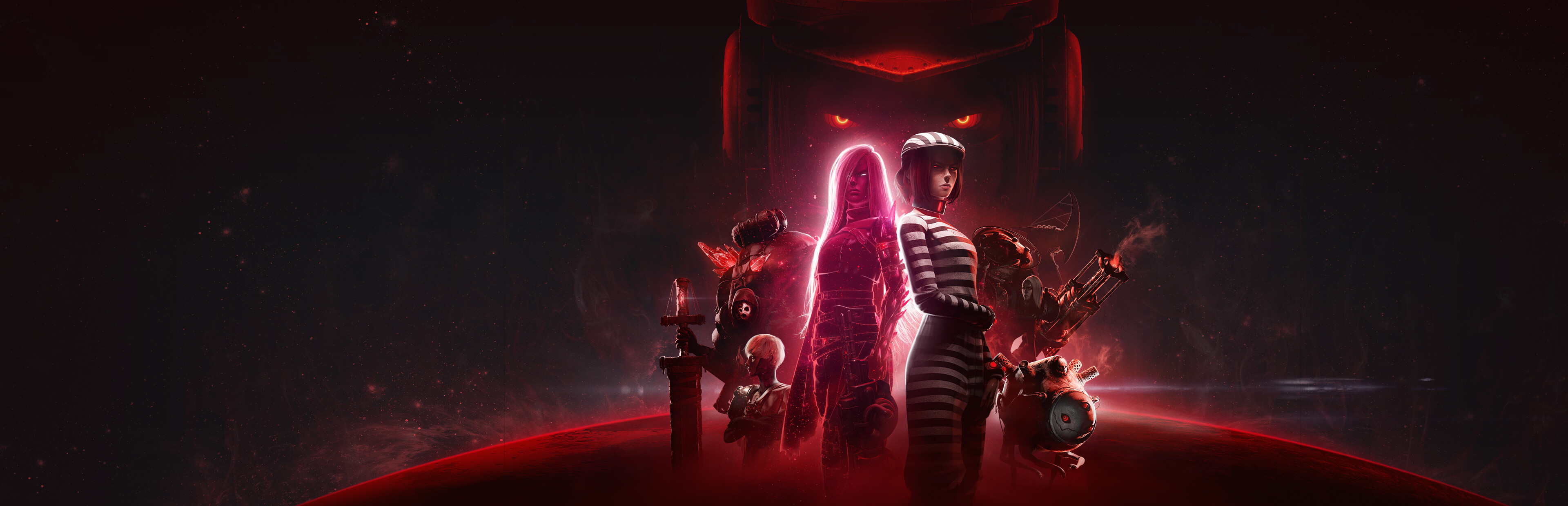
The story is the part of the game that is easiest to underestimate. Fawkes is sentenced to ten thousand years for a crime that the game does not show you on screen, and her arc through the Abyss is less about clearing her name and more about figuring out what she actually is to the structure that has captured her. The Eye, the antagonist, is the conscious entity of the Abyss itself, and the relationship between Fawkes and The Eye is the part of the writing that does the most heavy lifting. It is framed as adversarial. It plays as something stranger and more intimate.
The voice cast is genuinely strong. Fawkes is performed with a tight, dry delivery that feels closer to film noir than to game-protagonist line reads, and the supporting cast - the handful of fragmented voices that Fawkes encounters across her descent - all deliver the kind of strange, poetic line readings that count among the game's strongest features. The dialogue is sparse. The dialogue is unhurried. The dialogue does the job that a 30-hour open world would do in two hundred audiologs and a journal, and it does it in eight hours with a small cast and a much smaller word count.
What the narrative does not do is hold your hand. The lore is fragmentary by design. The plot resolves more in mood and image than in plot beats, and players coming in expecting a clean three-act through-line are going to be frustrated by how much of the game lives inside its own unresolved silences. I respected the choice. Your mileage will vary, and if the back half reads as drifty to you, that is not a misreading - it is just measuring the game against a different yardstick than Bonsai were aiming for. Luna Abyss is closer to Sapiens than to a story-rich AAA campaign in the way it expects you to do half the work of inferring what is happening, and the players who lean into that inferring will get a lot more out of the back half than the players who do not.
The score and the silence
The audio design deserves a paragraph of its own. The original score, composed by Maxime Goulet and a small ensemble, is built on industrial drones, dissonant string clusters, and percussive bursts that snap into rhythm exactly when the encounters demand it. The mix is tight. The sound design - the cracking of bullet impacts, the air-rip of dashed dodges, the metallic shudder of grapple anchors - sells the physicality of the movement in a way the visuals cannot do alone. You play this game with headphones on. Anything less is wasting Bonsai's work.
The dynamic music layer is built around the encounter pacing. Quiet exploration sections sit on a low ambient bed. Combat layers in percussion and synth leads as the difficulty escalates within a fight. Boss fights have dedicated themes that loop tighter as each phase escalates. It is an entire sonic language that maps directly onto what the player is being asked to do on screen, and it is one of the game's real strengths.
Performance, Steam Deck, and the technical layer
Luna Abyss runs on Unreal Engine and lands clean on PC. The PC build supports DLSS and FSR and offers full ultrawide support out of the box.
Steam Deck Verified is the headline. Bonsai pushed the game through Valve's certification path ahead of launch and confirmed the full controller layout, readable HUD at the Deck's native resolution, and stable framerates at the Deck's profile. This is one of the few launch FPS games of 2026 that genuinely runs on the Deck without compromise, and that is worth flagging on its own.
Game Pass is the other technical note. Luna Abyss launched directly into Microsoft's subscription service on day one across Xbox consoles, PC Game Pass, and Cloud, which makes it one of the easier just-try-it recommendations of the launch wave.
The length conversation
Luna Abyss is six to eight hours long depending on how much you explore. The campaign is tight. The pacing is deliberate. The encounter count is restrained. There is no padding, no fetch quests, no optional grind, no side content beyond a small number of collectible audiologs and lore murals that genuinely add to the story rather than artificially extending the runtime. There is a New Game Plus mode that opens after the credits and a small set of post-credit challenge encounters that reward replays, but the core experience is the campaign, and the campaign is short.
That length is going to be the divisive variable. For players coming off a 70-hour open-world FPS, eight hours is going to feel light. For players who appreciate a tightly authored arcade FPS experience with no filler, eight hours is exactly the runtime the game needed. I am in the second camp. The pacing across those eight hours is precise enough that I cannot imagine the game stretched longer without compromise. But the $29.99 price tag is going to feel different to different players, and Bonsai are going to take some hits on the value-per-hour conversation.
Discovery and the Game Pass factor
Luna Abyss is an indie-published FPS from a small, remote studio, and the honest commercial question is whether anyone finds it. The day-one Game Pass inclusion is going to drive a lot more discovery than a $29.99 standalone launch would on its own, and the shape of the game — short, authored, finishable in a weekend — is close to ideal for the way people actually work through a subscription library.
Where it sits in the 2026 FPS landscape
2026 has been a stacked year for first-person shooters. The genre has had to absorb the Forza Horizon 6-led racing wave, the JRPG resurgence on Switch 2, the Warhammer Skulls launch wave that includes Mechanicus II, and the broader expectation that every major FPS this year will ship with a service layer attached. Luna Abyss does the opposite of all of that. It is a single-player, story-driven, content-finite, no-service-layer FPS in a year that has been pushing the genre in every other direction. It is, in the most literal sense, an indie statement - Bonsai have not made the game the market is asking for, they have made the game they wanted to make, and the gamble has paid off.
The game it pairs best with is not another 2026 release. It is Returnal from 2021, or Ultrakill from across its early-access years, or the 2024 Indika that came out of Russia and made everyone uncomfortable in the best way. Luna Abyss is part of a small constellation of single-player FPS games that treat the genre as an art form rather than a service platform. That positioning is going to matter more in the months ahead than the day-one noise, because the audience that responds to that kind of pitch tends to stick with the games long after the launch noise settles.
Verdict
Luna Abyss is the kind of game the genre needed in 2026 - a tight, confident, no-filler FPS that knows exactly what it is, executes that vision with precision, and does not waste your time. Bonsai Collective have built a movement-first bullet-hell shooter with a cosmic-horror atmosphere that few studios this size have the discipline to deliver. The combat is fluid. The platforming is generous-but-rewarding. The bosses are the best work in the game. The story is short and strange. The audio is excellent. The Steam Deck performance is real. Game Pass owners have no reason not to try it.
The cons are honest. The enemy archetype variety thins out in the back half. The weapon upgrade tree is shallow. The campaign is short. The narrative resolves through tone rather than plot. None of those are dealbreakers. All of them are choices Bonsai made deliberately, and most of them are choices that protected the rest of the game from feeling bloated. Luna Abyss is not for players who want a 30-hour FPS sandbox. Luna Abyss is for players who want eight hours of high-skill movement combat wrapped in some of the strongest art direction of the year, and on that promise, it delivers.
It is also, more quietly, an argument for the kind of FPS the industry has been moving away from - the kind that ships as a finished product, has a beginning and an end, has authored encounters rather than procedurally generated ones, and trusts the player to do the work of paying attention. Bonsai have made that argument with a five-person team and a five-year build, and the result is the most confident first-person shooter to launch in 2026 to date. If you have Game Pass, you have already paid for it. If you do not, $29.99 is the right number for a focused, finished, eight-hour single-player FPS with one of the best art direction passes of the calendar year.
Score: 83 / 100
Luna Abyss is available now on PC via Steam, PlayStation 5, Xbox Series X|S, and Xbox Game Pass for $29.99.