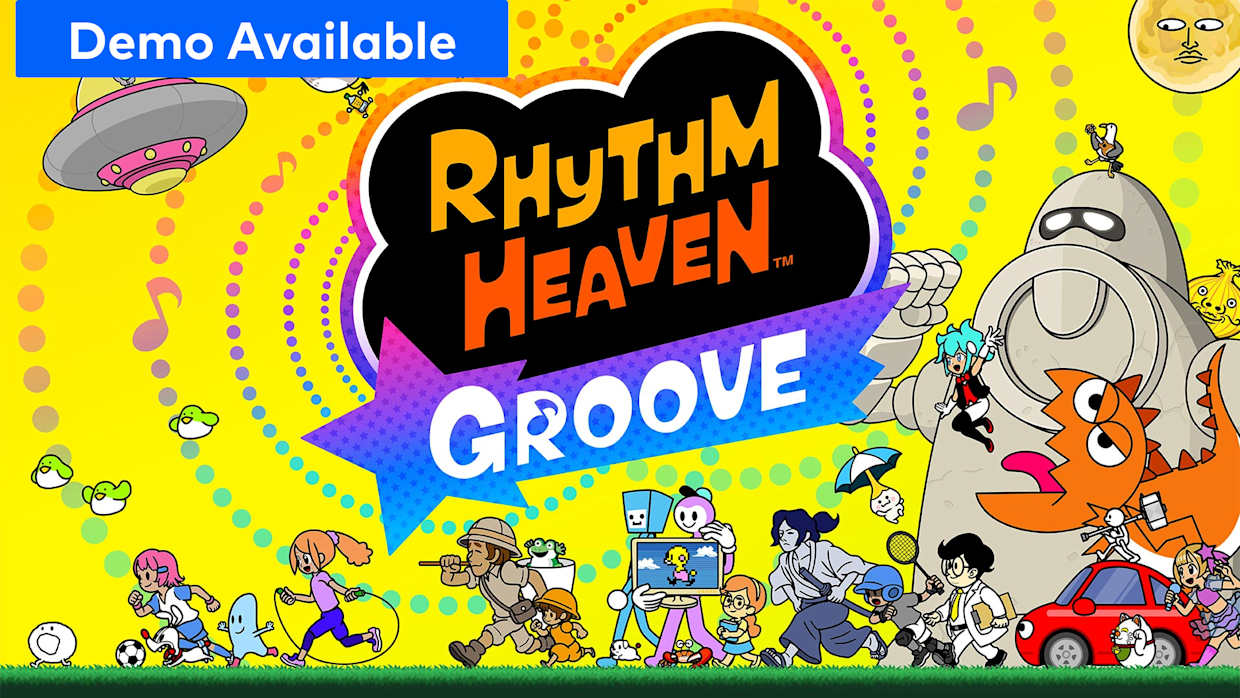
Some Nintendo series arrive with fanfare. Rhythm Heaven has always preferred to sidle in wearing a silly grin, tap you on the shoulder, and refuse to leave your head for a week. After 11 years away - the last full entry, Rhythm Heaven Megamix, landed on the 3DS back in 2015 - the series returns with Rhythm Heaven Groove, and the wait has done nothing to dull its peculiar magic. This is a game about pressing a button in time with a beat, and somehow it is also one of the most inventive, warm-hearted and quietly brilliant things Nintendo has published all year.
A series reborn
For the uninitiated, Rhythm Heaven is the deceptively simple brainchild of Japanese music producer Tsunku, the man behind Morning Musume and a whole galaxy of J-pop. His fingerprints are all over Groove: he returns as producer and composer, and the fact that he is doing so at all is quietly moving given his public recovery from laryngeal cancer more than a decade ago. Alongside him, director Kazuyoshi Osawa and the unmistakable art director Ko Takeuchi are back too, this time with development support from studio TNX. The result feels less like a reboot and more like a reunion - the band getting back together and discovering they never lost a step.
What Rhythm Heaven does is strip the rhythm-action genre down to its bones. There are no note highways scrolling toward you, no five-button guitar necks. Instead, each minigame teaches you a single interaction - a tap, a hold, a flick - and then buries it inside an absurd little vignette. You might be a choir of singing onions, a wrestler answering interview questions, or an assembly-line worker bopping widgets. The joke is that the rhythm is the tutorial and the punchline at the same time. You learn by listening, and the game trusts you to feel the beat rather than read it off the screen.

How it plays
Groove is built around a core loop that has barely changed in 20 years, and that is a compliment. You pick a minigame, watch a brief demonstration, and then perform. Nail your timing and you are graded at the end with one of three ranks: Keep Trying, Good, or the coveted Amazing. Clearing games with a Good or better opens the path forward; chasing Amazing on everything is where the real obsession sets in.
The genius is in how the audio and visuals reinforce one another. When you hit a beat cleanly, the world responds - a satisfying thunk, a bloom of colour, a character beaming back at you. When you miss, the whole vignette stumbles in a way that is almost worse than a failure screen, because you feel like you have let these daft little creatures down. It is feedback as comedy, and it makes practicing the same 90-second sketch a dozen times feel like play rather than grind.
Crucially, Groove is generous with its onboarding while remaining ruthless at its peak. Early sets ease you in with forgiving timing windows, but the back half asks for precision that will have you closing your eyes to concentrate purely on the sound. That escalation is the series at its best: it teaches you to trust your ears, then dares you to prove it.
Eighty minigames and the art of the remix
The headline number is 80 solo rhythm games, organised into sixteen sets. Each set follows a familiar and satisfying shape - four brand-new minigames followed by a remix that mashes their mechanics together into one escalating medley, with the final set piling up a gauntlet of five remixes for good measure. Those remixes are the beating heart of Rhythm Heaven. Individually, each minigame is a neat idea; strung together and cross-cut in a remix, they become a test of adaptability, forcing you to switch mental gears on the fly as the music refuses to let up.
What is remarkable is the sheer hit rate. Across 80 games there are inevitably a few that feel like connective tissue rather than showstoppers, but the ratio of gems to filler is astonishing. For every merely-fine sketch there are three or four that will make you laugh out loud, or gasp at a beat drop, or immediately restart because you have to see the Amazing animation. The variety of concepts on display - visual gags, musical genres, interaction types - suggests a development team firing on every creative cylinder.
Beatspell - a rhythm RPG that actually works
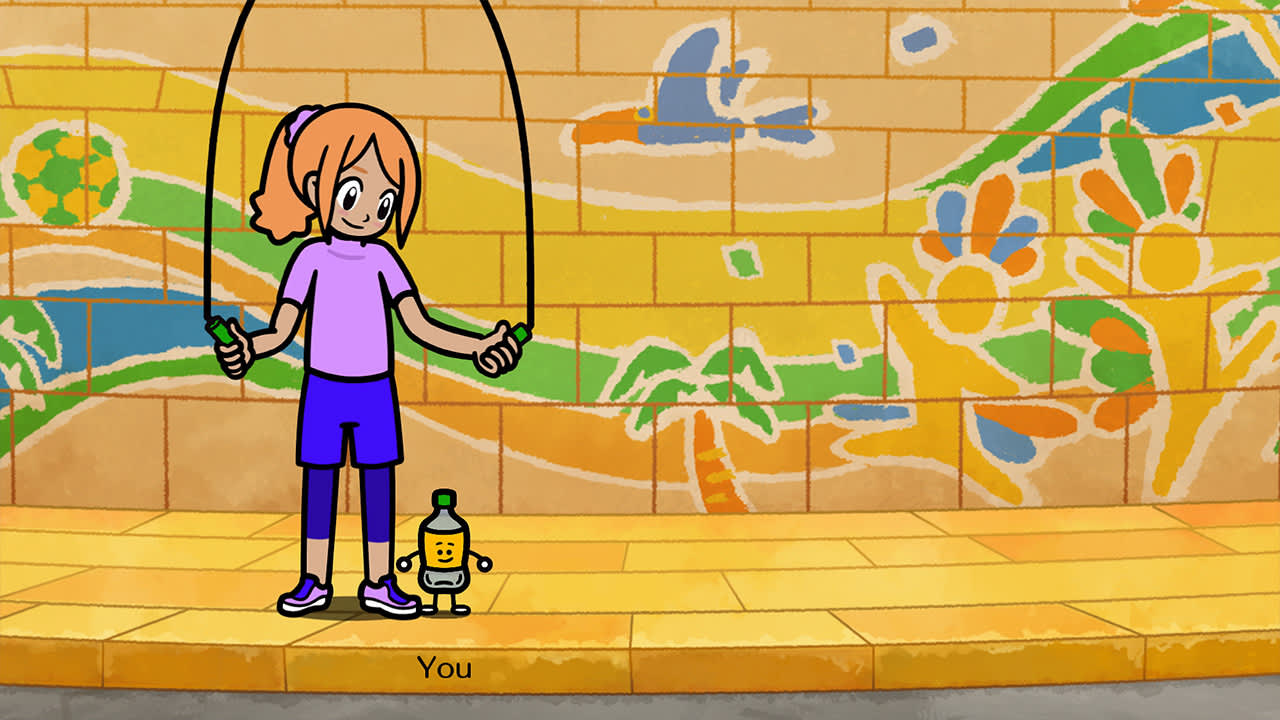
The most significant new addition, and the one that justifies calling Groove more than a greatest-hits package, is Beatspell. It is a rhythm RPG - a series first - in which you cast spells by tapping out button combinations in time with the music to defeat waves of monsters. Think of it as Rhythm Heaven wearing the clothes of a lightweight turn-based adventure, and it works far better than that description has any right to.
Beatspell threads the collection's core timing challenges through a loose progression structure, with encounters that ramp up in complexity as you learn longer, trickier spell patterns. It gives the whole package a spine - a reason to keep playing beyond chasing medals - and it is a smart way to teach advanced rhythm skills without ever feeling like a lecture. Some of its later fights are genuinely tense, the kind where a single dropped beat can undo a perfect run. It is not deep in the way a true RPG is, but that is not the point; it is a delightful framing device that makes the act of keeping time feel heroic.
Multiplayer mayhem
Groove also brings 30 dedicated multiplayer minigames supporting up to four players around a single console. This is a natural fit for the series' pick-up-and-play spirit, and it is where Groove becomes a party game in the truest sense. Watching four people try to stay in sync - and dissolve into laughter the instant one person falls off the beat - is exactly the sort of couch chaos the Switch was built for.
The multiplayer games are cleverly designed to be legible to newcomers while still rewarding the rhythmically gifted, so a hardened Rhythm Heaven veteran and a total beginner can share a screen without one of them being bored or humiliated. It is not the reason you will buy Groove, but it is a hugely welcome bonus that gives the package real staying power once the credits roll.

A feast for the eyes and ears
You cannot talk about Rhythm Heaven without gushing about its presentation, and Groove is the best-looking entry in the series by a country mile. Ko Takeuchi's art direction is instantly recognisable: bold flat colours, rubbery expressive characters and a fearless embrace of the surreal. Each minigame commits fully to its own visual identity, so the collection never feels like it is recycling assets. There is a joy in never quite knowing what the next set will throw at you - a monochrome noir sketch, a candy-coloured pop concert, a deadpan office comedy.
And then there is the music. Tsunku's compositions are the real stars, a run of impossibly catchy tracks spanning genres from funk to city pop to bubblegum J-pop. These are songs engineered to lodge in your skull, and because you are physically performing them, they burrow even deeper. Few soundtracks are this integral to how a game actually plays; here, the music is the game, and it is exceptional.
Performance, accessibility and value
Groove is a Nintendo Switch title, playable on Switch 2 via backwards compatibility. The one technical caveat worth flagging is input lag: in a rhythm game, even a few milliseconds of delay between your press and the on-screen response can throw off your timing, and it becomes noticeable when playing docked on TVs that add their own processing lag. Thankfully the game includes a calibration tool, and switching your TV to a game or low-latency mode largely resolves it. Handheld play sidesteps the issue entirely and is arguably the ideal way to experience Groove.
On accessibility, the series' audio-first design is a double-edged sword. The reliance on hearing the beat means players who are hard of hearing face a steeper climb, though strong visual cues help bridge the gap on many games. For everyone else, the difficulty curve is well judged, with practice modes and the freedom to move on after a Good rank keeping frustration at bay - while the hunt for Amazing ranks provides a mountain for perfectionists to climb.
At $39.99, Groove is also a conspicuous bargain in a $70 world. Between 80 solo games, 30 multiplayer games, the Beatspell campaign and the long tail of chasing perfect ranks, there is dozens of hours here for anyone who catches the bug - and near-infinite replay value for those who fall in love. It is priced like the joyful, unpretentious thing it is.

Where it stumbles
Groove is close to the platonic ideal of a Rhythm Heaven game, but it is not flawless. The docked input-lag issue, while fixable, is an unfortunate wrinkle in a genre where timing is everything. A handful of minigames land as merely pleasant rather than memorable, and because the format asks you to replay them, the weaker sketches stand out. The difficulty can also spike abruptly in the final sets, which will delight some players and wall others.
The bigger-picture problem is that Groove plays it structurally safe. Beatspell aside, this is the Rhythm Heaven formula lovingly refined rather than reinvented. If you bounced off previous entries, nothing here will change your mind. But that conservatism is also the game's strength - it knows exactly what it is, and it executes on that vision with a confidence and polish that most games never reach.
Verdict
Rhythm Heaven Groove is a triumphant return for one of Nintendo's most singular series - a collection so bursting with personality, wit and musical craft that it transcends its simple premise. Beatspell proves the formula still has room to grow, the multiplayer gives it legs, and Tsunku's soundtrack is a career highlight. Minor input-lag concerns and a conservative structure keep it just shy of perfection, but they barely dent the sheer joy on offer. Do not let this one pass you by.