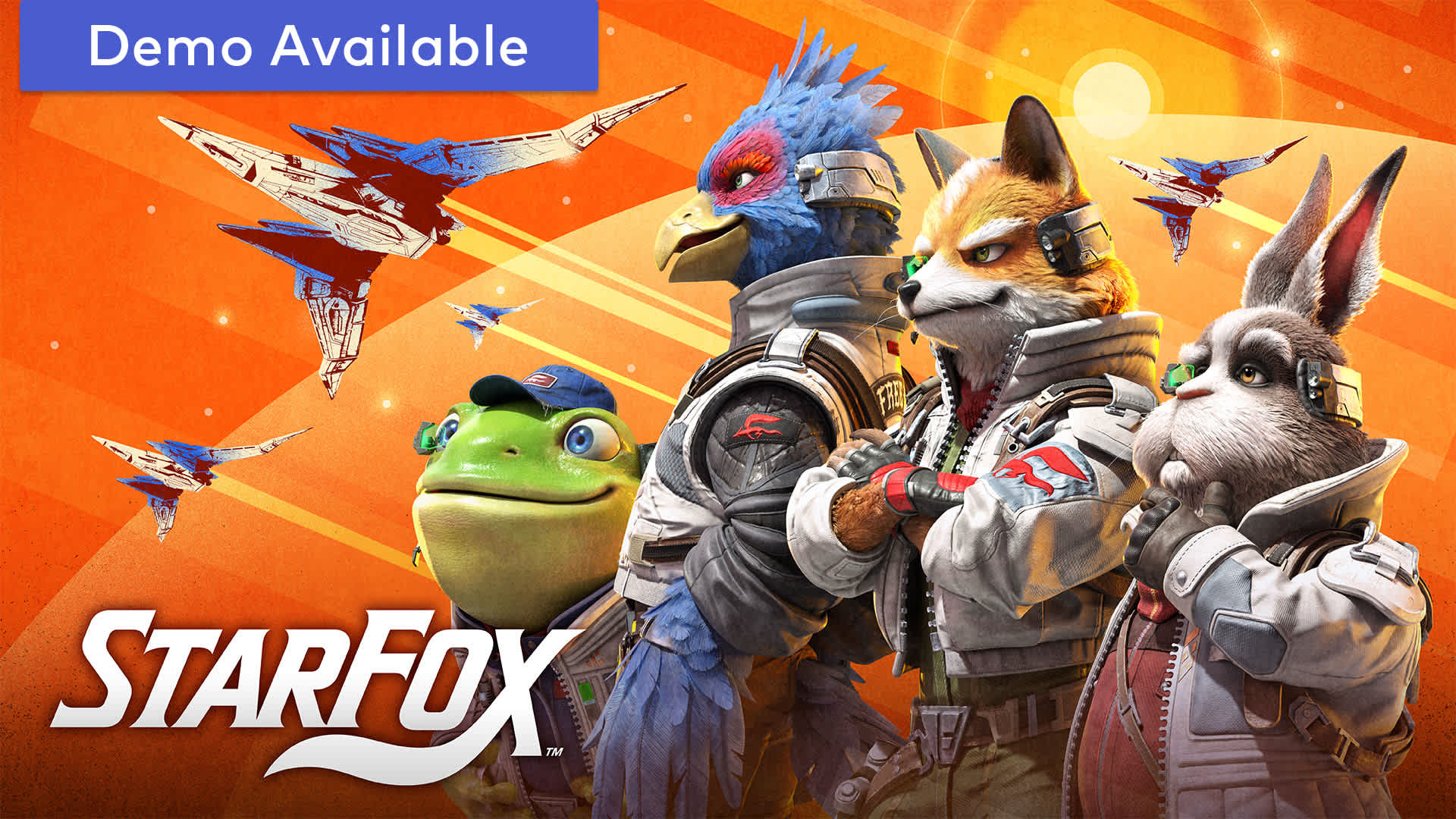
There is a particular kind of pressure that comes with reviving a sleeping legend. Get it wrong and you wake a fandom that has spent a decade composing angry forum posts in its head. Get it right and you are still accused of not being brave enough. Star Fox, Velan Studios' ground-up reimagining of 1997's Star Fox 64 for Nintendo Switch 2, walks straight into that crossfire - and, against the odds, mostly comes out smiling. It is the best entry the series has seen in nearly thirty years, a gorgeous, joyously playable love letter to one of Nintendo's most beloved on-rails shooters. It is also, by its own deliberate design, a remarkably safe one.
After roughly a decade in which the Star Fox name surfaced only in spin-offs, cameos and the occasional rumour, the prospect of Fox McCloud roaring back to a flagship slot is enough to make any longtime Nintendo fan sit up. What Velan has built is not a reinvention so much as a restoration: the Lylat Wars, lovingly reconstructed brick by brick, then polished until it gleams. Whether that is exactly what you wanted depends entirely on how much you have been aching for something new versus something true.
Either way, the Arwing has never felt this good to fly. Let us strap in.
A 1997 classic, rebuilt from the cockpit out
Let us be clear about what this is, because the word remake is doing a lot of heavy lifting elsewhere. Star Fox is not a remaster with a fresh coat of paint slapped over old polygons. Velan Studios has rebuilt every one of the game's 15 stages from scratch, reimagining each locale in the Lylat system with the kind of detail the Nintendo 64 could only gesture at through a fog of low-resolution charm. Corneria's skyscrapers, the asteroid fields, the watery surface of Aquas, the toxic skies of Venom - all of it has been reconstructed to take advantage of the Switch 2's horsepower, running at a crisp resolution and a locked, buttery frame rate that keeps the action legible even when the screen fills with laser fire.
The structure underneath, though, is pure 1997. This is still a tightly choreographed on-rails shooter at heart, one where the Arwing automatically pushes forward through gorgeously authored set pieces while you steer within the frame, dodging, boosting and braking. The signature moves are all present and correct - the barrel roll to deflect incoming fire, the somersault and U-turn to shake a tail, the satisfying lock-on charge shot that bursts across multiple enemies. Anyone who spent the late nineties shouting do a barrel roll at a CRT will find the muscle memory snapping back within seconds.
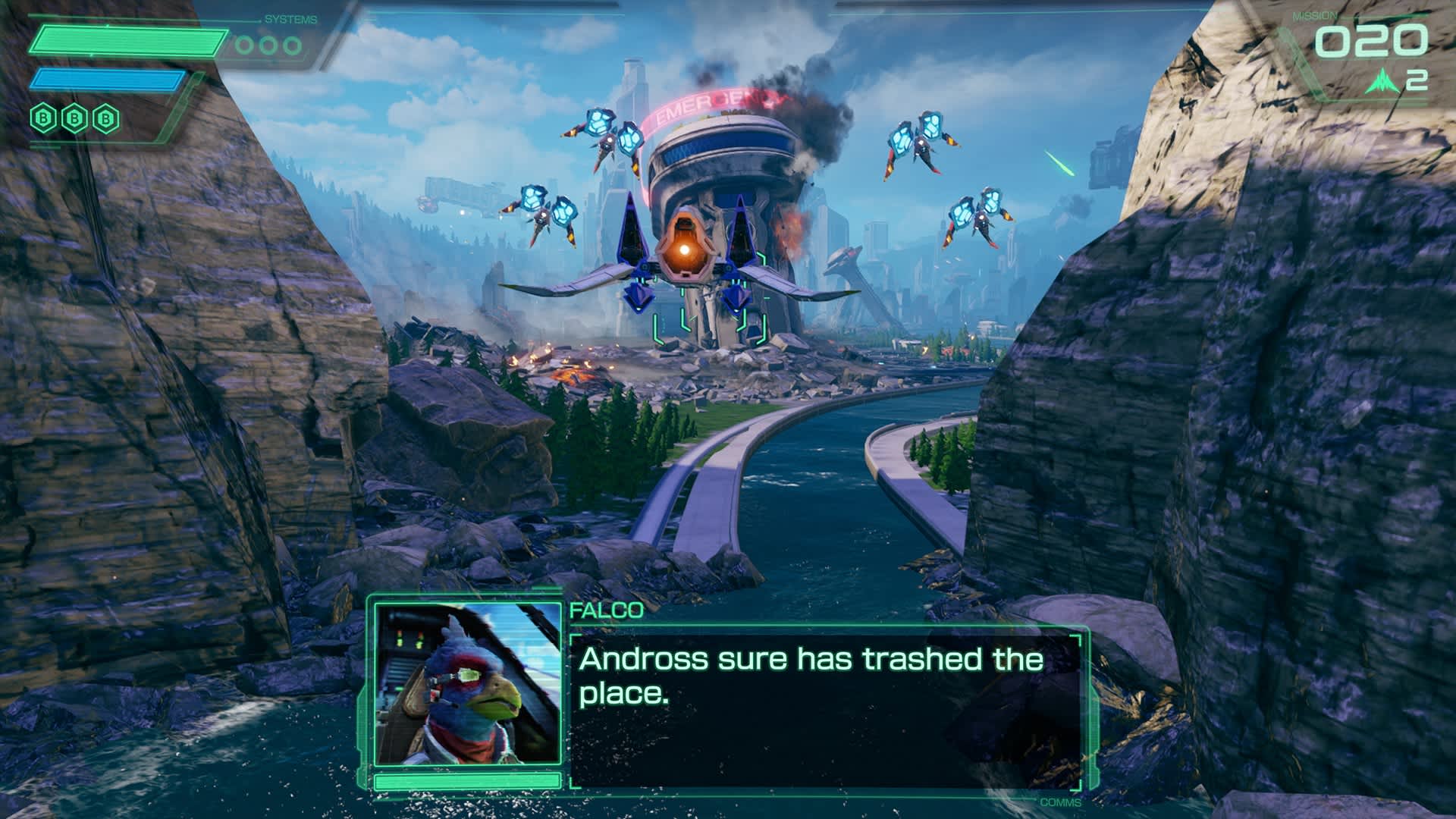
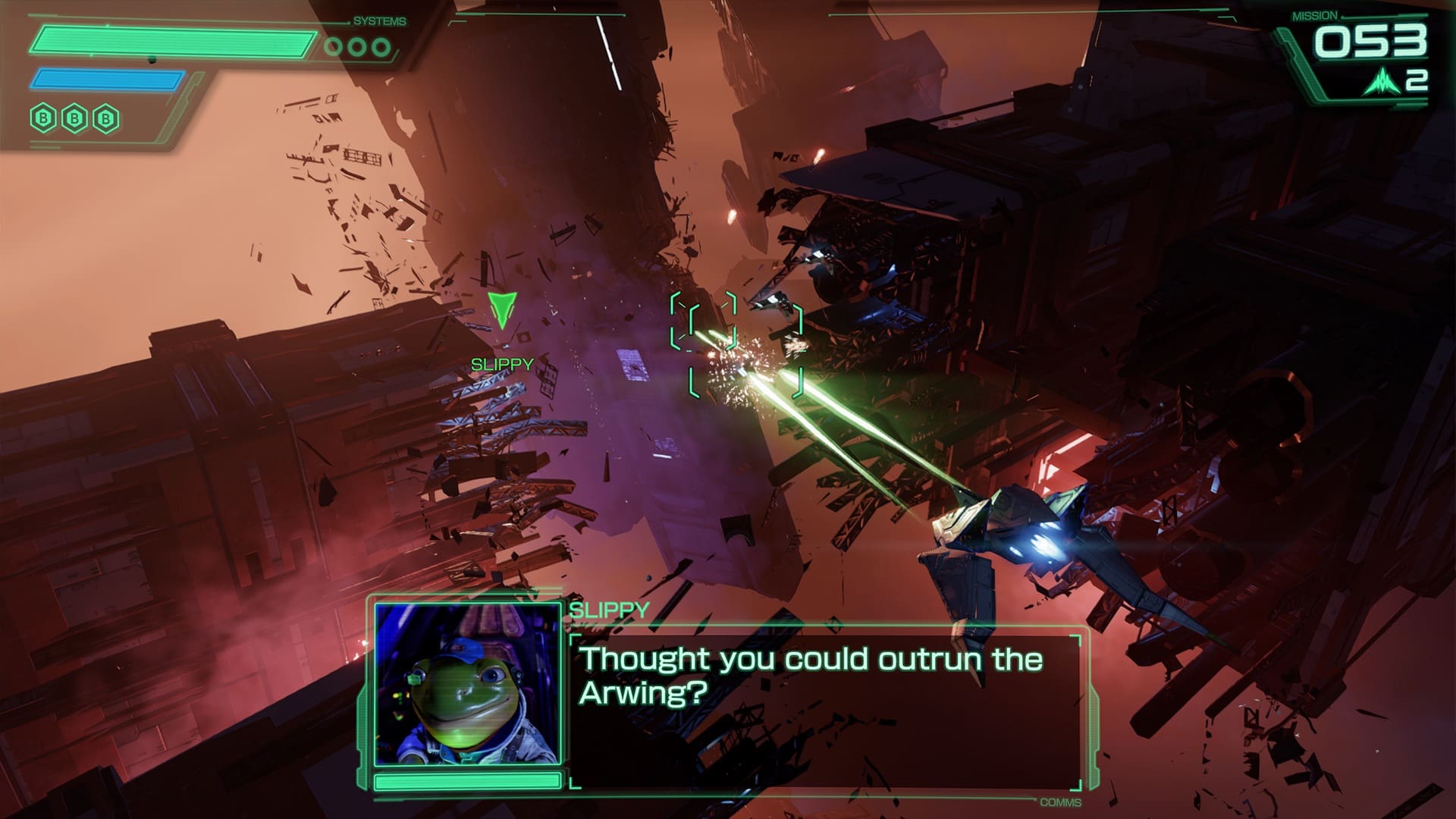
Velan has been smart about which conventions to preserve and which to quietly modernise. The all-range mode arenas, where the camera frees up and your Arwing can wheel around an open battlefield, return and feel meatier than ever. Wingmates Falco, Peppy and Slippy still chatter away over the radio, still get themselves into trouble, and still need bailing out - rescue them and they reward you across the rest of the run; ignore them and you will feel their absence. It is a thirty-year-old design language, but Velan speaks it fluently, and the result is a game that feels instantly familiar without feeling like a museum piece.
On the rails, by design - and full of forks
The genius of Star Fox 64 was never its length; it was its branching. That philosophy is the beating heart of this remake, and it is where the package earns most of its replay value. There are an astonishing 25 possible routes from the opening skirmish over Corneria to the final confrontation at Venom. Fourteen of those paths funnel you toward the standard ending, while eleven thread through tougher, more rewarding detours toward Venom's second route and the game's true finale.
Crucially, you do not pick these branches from a menu. They emerge organically from how you play. Clear a stage with ruthless efficiency, protect your wingmates, hit a hidden objective or even fail a particular challenge, and the galaxy map quietly reroutes you. Push through a waterfall when Falco leads the way and you will stumble into a hidden boss fight that, once won, unlocks an entirely new branch. It transforms what is mechanically a linear shooter into something closer to a personal-best puzzle: every run is a slightly different shape, and chasing the harder, hidden paths becomes its own compulsive metagame.
It is a structure that flatters skill rather than punishing curiosity, and it is the single best argument against the criticism that the campaign is over too quickly. Yes, a single clean run from Corneria to Venom can be done in well under two hours. But that number is almost meaningless in a game built to be played a dozen ways.
Chasing the true ending
For series faithful, the road to the real conclusion is the main event. Downing all four members of the rival squad Star Wolf - Fox's leather-jacketed mirror images - is the gateway to the fortress at the heart of Venom, and to a final boss that long-time fans will recognise with a shiver. Andross's true form, a grotesque disembodied brain wreathed in glowing eyes, is the reward for taking the hard road, and Velan has rendered it with a creeping menace that the original hardware could only imply. It is the sort of fan-service payoff that justifies all those repeat runs.
The boss design throughout is a highlight. Each encounter is a tight little test of pattern recognition and nerve, and the new presentation gives them a theatrical weight that elevates the spectacle. These are fights that were memorable in 1997 because of what your imagination filled in; here, Velan does the filling in for you, and the upgrade lands.
Mouse aiming is the quiet revolution
The most genuinely new addition is also the most easily overlooked. In single-player Campaign and Challenge modes, you can swap on the fly between traditional stick controls and a mouse-aiming scheme built around the Joy-Con 2's pointing capabilities. Slide the Joy-Con across a surface and your reticle tracks with it, decoupling your aim from your ship's movement in a way the series has flirted with before but never nailed this cleanly.
The effect is subtle but transformative for precision play. Sniping distant weak points, sweeping a charged lock-on across a cluster of fighters, threading shots through tight gaps - all of it becomes more deliberate and more satisfying with the mouse in hand. The fact that you can switch back to the stick mid-stage, with no penalty and no menu, means it never feels like a gimmick foisted upon you. It is there when you want the extra control and invisible when you do not. It is exactly the kind of platform-specific idea a launch-window Switch 2 game should be showing off.
A feast for the eyes - and the ears
If there is one area where Star Fox is unambiguously, swing-for-the-fences successful, it is presentation. The character redesigns are superb: Fox and crew look sleeker and more expressive than ever, with the anthropomorphic cast finally rendered at a fidelity that sells their personalities. The stages are bursting with colour and incident, and the whole thing is wrapped in fully animated, fully voiced cinematics that give the thin plot of the original room to breathe.
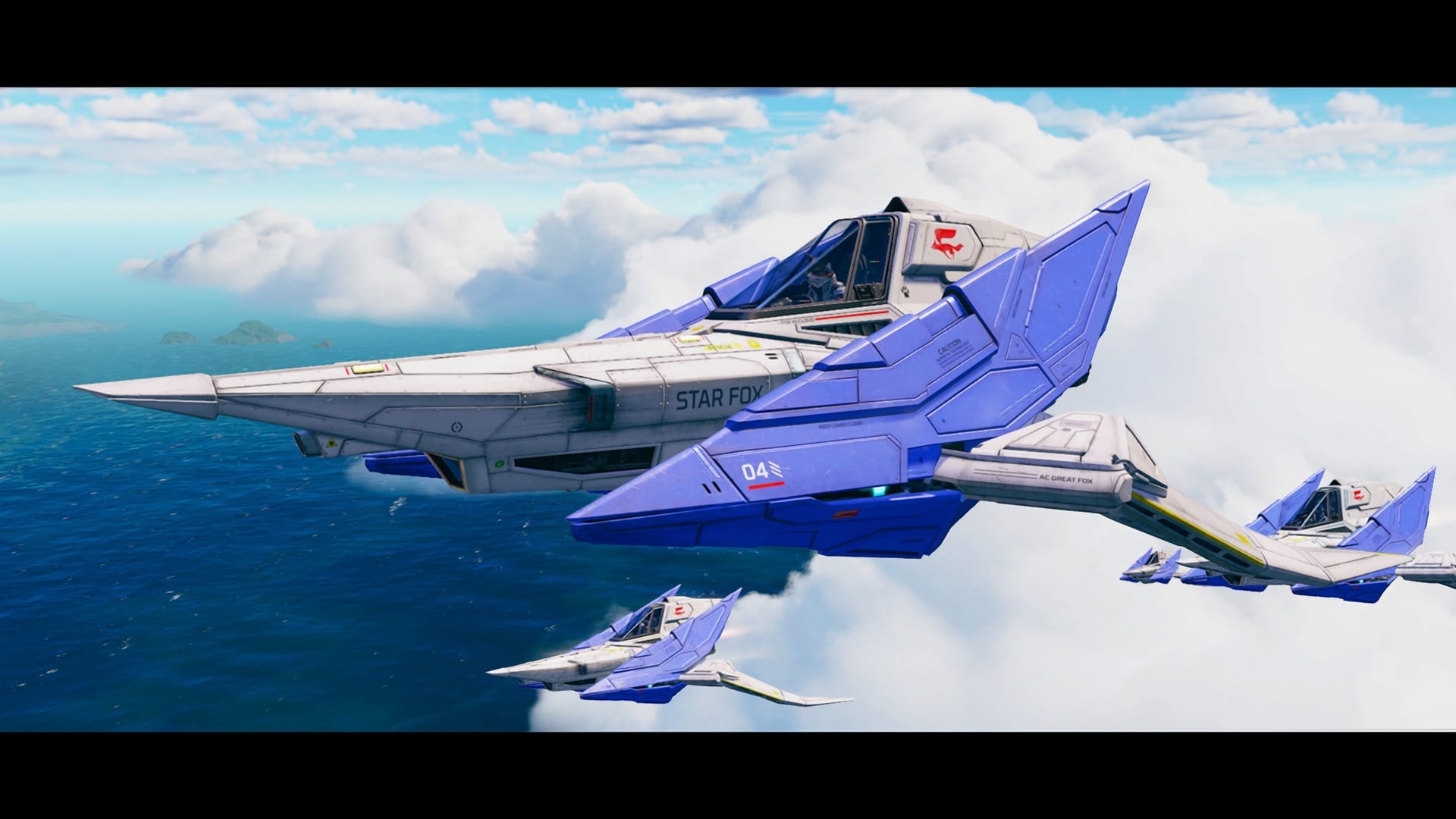
The orchestral score is the standout. Those iconic Star Fox themes, reorchestrated and performed with full symphonic swagger, lend even the quieter moments a sense of grandeur, and the rousing main theme remains one of Nintendo's all-time great earworms. Paired with a freshly recorded voice cast that gives Fox, Falco, Peppy, Slippy and the rest distinct identities, the audio package is the clearest evidence that this is a remake made with affection rather than obligation.
If there is a wrinkle, it is the writing. The expanded script, for all its new voice work, can feel a touch flat - it adds words without always adding wit, and the dialogue occasionally lands with the earnest stiffness of a cartoon that has not quite decided whether it is for kids or for the kids who grew up. It is a minor blemish on an otherwise lavish production, but it is the one place where more new content might genuinely have helped.
Eight players, two teams, total chaos
The headline new mode is Battle, an online and local multiplayer suite that pits up to eight pilots against each other in 4-vs-4 dogfights split between Team Star Fox and Team Star Wolf. It comes with three distinct objective-based arenas: a zone-control scrap over Corneria, an energy-crystal collection bout on the frozen surface of Fichina, and a cargo-retrieval scramble against space pirates in Sector Y.
It is frantic, colourful fun, and the all-range flight model translates surprisingly well to competitive play - reading an opponent's barrel roll and punishing it feels great. Nintendo's GameShare and GameChat features fold in neatly, too, letting up to four players jump in locally or online and putting your face right in the cockpit alongside your squad. Battle Mode is unlikely to dethrone the platform's dedicated multiplayer heavyweights, and the three-map rotation is on the lean side, but as a generous bonus that extends the package well beyond the campaign, it is a welcome and well-executed addition.
Challenge Mode and the length question
This brings us to the elephant in the hangar: value. A straight run through the campaign is short - genuinely short, around ninety minutes for a single path. For some players, particularly those approaching this as a one-and-done narrative experience, that brevity will sting at a 50-dollar digital or 60-dollar physical asking price.
Velan clearly anticipated the objection, and the answer is Challenge Mode. It sends you back into individual stages with bite-sized objectives layered on top - clear the level under a time limit, wipe out a specific enemy type, fulfil a wingmate's request - and clearing a stage's full slate unlocks tougher Expert variants. Combined with the 25 branching routes, the score-chasing and the hunt for the true ending, the actual playtime on offer balloons far beyond that ninety-minute figure for anyone who engages with it. This is a game designed to be mastered, not merely completed.
Still, it is fair to say the package rewards a particular temperament. If you are the sort of player who loves to perfect a run, shave seconds and unlock everything, Star Fox is a near-bottomless well. If you simply want to fly through the story once and move on, you may finish before you have fully fallen in love.
The tension at the centre of it
There are two entirely reasonable ways to finish this game. One is enchanted by the spectacle and the tightness of the core loop, and lands on it as the definitive way to experience a classic. The other acknowledges the polish and still gently laments that a decade-long wait produced a faithful retread rather than a bold new chapter - a beautiful answer to a question some fans had stopped asking. Both readings are correct, which is precisely why this is such an interesting release. The disagreement is not about quality; it is about ambition.
Verdict
Star Fox is the most beautiful, the most playable and the most lovingly crafted entry the series has produced since its Nintendo 64 peak. Velan Studios nails the spectacle, sharpens the controls to a fine point, adds a genuinely clever mouse-aiming option, and wraps the whole thing in a symphonic, fully voiced presentation that does right by three decades of nostalgia. The branching 25-route structure and Challenge Mode give it real legs, and the eight-player Battle Mode is a cheerful, chaotic bonus.
What it is not is a reinvention. This is a restoration first and foremost - reverent to the point of caution, brief in the campaign, and light on the kind of new ideas that might have turned a great remake into a landmark. For longtime fans who simply wanted the Lylat Wars done justice on modern hardware, that is a dream fulfilled. For those who hoped a ten-year absence would end with something bolder, it is a triumphant homecoming with an asterisk. Either way, Fox McCloud is back, the Arwing is in superb shape, and the skies of Lylat have never looked better. Do a barrel roll - you have earned it.