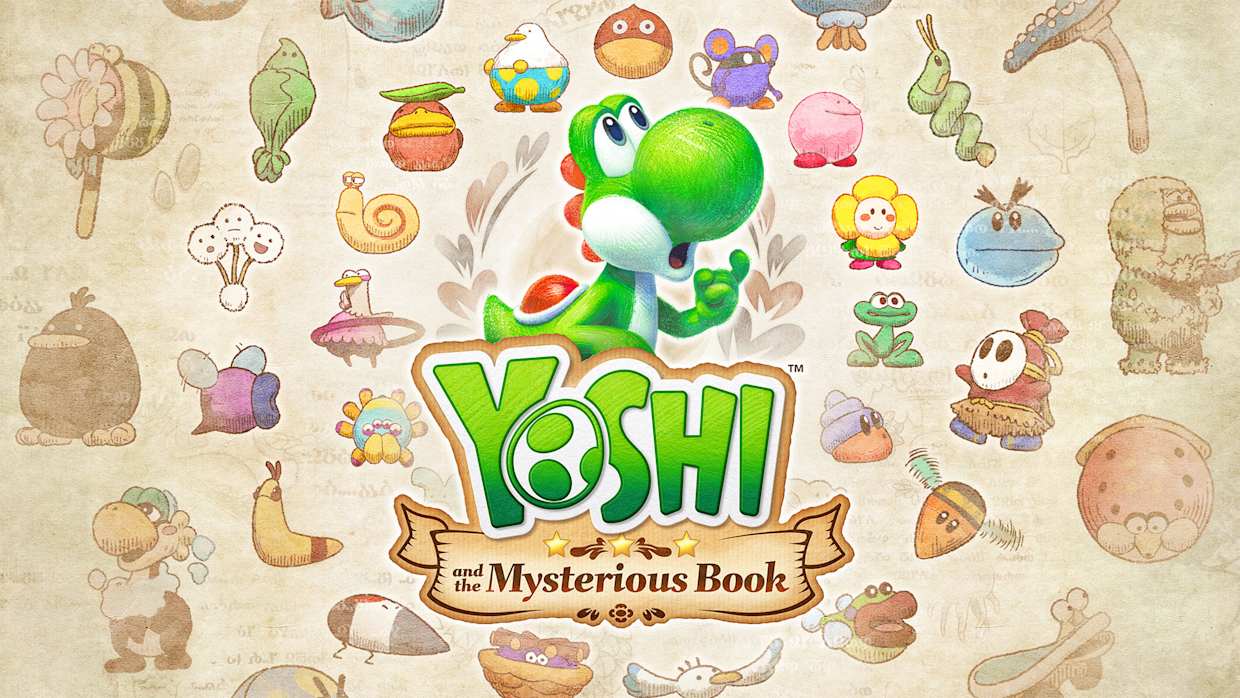
Nintendo''s Switch 2 launch year has been a parade of recognisable returns - 3D Mario, Donkey Kong, Star Fox, even Yoshi''s old picture-book co-star Kirby - and across that parade Yoshi and the Mysterious Book arrives with the quietest fanfare and, surprisingly, the most distinctive identity. It is a 2D-ish Yoshi platformer with no lives, no game-over screen, no traditional bosses, no time limit, and a deliberately uncoupled relationship between Yoshi the protagonist and the threats around him. It is also one of the most generous, charming, and conceptually focused Yoshi games Nintendo has shipped since Yoshi''s Island, and it does most of that with watercolour brushwork and a stack of creature drawings instead of high-end Switch 2 horsepower.
Whether that combination produces a game you will want to spend forty hours inside, or a game you will breeze through with a child and shelve after a weekend, depends almost entirely on whether you have made peace with what modern Nintendo platformers are for. Good-Feel - returning to the franchise after Yoshi''s Crafted World - has made another tactile, deeply approachable side-scroller and surrounded it with a creature-collecting sandbox bigger than anything the studio has previously attempted. It is not a return to the spike-pit perfectionism of Yoshi''s Island. It does not pretend to be. The book in the title is more or less a permission slip to stop pretending.
The pitch: a creature catalogue with platforming attached
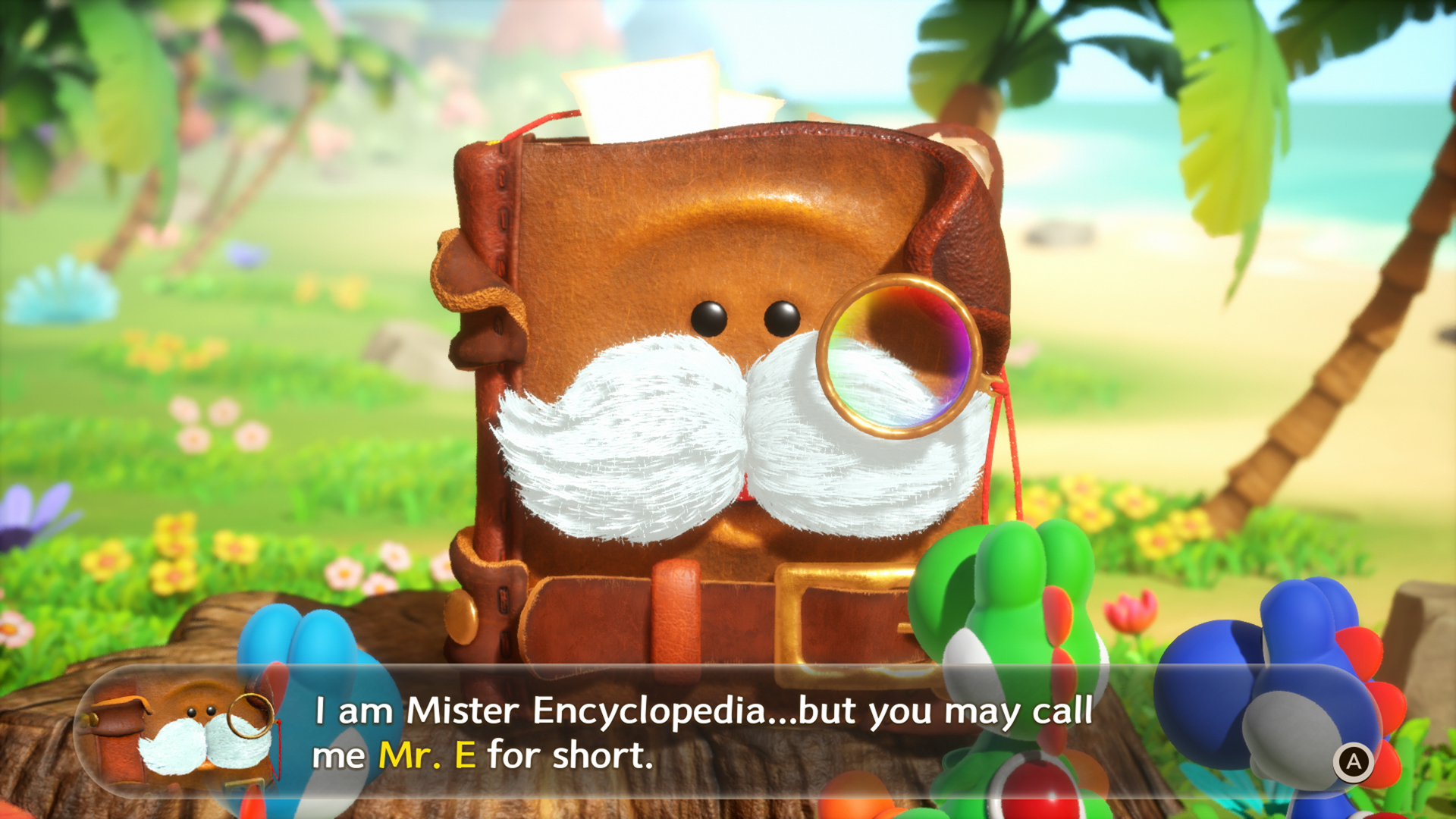
The setup is small and pleasant. Yoshi falls into a library, finds a mustachioed talking tome named Mr E, and is informed that the book has forgotten its creatures. Each chapter is a habitat that needs its species re-observed - sometimes coaxed out, sometimes fed, sometimes scared back into hiding, sometimes outright recruited - and Mr E records each find as a tiny illustrated entry in the back of the book. The fiction is so straightforward you would not notice it as a fiction if the structure did not lean on it, but the structure leans on it a lot. Mr E is the menu, the world map, the level-select, and the credits sequence rolled into a single floating mustache, and he is so consistently funny and self-effacing that Good-Feel essentially gets a free pass to drop in a new mechanic any time he flips a page.
From there the moment-to-moment shape is familiar in outline. Yoshi runs and jumps along a 2D plane, tail-flicks objects, swallows things and turns them into eggs, and flutter-jumps over gaps. There are eggs that bounce, eggs that explode, eggs that grow into vines, eggs that hatch into temporary buddies who carry Yoshi over hazards. There are gates that only open after a creature is observed; there are pieces of scenery that change colour when Yoshi paints them with a stomp; there are entire stages that hand Yoshi over to a creature - a giant croaking frog called Croakaoke, a chameleon named Hue, a grumbling rock thing whose name your child will get to before you do - for a single mechanical idea spread across a single, generously designed level.
What is missing is what Good-Feel and Nintendo have spent the last three trailers carefully signalling: the failure state. There is no Baby Mario, no health bar that ticks down to zero. Hostile creatures bump Yoshi, knock loose a few of the gems you have collected, and skitter away. Spikes do the same. Pits sometimes do nothing more than dump Yoshi back near where he fell. The "Mysterious" of the title turns out to be the most permissive Yoshi has ever been, and the entire experience is engineered around that permission.
The look: paper craft as a complete design language
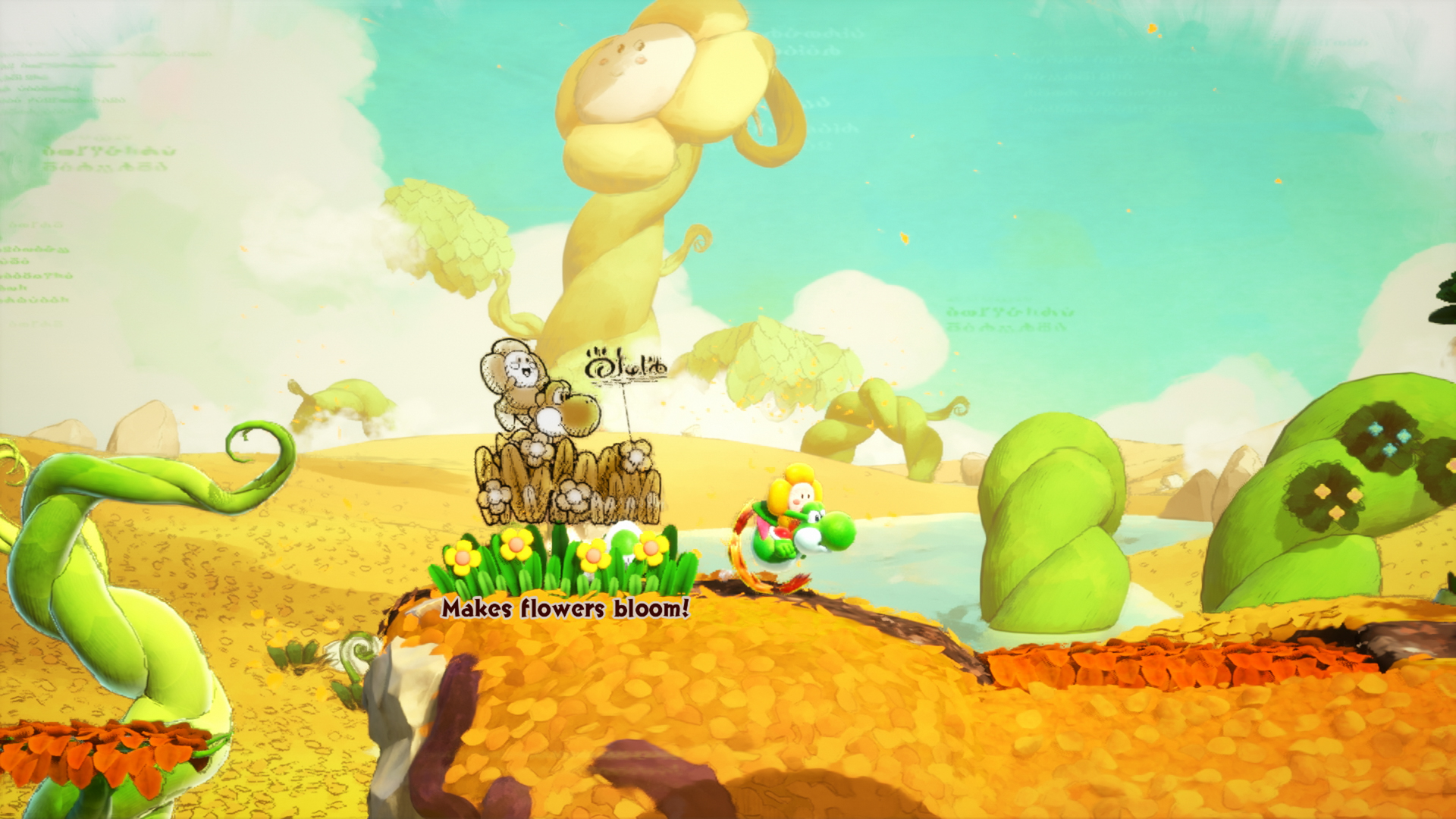
If Yoshi''s lineage is going to keep dressing up in craft-store materials, it had better be done well, and Yoshi and the Mysterious Book is the cleanest visual interpretation of the concept since Woolly World. Levels look like a watercolour storybook with one or two pieces of stop-motion clay sat on top. Yoshi himself is painterly, the creatures are pencil-and-wash, the foreground is brushed cardboard, the backgrounds are watercolour wash. The pencil outlines wobble subtly, like a Studio Ghibli storyboard panel rotated into 2.5D, and the wobble is sympathetic rather than dizzying - it suggests a hand at the page.
Where Crafted World sometimes slipped into "everything is fabric" homogeneity, Mysterious Book is more disciplined. Materials shift by chapter. The opening pages are loose pencil sketches; the underwater chapter dunks the whole illustration into a bleeding watercolour wash; a desert section feels like coloured pencil over rough kraft paper. By the late chapters, individual stages are filing the entire illustration style under a single visual joke - the food chapter, predictably, looks edible, but the joke goes further than expected, with eggs that hit cake batter and crater it, and creatures that nest inside half-eaten loaves of bread.
The trick the game pulls is the framerate. Yoshi and a handful of named creatures run at a smooth 60fps; chapter dressing runs at a deliberately stepped-down 12fps or so, like a Saturday-morning cartoon. The combination invites the eye to read Yoshi and the creatures as the "real" actors in the scene, with the backgrounds re-cast as illustrations they are walking across. It is a low-cost solution that drips with intent, and it is the kind of choice that justifies a Switch 2-exclusive label more than any pixel-pushing showcase could.
Mr E and the writing room
Mr E is the secret weapon. Talking-companion characters in Nintendo platformers usually wear out their welcome by the third world, but Mr E is metered carefully. He does not narrate stages. He does not bark hints. He shows up at level entries and exits, performs a tiny pencil-sketched flourish, and delivers a single beat of writing that is genuinely amusing to read. He is, in personality, a tweedy academic horrified to discover he has forgotten the contents of his own library and increasingly delighted that the goofy dinosaur turning his pages is bringing them back faster than he can keep up.
The writing is small in scale and unfailingly warm in tone, and it is happy to play against expectation. Mr E openly resents being the protagonist''s sidekick, openly resents some of the creatures Yoshi observes, and openly resents the implication that the player needs anything explained to them. The result is a script that, in twenty minutes of accumulated dialogue, sketches a more memorable supporting character than most modern Yoshi games have managed in their entire runtimes. Younger players will not pick up every joke - Mr E''s monocle gag about academic publishing is not going to land with a six-year-old - but the cadence, voice, and exaggerated horror are pitched cleanly enough that the laughs are mostly for the grown-up in the room.
Crucially, Mr E sits inside the design as well as on top of it. The catalogue he keeps is what unlocks the back half of the game; observing a creature in a stage adds a stamped page to his book, and pages enable new chapters. The collection is the progression. There is no shop, no skill tree, no XP bar. The only currency is curiosity, which is exactly what a creature-driven platformer should be selling.
The core loop: eggs, tongue, tail, repeat
Mechanically, this is a Yoshi game in good standing. Tongue, swallow, lay egg, throw egg, flutter jump, ground pound, tail flick. Every verb is here and every verb behaves the way you remember. The tongue has slightly more vertical reach than in Crafted World; the flutter has a more generous timing window than in Yoshi''s Island; the ground pound now has a small radial shockwave that knocks over fragile scenery, which is mostly used for puzzle scenery rather than crowd control.
What is new is the egg ecosystem. Different chapters allow Yoshi to swallow different things and produce different egg types: water eggs that grow tide pools where they land, paint eggs that recolour scenery, sound eggs that lure creatures, and so on. Egg types are bound to chapter, not to a global inventory, which keeps each habitat feeling like its own toy. That decision pays off in pacing: a typical chapter gives you a new egg in its second stage, plays with it for three stages, then sets it aside for the next chapter''s gimmick, and the game never asks you to track a juggling toolkit of fifteen overlapping verbs.
The friction in that design is also its honesty. There is not very much you have to master. You learn an egg, you use it, you watch it interact with something you have not interacted with before, you smile, you move on. The game is more interested in being interesting than in being demanding. Some chapters land that intention beautifully (the underwater chapter''s tide-pool egg is one of the better single-mechanic vignettes in any Yoshi game), and a few chapters miss (a late chapter built around sound eggs has a puzzle layer that wears thin by the end of its third stage).
The creature sandbox
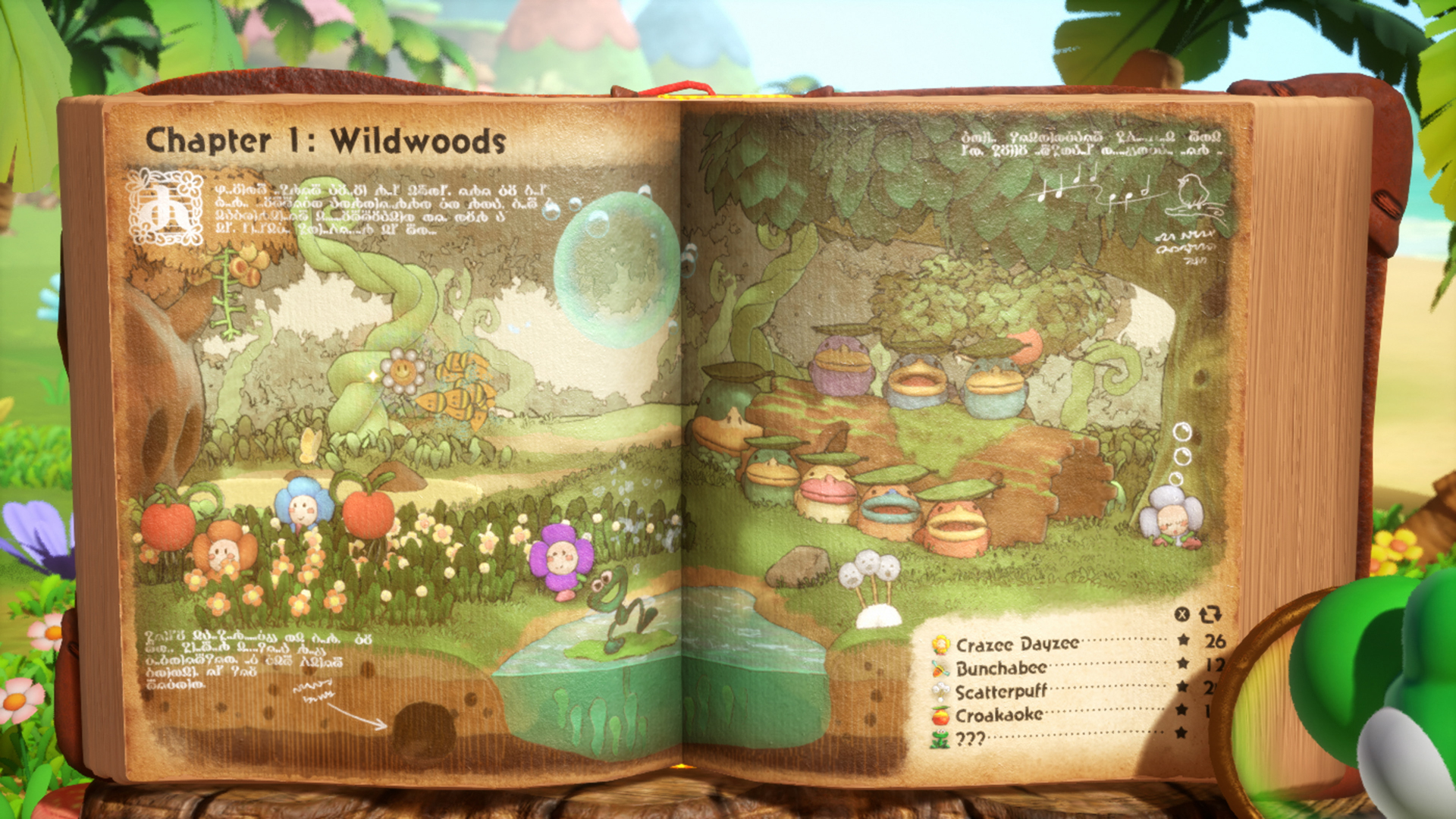
The creature catalogue is the systemic backbone, and it is the most interesting design choice Good-Feel has made in years. Each stage hides between five and twelve creatures. Some are obvious - they wander the foreground in plain sight. Some require a specific interaction: paint a wall the right colour, lay an egg next to a nest, lure a creature toward a friend it likes, drive a creature away from a predator it does not. A handful are tied to environmental triggers that have to be discovered through play. There is a creature in the food chapter that only emerges if Yoshi has eaten exactly enough bread in the stage to be visibly full, and watching the player work that out is the kind of small revelation that Yoshi''s Island''s flowers used to provide.
Where the system stumbles is in repetition. Once you have learned that the creature sandbox is the game, you start to notice the same observation patterns. A creature hidden behind a wall that an egg breaks. A creature that wants a specific egg colour. A creature that emerges when fed. The taxonomy of "how is this one hidden" runs out a couple of chapters before the catalogue does, and you may find yourself in the last two worlds going through the motions of completion rather than discovery. The final two chapters are also stingier with new ideas, leaning heavily on remixed versions of mechanics already shown.
The flipside is that the catalogue rewards experimentation in ways that surprise without being precious. Mr E periodically prompts you with a "guess what I am thinking" entry - a half-finished sketch of a creature you have not yet found - and the silhouettes are vague enough that the moment of recognition, when you finally turn the right corner with the right egg, lands as a small genuine reveal. The illustrations are good. The little stamped diary entries are good. Children will love filling in the book. Adults who buy a stamp book for the joy of stamping will love it too.
Level design: generous corners
The level-by-level construction is consistently competent and occasionally inspired. Stages are short - typically four to six minutes for a first run, ten or so to clear out the creature list - and structured around a single setpiece per level. The first time a level uses its setpiece is the strongest beat; revisits and remix levels are softer. Hidden routes are signalled by ink-blot patches on the background that Yoshi can paint over, and the painting tells a small story of its own - sometimes literally revealing a sketch that hints at a creature in the wings.
There are also two structural decisions worth flagging. First, every stage has a "second pass" mode: re-enter a cleared level and Mr E adds an extra page of creatures unlocked by something only available after the chapter ends - a paint colour, a tool, a partner creature. The second-pass material is not optional if you want to complete the catalogue, and it is where most of the game''s best ideas live. Second, the boss encounters - the chapter-end pieces - are not bosses in the traditional sense. They are extended creature-observation puzzles with a charismatic over-sized creature at their centre. There is no health bar to chip down. The "win" is observation, which is consistent with the design but does mean that anyone hoping for a Yoshi''s Crafted World-style final confrontation is going to bounce.
The level count is plentiful: ten chapters, six to eight stages each, plus a small handful of bonus pages unlocked at completion thresholds. The main path runs roughly nine to eleven hours. Full completion - every creature, every second-pass page, every bonus stage - is closer to twenty. That is on the long side for a modern Yoshi game and, importantly, the catalogue gives the back end something to chase, which previous Yoshi titles have struggled with.
The accessibility decision
The biggest design conversation around Mysterious Book is going to be its near-total absence of failure. Yoshi does not die. He cannot be soft-locked. Pits return him to safe ground. Spikes are decorative. There is no game over.
If you bring the expectations of a 1995 Nintendo platformer to that decision, the game will feel disarmed. There are no tense corners, no panic-jumps, no last-second flutters to a perch. There is, however, a deliberately scaffolded "Chronicle" mode unlocked after the first chapter, which adds limited-life runs of each stage with a leaderboard, harder enemy patterns, and a true-failure pit; it is the closest thing the game has to a challenge mode and it is, surprisingly, very well-tuned when you opt into it. Chronicle leaderboards are local + Nintendo Switch Online global, and the developers have included a series of "Mr E recommends" curated stage seeds that pair specific creatures with specific layouts for a more puzzle-shaped run.
The trick is that Chronicle is hidden behind a chapter-one wall by intent. The base game is, in effect, the demo for the actual game - it teaches every verb, fills out the catalogue, and shows every chapter; Chronicle is the same content played against a clock and a life count. Some critics have read that as the main mode being too soft, and they are not wrong, but the option is sitting right there, and it is genuinely good. Treating Yoshi and the Mysterious Book as a no-fail children''s book ignores about a third of its content.
Performance and the Switch 2 question
Performance is largely uneventful, which on Switch 2 in 2026 still counts for something. The headline mode is 4K docked, 1080p handheld, 60fps locked in both. The framerate stepping on backgrounds is intentional and consistent. I did not measure a single dropped frame in foreground action through the main story, and only a couple in the most particle-heavy paint chapter setpiece on a late second-pass run.
Load times are nearly invisible. Stage-to-stage transitions are page flips, with the next page already rendering as the flip plays, and the game takes about ten seconds from the title screen to playable Yoshi on a cold boot. The HDR implementation is gentle - the palette is deliberately desaturated as a baseline, so HDR mostly shows up as cleaner highlights on the metallic foreground objects. Spatial audio via Joy-Con 2 stereo is unobtrusive and surprisingly directional in the creature-observation moments.
Amiibo support is in but light: scanning a Yoshi-series amiibo grants a single cosmetic skin per character. No content is gated behind an amiibo. There is no DLC roadmap announced at launch, though the data structure of the catalogue (with empty page slots in late chapters) implies room for one.
Sound: the small big win
The soundtrack is one of the most quietly accomplished Nintendo platformer scores in years. Composed by a small team including a couple of regular Yoshi-series collaborators, the score leans on woodwinds, brushed percussion, plucked strings, and a few sparkly bits of vibraphone that recall the Game Boy Yoshi games without imitating them. Each chapter has its own thematic motif that gets restated in different instrumentation across its stages, and the boss-equivalent encounters use the same melody slowed down to half-speed with an extra brass swell. It is the kind of score that becomes a recommendation in its own right.
Voice work, such as it is, is the usual Yoshi croons and chirps, with Mr E vocalising entirely in clearing-of-the-throat and pursed-lip sounds that resemble narrated picture-book interjections more than dialogue. It works.
What it is, and what it is not
The honest summary is that Yoshi and the Mysterious Book is a generous, beautifully made, mechanically gentle platformer aimed at a wider age band than its harshest critics will allow. It is not for everybody, and the Nintendo Life and IGN reviews that have docked it for shallowness are reading something real - if you want a Yoshi game that punishes mistimed flutter jumps, this is not it. But it is for a lot of people. It is for the parent and the child. It is for the player who wants a smaller commitment between bigger games. It is for the catalogue completionist who likes a stamp book. It is for the Switch 2 owner who wanted Good-Feel to take the brief seriously and design something other than another remix of Yoshi''s Island.
The most useful comparison is probably not another Yoshi game; it is the recent string of Nintendo platformers - Kirby and the Forgotten Land, Super Mario Bros Wonder, Princess Peach: Showtime! - that have used Nintendo''s second-tier platformer brands to experiment with structure. Mysterious Book sits squarely in that conversation. It is more interesting than Princess Peach: Showtime!, less mechanically rich than Wonder, and broader in audience than Forgotten Land. It is also, frame for frame, the prettiest of the four.
Verdict
There is a temptation, with a game this generous and this gentle, to mark it on a curve - to grade it for who it is for rather than for the broader population of platformer players. I am not going to do that, because the game does not need it. Yoshi and the Mysterious Book earns its score by being deliberate and consistent in what it sets out to do, by surrounding its low-stakes core with one of the best supporting characters Nintendo has written in years, and by giving completion the dignity of a real reward structure. It will not be in anybody''s game-of-the-year top three. It does not need to be. It is, instead, the kind of game you will recommend to people who have not bought a Switch 2 yet, and they will probably listen.
The Chronicle mode is the safety valve for anyone who actually wants risk in their Yoshi. The catalogue is the carrot for anyone who likes a stamp book. The watercolour art and Mr E are the carrots for everyone else. The bits that do not work - the soft sound-egg chapter, a couple of late-game stages that wear their setpieces thin - are forgivable, and Good-Feel has earned the benefit of the doubt that future content will lean into the catalogue''s open page slots. This is the most distinctive Yoshi game in a generation, and it is going to find its audience.