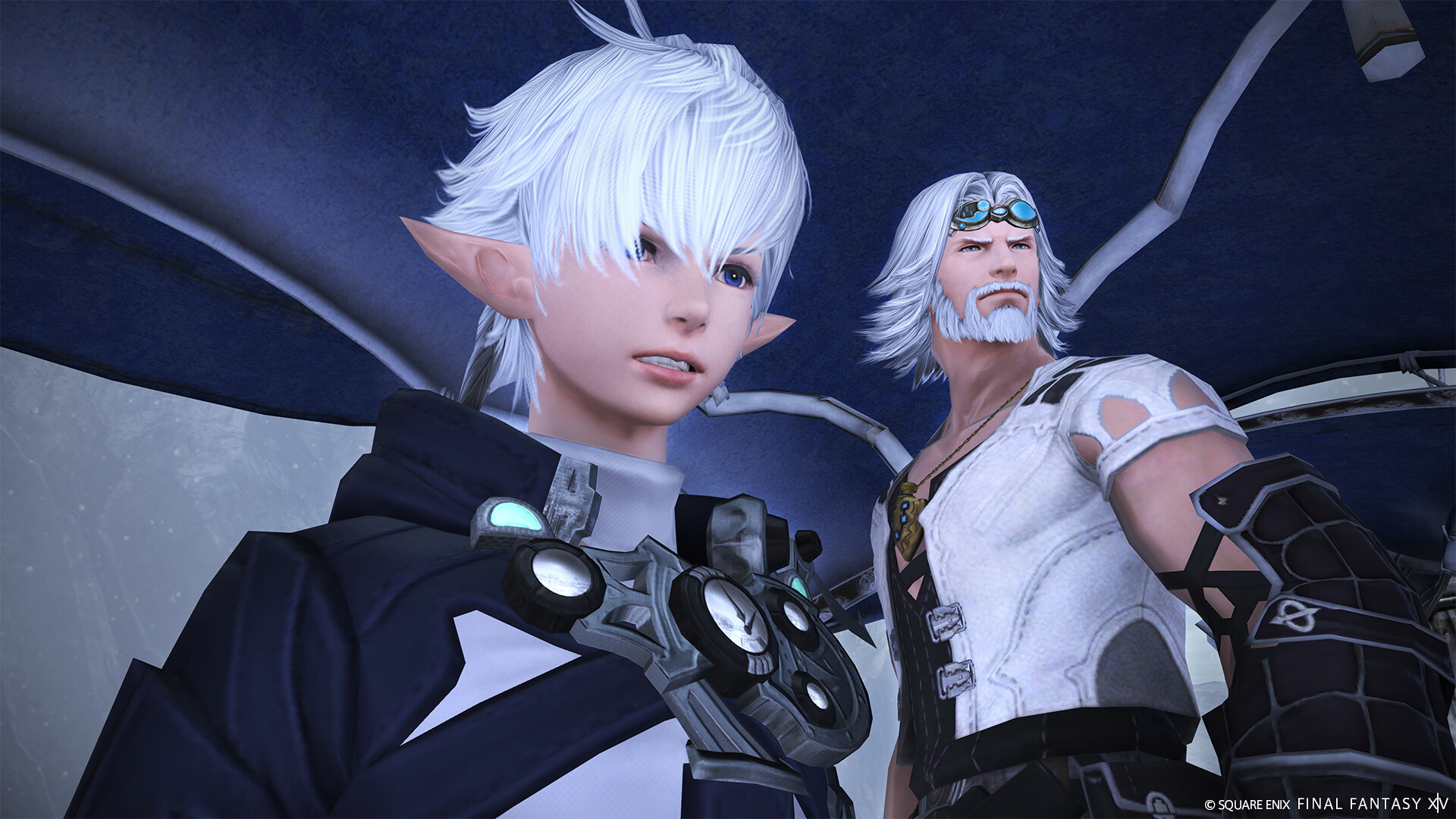
Square Enix has rewritten the rulebook for what Final Fantasy XIV players may do with the game's art, screenshots, text and music. A revised Materials Usage Policy took effect on 16 September for accounts registered in North America, and the most consequential part of it is a section headed "Guidelines for Creation of Physical Items" — a detailed, ten-condition framework covering the things players build in the real world rather than post online. It grants more than the old framing of the licence ever made obvious, and then fences it in with two prohibitions that rule out the methods most people would actually reach for.
You can make things — as long as you make them yourself
The core grant is short. Subject to the conditions, you may create physical items incorporating the materials "solely for your own personal, non-commercial use." Gifting is explicitly covered too: you can hand what you make to family, friends or anyone else, provided no money, consideration, compensation or other commercial benefit changes hands, directly or indirectly, in connection with making, distributing or transferring the item.
That "indirectly" is doing real work. It is not enough to avoid charging for the thing itself. Anything that routes value back to you because the item exists — a tip jar attached to the giveaway, a raffle entry, a reward tier — is the kind of arrangement the wording is built to catch. Square Enix also restates, at the close of the section, that nothing in it authorises sale, advertising, promotion, crowdfunding, auctioning, licensing or distribution of physical items, and that no ownership or intellectual property rights transfer to you.
Condition four is the one that will sting
The first condition is that the item must be made by you personally. The fourth spells out what that means in practice: it is prohibited to commission a company or store to create the item, or to use paid printing or production services. For a community that has spent years running acrylic-stand orders and print-shop runs of character art, that is the sentence to read twice.
There are two carve-outs. The first is business cards, of the sort players hand out at meetups, introducing their character or their activities in the community. Those cards must carry either the character name and Home World, or the name of the activity plus a social media account explaining it. The second is stickers, which players may have produced using their own fan-made illustrations or screenshots that include their own character.
No 3D printers, no generative AI
Conditions five and six are the flat bans. Creating items with a 3D printer is prohibited outright. So is creating items using AI-generated derivative works — a line that lands squarely in an argument the Final Fantasy XIV community has been having loudly with itself, and one Square Enix has so far mostly answered with silence rather than policy text.
The 3D printing ban is the blunter of the two, and it closes a door that has been open by default for years. Home printers and resin kits have been how players turn a minion, a mount or a glamour into an object on a shelf. Under the new wording, that is off the table regardless of whether the file was modelled by hand or pulled from the game.
Don't make it look official
The remaining conditions are about keeping fan output visibly separate from Square Enix's own merchandise line. You may not claim an item is official, or imply it is approved or sponsored. You may not use crossover content, or any content a third party holds rights in — which quietly excludes a long list of collaboration gear and guest characters. You may not imitate official merchandise or promotional items, and you may not create items by moulding official merchandise. And Final Fantasy XIV logos and Square Enix logos are off limits entirely.
In place of the usual copyright line, physical items carry an attribution of a different shape. Condition two asks for either a link to the policy using the shortened URL sqex.to/FFXIVMU, or a QR code pointing at the same address. It is a neat solution to a real problem: a sticker has nowhere sensible to put a full legal notice, but it has room for a code.
The online rules are broadly where they were
The rest of the document covers the familiar ground. Text, images, screenshots and video from the official sites and from in-game capture are all covered materials, as is the game's music and the music on a long list of official albums. Non-commercial use remains the baseline, with carve-outs for partner programmes on YouTube, TikTok, Instagram, Facebook, X and Twitch, and for revenue received from corporate entities through streaming or posting gameplay. Square Enix notes that it does not have the resources to answer every platform that writes in to confirm this, and asks that partner programmes simply be pointed at the page.
Online use still requires a © SQUARE ENIX notice, still bars excessive edits or alterations, and still obliges you to take material down immediately on request. Anything posted to the internet counts as public even behind a friends-only setting. Videos of the in-game Performance feature may only be published if the music being performed comes from the game. Music from Final Fantasy XIV may only accompany footage from the game, videos may not carry other music or audio beyond your own voice, and music may not be uploaded on its own — Square Enix reserves the right to monetise content whose primary purpose is listening. Tracks registered to the official TikTok account may be used only on TikTok, up to one minute per video.
Check which copy applies to you
One detail is easy to miss and matters a great deal: this document applies to players with a Square Enix account registered in North America. Europe and Japan have their own regional policies, and the text directs players to those instead. Nothing here should be read as describing what a player in Frankfurt or Tokyo is permitted to do.
And the whole thing remains revocable. Square Enix can withdraw the permission at any time, through any of six listed channels — a notice on a website, an in-game notice, an email to registered players, a newsletter, a post on the Lodestone forum, or any other method it decides on. It also reserves the right to prohibit, restrict, modify or remove any content incorporating the materials, physical or digital, with or without notice. The licence is a permission slip, not a contract, and it says so plainly.