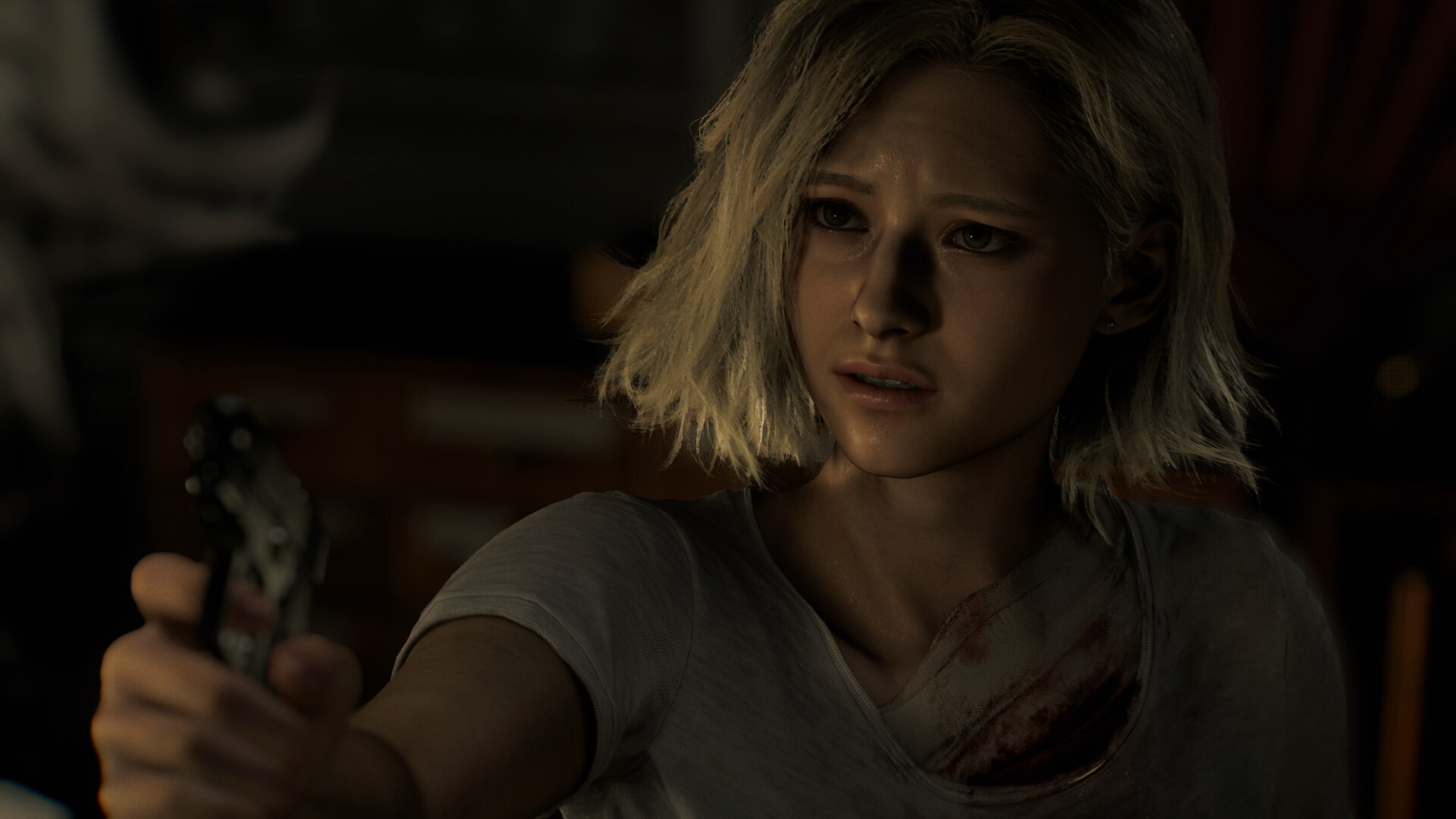
When Nvidia rolled out its DLSS 5 reveal back on March 16, the company picked Grace Ashcroft from Resident Evil Requiem as the poster child for its new AI image enhancement tech. The internet looked at what the AI did to her face and immediately decided this was a war crime. Now, nearly two months later, Capcom’s Requiem producer Masato Kumazawa has finally weighed in — and his take is that the whole thing was actually fantastic news for the studio.
“The fact a lot of players commented they really liked the original design of Grace and didn’t want to see it changed was a positive,” Kumazawa told reporters this week. “It meant we got the design right. It points to the fact that Grace quickly established herself as a fan favorite, that people had such strong opinions on her design.”
If you missed the original DLSS 5 controversy, here’s the short version. Nvidia’s reveal video showed off-and-on comparisons of several games receiving the AI treatment, and Grace got the worst of it. Her lips were plumped, her eyes were widened, her hair was redrawn, and the unique facial structure that gave her character its grounded, slightly weary FBI-analyst look was smoothed into a generic AI-pretty mask. Within hours, “DLSS 5 Off / DLSS 5 On” memes were everywhere, almost universally mocking the “yassification” of Grace’s face.
What made the whole episode messier was the fact that Capcom apparently had no idea Nvidia was going to use Grace this way. The DLSS 5 demo wasn’t something the development team produced or signed off on — it was an Nvidia marketing exercise that pulled assets from one of the year’s most prominent games and ran them through an AI filter without much thought for what that would do to the character art the Capcom team had spent years perfecting. The studio that actually built Grace had her likeness modified without permission, then watched the internet collectively recoil at the result.
Kumazawa’s framing is the most diplomatic version of the story Capcom could tell. Rather than torching Nvidia publicly or getting drawn into a debate about generative AI in game art, the producer reframed the whole controversy as a backhanded compliment to his team. Players hated the AI Grace, his logic goes, because they already loved the real Grace. The intensity of the backlash was just proof that Grace Ashcroft had become a character people cared about within months of release.
It’s hard to argue with the underlying point. Resident Evil Requiem has been a runaway success since its February launch, crossing 7 million units sold in roughly two months and pulling in some of the strongest reviews of the franchise since Resident Evil 2 Remake. Grace, played by Angela Sant’Albano in English and Shihori Kanjiya in Japanese, has been a critical and fan favorite — a rare new Resident Evil protagonist who landed without the usual “but I want to play as Leon” backlash.
The broader implications for AI-driven art in games are uglier than Kumazawa’s comments suggest. Nvidia’s decision to use a real, beloved character to demo a feature that fundamentally rewrites her face is the kind of marketing misstep that should make every studio with a recognizable IP nervous about partner demos going forward. The DLSS 5 backlash also tied into a much bigger conversation about the line between graphical upscaling — which players have generally embraced — and AI-driven art alteration, which players clearly do not want applied to characters they’ve come to know.
Capcom hasn’t indicated whether it’s renegotiating any technical partnerships in light of the demo, and Nvidia hasn’t publicly commented on the producer’s framing. DLSS 5 itself is still rolling out, with most implementations focused on resolution scaling rather than face-altering “enhancement.” Whatever happens next, Grace Ashcroft’s original design has now been validated twice — once by 7 million purchases, and again by the internet uniting to defend her from Nvidia’s AI.
Resident Evil Requiem is available now on PS5, Xbox Series X|S, and PC. The mini-game DLC announced last month is still slated for May.