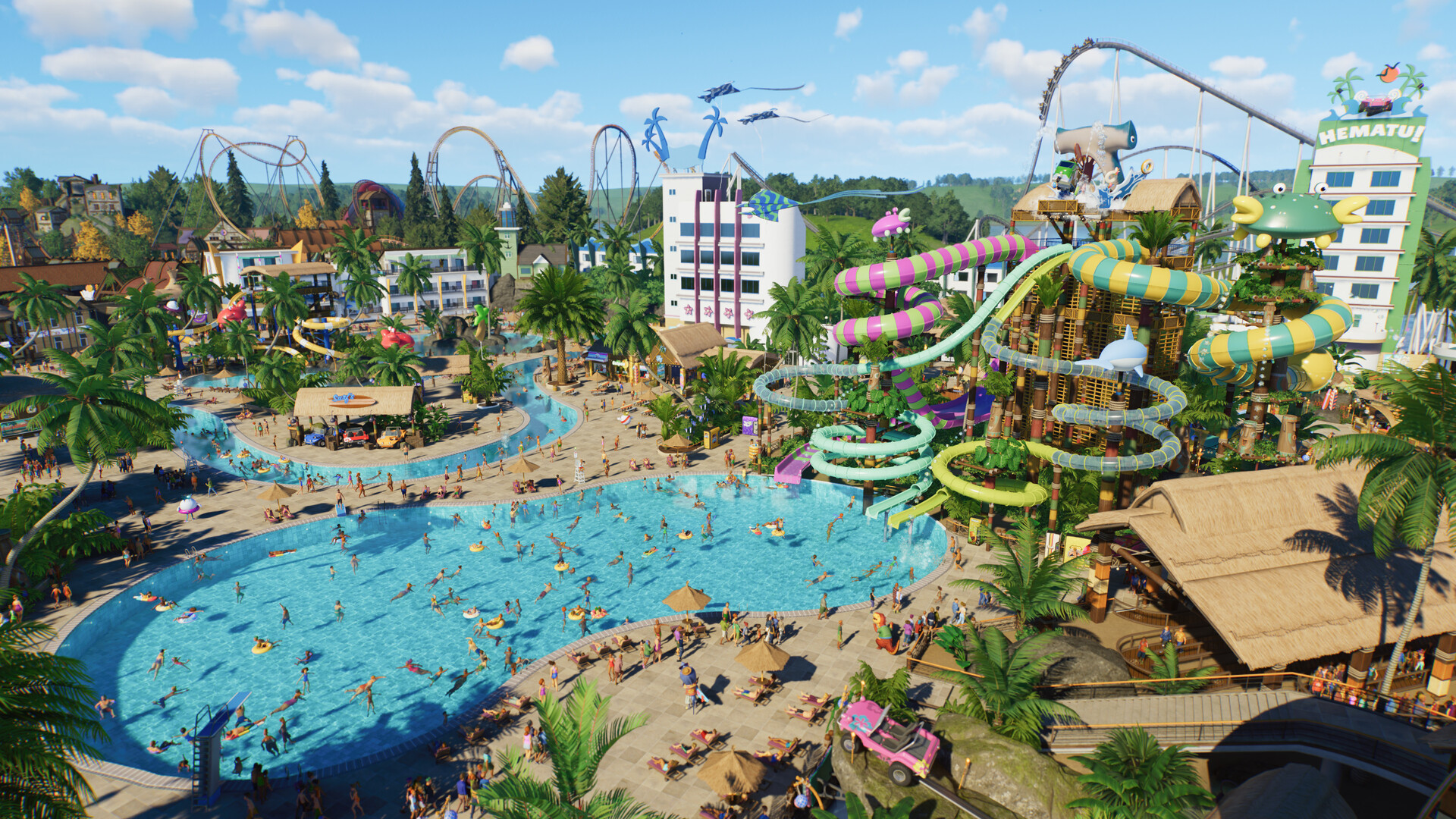
Frontier Developments went to the London markets before the games press this morning, and the announcement it filed is the kind that reframes a studio's next five years in a single sentence. The Cambridge developer has signed an agreement with Disney to develop and publish a new game drawing on Disney's portfolio of intellectual property - and Frontier is paying for the whole thing out of its own pocket.
The regulatory notice, filed to AIM under the ticker FDEV on September 3, is short by design. There is no title, no platform list, no release window, no confirmation of which Disney characters or properties are involved. What it does confirm is the shape of the project, and that shape is the most interesting part.
A CMS game, not a licensed action title
Frontier framed the deal squarely around Creative Management Simulation - the label it has spent the last two years bolting to its own identity. The announcement says the game will build on the company's experience as a leader in the CMS genre, and then lists the receipts: Planet Coaster, Planet Zoo and Jurassic World Evolution. That is not a throwaway line in a document filed to the London Stock Exchange. It is the closest thing to a genre confirmation Frontier is going to give before it has a trailer.
CEO Jo Cooke's statement pushes in the same direction, describing the deal as reinforcing what the company calls a "clearly defined strategy" of building and nurturing CMS franchises. Cooke also framed the mission as connecting a creative community of players with one of the world's best-known brands - which reads a lot less like a combat game and a lot more like handing players a toolbox and a licence.

Planet Zoo 2, out October 13, is one of the three CMS pillars Frontier cited in its Disney announcement.
"Fully funded by Frontier" is the line that matters
Licensed games usually arrive with a rights-holder co-funding, commissioning or work-for-hire arrangement attached. This one does not. The notice states plainly that the game will be fully funded by Frontier, which changes the risk profile in both directions: Frontier carries the development cost on its own balance sheet, and Frontier presumably keeps a proportionally larger share of what the game earns.
It also tells you something about how confident the company is in the genre it has narrowed down to. Frontier's own description of its strategy leans on back-catalogue performance and long-tail player engagement - the pattern where a CMS game keeps selling for years while paid packs roll out on top of it. Planet Coaster 2 has been on exactly that treadmill through 2026, with the Silver Screen Pack arriving in August as the latest in a run of themed add-ons. Applying that model to Disney IP, where the well of recognisable material is effectively bottomless, is an obvious commercial fit.
What Frontier has in the pipeline already
The Disney game joins a slate that is busier than it looked twelve months ago. Planet Zoo 2 is dated for October 13 on PS5, Xbox Series X|S and PC. Planet Coaster 2 continues its pack cadence. Jurassic World Evolution remains a live franchise. And buried in the middle of the announcement is a detail worth flagging on its own: Frontier also confirmed there is an unannounced Planet game currently in development.
That is a fourth CMS project sitting alongside the Disney deal, and Frontier has not said what it simulates. Planet Coaster handled theme parks, Planet Zoo handled animals - the naming convention leaves a lot of doors open.

Frontier's proprietary COBRA engine underpins all of its management sims, including the unannounced fourth Planet-branded project.
The obvious guess, and why it is still a guess
Put a theme-park simulation specialist together with the company that runs the most photographed theme parks on Earth and the conclusion writes itself. Community speculation moved to a Disney park builder within minutes of the filing, and it is a reasonable read: Frontier has already built two generations of coaster-management tools, and Disney's parks division is the one part of its business that maps one-to-one onto that toolset.
But Frontier said IP portfolio, not parks. Disney's portfolio includes Marvel, Star Wars, Pixar, 20th Century and the entire animation library, and CMS does not have to mean rides. A zoo-adjacent game built on Disney's animal properties, a city or resort builder, or something that mixes multiple brands into one sandbox would all sit inside the language of the announcement. Until Frontier shows something, the park sim is the likeliest outcome rather than the confirmed one.
What to watch next
Frontier's investor calendar is where the next real detail is likely to surface, since the company tends to attach game announcements to results and trading updates. Expect the marketing beat - name, genre, platforms - to arrive well after the financial framing does.
For now the takeaways are firm enough: Disney has licensed its IP to a management-sim studio rather than an action studio, Frontier is funding it alone, and the company is signalling that everything it makes from here runs through the CMS lens. Whether that produces a Magic Kingdom you can bulldoze and rebuild, or something stranger, is the question the next announcement has to answer.