Graveyard Keeper 2 launches today, 22 September 2026, and it arrives with a promotion the original's protagonist never earned: you are the Grand Inquisitor now. Lazy Bear Games and tinyBuild's sequel keeps the medieval cemetery business at its centre, then wraps a ruined town, a production automation layer and an undead army around it. It is out day-and-date on PC via Steam, PlayStation 5, Xbox Series X|S, Nintendo Switch 2 and Nintendo Switch.
The job description got longer
The first Graveyard Keeper was a joke about labour that turned into a genuinely dense crafting sim. You woke up in a medieval churchyard, you were handed a shovel, and the game spent the next several dozen hours quietly asking how far you would bend your ethics to improve throughput. The sequel does not walk that back. It escalates it.
This time the surrounding settlement, referred to throughout the developer's material simply as The Town, has been overrun by zombies. Clearing them out is your problem. So is rebuilding what is left afterwards. Lazy Bear frames it plainly in its own devlogs: you get the house, the church and the graveyard for being a decent person, but the Town has to be liberated in battle, and the person who liberates it is also the person stuck putting the roofs back on.
That structure is the sequel's real pitch. The original gave you one plot of land and a tech tree. This one gives you a settlement with residents, quests and reconstruction work, and it explicitly ties your profits to their problems. The studio's phrasing for the town loop is "milk its residents for maximum profits," which is about as honest a statement of intent as a management game has offered lately.
A bigger map than the first game showed
Lazy Bear has been open about how much of its world it held back the first time. The original Graveyard Keeper was full of blocked roads and characters who referred to places you could never visit. In a developer diary published ahead of launch, the studio said the sequel opens up a substantially larger slice of that map, including the Town's southern outskirts, a second village, another tavern, another forest, another swamp, and a second church and graveyard of their own.
The intent, as the studio put it, is for the world to feel like it continues past the edges of what you can reach. That is a low bar to state and a hard one to hit, but the structural change is real: there are simply more distinct locations here than the first game ever exposed.
Automation, and a workforce that does not need feeding
Production automation is called out as a headline system rather than a late-game convenience. The graveyard still runs on harvesting flora, fauna and human remains, and you still build increasingly elaborate machinery to process them, but the sequel pushes the pipeline further and hands a chunk of the manual labour to your zombies.
Lazy Bear's own framing of its undead is the funniest thing in the marketing and also a decent summary of the design: good zombies are the ones that work, skilfully, with no days off, and for free. Bad zombies are the ones that bite, and there are thousands of them in the Town. The same resource is both your workforce and your enemy, which gives the combat a reason to exist inside a management game instead of sitting beside it.
Combat is a siege, not a brawl
The battle layer has you building towers and fortifications, crafting armour and weapons, arming and training troops, and then leading them out. The studio describes the soldiers as "not-so-smart," which suggests the challenge sits in preparation and positioning rather than in your own reflexes. Lazy Bear says it deliberately wanted battles to be part of the story rather than a separate mode, and the zombie-apocalypse premise exists largely to make that connection hold.
Rebuilt underneath, familiar on top
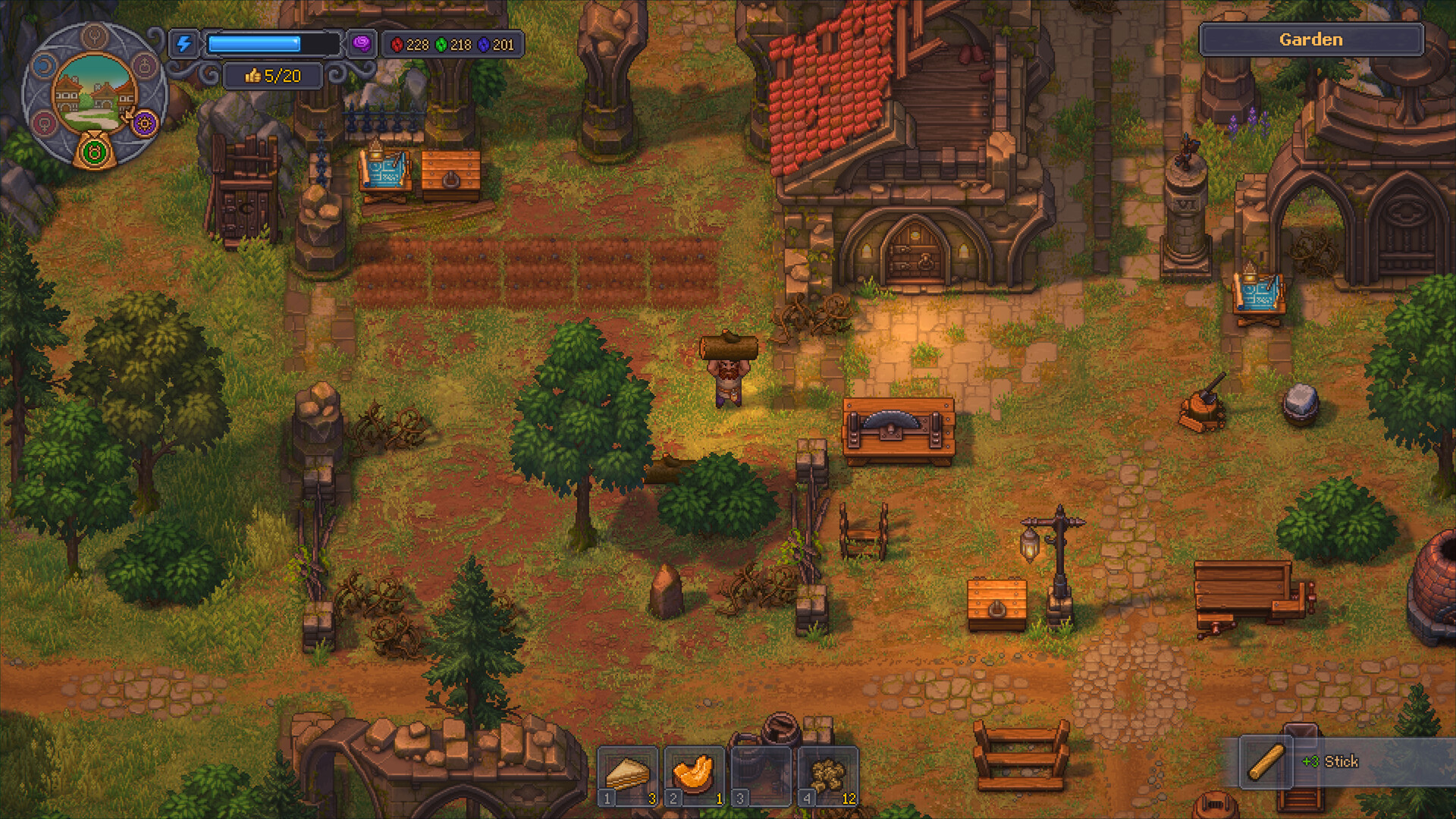
The most consequential technical change is one most players will not consciously notice. The original was a stylised 2D pixel-art game, and Lazy Bear spent real effort faking dynamic shadows and volumetric lighting inside those constraints. For the sequel the studio moved the whole thing to 3D, specifically so its tech tree would stop being limited by what 2D could express.
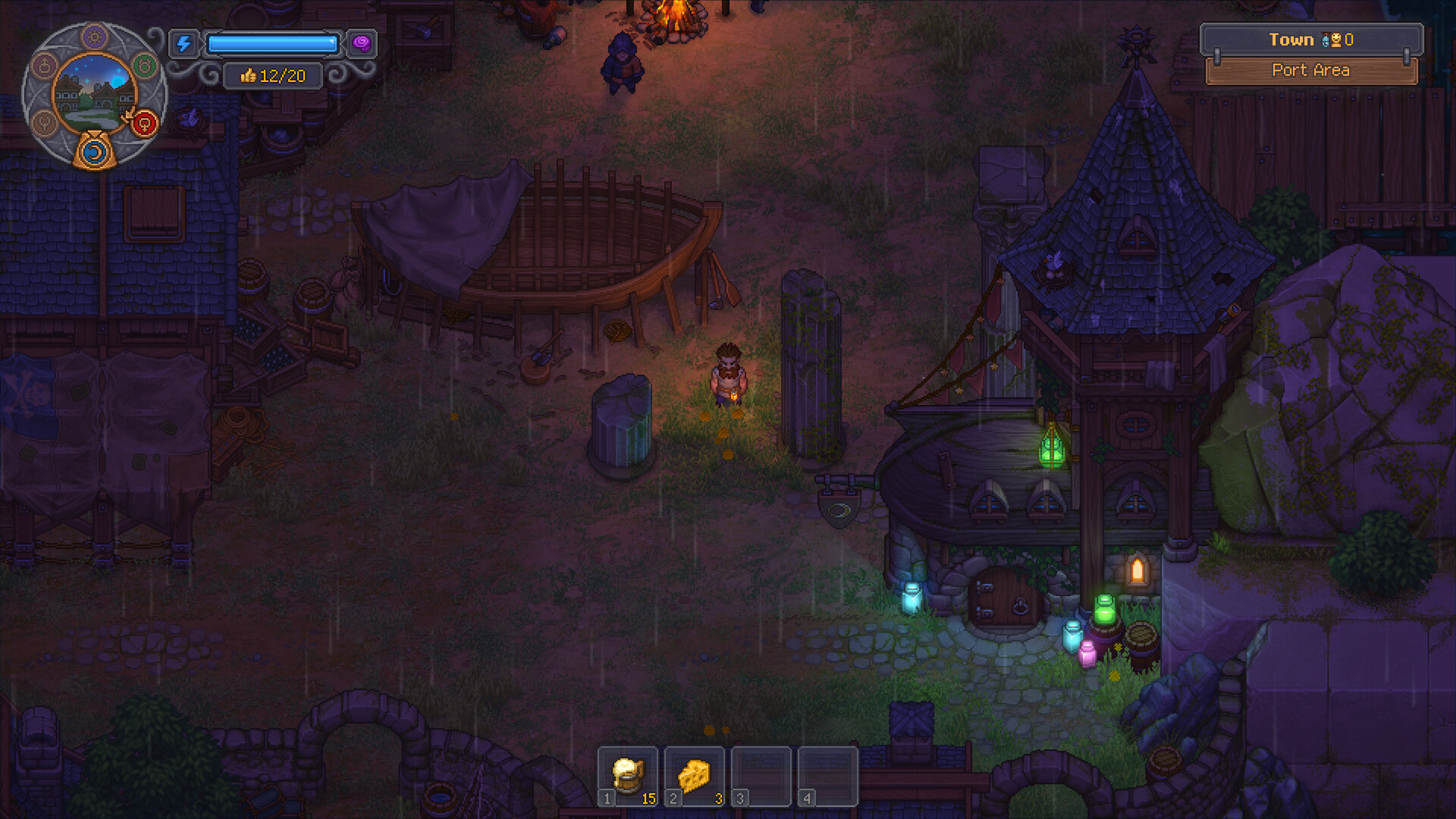
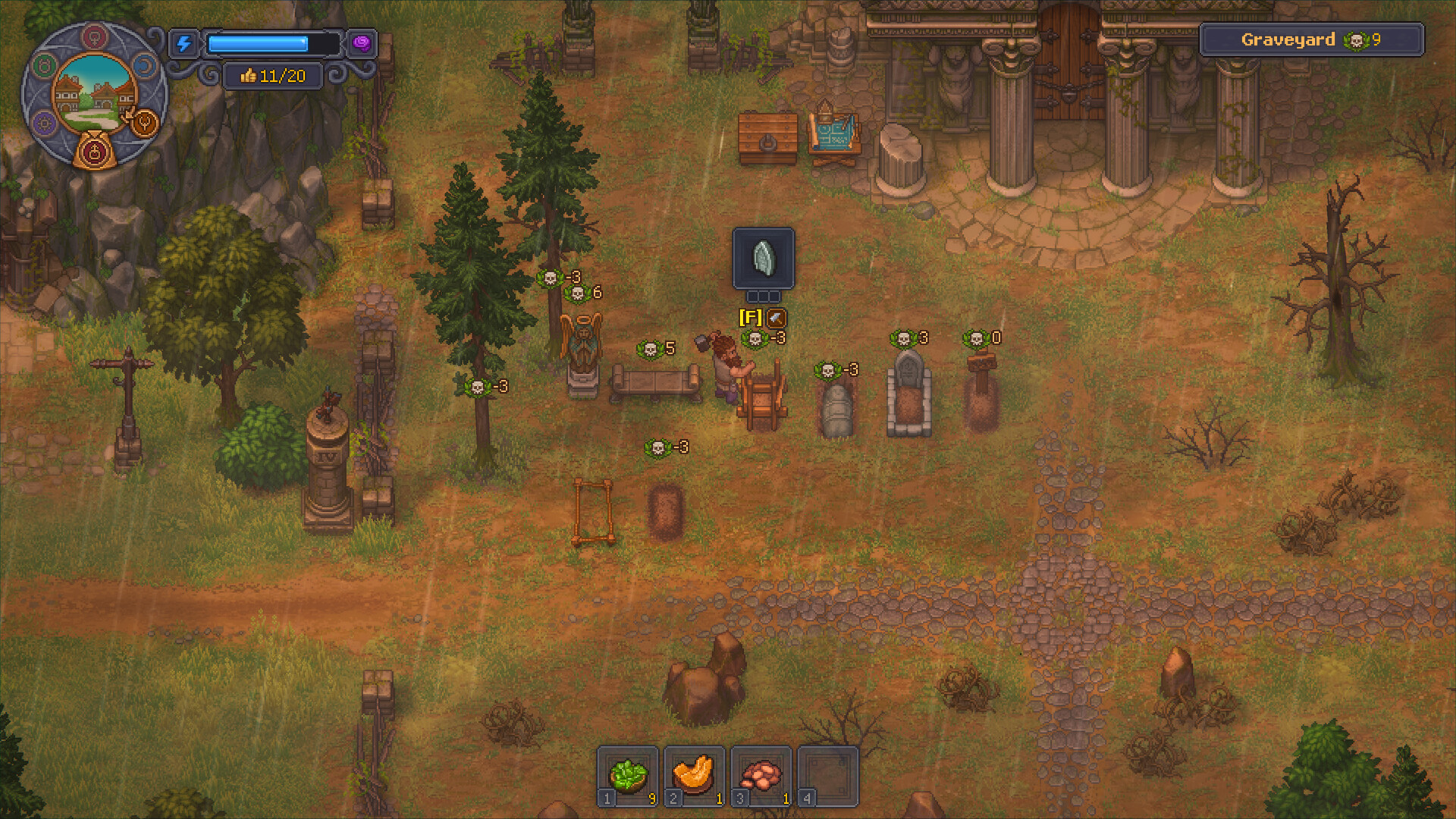
The visual result is deliberately continuous with the first game rather than a clean break. Scenes still read as the same hand-drawn, top-down churchyard world, but weather, time of day and light sources now behave like they have somewhere to fall. Rain streaks across the graveyard at dusk; the port district after dark is lit almost entirely by lanterns and glowing bottles.
The demo is the on-ramp, and it counts
A demo went live on 14 September across Steam, PlayStation, Xbox, Switch 2 and Switch. It covers the opening stretch of the Town and gives you a first pass at crafting, scavenging, grave-digging, graveyard decoration and leading an army. Crucially, tinyBuild confirmed that demo save files carry over into the full release, so anyone who played it last week is not starting again today.
Pre-orders unlock a Sauna building and an outfit for the new Grand Inquisitor, with the outfit varying by the platform you bought on.
Price, features and PC requirements
Graveyard Keeper 2 is $24.99, discounted 20 per cent to $19.99 on Steam at launch. It is single-player only, with Steam Achievements, Steam Cloud, full controller support including DualShock and DualSense, custom volume controls, and a "playable without timed input" accessibility tag, which matters more than it sounds in a game that now includes battles.
The PC specifications are modest. The minimum is Windows 10 64-bit, an Intel Core i3 of 13th-generation vintage or equivalent, 6GB of RAM and a GeForce GTX 1650, with DirectX 12 and just 4GB of storage. The recommended tier moves to a Core i5, 8GB of RAM and an RTX 3060. The storage figure is the striking one: a 4GB install in 2026 is close to a rounding error, and it means the whole thing will sit comfortably on a handheld alongside everything else.