ATLUS aired the second episode of its Persona 4 Revival Broadcast on September 19, and unlike the first instalment — which spent most of its running time re-establishing Inaba, the Midnight Channel and the murder case that drives the whole thing — this one was about the people. The broadcast worked through the remaining members of the Investigation Team, brought the Dojima household and a certain mild-mannered detective on screen, spent a stretch on how a fight actually plays out, and then closed with the piece of genuinely new information: a Social Link who was not in the 2008 original, and a whole category of story content built around her family's restaurant.
The rest of the Investigation Team finally shows up
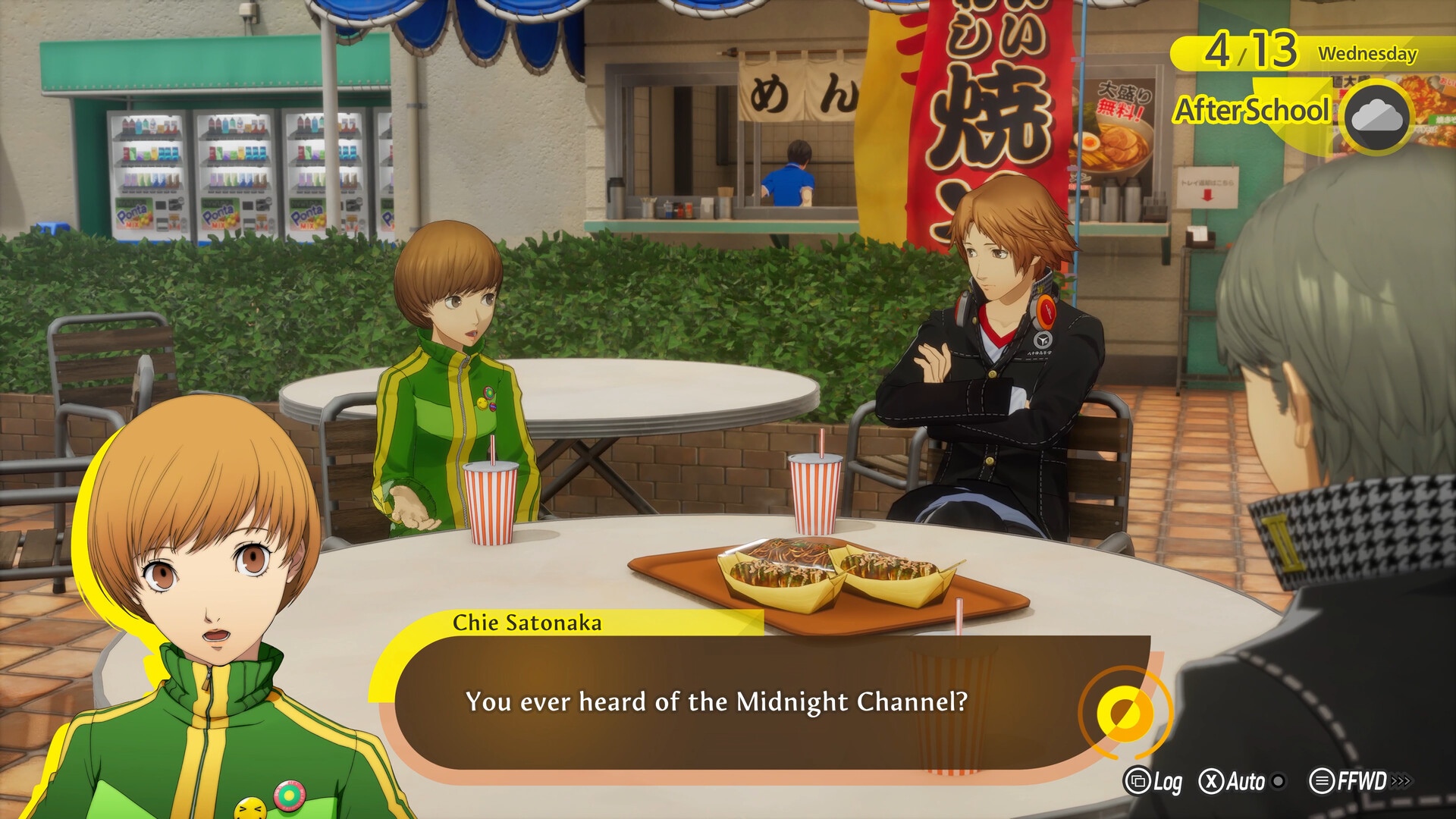
The first broadcast stopped after the early recruits. Episode two picked up where it left off and covered Rise Kujikawa, Kanji Tatsumi, Naoto Shirogane and Teddie — effectively the back half of the roster, and the half that carries most of Persona 4's heavier material. Kanji's segment lands with a little extra weight for anyone who has been following the reveals, because his English voice was the headline of ATLUS's PAX West appearance earlier this month, and this is the first time the new performance has been shown in the context of the full cast rather than a standalone trailer.
Beyond the party, the broadcast also introduced the supporting cast: Nanako Dojima, Ryotaro Dojima, and Tohru Adachi. Presenting all three together is a reasonable way to handle a remake of a game whose twist is older than some of its audience — the Dojima house is where Persona 4 does its quiet work, and Adachi is the reason the quiet work matters. ATLUS is not pretending the story is a secret, but it is clearly framing these three as a unit rather than as background furniture.
Aika Nakamura is a new Social Link
The genuinely new addition is Aika Nakamura, the daughter of the couple who run Aiya, the Chinese diner in Inaba's Central Shopping District. In the original game Aika existed mainly as a delivery gag and the gatekeeper of the Rainy Day Mega Beef Bowl Challenge; here she gets a full Social Link of her own.
That matters more than a single extra confidant normally would, because of what her link is attached to. Persona 4's Social Links were always split between party members, whose arcs are load-bearing for the plot, and townspeople, whose arcs exist to make Inaba feel inhabited. Aika sits in the second group but is being used to open up a mechanic, which suggests ATLUS is doing more here than padding the calendar with a new face.
Location Episodes dig into Inaba's past
The system is called Location Episodes, and it starts with Aiya's owners asking the protagonist to look into what Inaba used to be like in the old days. Following that request unlocks episodes set around the town's locations that fill in the history of the cast — and, importantly, not only the cast you fight alongside. ATLUS specified that Location Episodes cover characters outside the Investigation Team as well.
Structurally this is a smart fit for a game that already asks you to walk the same shopping district several hundred times across a calendar year. Persona 4's map is small and deliberately repetitive; the flood plain, the shrine, Junes and the Central Shopping District are the entire world outside school and the TV. Attaching optional stories to those places gives the repetition somewhere to go, and gives returning players a reason to revisit locations they would otherwise treat as menu entries.
It also fills a gap the original had. Persona 4's side characters are vivid but thin — you learn a lot about Inaba's mood and very little about its history. A system that hands out backstory for townspeople is the kind of addition that only makes sense in a remake, where the developer already knows exactly which corners of the setting players got attached to.
What the combat segment showed
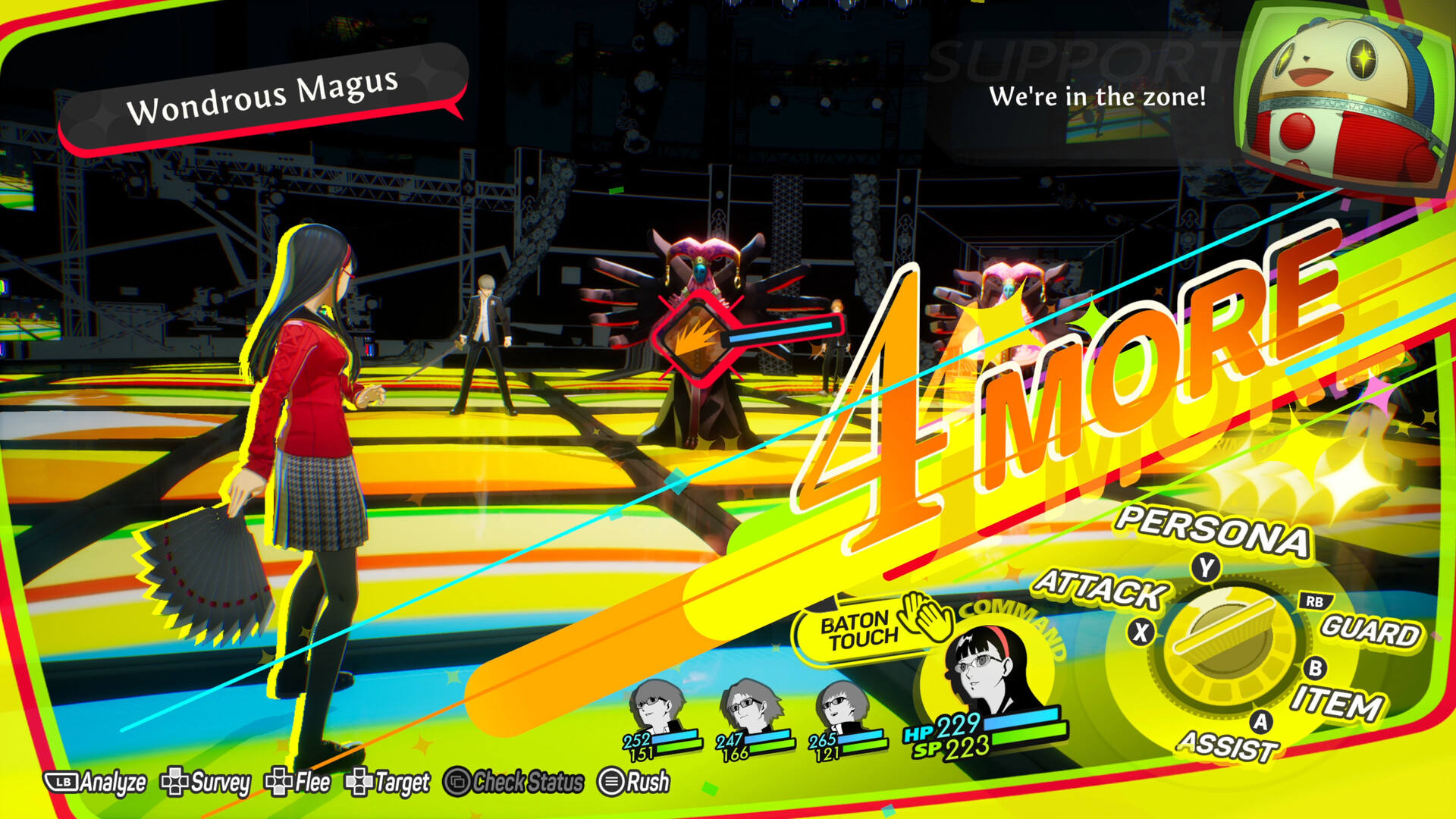
After the character introductions, the broadcast moved to battle. Persona 4 Revival's fights keep the turn-based skeleton the series is known for — knock an enemy down by hitting a weakness or landing a critical, bank the extra turn, hand it to a teammate through Baton Touch, and try to chain the whole party into an all-out attack before the enemy gets to act. What has changed is the presentation layer. The on-screen furniture is far busier than the original's flat menus: the extra-turn counter now sprawls across the screen in Persona 5-style kinetic typography, the command wheel sits in the bottom right with the full ability set mapped out, and Rise's support callouts appear in her own television frame in the corner.
Analyse, Survey, Flee, Target, Check Status and Rush all sit on the same bar at the bottom of the screen, which is a meaningful quality-of-life shift for a game whose original version buried a lot of that behind submenus. The party also gets an explicit Assist command alongside Attack, Guard, Persona and Item. None of this changes what Persona 4's combat is, but it does bring the moment-to-moment friction closer to what the series has trained people to expect over the last decade.
Kozuka's message, and the wait until February
The broadcast wrapped with a message from composer Ryota Kozuka, who is handling the music for the remake. Kozuka's involvement has been public since the game's earlier showings, and his appearance here mostly serves as confirmation that ATLUS considers the soundtrack a headline feature rather than a port job — which, given that Shoji Meguro's original score is one of the most recognisable things about Persona 4, is a job that comes with a fair amount of scrutiny attached.
Both English and Japanese versions of the broadcast went out, which has become standard for ATLUS's Persona marketing and is worth noting only because the dub casting has been a running thread through this game's reveals rather than an afterthought.
Persona 4 Revival is due on February 18, 2027 for PlayStation 5, Xbox Series X|S and PC via Steam and the Microsoft Store, with a Nintendo Switch 2 version following on May 20, 2027. ATLUS is developing, SEGA is publishing. At roughly five months out from the first wave of platforms, a broadcast that spends its time on party members, town characters and a new optional system reads like a game that is past the "here is the concept" stage and into showing the parts it expects people to actually spend hours inside.