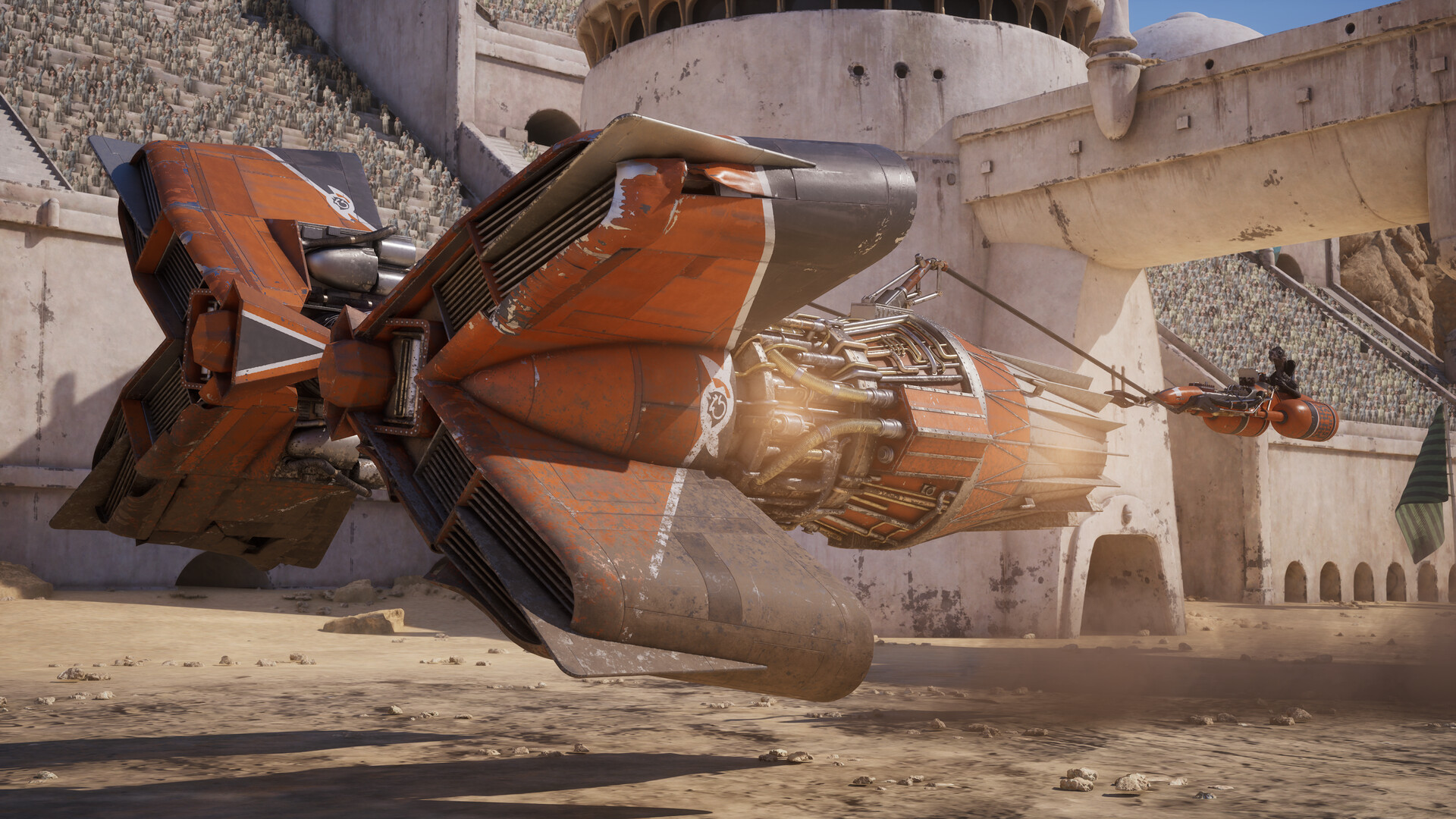
Star Wars: Galactic Racer is out today, October 6, on PC, PlayStation 5 and Xbox Series X|S. It is the first Star Wars racing game in more than two decades, and it comes from Fuse Games, the Guildford studio founded in 2023 by veterans of Criterion, the team behind Burnout and Need for Speed. Secret Mode publishes, Lucasfilm Games has been involved since the start, and the standard edition costs $59.99 on Steam.
A racing league built on the Empire's collapse
Galactic Racer is set after Return of the Jedi, in the New Republic era. With the Empire gone and the new government still finding its feet, the Outer Rim has turned to gambling, spectacle and speed. Out of that comes the Galactic League, an unsanctioned circuit where crime syndicates back pilots and fortunes change hands in a single lap.
You play as Shade, a loner with a grudge against the Bool family. The League was founded by Darius Pax, a former podracer mechanic, but it is now run in all but name by the racer Kestar Bool and his clan. Pax brings Shade in to break Bool's grip on the competition he built. There are no Jedi and no Force powers here. The store page puts it bluntly: no prophecy, just skill, strategy and nerve.
Fans of The Phantom Menace will spot familiar faces on the grid. Podracing veterans such as Sebulba and Ben Quadinaros turn up, and the tracks span several planets, including Tatooine, Jakku, Ando Prime, Lantaana and Sentinel One.
Four vehicle classes, one new to Star Wars
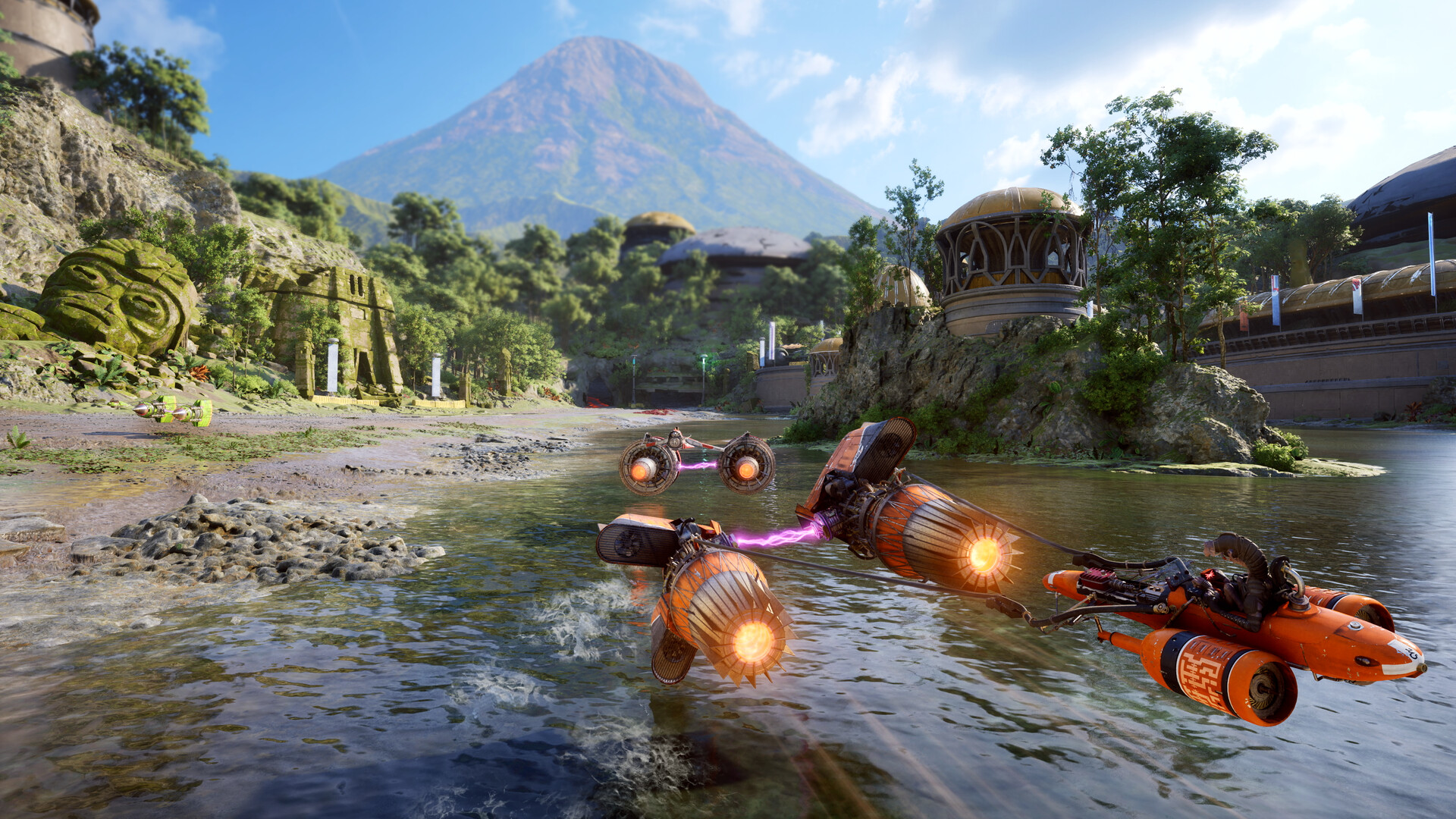
The game is not all podracing. There are four classes of repulsorcraft, and each handles differently: podracers, landspeeders, speeder bikes, and skim speeders, a class created for this game. You build and tune your vehicles as you go, and customisation opens up the further you get into the campaign.
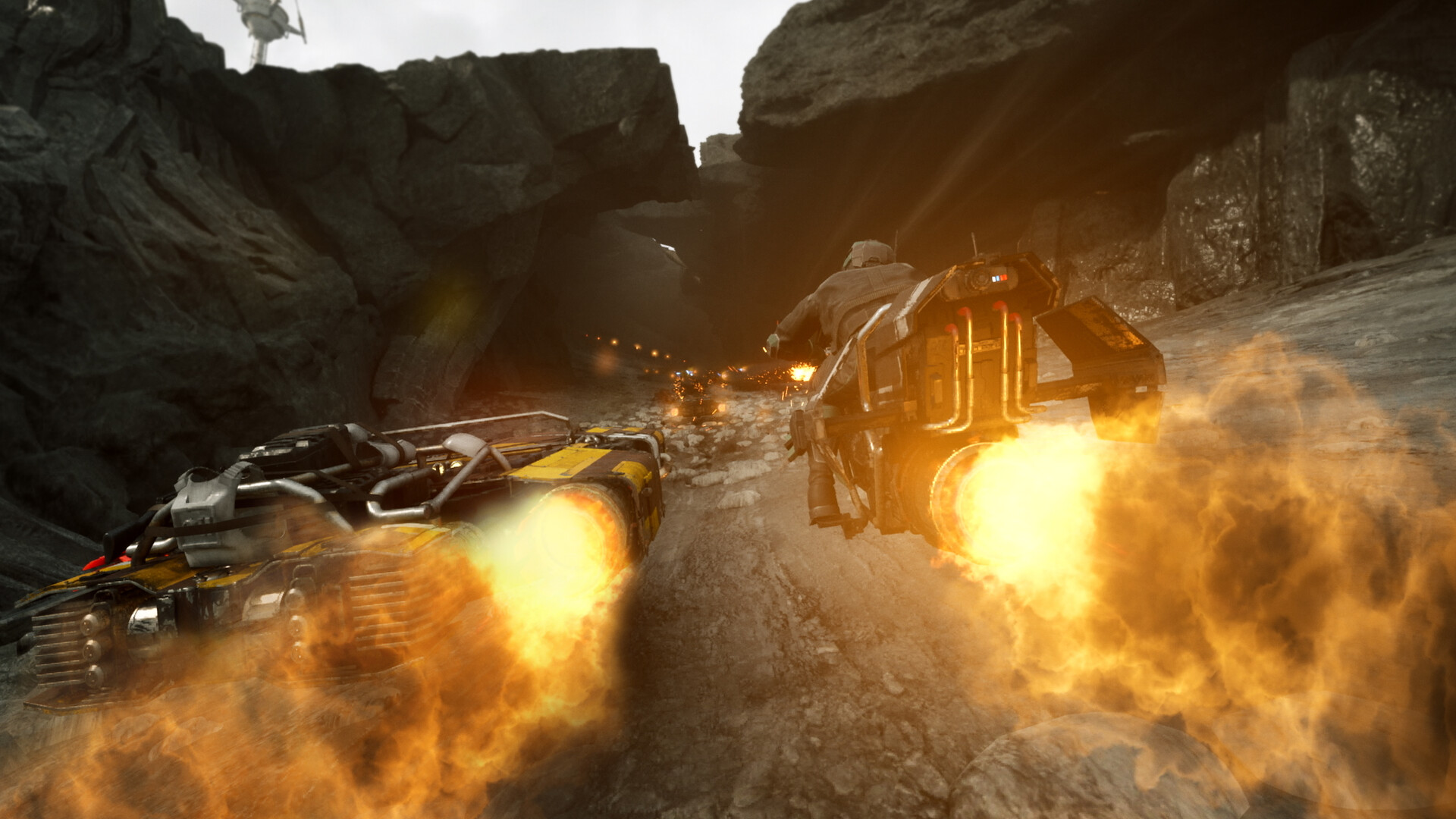
The racing borrows heavily from its creators' Burnout roots. You can slam, shunt and take down rivals, and Fuse ties risk directly to reward, so aggressive driving pays. According to the developers, there is no single ideal racing line on any track, which pushes players to find their own routes instead of memorising one perfect lap.
A roguelite campaign instead of a car collection
The most unusual part of Galactic Racer is its structure. Fuse calls it a runs-based racer: the single-player campaign works like a roguelite, so the order of events and the path the story takes shift with how you play and what you achieve. Between races you choose your missions, tracks and challenges, and those choices steer the story. The studio calls the result a "racing adventure", with sections off the track as well as on it.
Fuse has said it wanted to move away from the progression loop most racing games have followed for decades: race, earn credits, buy a faster car, repeat. Procedurally varied runs are meant to give the campaign replay value that a fixed career ladder doesn't have. Difficulty can be adjusted for players who want the story without the grind.
Alongside the campaign there is an arcade mode for quick races and a scenario mode with time trials and races built around other objectives.
Multiplayer and the Deluxe Edition
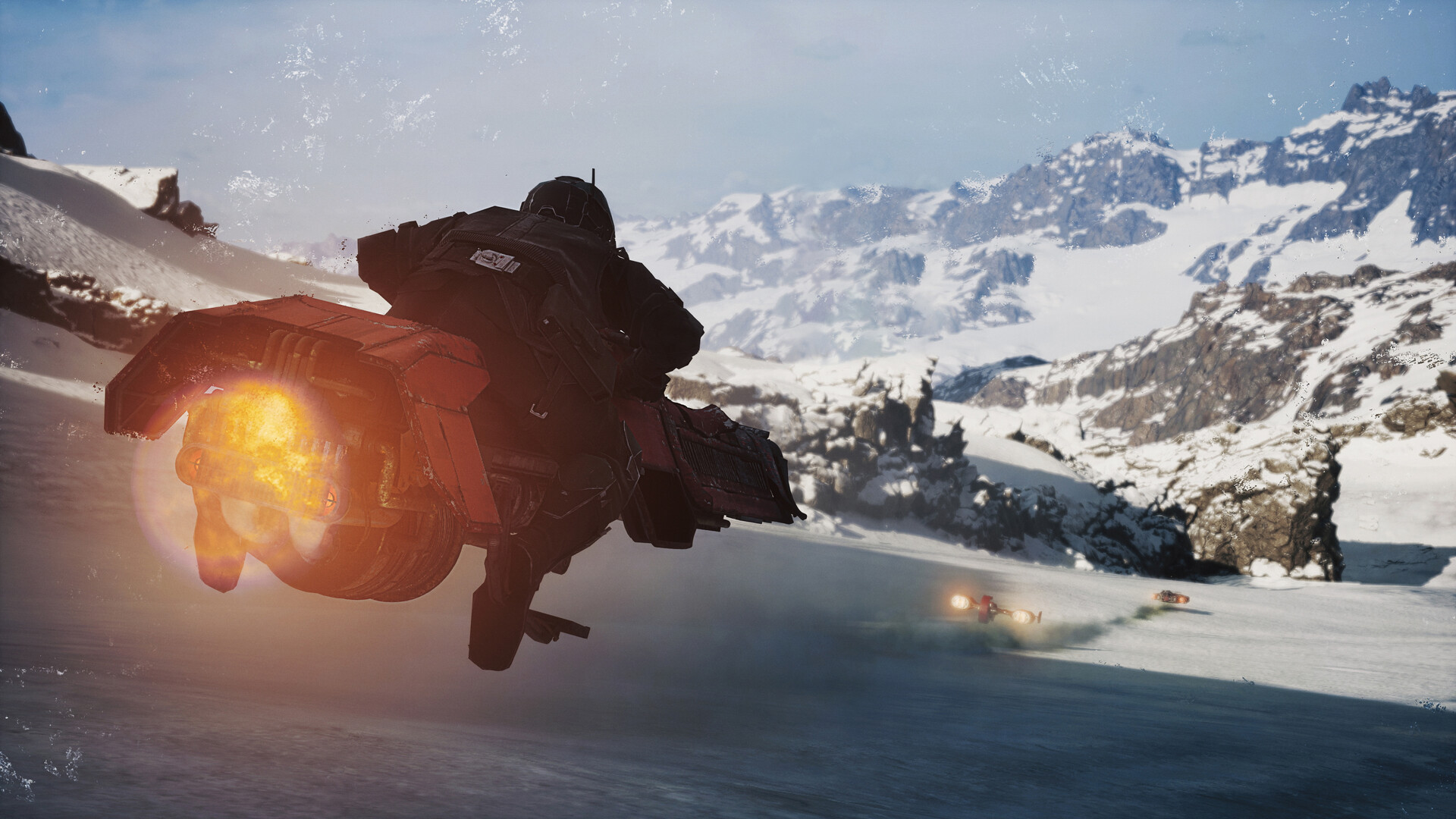
Online races hold up to 12 players, and the game frames them as PvP grudge matches in which your reputation carries over from race to race. A ranked system is planned for multiplayer.
The Digital Deluxe Edition adds three Kor Sarun vehicles (the Ciza T speeder bike, the Darc X landspeeder and the Rak S skim speeder), a livery inspired by the Naboo N-1 starfighter, three exclusive Arcade events built for those vehicles, a multiplayer banner, and a digital art book of concept art from development. Players who already own the standard game can buy the Deluxe Upgrade separately on Steam.
PC requirements
The minimum spec on Steam calls for Windows 10, an Intel Core i5-8400 or AMD Ryzen 5 2600, 12 GB of RAM, and an Nvidia RTX 2060, Intel Arc A580 or AMD Radeon RX 5600 XT with 6 GB of video memory. The install needs 50 GB of space, and an SSD is required. The store page does not list a recommended spec yet.
Where it fits
Galactic Racer is the fifth Star Wars racing game, after Episode I: Racer in 1999, Racer Arcade in 2000, Super Bombad Racing in 2001 and Racer Revenge in 2002. It was revealed at The Game Awards in December 2025, got its release date in April, and showed its story in June. Fuse's founder Matt Webster worked on Star Wars Battlefront and Battlefront II with DICE while he was at Criterion, so this is not the team's first trip to that galaxy. It is, however, the studio's debut, and it arrives in a crowded October.