Titan Quest II finally has a finish line. THQ Nordic and Grimlore Games announced today that the mythological action RPG will leave Early Access on January 19, 2027, and that version 1.0 will launch on PlayStation 5 and Xbox Series X|S on the same day it arrives in full on PC through Steam and the Epic Games Store. The console versions are priced at $59.99 / €59.99 and the PC release at $49.99 / €49.99. That brings the sequel to a game that has been without a numbered follow-up for almost twenty years to a much wider audience than the PC-only Early Access crowd that has been playing it since August 1, 2025.
A year and a half in Early Access
By the time it ships, Titan Quest II will have spent close to eighteen months in Early Access on Steam. In the studio's announcement, framed as a proclamation from Hermes, it credits "hundreds of thousands" of players with shaping the game over that time. Its updates have added new regions, new masteries and new loot, and the most recent major drop brought the Spirit mastery and a crafting system, both since tidied up by a run of hotfixes through August.
Grimlore describes 1.0 as the point where all of those threads come together into the complete campaign it had always planned, "plus a fair bit more." The studio has not yet broken down exactly what the "more" is. The official site and store pages still point to the same pillars the game was built on, so those are what players should expect to see finished in January.

Nemesis, the Moirai and a handcrafted Greece
The story puts you up against Nemesis, the Goddess of Retribution, who has gone rogue. She is corrupting the Threads of Fate spun by the Moirai and sentencing anyone who resists her to eternal punishment. Your job is to fight alongside the gods, free the people she has condemned and, in the game's own words, change fate itself.
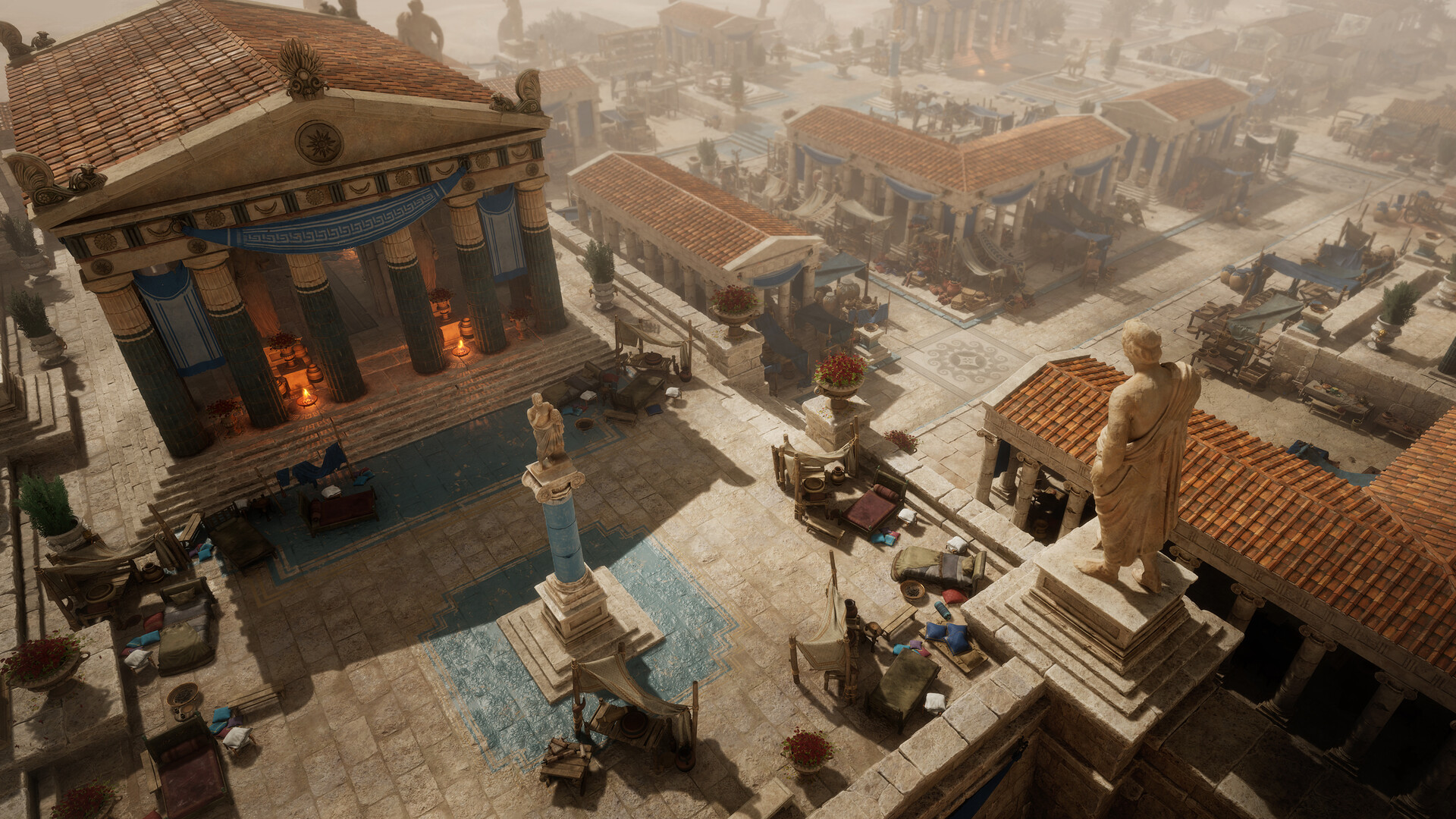
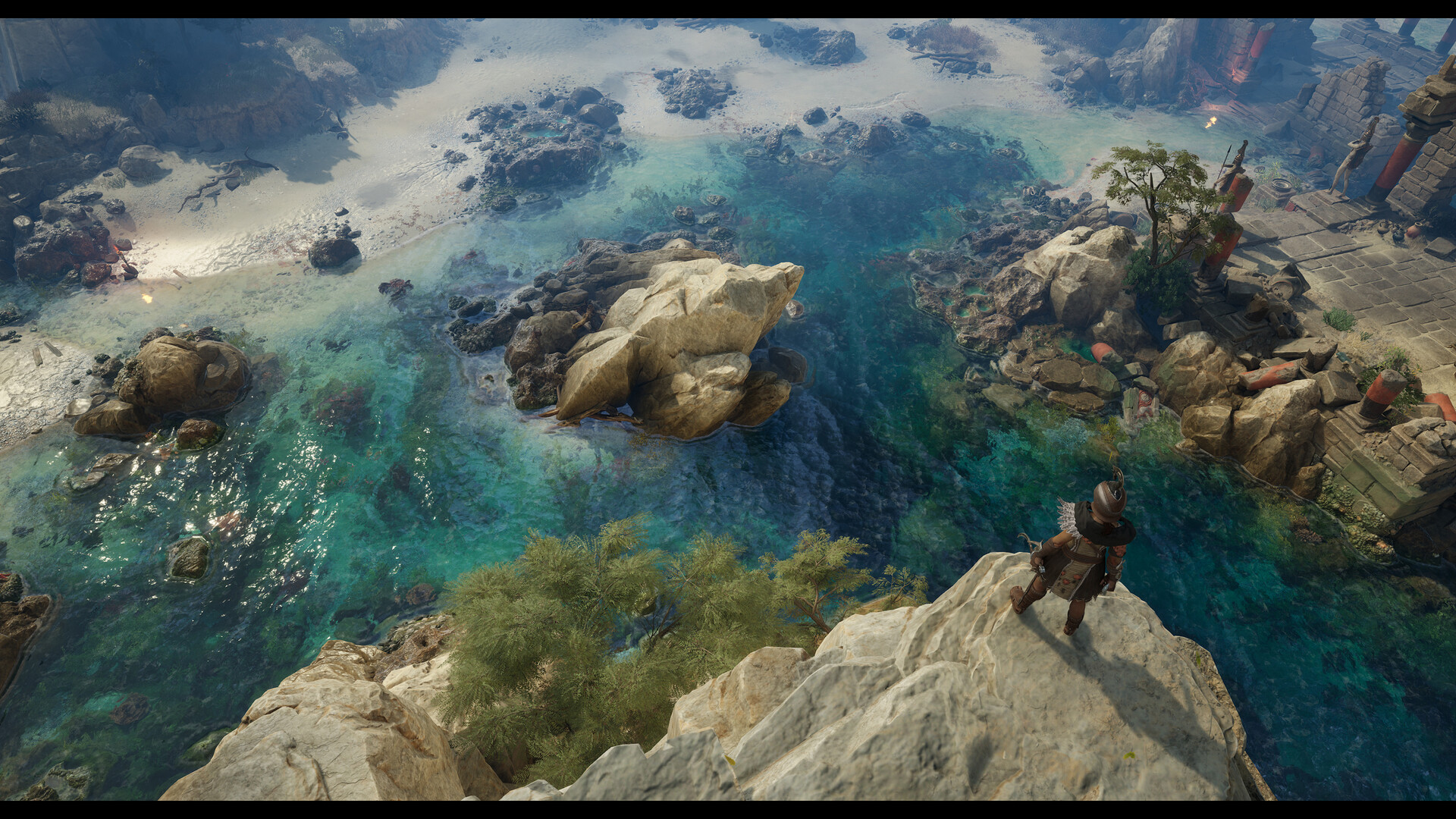
Unlike many of its genre neighbours, Titan Quest II does not generate its world procedurally. Grimlore stresses a handcrafted campaign built around exploration, running from beaches and temple complexes to ruins haunted by the dead, and on into places no mortal is meant to reach, including the realm of the Moirai. The bestiary leans on both classical myth and the original game: ichthians, centaurs, gryphons, hippokampoi and cyclopes all return, alongside legendary monsters tucked away in hidden groves. Towns, conversations and found items are designed to lead to side discoveries, so the game is pitching itself as something to explore, not only a loot treadmill.
Two masteries, one hybrid hero
The feature that defines the series is still here. Instead of picking a fixed class, you combine two masteries and play the hybrid that results. The Early Access build has been shipping disciplines such as Warfare, Rogue, Forge and the newer Spirit, and each pairing produces its own class. Skill modifiers, attributes and gear then push that combination in different directions, so two players with the same pair of masteries can still end up with very different characters.
Grimlore's own build guides show how far that goes. A recent one paired Warfare with Spirit to make a Revenant built around stacking buffs onto a single beam attack, spending health reserves and summoned shades as a resource. That's the kind of theorycrafting that keeps an ARPG community busy long after the campaign credits roll.
Combat that fights back, difficulty you set
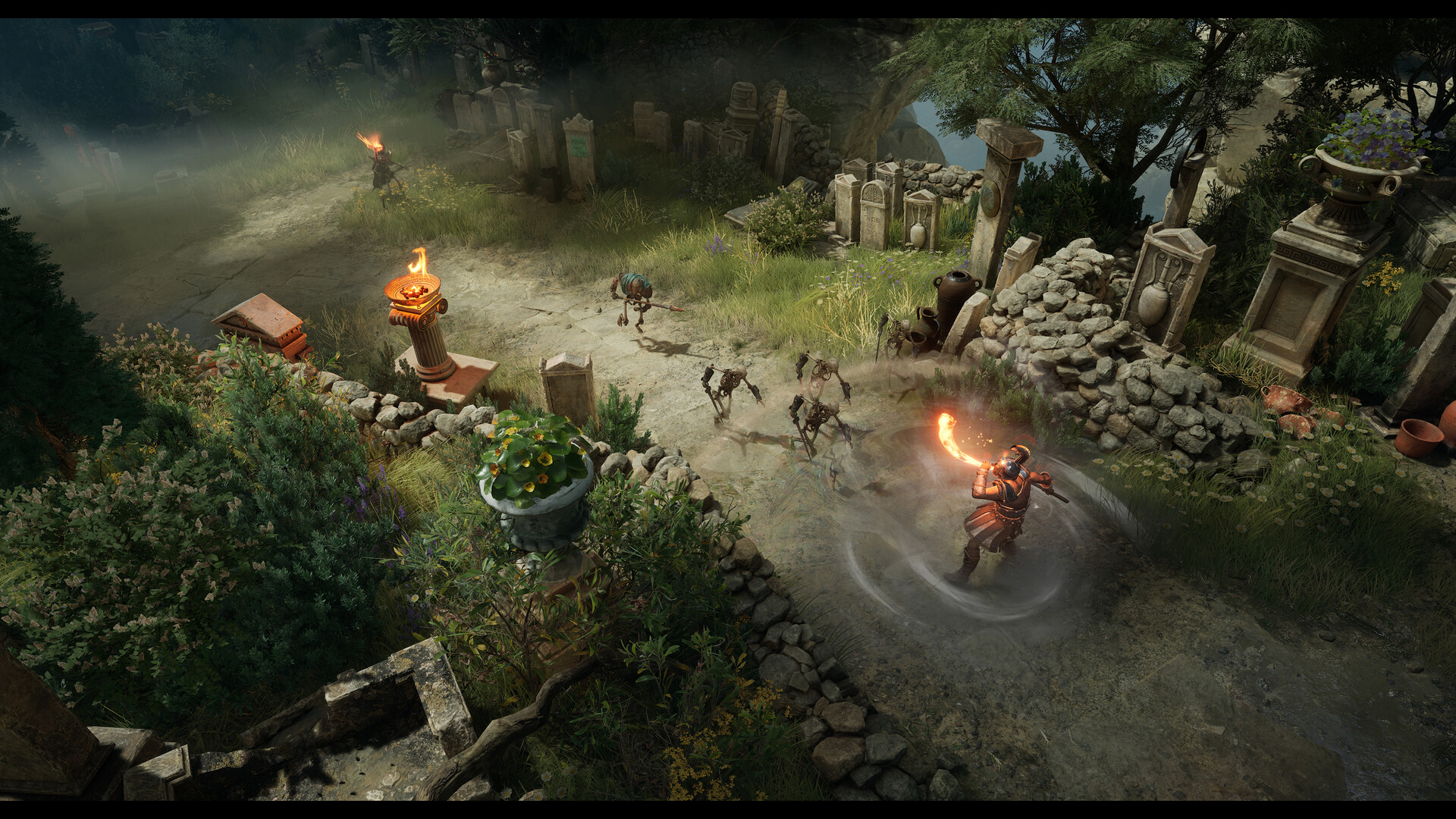
THQ Nordic describes combat as challenging by design. Enemies are organised into factions that coordinate, combining their abilities rather than rushing you one at a time. The answer on the player's side is active defence: dodge incoming attacks, counter, then punish with a flurry of blows. To stop that from becoming a wall, a Rituals system lets players tune the difficulty up or down themselves.
Loot follows the same philosophy. The studio's line is that every item has a purpose and every build has options for gear, a pointed contrast with ARPGs that bury players in piles of vendor trash. How well that holds up at the endgame is something the full release will have to prove, but it is the stated goal.
What the console launch means
The console versions are the biggest change in today's news. The original Titan Quest, released in 2006, was a PC game for most of its life before later ports. The sequel is going day-and-date on PS5 and Xbox Series X|S from the start of its full release. Grimlore, best known for the SpellForce 3 strategy RPG, now has less than four months to get an interface and control scheme designed around mouse-driven skill bars feeling right on a controller.
The $10 price gap between console and PC is worth noting too. PC players can still buy into Early Access now and carry on into 1.0, while console players will be meeting the game for the first time in its finished form in January.
The date
Titan Quest II launches in full on January 19, 2027 for PS5, Xbox Series X|S and PC via Steam and the Epic Games Store, at $59.99 on consoles and $49.99 on PC. The Early Access version remains available on Steam until then. That puts it in a January window that is quiet for new releases, and ARPG fans in particular will notice.