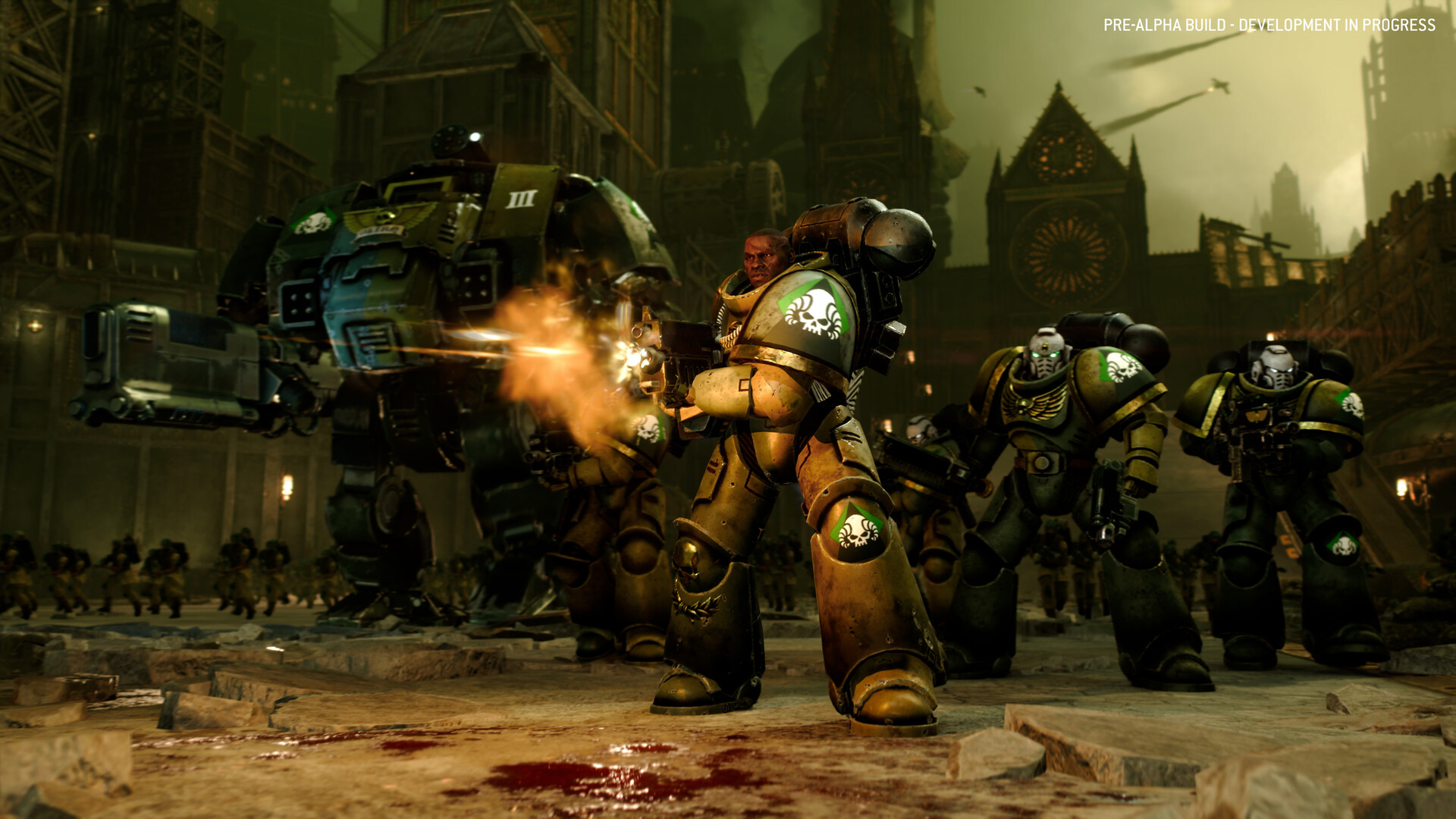
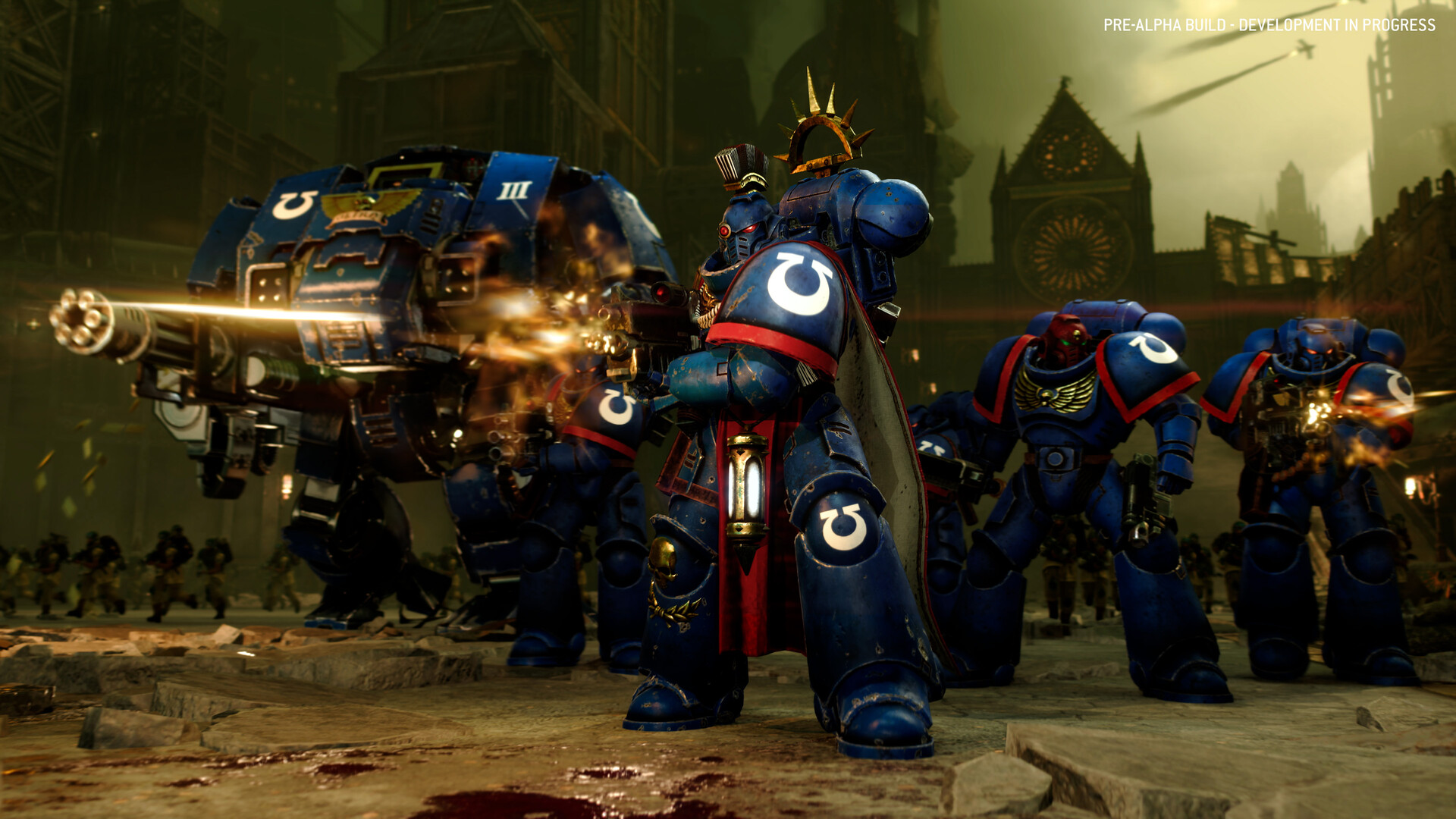
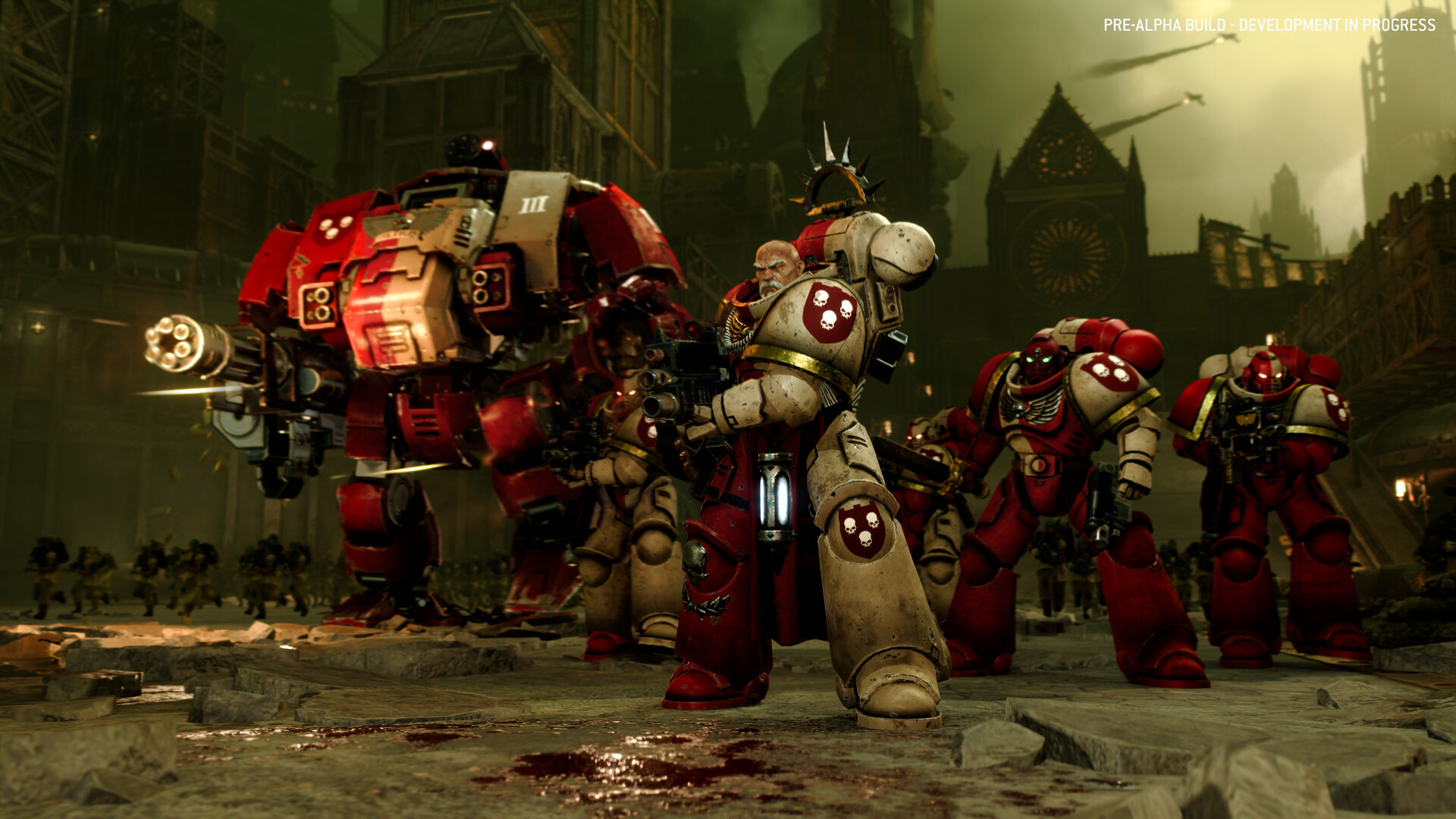
Creative Assembly aired its second Total War: Warhammer 40,000 "Show & Tell" stream on May 1, and the headline reveal was probably the most significant gameplay confirmation we have had since the game's reveal trailer dropped at The Game Awards in 2025: the upcoming entry in the long-running strategy series will feature destructible terrain at a scale the franchise has genuinely never attempted. We are not talking about a single scripted explosion or a handful of breakable walls in the corner of a map. According to battle product owner Dave Petry, who hosted the segment alongside members of the design team, full cover destruction is going to be a foundational mechanic of how 40K's battles play out.
The quote that's been making the rounds since the stream went live is the one Petry delivered halfway through the demonstration: "That forest, if you don't like it, you don't have to keep it." He was talking, deliberately, about the kind of moment that has frustrated Total War fans for fifteen years — a thicket of trees blocking a critical sightline, a rocky outcropping that prevents you from putting your tanks in the perfect position, a chunk of map geometry that the AI knows how to exploit and you don't. In Total War: Warhammer 40,000, you can simply remove that forest. Bring the right ordnance — a Leman Russ tank, an Imperial Knight, a Tyranid Bio-Titan — and the offending terrain is just gone.
Why Cover Destruction Matters in 40K Specifically
This isn't a feature Creative Assembly bolted on for spectacle. It is, by Petry's own description, a direct response to one of the core design problems of bringing the Warhammer 40,000 universe to a strategy game in the first place. The 40K tabletop has always been built around long-range, flat-trajectory firepower — bolters, lascannons, autocannons, plasma — weapons that punish anyone caught out of cover and demand that you think about line-of-sight at a level Total War: Warhammer's fantasy roster never really had to worry about.
In the Warhammer fantasy trilogy, your typical battle line was a melee infantry brick supported by a handful of crossbow units and the odd wizard. Cover was nice but rarely decisive — you could win battles standing in the open as long as your front line held. In 40K, you can't. A unit of Space Marines exposed in open ground will be cut down in two volleys. A Guardsman platoon outside cover is functionally already dead. Petry confirmed this directly: "Given the universe is full of really powerful but flat-firing weapons, cover becomes incredibly important."
And once cover is that important, taking cover away from the enemy becomes the most valuable thing you can do on the battlefield. That is exactly what destructible terrain is solving for. Turning a wall to rubble doesn't just give you a clearer shot — it strips the defender of their fundamental tactical advantage. Battles in 40K, in other words, are going to be a back-and-forth of who can deny cover faster, not just who can grind through whose front line.
How Far Does the Destruction Actually Go?
This is where the stream got more grounded. Petry was clear that not absolutely everything on a 40K battlefield is destructible. "We've kept it to areas where it really works and makes sense and can add to the gameplay depth," he said — meaning the destruction system is curated rather than physics-based simulation across every prop. Forests, fortification walls, sandbag emplacements, certain buildings, and modular battlefield clutter all appear to be on the destruction list. Hard map geometry — cliffs, terrain elevation, the actual shape of the ground — is not.
That's a smart line to draw. The studios that have tried fully destructible terrain in strategy games over the years — most famously the original Worms series, more recently certain RTS prototypes — have run into AI pathfinding problems that scale exponentially with the number of breakable surfaces. Creative Assembly is sidestepping the worst of that by keeping ground topology static and limiting destruction to a defined list of "set pieces." From a design standpoint it is the same approach that the studio took with collision-based building destruction in 3 Kingdoms in 2019, just expanded into a much more central role.
Petry also talked about destructible cover working alongside a new cover system that, again, the Warhammer fantasy trilogy mostly didn't need. Units in 40K will benefit from soft cover (forests, ruins) and hard cover (walls, dug-in positions) in distinct ways, with damage reductions and accuracy modifiers attached to each. Both can be removed with sufficient firepower, with hard cover demanding heavier weapons to crack and soft cover yielding to almost any explosive ordnance. The system has clear DNA from the tabletop's cover saves rules, translated into the real-time chaos of a Total War battle.
What This Means for the Series Going Forward
If destructible terrain works in 40K, it almost certainly comes back to the historical Total War games next. Creative Assembly has been openly looking for ways to revitalize the historical line ever since Three Kingdoms wrapped its DLC cycle in 2021, and a Pharaoh successor or a revisited Empire has been rumored at various points. A working destruction system tested in the science-fiction sandbox of 40K is exactly the kind of mechanic that could pivot back into a more grounded historical setting — picture artillery actually flattening a Renaissance fortress wall in real time instead of inflicting an abstract HP value on it.
It also probably means battles in 40K are going to be shorter and more decisive than the long, grinding melee engagements that defined the Warhammer fantasy trilogy. When cover can be erased, positioning matters more than holding ground, and momentum shifts compound much faster. That's a meaningfully different rhythm of strategy game from anything Creative Assembly has built before, and it is going to demand a significantly different multiplayer meta when the game eventually launches.
When Are We Actually Playing This?
The thing the stream did not give us is a release date. Total War: Warhammer 40,000 still has no firm window beyond "2026-or-later," though the game has now passed one million Steam wishlists and is publicly stated to be coming to PC, PS5, and Xbox Series X/S. Creative Assembly's recent show-and-tell cadence — galaxy map reveal in March, allies and faction politics in April, terrain and battles in May — suggests the studio is steadily building toward a heavier marketing push later in the year. A summer or fall reveal of a hard release date would line up neatly with the established rhythm.
For now, the destructible-terrain confirmation is the strongest signal yet that 40K is genuinely going to play differently from Warhammer fantasy, not simply re-skin it. That is exactly what fans have been hoping for since the rumor cycle started two years ago. Whether the rest of the systems — galactic conquest, voidship combat, the much-teased Imperial Knight gameplay — hold up to the same standard is the question that the next Show & Tell will need to answer.