Total Mayhem Games has put a firm date on the next chapter of its co-op puzzle series. We Were Here Tomorrow launches on October 20, and the studio paired the announcement with a release date trailer and — more usefully for anyone planning a co-op night — an actual price and a runtime estimate. It is the first time the Dutch studio has given hard numbers for a game it has been teasing since February.
A date, a price and a discount
The game arrives October 20 at $19.99 / €19.99 / £16.99, with a 10 percent discount running at launch. That is a meaningful step up from where this series started: the original We Were Here has been free on Steam since it launched in 2017, and the follow-ups climbed a rung at a time as they grew — $9.99 for We Were Here Too, $12.99 for We Were Here Together, $17.99 for We Were Here Forever. Twenty dollars for a two-player game that only one of you technically needs to buy is still a cheap evening, but it does signal that Total Mayhem considers this the full-fat entry rather than another mid-size escape room.
There is a Fan Edition on Steam as well, bundling extra downloadable content and the official soundtrack. The studio says the soundtrack will also be sold separately, which matters more than it sounds — the synthwave score has been one of the more distinctive things in the trailers, and the series has never had a standalone release for it before.
Fifteen hours is a large jump
The number that reframes everything else is the runtime. Total Mayhem puts Tomorrow at around fifteen hours of content and calls it the biggest We Were Here adventure yet. For context, the earlier games in the series are built around tight, self-contained puzzle chambers that a coordinated pair can clear in a single sitting; even We Were Here Forever, the most ambitious of them, was a considerably shorter commitment.
Fifteen hours of asymmetrical co-op is a different proposition, and a riskier one. These games live or die on two people staying patient with each other over a walkie-talkie, and the failure mode of a long puzzle game is that one partner drifts. It is the single most interesting question hanging over the release, and one that only the finished game can answer.
Norček Industries and an 80s that never happened
The setup moves the series out of its castles and into a facility. Two Explorers on a rescue expedition get trapped beneath the Antarctic ice, wake up somewhere that is not the world they left, and find themselves inside a Norček Industries site run by a director named Kathleen Bowe. Her research team was reportedly close to a breakthrough before they vanished, and with a global crisis building, she hands the unfinished work to the two people who just fell into her lap.
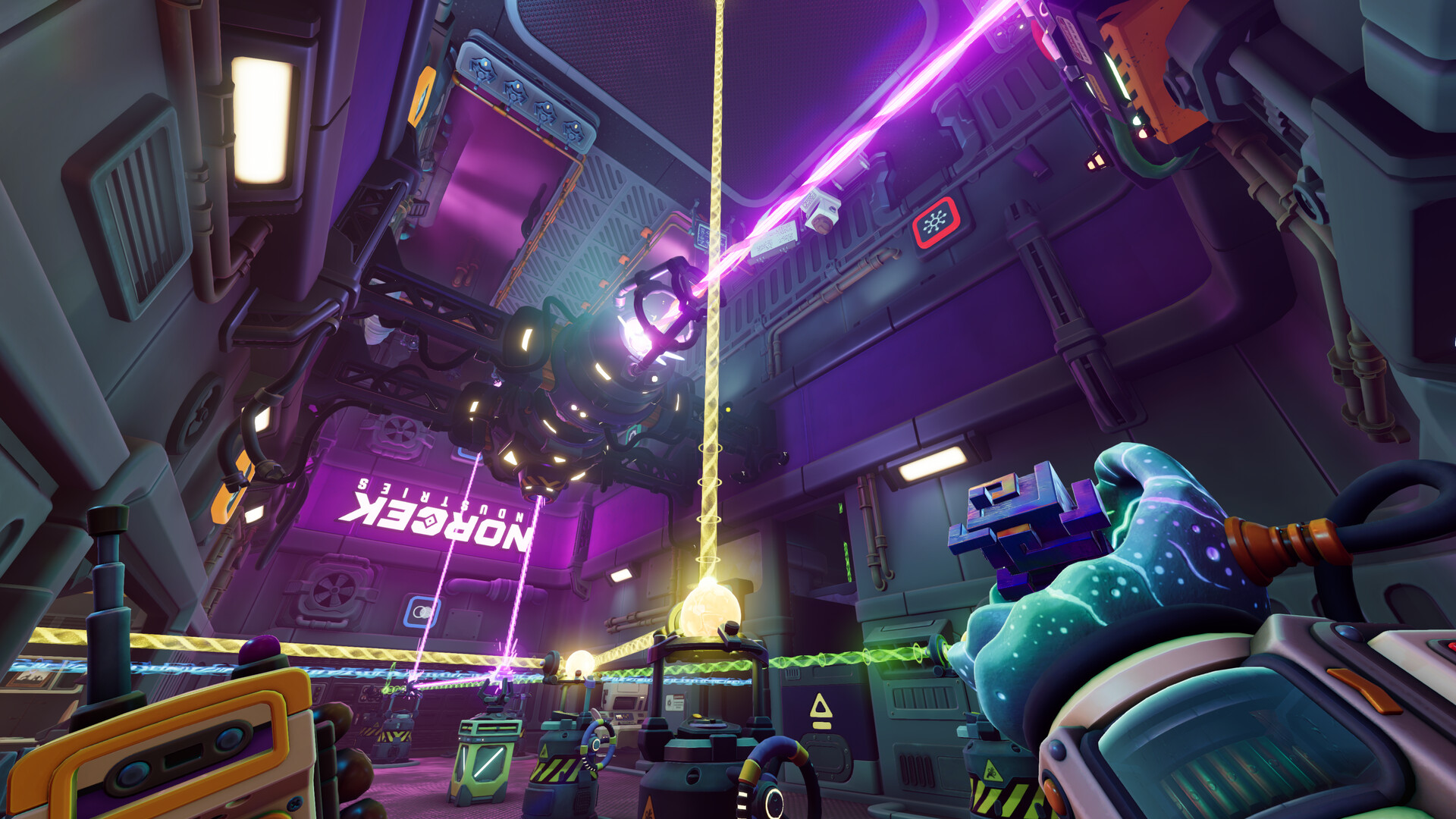
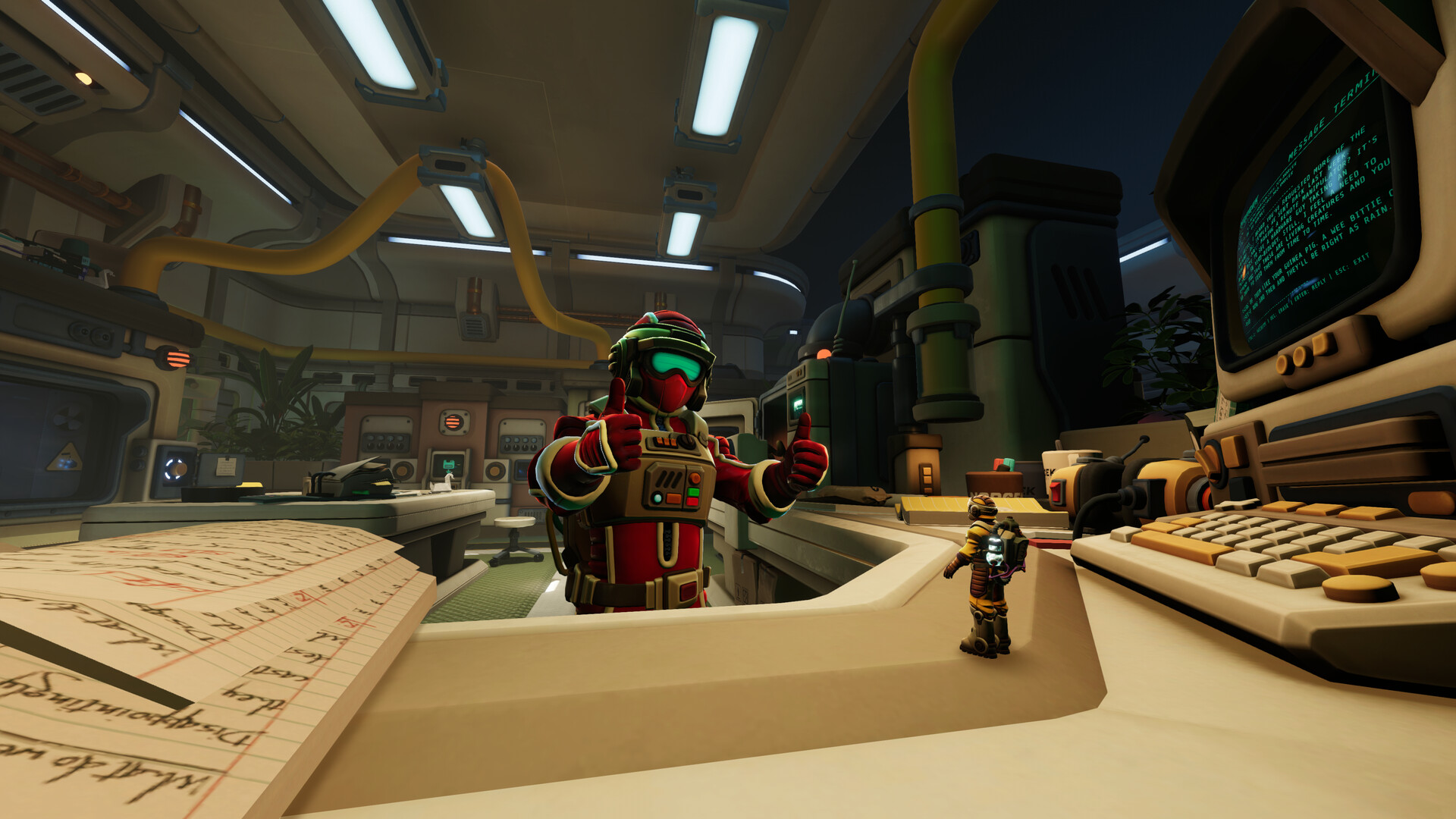
Visually it is a retro-futuristic 80s: beige plastic terminals, chunky keyboards, green phosphor text, pipes in primary colours. The studio has been explicit that the puzzles bend the rules of time, gravity and space, and the screenshots back that up — rooms that read as upside down, signage hanging the wrong way, beams that clearly matter to whatever the solution is. It is a broader canvas than a stone corridor, and it gives the asymmetry somewhere new to go.
Two roles, two tools, one radio
The core loop is unchanged in shape. You and your partner are separated for most of the game and communicate only by walkie-talkie, describing what you can see to someone who cannot see it. What is new is that each Explorer now has a distinct role with its own piece of high-tech equipment, rather than the two of you simply occupying different halves of the same puzzle.
That is a structural change worth watching. The older games generated their best moments from the gap between two descriptions of the same object; giving each player a tool the other lacks turns some of those exchanges into negotiations about who should act rather than arguments about what a symbol looks like. Total Mayhem also notes that every game in the series is standalone — the stories connect, but newcomers are not expected to have played the previous five.
What the store page actually commits to
The Steam listing is worth reading carefully before you plan anything. Its platform row currently covers Windows only, with no macOS or Linux build listed. The store page does advertise cross-platform multiplayer, online co-op, Steam Cloud, Family Sharing and both DualShock and DualSense controller support, so console-side plans clearly exist in some form even if Steam is not the place they will be confirmed.
The requirements are modest for a 2026 release: Windows 11, a Ryzen 5 3600 or equivalent, 8GB of RAM, a GTX 1660 Ti with 6GB, DirectX 12 and 50GB of storage. Integrated graphics are explicitly not supported. The one line people skim past is the hard one — the game is co-op only, and it requires both players to have a working microphone and an internet connection. There is no solo mode and no text-chat fallback. If your co-op partner will not talk, this is not a game you can buy for them.
Full audio localisation is listed for English, Japanese, Brazilian Portuguese, Simplified Chinese and Latin American Spanish, with subtitle support extending to a dozen more including Arabic, Korean, Polish, Turkish and Ukrainian.
One month out
Total Mayhem also says it has updated the game's FAQ alongside the announcement, which is the sort of housekeeping a studio does when it has stopped moving the date around. A month of lead time, a locked price, a stated runtime and a launch discount is about as settled as a release gets. The remaining unknown is whether fifteen hours of two people shouting landmarks at each other holds up as well as ninety minutes of it always has.