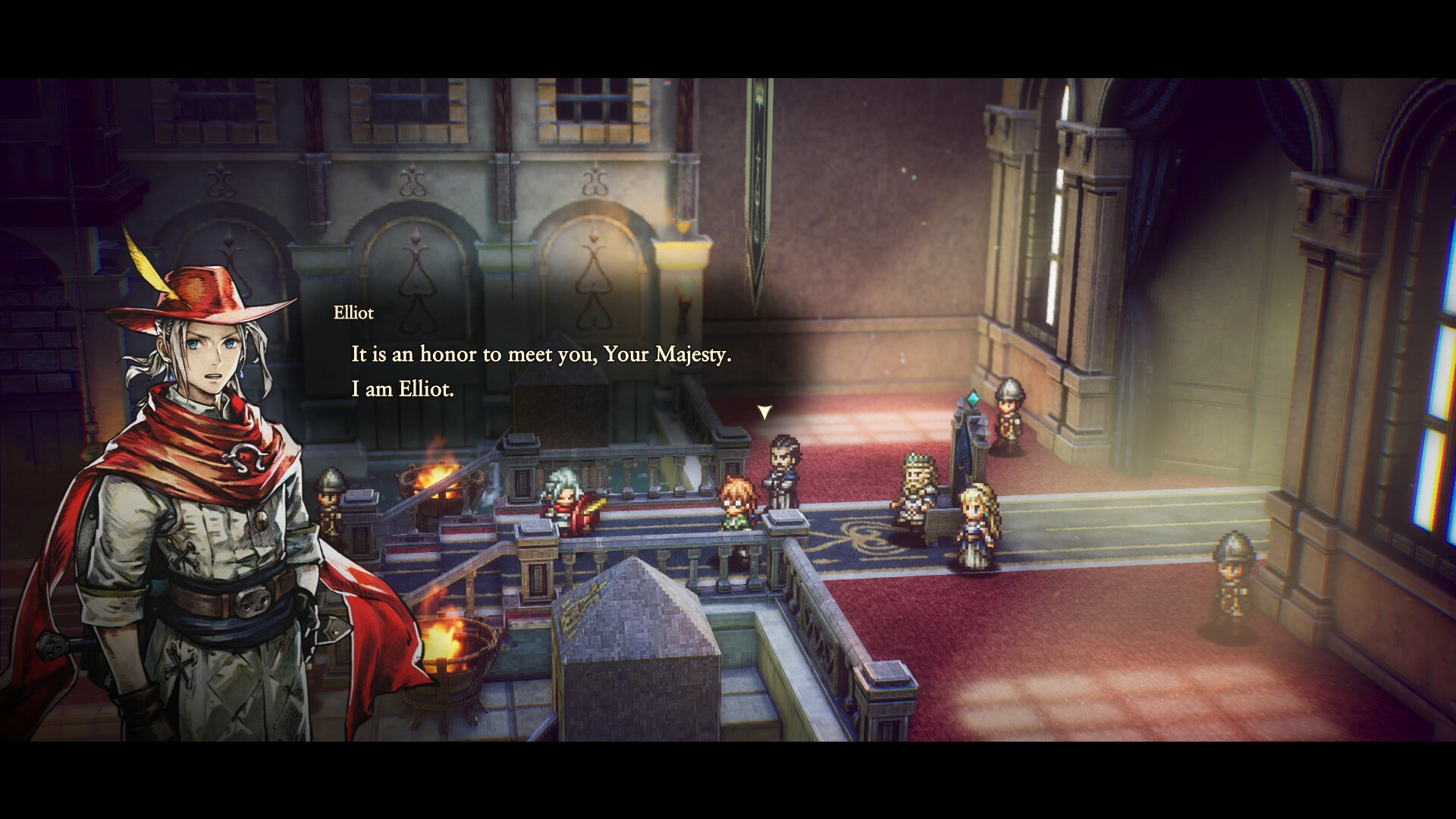
For the better part of a decade, HD-2D has been Square Enix’s signature party trick — that gorgeous collision of chunky sprite work, miniature-diorama environments and lavish modern lighting that made Octopath Traveler feel like a storybook lit from within. But it has almost always been deployed in service of slow, deliberate, turn-based role-playing. The Adventures of Elliot: The Millennium Tales is the moment the style finally takes off the training wheels and learns to run. This is Team Asano and developer Claytechworks’ first real attempt at a full-blooded action-adventure inside the HD-2D framework, and the headline is simple: it works, and it works beautifully.
Released on June 18, 2026 across PlayStation 5, Xbox Series X|S, Nintendo Switch 2 and PC via Steam, Elliot arrives carrying the pedigree of the people behind Octopath Traveler, Bravely Default and Live A Live. That heritage sets expectations sky-high, and for the most part the game clears them. What you get is a compact, lovingly crafted journey that borrows the structure and rhythm of classic Zelda, threads it through a time-travel hook spanning four distinct eras, and dresses the whole thing in some of the most striking environment art the engine has produced to date. It is not flawless — a thin enemy roster, fiddly platforming and an uneven Switch 2 port keep it from greatness — but it is the kind of confident, generous adventure that is very easy to fall for.
A thousand-year quest, told across four ages
The setup is pure fairy tale. You play as Elliot, a young adventurer who, alongside a sharp-tongued fairy companion named Faie, sets out to lift a curse that has been laid upon Princess Heuria. The catch — and the whole conceptual engine of the game — is that the curse cannot be undone in a single lifetime. To break it, Elliot must travel across four different historical ages, with each era building on the consequences of the last. The game’s title is not just flavour: this really is a tale that unfolds over a thousand years.
What makes the structure sing is the way your actions ripple forward through time. Plant a seed in one age and you may find a forest, a friendship or a fortress waiting for you in the next. Choices and small interventions in the distant past quietly reshape the world you return to later, and the game is smart about doling out those payoffs at a pace that keeps you leaning forward. By the time the credits approach, the threads you have been tugging at for hours start to knot together into something genuinely affecting. The true ending, in particular, lands as a well-earned and memorable capstone rather than a cheap twist — the sort of conclusion that rewards players who took the time to poke at every corner of each era.
It is worth being honest about where the writing reaches further than its grasp, though. Elliot wants to be more than a breezy romp; it gestures at weightier themes of legacy, sacrifice and the cost of meddling with history. Those ambitions do not always land. There is at least one major emotional beat — a character death — that arrives without enough setup to earn the gravity the game clearly wants it to carry. The result is a story that is consistently charming and occasionally moving, but one that sometimes mistakes brevity for depth. If you come in expecting the narrative richness of the studio’s turn-based epics, you may find Elliot’s tale a touch slight. If you come in wanting a propulsive adventure with a clever hook and a satisfying finish, it more than delivers.
Faie, the cast, and the texture of each era
Every good adventure needs a voice in your ear, and Elliot has Faie. The fairy companion is part guide, part comic foil and part gameplay system, fluttering alongside you with a running commentary that keeps the tone light even when the plot turns toward loss and legacy. It is a familiar archetype — the chatty fairy is practically a genre fixture by now — but Faie is written with enough warmth and bite to avoid grating, and the back-and-forth between the pair does a lot to carry you through the quieter stretches between dungeons. Faie’s magic also threads directly into the combat and puzzle-solving, so the companionship is mechanical as well as narrative; you are never quite alone, and the game is built around that two-handed dynamic.
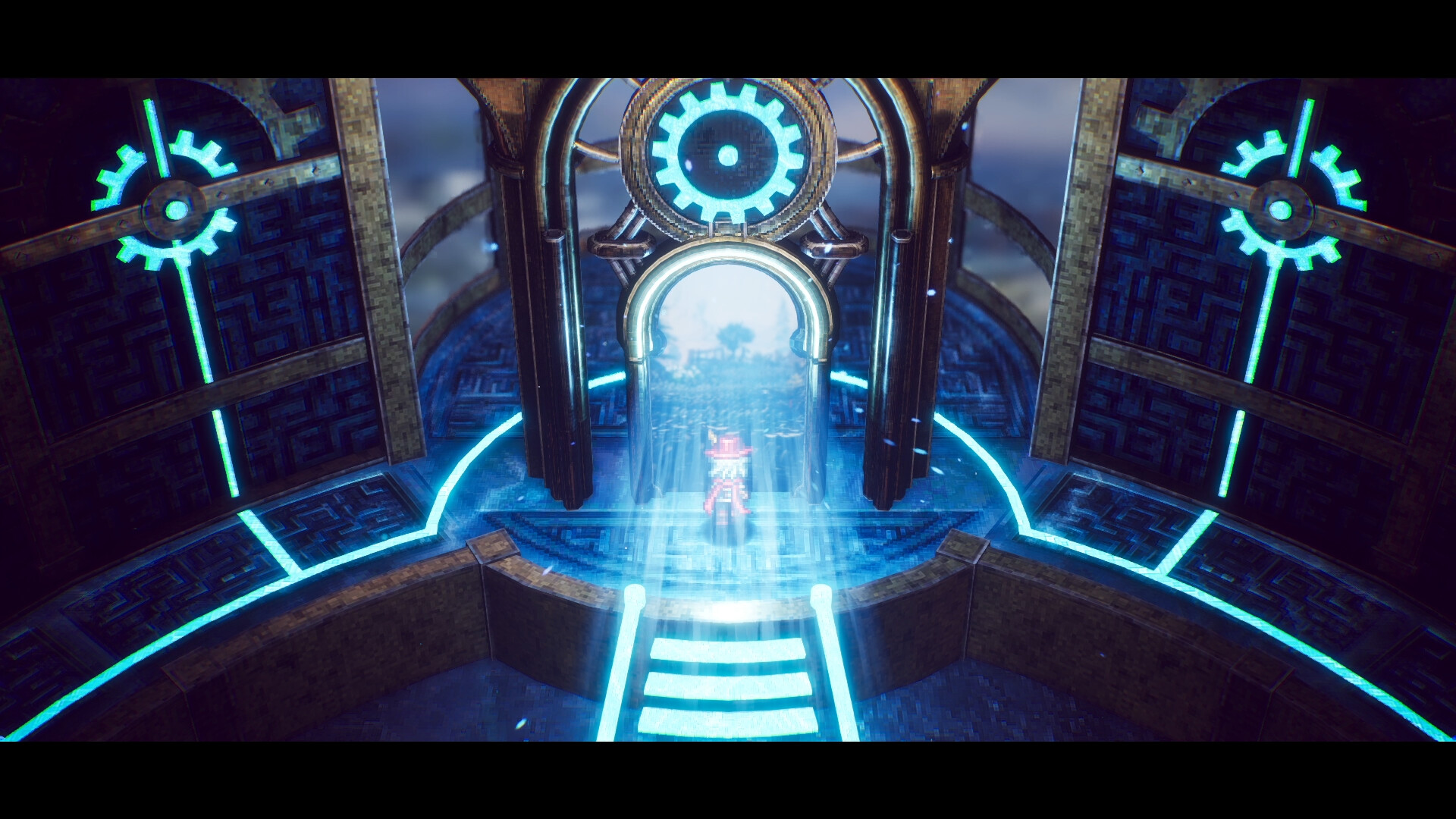
The four ages, meanwhile, are the real stars of the cast. Each era has its own visual identity, its own architecture and inhabitants, and its own small dramas playing out among the NPCs who call it home. Part of the game’s quiet magic is watching a single location evolve across centuries — a humble settlement in one age that you later find grown, ruined or transformed in the next, populated by the descendants of people you once helped. That sense of consequence rippling down a family line or a community gives the world a lived-in continuity that few games of this scale attempt, let alone pull off. It also makes the optional content feel worthwhile: a sidequest completed in the past is not just a checkbox but a stone dropped into a pond, and the ripples are often waiting for you a thousand years downstream.
It is this interplay — between Faie’s constant presence, the personalities dotted across the eras, and the structural trick of revisiting the same places at different points in history — that elevates Elliot above a simple dungeon-crawl. The characters are not deep in the novelistic sense, but they are drawn with a fairy-tale clarity that suits the material, and the cumulative effect of helping the same world across four lifetimes is genuinely touching by the end.
Combat: simple on the surface, deep underneath
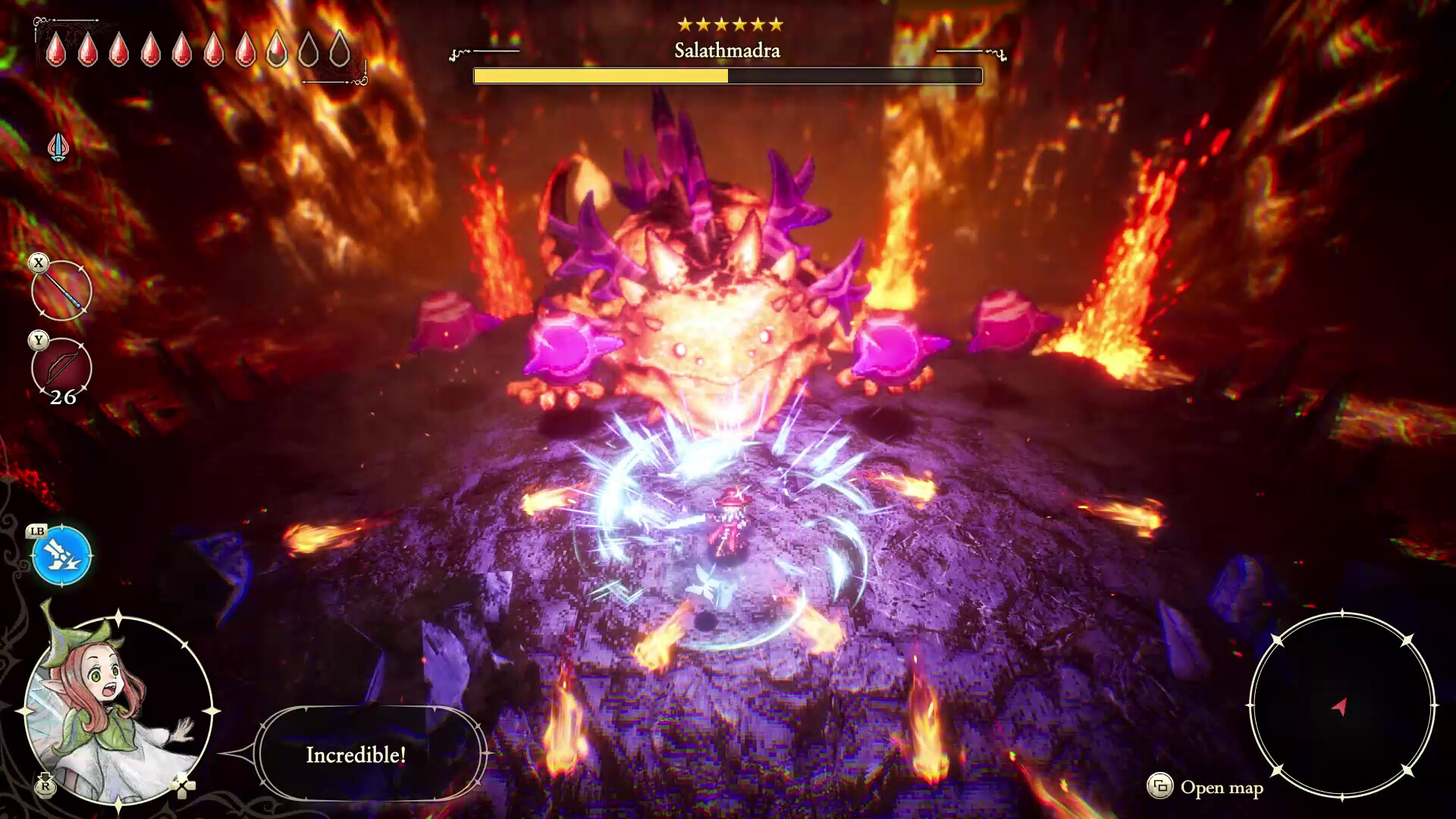
Move Elliot for five minutes and the first thing you notice is how good he feels to control. This is the part that could so easily have gone wrong — HD-2D was built for menus and measured turns, not for dodging, parrying and chaining hits in real time — and it is precisely where Claytechworks has done its most impressive work. Movement is responsive and weighty in the right ways, never cumbersome or sluggish, and the camera and hit feedback are tuned so that combos read clearly even when the screen fills with effects. The engine, it turns out, is far more versatile than years of turn-based RPGs had led anyone to assume.
The combat itself is built around seven distinct weapon types, each with its own feel, range and rhythm. Swords offer the reliable all-rounder option; heavier armaments trade speed for crowd-clearing reach; faster weapons reward aggression and precise spacing. Crucially, you are encouraged to swap between them constantly rather than settling on a single favourite, because enemies and environmental puzzles alike are designed with specific tools in mind. The result is a loop that stays fresh far longer than a hack-and-slash this approachable has any right to.
At the centre of the moment-to-moment action sits a parry mechanic that nails one of the hardest balances in the genre: it is satisfying without being punishing. Time your guard well and you are rewarded with a meaty, screen-shaking riposte and a window to punish; mistime it and the game is forgiving enough that you are not sent straight to a death screen. That generosity is a deliberate design choice that keeps the action feeling celebratory rather than stressful, and it makes Elliot a far easier game to recommend to players who normally bounce off twitchier action titles. The combat will not satisfy hardened character-action veterans looking for deep cancel systems and frame-perfect mastery — but that is plainly not the audience it is chasing.
The magicite system and building your Elliot
Layered on top of the weapons is the magicite system, the game’s answer to build customisation. Faie’s fairy magic and a slate of equippable magicite let you tune Elliot to your playstyle — leaning into raw damage, survivability, elemental coverage or utility — and the freedom on offer is more generous than the game’s breezy presentation might suggest. You can specialise a weapon to complement a particular magicite loadout, then pivot entirely a few hours later when a new era throws a different kind of challenge at you.
It is here that Elliot quietly reveals its RPG bones. The numbers are never overwhelming, and the systems never bury you in spreadsheets, but there is real room to express yourself in how you assemble your kit. Players who enjoy theorycrafting will find enough depth to chew on, while those who would rather just swing a sword and move on can largely ignore the deeper optimisation and still cruise through. That scalability — meaningful for the engaged, optional for the casual — is one of the game’s smartest and least heralded achievements.
A world worth getting lost in
If the combat is the pleasant surprise, the world design is the part that feels most lovingly studied. Elliot is, structurally, the closest thing to a modern Link’s Awakening that anyone outside Nintendo has made in years. The map is not sprawling in the open-world sense; instead it is small, dense and intricately interlocked, the kind of space where a locked door or an unreachable ledge spotted in your first hour becomes a satisfying “oh, of course” moment six hours later when you finally have the right tool. Backtracking here feels like discovery, not chore — the highest compliment you can pay this style of design.
The dungeons are the standouts. They are intricately designed, generously packed with puzzle traps, environmental switches and clever uses of your weapon kit, and they consistently end with rewards meaningful enough to justify the climb. The four-ages structure does wonderful things for this exploration loop, too: revisiting a familiar location in a different era, seeing how it has decayed or flourished, and using knowledge from one timeline to crack a puzzle in another is exactly the kind of design that makes the time-travel hook more than window dressing. There is a constant, low-level pleasure in simply moving through these spaces and being trusted to figure things out, with the game leaning on visual language and environmental cues rather than a constant stream of hand-holding markers.
HD-2D, evolved
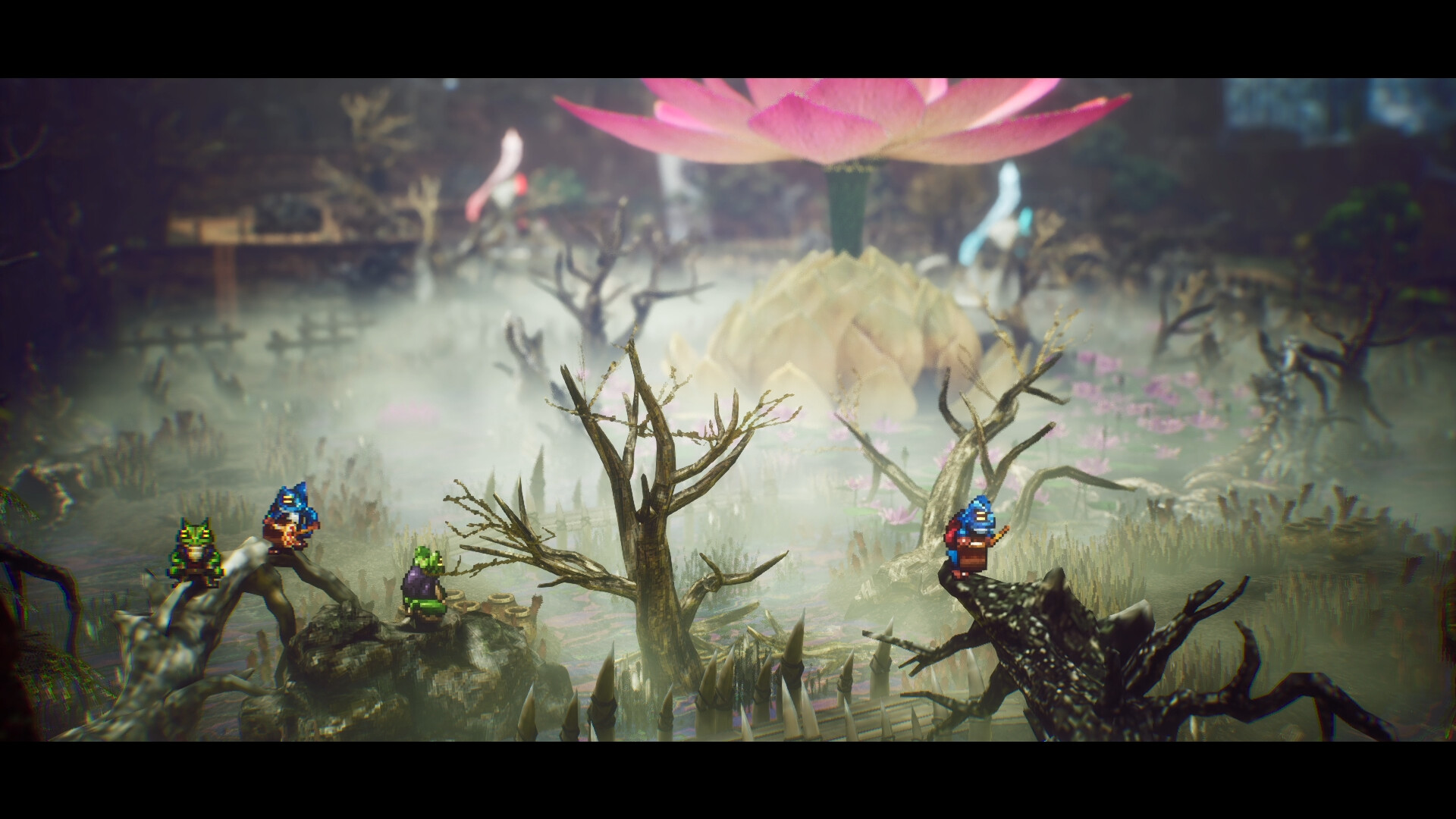
And then there are the visuals, which are frankly stunning. We have seen plenty of HD-2D by now, but Elliot still manages to find new ways to make you stop and stare. Environments are exquisite and wildly varied across the four ages, from sun-dappled woodland to crumbling ancient ruins, and the lighting work in particular does an enormous amount of heavy lifting. One frequently cited example says it all: a swampy area where the light refracts off the thick, oily surface of the water, giving it a colourful, shifting rainbow sheen. It is the kind of detail nobody would have missed had it been left out, and its presence tells you how much care went into every screen.
The presentation extends to the audio, too. The soundtrack is warm, evocative and tightly matched to each era’s mood, and the overall production values — the breezy, charming flow of the whole thing — are exactly what you would hope for from a studio with this lineage. More broadly, Elliot is a proof of concept with implications beyond itself: it demonstrates that HD-2D is a far more flexible engine than its turn-based origins suggested, and that developers have only really begun to explore what it can do. If this game inspires a wave of HD-2D action titles, that will be a very good thing.
Length, pacing and value
Elliot is a focused adventure rather than a bloated one, and it is better for it. This is not a sixty-hour epic that pads its runtime with busywork; it is a tightly constructed journey that respects your time, moving you briskly from one era and one dungeon to the next without ever letting the momentum sag for long. The pacing does dip in the back half of certain eras, almost entirely because of the enemy repetition discussed below, but the structure is smart about reintroducing novelty — a new weapon, a new traversal tool, a fresh wrinkle in the time-travel logic — just as your attention starts to wander. The promise of the true ending, and the way the game withholds its biggest emotional payoffs until you have invested in every age, gives you a concrete reason to see things through and to chase the optional content rather than bee-lining the critical path.
As a premium Square Enix release with no microtransactions or live-service hooks, it also represents the kind of clean, complete, buy-it-once proposition that is increasingly rare from a major publisher. The magicite system and weapon variety offer a modest amount of replay value for players who want to tackle a second run with a different build, and the four-ages structure rewards the curious with secrets that are easy to miss on a single pass. It is, in short, a generous package — the sort of game you finish feeling like you got your money’s worth, and then keep thinking about afterwards.
Where it stumbles
For all its charm, Elliot is not without rough edges, and they are worth laying out plainly. The most persistent is enemy variety, or the lack of it. Across the four ages you will spend a great deal of time fighting what amount to palette swaps of the same handful of foes — recoloured versions of enemies you have already beaten dozens of times. Given how much the rest of the game leans on novelty and the thrill of the new, this repetition stands out, and it can make the combat feel like it is treading water during the back half of certain eras. A richer bestiary would have done wonders for the pacing.
Platforming is the other recurring frustration. Elliot asks you to jump more than a typical Zelda-like, and the jumping is simply not precise enough to fully support it. On static ground it is fine, but the moment you are dealing with moving platforms or tighter gaps, the imprecision becomes genuinely annoying, leading to cheap-feeling falls that owe more to fuzzy controls than to player error. It is never bad enough to derail the experience, but it is the one mechanic that consistently undercuts the otherwise excellent moment-to-moment feel.
The story’s occasional overreach, discussed above, rounds out the list. None of these issues are fatal, and none of them stop Elliot from being an easy recommendation — but a sharper enemy roster, tighter jumping and a little more narrative connective tissue would have pushed a very good game into the realm of the genuinely great.
Performance: a tale of platforms
One of the more important things to flag for prospective buyers is that your experience will vary meaningfully depending on where you play. The most notable weak spot is the Nintendo Switch 2 version, which suffers from long load times and noticeable menu lag — the latter especially grating in handheld mode, where navigating menus should feel instant and instead introduces a beat of hesitation. It does not ruin the game, but it is the kind of friction that adds up over a long adventure, and it is disappointing on hardware this capable.
The flip side is that the game runs beautifully elsewhere. On PC and the current-gen consoles it is smooth and stable, and it is a particularly strong showing on Steam Deck, where it performs well across a range of settings. The recommended sweet spot is around 45 FPS with high-quality graphics and roughly 65 percent resolution scaling, which preserves those gorgeous visuals while keeping things smooth and yielding three to three-and-a-half hours of battery. If you would rather chase a locked frame rate you can drop to low settings for a steady 60 FPS, or push everything to maximum and accept 30 FPS — the point is that the game is flexible and well-optimised on Valve’s handheld. For a portable-first experience, Steam Deck is arguably a better home for Elliot than the Switch 2 right now, which is a genuinely surprising thing to be able to say.

Where it lands
Elliot sits firmly in “strong, not spectacular” territory, and which version you buy matters: the PlayStation 5 edition is the one to own, with the Switch 2 and PC releases a few notches behind it for the performance reasons noted above. The summary is easy to write because the game is so legible — the visuals, the world design and the surprisingly satisfying action are the draw, and the repetitive enemies and a story that does not always stick its bigger swings are the price. Elliot knows exactly what it is.
Verdict
The Adventures of Elliot: The Millennium Tales is the game that proves HD-2D can carry a real action-adventure, and it does so with style, generosity and a clever time-travel hook that pays off in the end. The combat feels great, the dungeons are a delight, and the world is the rare kind you are happy to comb over every inch of. It is held back from greatness by a thin enemy roster, imprecise platforming and a Switch 2 port that needs work, plus a story that occasionally overreaches — but none of that dims the overall warmth of the experience. If you have been waiting for an HD-2D game that plays as good as it looks, your wait is over. Play it on PS5, PC or Steam Deck for the best version, set your expectations to “charming adventure” rather than “sweeping epic,” and you will have a wonderful time across all four ages.