Crystal Dynamics has spent the last few months releasing short mini-documentaries about how it is rebuilding the 1996 Tomb Raider, and the sixth one — Combat & Progression Reimagined — is the one that was always going to cause an argument. Tomb Raider: Legacy of Atlantis has skill trees. It has crafting. And it has a bullet-time meter.
Focus: slow-motion somersaults, on a meter
The centrepiece is the Focus system. Game director Raul Siqueira explains it in the video in fairly plain terms: acting in combat builds the meter — taking damage, dealing damage, dodging attacks all feed it. Spend it, and time slows down while Lara gets access to the acrobatic moveset that defined her in 1996, including firing backwards mid-somersault.
That framing is smarter than it first sounds. The original Tomb Raider's combat was, mechanically, very thin: auto-aim, jump sideways, hold the trigger. What made it memorable was the animation — Lara cartwheeling away from a T-Rex while both pistols kept firing. Focus is an attempt to make that visual language into something the player deliberately triggers rather than something the auto-aim happens to produce.
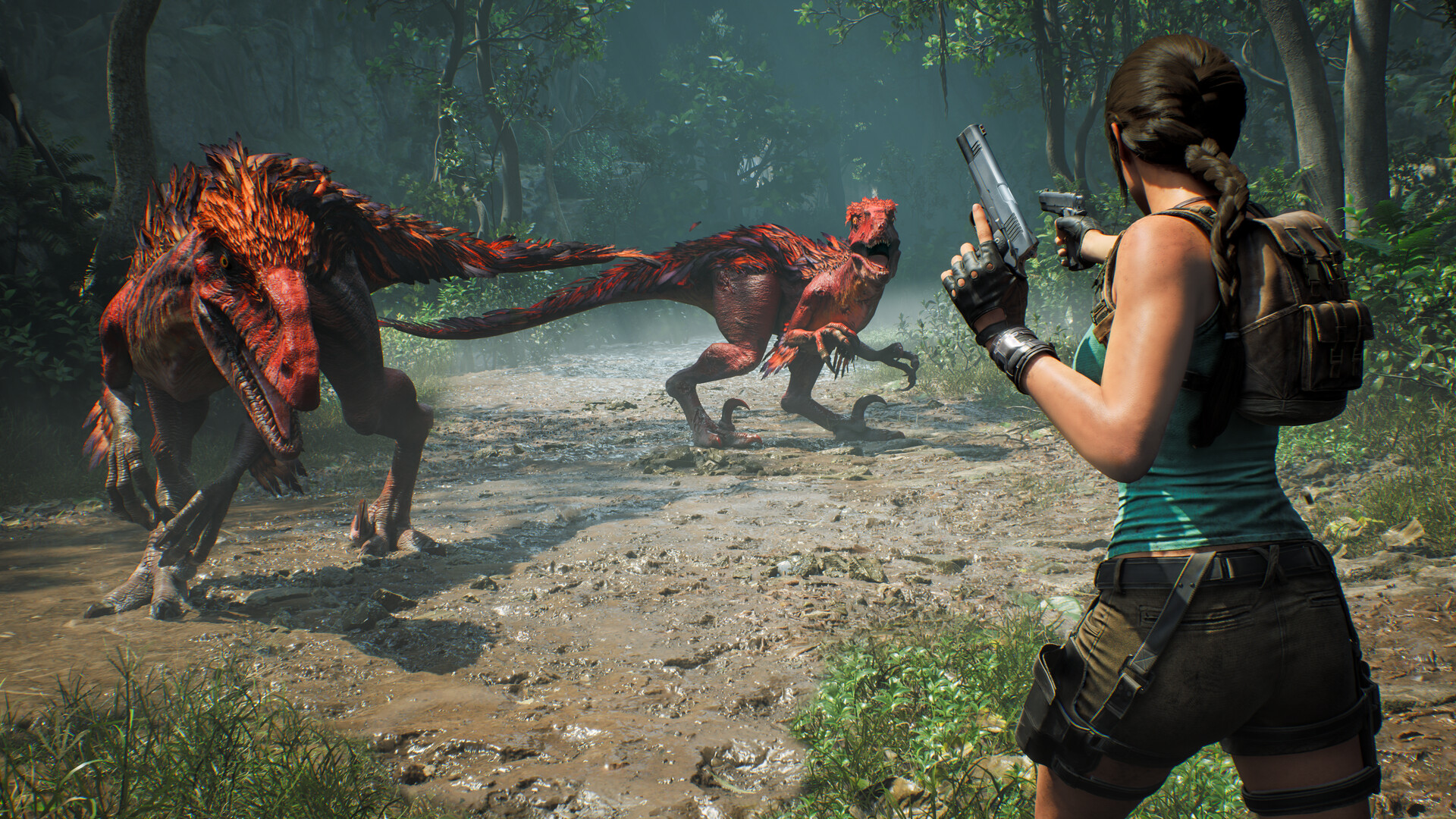
The dual pistols remain the spine of the whole thing. Crystal Dynamics says you can theoretically finish the entire game using nothing but them — the SMGs, shotgun and assault rifle are advantages rather than requirements. For a remake that has to keep an iconic silhouette intact while adding a decade and a half of design vocabulary, "the starting weapon is always viable" is a meaningful commitment.
Skill trees without XP grinding
The skill tree is where the reaction got loud. Crystal Dynamics has integrated progression directly into Legacy of Atlantis, letting Lara upgrade her abilities as she explores — one example shown in the video is a straightforward 10% boost to weapon fire rate.
The important detail, and the one that got lost in the initial round of reactions, is how you unlock those nodes. There is no XP bar. Upgrades are tied to artefacts scattered through the world, which makes the skill tree a reward for exploration rather than for killing a quota of enemies. In a game whose original design was 90% environmental problem-solving, that distinction matters: the progression system is pointed at the same behaviour the level design already rewards.
Crafting, and the word the developers keep repeating
Crafting works on collected natural materials — herbs, mostly — combined into recipes. The outputs are bandages for healing and food that grants combat buffs, either reducing damage taken or increasing damage dealt. Some skill-tree nodes improve your cooking rather than your guns.
This is unmistakably the Survivor trilogy's vocabulary showing up in a game about the 1996 Lara, and a chunk of the fanbase said so immediately and at volume. Crystal Dynamics' answer is that the survival mechanics are entirely optional. Players who want to approach Legacy of Atlantis as a puzzle-and-traversal game can ignore the herbs, skip the cooking, and play it as a tomb raider rather than a survivor.
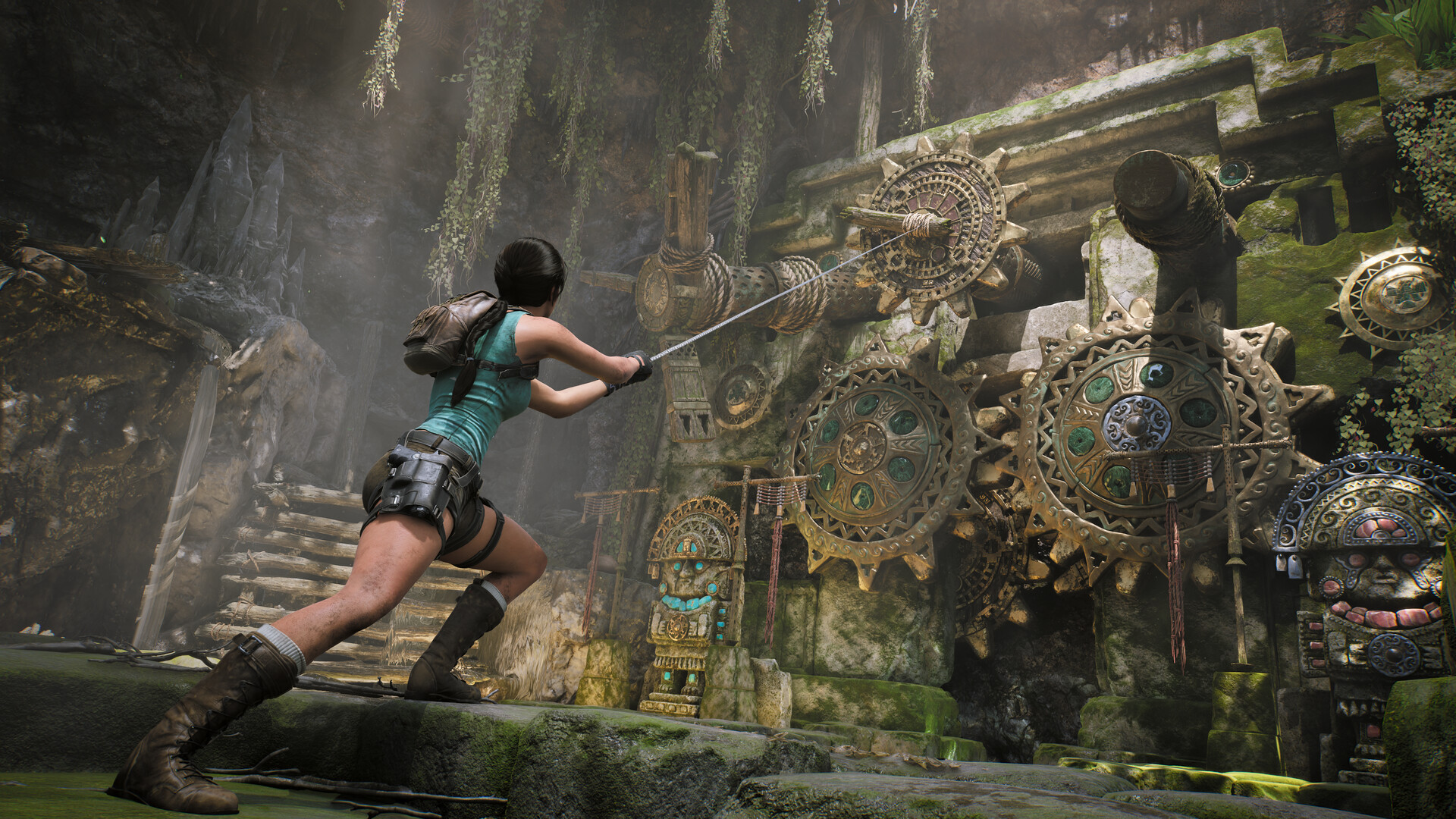
Whether "optional" holds up in practice is the thing to watch. Optional systems in action games have a habit of being optional in the sense that you can skip them and then find the boss fight tuned as though you didn't. But the design intent is at least stated clearly, and it is being stated before launch rather than in a patch note six months after.
Who is actually making this
Legacy of Atlantis is a joint build between Crystal Dynamics in the US and Flying Wild Hog in Europe, published by Amazon Game Studios, running on Unreal Engine 5. Flying Wild Hog's involvement is the interesting half of that pairing — the Shadow Warrior studio is not an obvious fit for methodical tomb exploration, but it is a very obvious fit for a combat system built around momentum and slow-motion gunplay.
The game is currently dated for February 12, 2027, on PlayStation 5, Xbox Series X|S, Nintendo Switch 2 and PC via Steam.
The real question
Remakes of games this old face a problem that remasters don't: the original's mechanics were often thin by modern standards, and simply reproducing them faithfully produces something that reviews badly and plays worse. The 2024 Tomb Raider I-III Remastered collection solved that by not trying — it kept the tank controls and shipped as a preservation project.
Legacy of Atlantis is attempting the harder version, and the mini-documentary series is essentially a five-month exercise in showing its work before anyone can accuse it of quietly turning Tomb Raider into Uncharted. Focus is the argument that modern combat and 1996 Lara can be the same thing. February 2027 is when we find out whether the argument holds.