Twenty years is a long time to leave a sword in its sheath. Onimusha: Dawn of Dreams closed out Capcom's samurai-versus-demons series in 2006, and for most of the two decades since, the name survived only as a remaster line and a fond memory of the PlayStation 2 era. Onimusha: Way of the Sword, released on September 4 across PS5, Xbox Series X|S, Nintendo Switch 2 and PC, is the first genuinely new entry since then, and it arrives with an unusually clear sense of what it wants to be: a tight, bloody, one-on-one sword-fighting game set in a single, obsessively detailed city. Capcom says it sold more than a million copies on launch day. The more useful question for anyone who has not bought it yet is whether the design underneath that number holds together. On the evidence of what the game demonstrably contains, it largely does. This review is built from Capcom's own feature documentation, the developers' published interviews and the official footage and demo material, not from a claimed playthrough, and the verdict below follows only from what that material shows.
A reboot in everything but name
The first thing to understand about Way of the Sword is that it does not ask you to remember anything. Director Satoru Nihei and producer Akihito Kadowaki have been explicit that the team rebuilt the fiction from the ground up so that newcomers could step in cold, and given the twenty-year gap, newcomers are most of the audience. The core ideas have been redefined rather than inherited. The Genma, the series' demonic antagonists, now dwell in hell and spill into the human realm through portals when Malice overflows. The Oni are the guardians of those gateways, and the Oni Gauntlet is the artifact that lets a mortal wield their power against the things that come through.
That is a cleaner, more mythic setup than the original trilogy's tangle of Nobunaga resurrections and time travel, and it is a sensible choice. A franchise revival lives or dies on whether a new player understands the stakes within the first hour, and a premise of "hell is leaking into Kyoto, and you are holding the only thing that can push it back" needs no glossary.
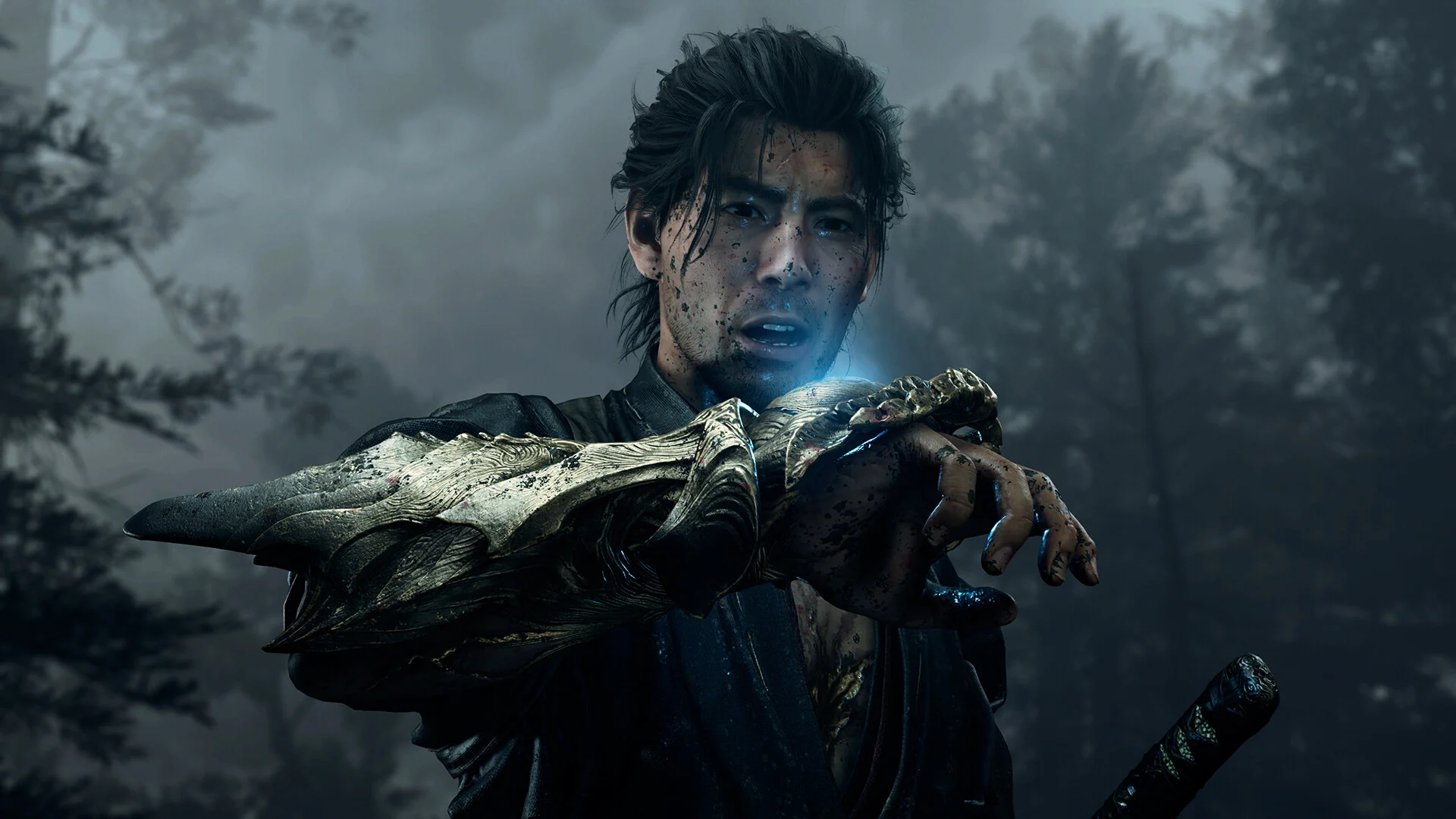
The protagonist is a young Miyamoto Musashi, an ardent swordsman who has come to Kyoto to prove he is unmatched and finds his path taking a stranger turn than he planned. Capcom's headline decision here is the casting: the late Toshiro Mifune, the face of Akira Kurosawa's samurai cinema, serves as Musashi's face model, recreated with the support of Mifune Productions. It continues a habit the series has had since 2001, when the original game's Samanosuke was modelled on Takeshi Kaneshiro, but this time the choice carries more weight. Mifune is not just a famous face. He is the visual shorthand for an entire genre of film, and building the protagonist on that likeness signals the tone the game is reaching for: less anime power fantasy, more grim, sweat-and-mud jidaigeki.
Kyoto, rebuilt pillar by pillar
Where many action games treat their setting as a backdrop, Way of the Sword treats early Edo-period Kyoto as its main character. The developers worked with the Kyoto city government on the project, and they have described matching real structures down to the count of wooden pillars at Kiyomizu-dera Temple. The sound team recorded impulse responses in actual Japanese temples and historic residences so that footsteps, sword clashes and voices reverberate the way they would in those spaces. On PS5, that data is fed into 3D Audio with height channels, so flying Genma and collapsing structures are placed above the player as well as around them.
The named locations read like a walking tour: Kiyomizu-dera, where the game's opening duel takes place; the pilgrim road of Kiyomizu-zaka; Yasui Konpiragu Shrine; and Rokudo Chinno-ji Temple, a real temple historically associated with the boundary between this world and the next, which serves as Musashi's base of operations. Against that grounded geography, Capcom sets the Oni Refuge, a deliberately surreal dimension of floating islands that functions as the game's counterweight to all that historical accuracy.
This matters for more than tourism. A game about a single city, rendered with this much specificity, has a coherence that sprawling multi-region action RPGs often lack. Every shrine, bamboo grove and flooded garden in the official footage is dressed with intent, and because the fiction is about Malice corrupting a real place, the corruption only lands if the real place is convincing first. By every piece of evidence Capcom has put out, it is.
The sword is the whole game
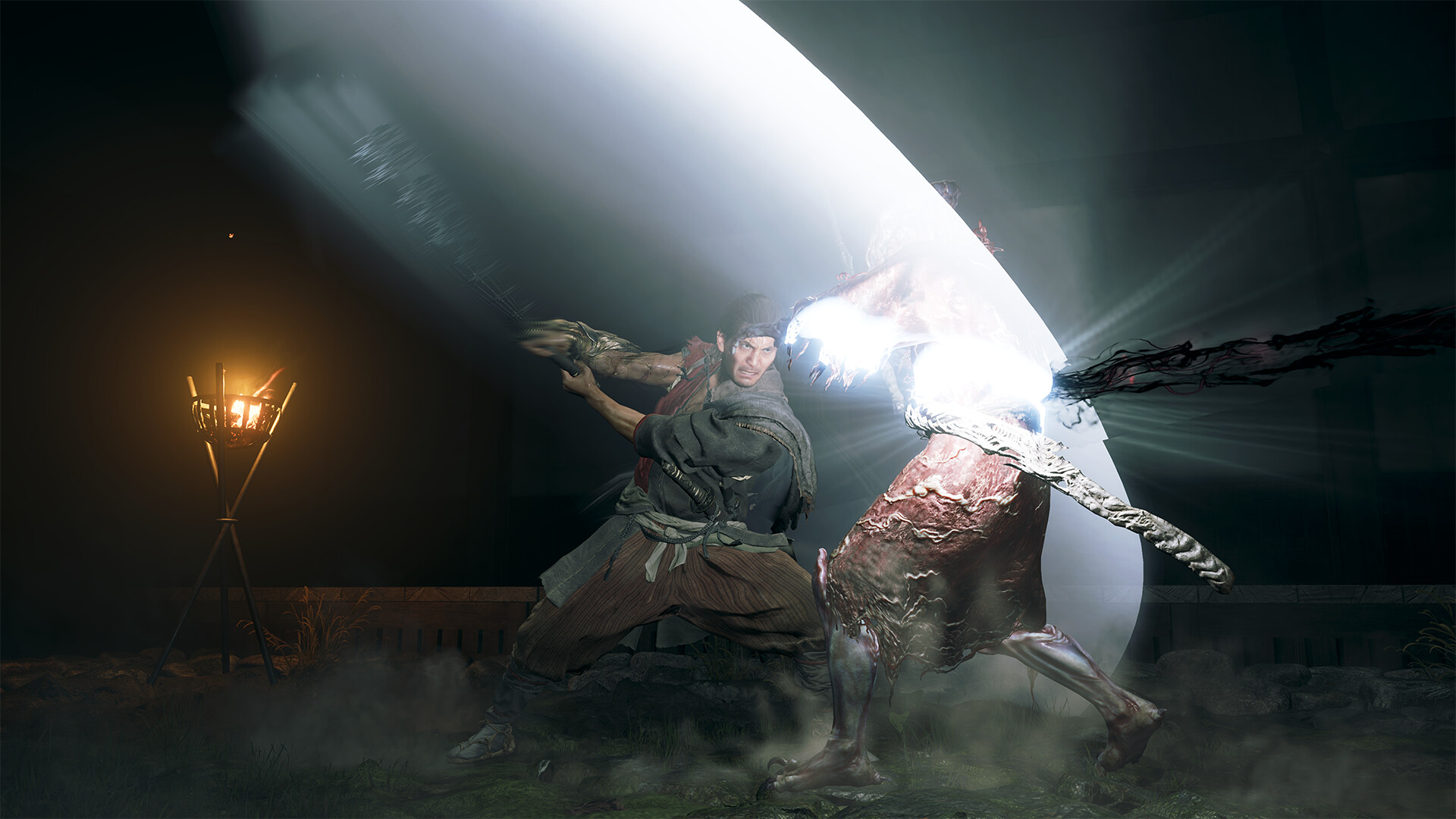
The title is not decoration. Way of the Sword is built around katana combat against individual opponents, and its systems are designed to make each exchange feel decisive. Three pieces carry the weight.
The first is the parry-and-deflect layer. The official materials describe precise parry and deflect timings as the foundation of every encounter, and the combat pitch repeatedly emphasises tactical choices over button volume, including the option to fight with "fewer but more devastating blows." That is the language of a duelling game, closer in spirit to Sekiro than to Capcom's own character-action tradition in Devil May Cry.
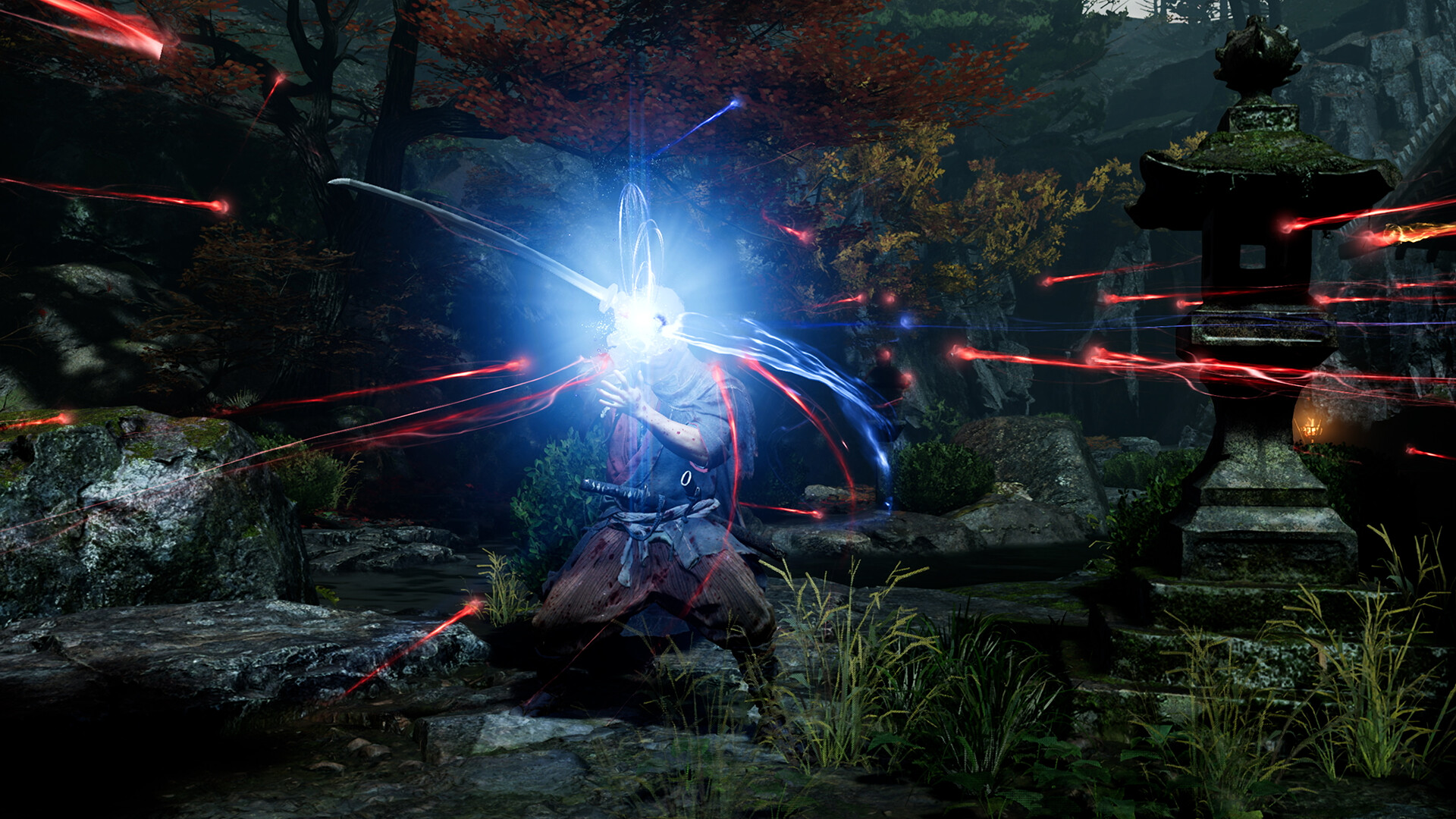
The second is Issen, the series' signature. Since 2001, Issen has been the perfectly timed counter that kills a standard enemy in a single stroke, and it has always been the skill ceiling of Onimusha. It returns here in its classic, frame-tight form. Alongside it sits the more important new idea, Break Issen. Drain an enemy's Stamina Gauge completely and a Break Issen opens up, a devastating finisher that no longer depends on pinpoint timing. The developers' stated aim is to let players experience those iconic strikes across a much wider range of fights.
This is the most consequential design decision in the game, and it is a good one. The classic Issen is thrilling but exclusionary: a mechanic that only a subset of players will ever reliably perform. Break Issen gives everyone else a route to the same payoff through sustained pressure rather than reflexes, while leaving the original intact for players who want to chase it. It is the kind of change that broadens a series without diluting it, and it gives every fight two distinct tempos, the patient grind toward a stamina break and the gamble of a perfect counter.
The third piece is Dynamic Dismemberment. Enemies are cut along the exact trajectory of Musashi's blade, not snapped apart at predetermined points, so a diagonal slash splits a body diagonally and a downward stroke cleaves head to toe. Features like this can be pure gore spectacle, but here the effect is tied to readability. Because the wound follows the swing, every hit confirms visually what the player actually did, and in a game where timing is everything, that feedback has real value.
Souls, the Oni Gauntlet and the price of greed
If the sword is the game's skeleton, the Oni Gauntlet is its circulatory system. As in the original games, Musashi absorbs the souls that spill from slain Genma. Those souls restore him in the moment and double as the currency for upgrading his gear and unlocking new abilities, so the gauntlet grows stronger as the campaign goes on. There is also a voice that speaks from the gauntlet, and the game keeps its identity deliberately unclear well into the story.
The clever twist is that souls are not always safe to leave lying around. Capcom has confirmed that certain bosses can consume absorbed souls themselves, which turns a routine pickup into a decision: absorb now, mid-fight, at some risk, or leave them and risk losing them to the enemy. Daidara, the towering boss who closed out the expanded demo, is built around exactly this soul-devouring mechanic. It is a small rule with an outsized effect, because it takes the most automatic habit in the genre, hoovering up resources, and makes it part of the duel.
On top of the gauntlet sits Oni Awakening, the ability that lets Musashi release the Oni strength inside him and overpower enemies for a stretch. Capcom held it back through five trailers before revealing it in August, and it reads as the game's pressure valve: a comeback tool for fights that go sideways rather than a default state. Mid-way through the campaign Musashi also acquires the Oni Bow, which adds ranged options, environmental puzzle-solving and trap activation. On PS5, drawing the bowstring increases adaptive trigger resistance, and sealing a demonic portal requires squeezing the trigger all the way down, a narrow and deliberate use of the DualSense rather than blanket rumble.
A bestiary with a budget
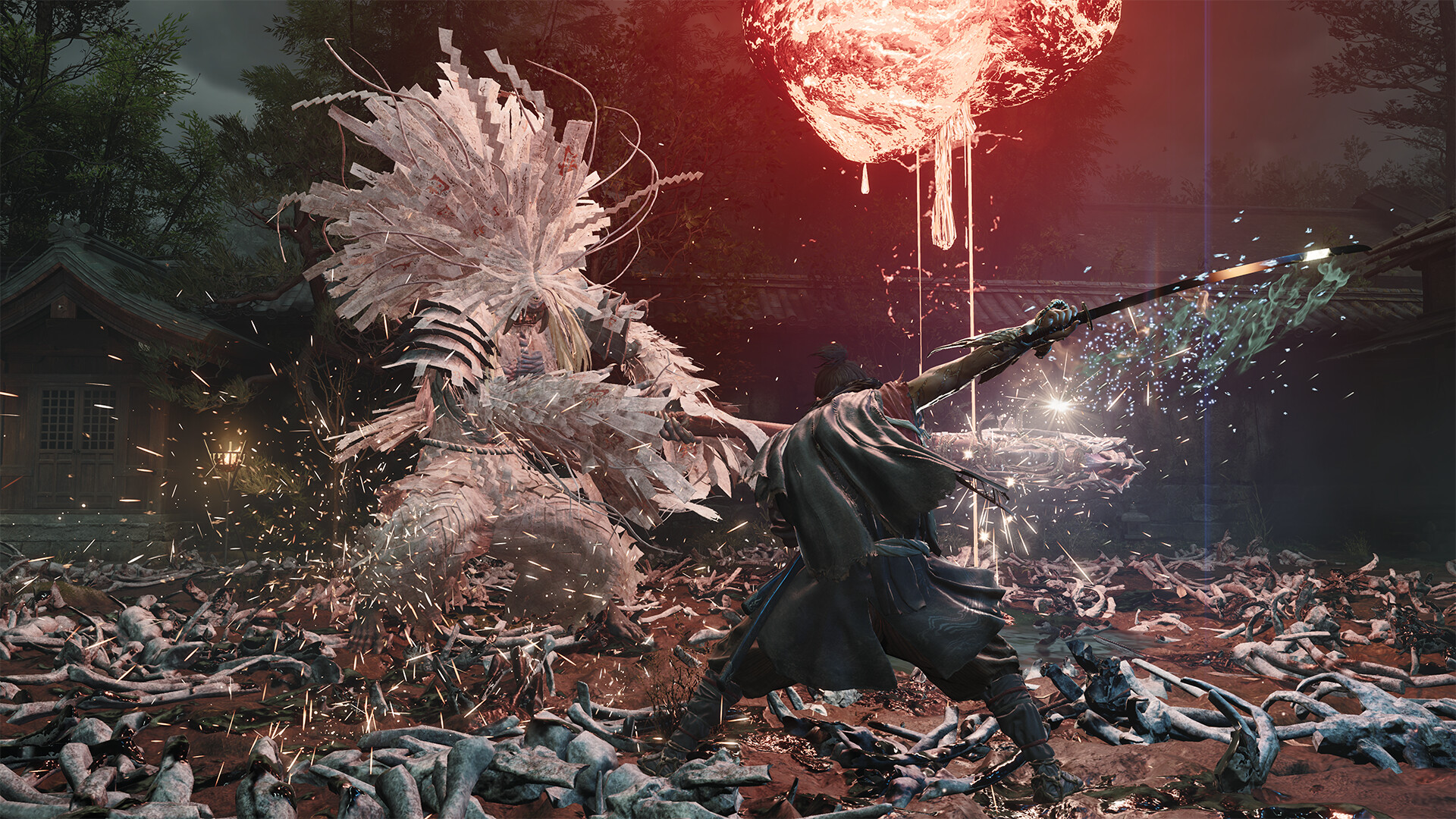
The Genma are where the art team has most visibly spent its money. The official screenshots and trailers range from paper-wreathed apparitions lit by a blood-red moon to hulking, mask-faced beasts that fill the frame, and the named bosses each come with a clear mechanical identity. Beyond Daidara's soul-eating, Capcom has shown Rasho-gan, a multi-armed creature that turns the environment into a weapon by hurling trees, boulders and pieces of buildings, and Byakue, an animalistic enemy that grows wilder when coated in blood. The opening duel pits Musashi against Sasaki Ganryu, the rival swordsman history has always paired him with.
That spread is important. A duelling game with a thin bestiary becomes a pattern-recognition exercise very quickly, and the best games in the genre keep reinventing the question each boss asks. From the named encounters alone, Way of the Sword seems to understand this: one boss punishes greed, one punishes standing still in a cluttered arena, one escalates as the fight gets messier. The human duels against figures like Ganryu add a fourth flavour, opponents whose martial skill mirrors Musashi's own rather than overwhelming him with size.
The one caveat worth flagging is structural. Capcom has shown the headline bosses extensively, and the marketing leaned on them heavily. How much variety exists in the rank-and-file Genma between those set pieces is harder to judge from official material alone, and it is the area where games of this shape most often run thin.
Missions, not a map
Way of the Sword is not an open-world game, and it is better for it. The official preview describes a structure in which tightly scoped missions open out into wider locations with more room to explore. Kyoto itself is gated by demonic barriers and toxic fog, and progress means sealing the rifts where Genma manifest, which clears those blockades and opens new districts. Rokudo Chinno-ji Temple acts as the hub between excursions, where allied characters operate and Musashi prepares for the next push.
This is a classic Capcom shape: a series of authored stages linked by a home base, with exploration rewarded but never mandatory busywork. It keeps pacing under the designers' control, which is exactly what a combat-first game needs, and it lets each district be dressed and lit for its specific fights rather than for a generic traversal loop. Players hoping for a Ghost of Tsushima-style samurai sandbox will not find one here. Players who miss the focused, stage-by-stage intensity of the PS2 originals will find the structure almost exactly calibrated for them.
Looks, sound and performance
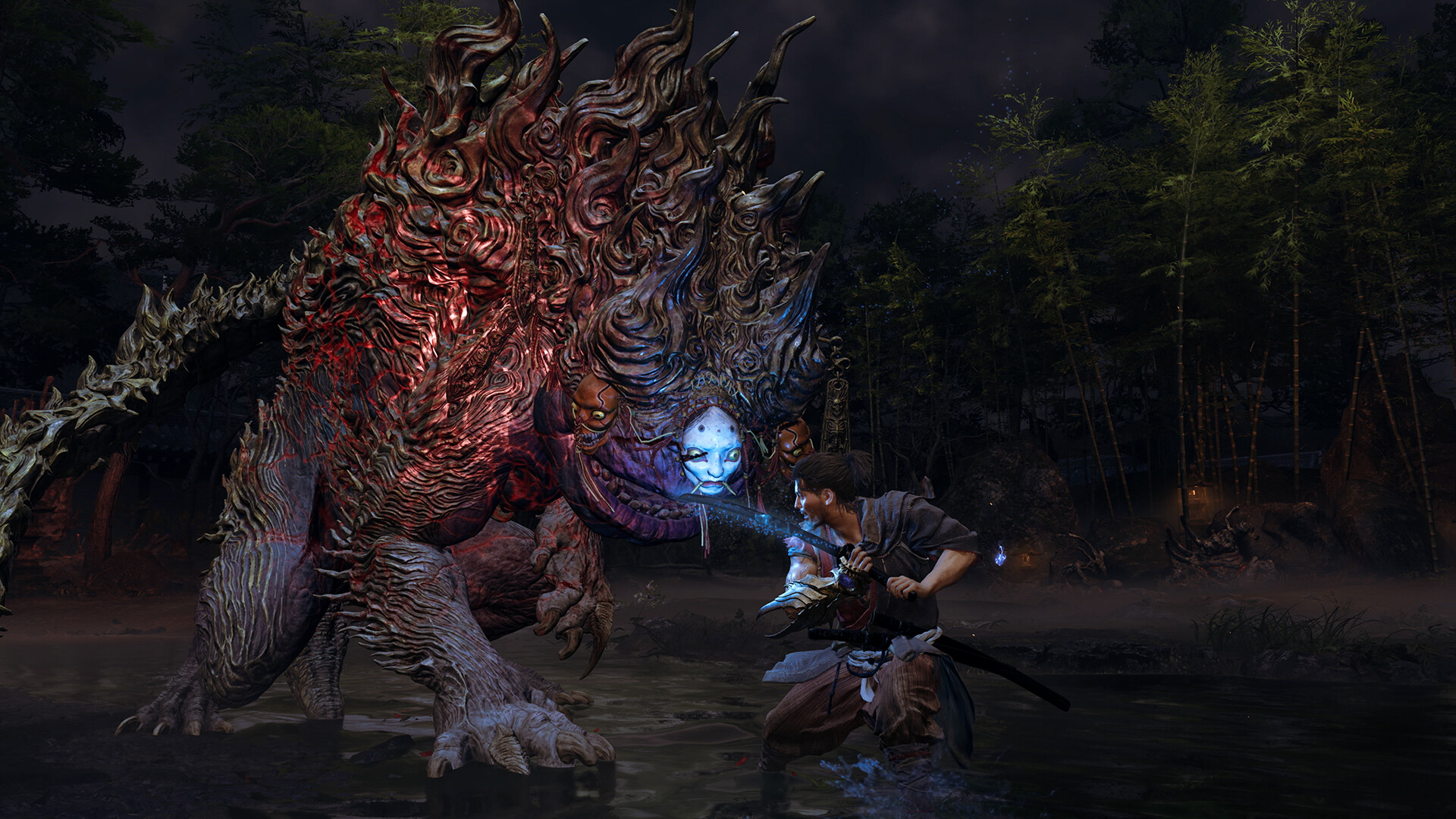
Visually, Way of the Sword sits comfortably among the most striking games Capcom has produced on its RE Engine. The palette is dominated by wet blacks, mossy greens and the red of blood and Malice, with the blue glow of absorbed souls cutting through the gloom. Character work is exceptional: the Mifune likeness is uncanny in close-up, and the supporting cast, including the dancer Okuni and the enigmatic Oni Lady whose outfits appear in the premium editions, are rendered with the same care.
Sound design deserves specific credit. The impulse-response recordings from real temples are the sort of detail most players will never consciously notice, but they are exactly what makes a sword clash in a wooden hall sound different from one in a stone courtyard, and in a game built on reading the rhythm of a fight, audio clarity is a gameplay feature. On PS5 the DualSense speaker carries soul absorption and the voice from the gauntlet, and haptics are synced to cutscenes and to the scale of the larger Genma.
On PC, the published requirements are reasonable for a current-generation Capcom release. The minimum spec, a GeForce GTX 1660 or Radeon RX 5500 XT with 16 GB of RAM, targets 30 fps at 1080p on the Low preset with upscaling. The recommended tier, an RTX 2060 Super or RX 6600, targets 60 fps at 1080p on Medium, again with upscaling. An SSD is required, the install is around 50 GB, and upscaling is handled by DLSS 4.5 and FSR 3.1. The reliance on upscaling even at recommended spec is worth noting: this is a game that expects reconstruction to be switched on, and players on older hardware should plan accordingly.
The Switch 2 version shipped day and date with the other platforms, and the expanded demo ran on it too, which is a meaningful commitment for a game this visually ambitious. Its existence alongside the PS5 and Xbox builds makes Way of the Sword one of the more broadly available premium action games of the year.
Editions and value
The Standard edition costs $69.99. The $79.99 Deluxe edition adds a cosmetic kit, including the Red Armor outfit, the Crimson Lotus gauntlet, four sword appearances and three equippable charms. The $89.99 Premium Deluxe edition layers on three haori, outfits for Okuni and the Oni Lady and a mini digital soundtrack. None of the editions grants early access, so the decision is cosmetic and can be put off safely. The charms are the only items with any gameplay relevance, and paying extra for stat-adjacent extras in a single-player game is never an essential purchase.
The free demo remains available, and it is the most honest pitch Capcom could make. Its first version offered roughly 30 minutes of early story ending in a fight on Mount Oe against a colossal Genma claiming to be the legendary ogre Shuten Doji. The August expansion widened it into the Oni Refuge and the Daidara fight, and saved progress carries into the full game with the Kubi Akari Charm and a set of stat boosts as a bonus. Anyone on the fence should play it before buying. It is designed to teach exactly the parry-and-Issen rhythm the rest of the game builds on.
Who it is for, and where it may not land
For players who want a focused, single-player sword-fighting game with real stakes in every exchange, Way of the Sword is close to ideal on paper. The Issen and Break Issen pair gives the combat both a high skill ceiling and an accessible floor. The soul-risk mechanic adds a layer of decision-making to boss fights that most of the genre ignores. And the commitment to one city, rendered with archival precision, gives the whole thing a sense of place that bigger, looser games rarely achieve.
It will be a harder sell for three groups. Players who want open-world freedom will find the mission structure and gated districts confining by design. Players who prefer combo-heavy character action, the style Capcom perfected with Devil May Cry, may find the deliberate, parry-first tempo slower than they want, since this game rewards patience over flourish. And long-time fans who loved the original trilogy's time-travel pulp and its Nobunaga-centred melodrama should know that the fiction has been rebuilt from scratch. The name, the gauntlet and the Issen are familiar. Almost everything else is new.
There is also the question of what the official material cannot show. Capcom has been generous with bosses, systems and setting, and much more guarded about campaign length, side content and how the difficulty curve behaves beyond the demo. Those are the areas where a game like this can quietly lose momentum in its back half, and no amount of marketing footage settles them either way.
Verdict
Onimusha: Way of the Sword is the rare franchise revival that seems to know exactly why the original mattered and exactly what needed to change. It keeps the Issen, the Oni Gauntlet and the soul-absorption loop that defined the series. It adds Break Issen to open the skill ceiling to everyone, a soul-risk rule that turns routine pickups into decisions, and Dynamic Dismemberment that ties spectacle to feedback. And it wraps all of it in a painstakingly reconstructed Kyoto that gives the fight against hell something worth defending. Its tight mission structure and deliberate combat tempo will not suit every player, and the depth of its non-boss encounters is the open question. But as a statement of intent from a series that had been dormant for twenty years, it is confident, coherent and beautifully made, and it makes a strong case that Capcom's back catalogue has more to give.