Epic Games used Championship Sunday at the RLCS Paris Major on May 24 to reveal Unreal Engine 6 - the first time the company has publicly named or shown the successor to Unreal Engine 5, which it announced back in 2020. The reveal came as a Rocket League teaser played to the Paris crowd between the second semifinal matchup of Team Vitality and Karmine Corp, with the trailer ending on the Unreal Engine 6 logo. Psyonix confirmed Rocket League will be the first announced title to run on the new engine, finally pulling the eleven-year-old game off the Unreal Engine 3 platform it shipped on in 2015.
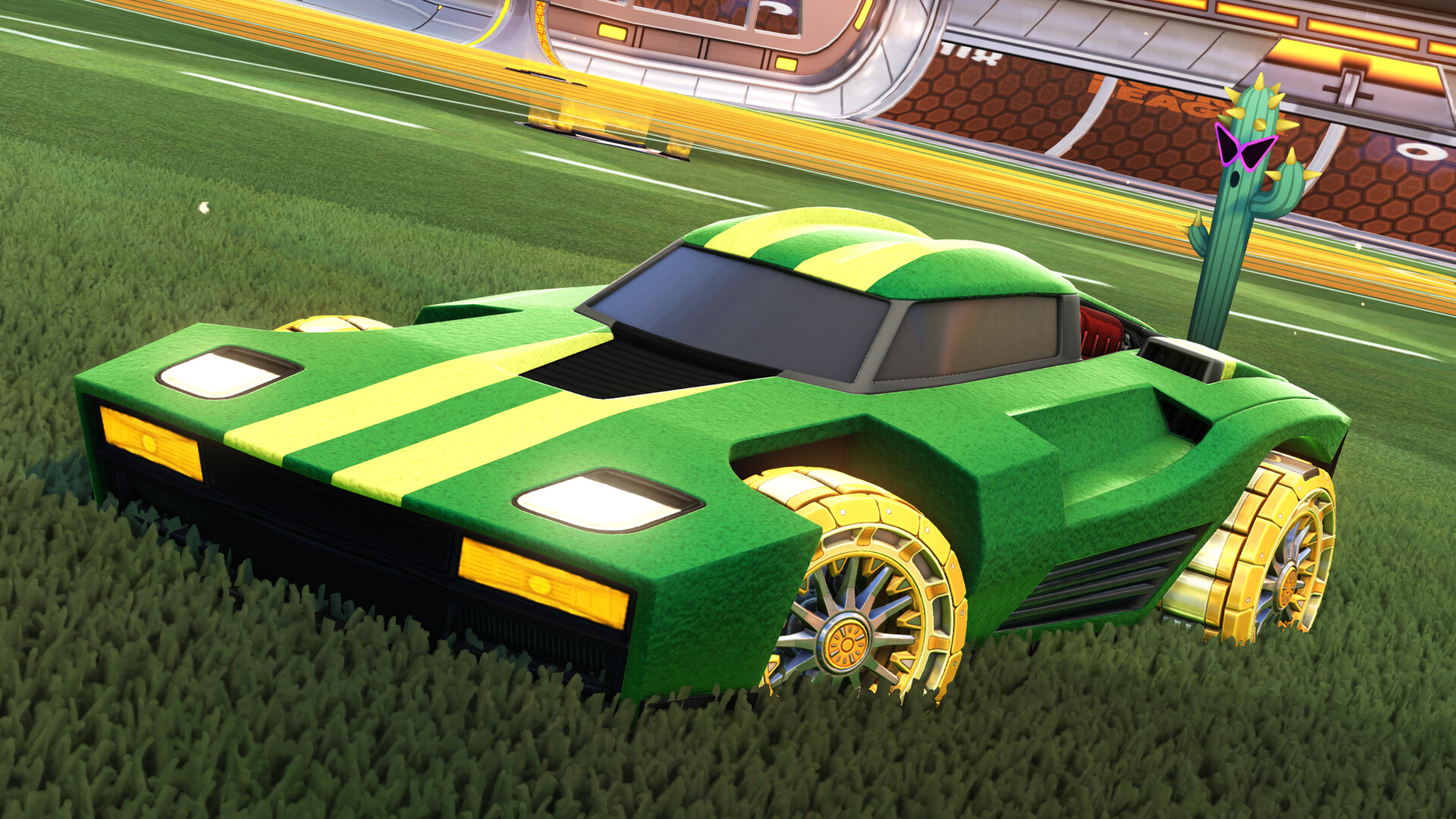
The teaser itself is short - under a minute - and shows Rocket League cars running in-engine on UE6 rather than a tech demo. The footage focuses on the small but expensive things that the engine upgrade makes possible: real-time ray-traced reflections on the carbon-fiber bodywork that the Unreal Engine 3 build can only approximate with cube maps, finer surface microdetail on the rocket trails and arena floor, dynamic global illumination spilling out of the goal explosions, and a noticeably higher-density crowd in the stands. Epic's choice to lead with Rocket League rather than Fortnite is the part that surprised most of the crowd in Paris - the standard assumption had been that Epic would unveil UE6 on its own platform first, with a third-party launch title following months later.
The engine jump itself is a generational leap because Rocket League skipped Unreal Engine 4 and Unreal Engine 5 entirely. Psyonix kept the game on UE3 for over a decade through the free-to-play transition in 2020 and the post-Epic-acquisition era because the physics simulation that drives Rocket League's car-and-ball interactions had been hand-tuned against UE3's specific tick rate and collision behavior. Moving to UE6 means rebuilding that physics layer from scratch - which is the reason the announcement included no transition date, and which is also the source of the loudest community concerns about the move. Players have spent eleven years learning the exact micro-timings of UE3 physics; even a one-percent change in how a flip cancels or how a corner double-flip behaves will reshape the competitive meta overnight.
The broader engine pitch is the part Tim Sweeney has been building toward in interviews since 2023. Unreal Engine 6 is positioned as the convergence of the traditional Unreal Engine toolchain and Unreal Editor for Fortnite, the creator-facing toolset that powers UEFN, LEGO Fortnite, and the rest of the Fortnite metaverse-style ecosystem. The convergence runs through Verse, the new functional programming language Epic has been iterating on inside UEFN since 2023, which UE6 will adopt as its first-class scripting language. The pitch is that an asset, a gameplay system, or a creator-made experience built in UE6 will move between a standalone game like Rocket League, a Fortnite-style hub experience, and a UEFN creator project without rewriting it. Whether that promise survives contact with shipping deadlines is the question developers will be testing over the next two years.
Sweeney has not given UE6 a release date, but he has talked publicly about the timeline. In commentary picked up around the Paris reveal, Sweeney said a preview build of UE6 is two to three years out - which puts the developer preview window in late 2027 or 2028 and a stable 6.0 release around 2028. That is a longer runway than UE5, which Epic showed in mid-2020 and shipped as a developer-preview in 2021 with a stable release in April 2022. The longer cycle is consistent with the scope of what Epic is trying to do: rebuilding the editor around UEFN, replacing Blueprints with Verse as the primary scripting flow, and routing the engine's render pipeline through whatever Epic has been working on as a Nanite-and-Lumen successor.
Hardware is the next question after the timeline. Epic has not published technical requirements for UE6, has not named a target platform generation, and has not said whether the engine will support current PS5 and Xbox Series X|S hardware as a release platform or only the next console generation. The Rocket League teaser running on UE6 looked clearly more demanding than the current UE3 build, but Rocket League's current build is also extremely lightweight - the teaser is not a meaningful benchmark for what an AAA UE6 title will demand. The widely-shared community concern that UE6 might leave older PCs behind has merit; UE5's adoption curve was hampered by Nanite and Lumen's high baseline GPU cost, and a UE6 that doubles down on the same path will sit further out of reach for budget hardware than UE5 already does.

For Rocket League specifically, the UE6 transition is the kind of move that should have happened years ago. The game has been stuck on UE3 long after Epic's own tools left UE3 behind, which has shown up in the slow pace of post-launch content - new arenas, new game modes, and meaningful renderer upgrades have been hard to ship because the underlying engine is two console generations old. The UE6 build promises to fix all of that in one move, but it also lands at a moment when Rocket Leagues player base is fractured on whether the game needs the upgrade at all. The competitive community wants the physics left alone. The casual community wants new content, which a UE6 build can finally deliver. The cosmetic-focused playerbase wants the UE6 economy to integrate with Fortnite Item Shop crossovers more cleanly than the current UE3 build allows.
Epic's other live-service titles are the obvious follow-up question. Fortnite, LEGO Fortnite, and the new Fall Guys-style party games Epic has been quietly developing all run on flavored UE5 builds today. None has been publicly committed to a UE6 transition, but Sweeney's metaverse pitch only works if those games end up on the same engine as the third-party UE6 titles. Expect Fortnite to make the jump on a timeline that matches UE6's stable release, with Fortnite Chapter 8 or Chapter 9 in 2028 being the obvious launch window for the migration.
The reveal at Paris was deliberate. Rocket League's competitive scene is one of the most stable in esports - a decade of the same engine has produced a community of players who treat physics consistency as sacred - and putting the UE6 reveal in front of that audience is Epic's way of signaling that this transition is happening even where the cost is highest. The trailer ended without a date for either UE6's developer preview or Rocket League's UE6 build, but Sweeney's two-to-three-year preview comment is the only timeline Epic has put on the record, and 2028 is the year to circle.