Ironhide Game Studio has locked in September 24 for Kingdom Rush 6: Genesis TD, and the Uruguayan studio is doing something it has not done in years: shipping the phone version on the same day as everything else. Pre-registration is live on Google Play and the App Store, a demo is already playable on Steam, and the App Store listing puts the download live at 07:00 UTC on Thursday. For a series that started life as a Flash game in 2011 and has spent a decade and a half as one of the defining names in mobile tower defense, this is the sixth mainline entry — and by the numbers on its own store page, the largest.
A prequel that rewrites the saga's own history
Genesis is not a sequel. It winds the clock back to the dawn of Linirea, the kingdom the series has been defending since the first game, and drops you into the era before any of it went wrong. The hook Ironhide is selling is a young Vez'nan — the robed antagonist who has been the saga's recurring face of villainy, and later its playable anti-hero — caught at the point before the corruption took hold. The studio's framing is blunt about it: defend the past to change the future.
That premise gives Ironhide licence to do the thing long-running series usually can't, which is revisit its own greatest hits without simply remaking them. The store description promises a return to the original Kingdom Rush lands and "known battlefields," which in practice means veteran players should recognise the geography while the events playing out on it are new. Familiar Linirean champions return to the roster alongside characters the series has never introduced before.
Fifteen towers, twelve heroes, two at a time
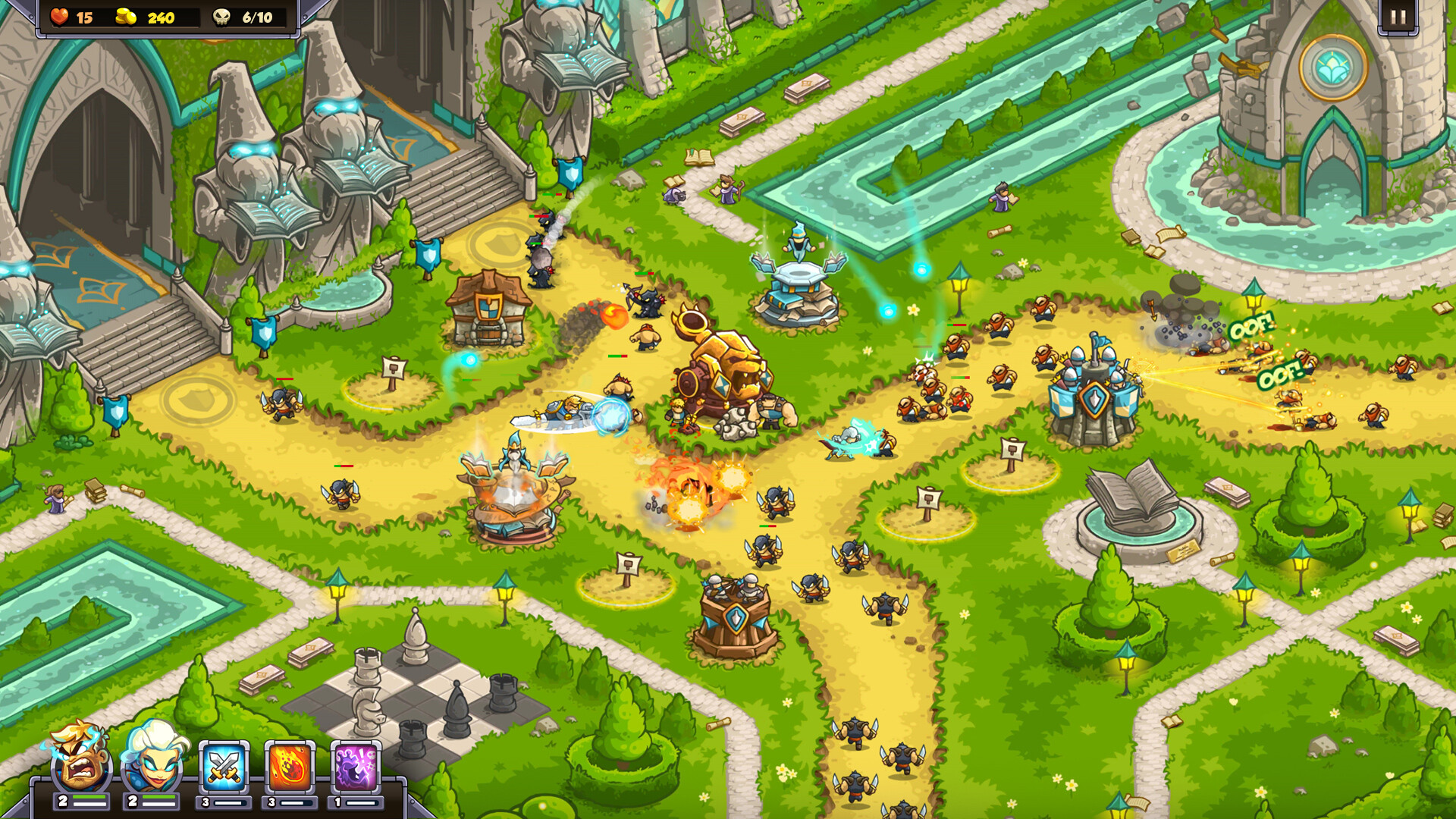
The headline count is 27 upgradeable characters, split between 15 towers and 12 heroes. The tower families are the ones the series has always run on — archers, mages, barracks, artillery — and Ironhide's pitch is that the interesting decision has never been which tower is strongest but which pair of them covers each other's weakness. Lock the lane, break the wave.
The hero change is the more interesting one. Kingdom Rush has historically given you a single hero per stage, a roaming unit you steer by hand while your towers handle the rest. Genesis lets you bring two heroes into every battle and combine their abilities, which is a meaningful shift in how a stage plays: instead of one mobile plug for whichever lane is leaking, you have a pair that can either split the map or stack on a single chokepoint. Nine equippable spells round out the loadout, from meteor showers to reinforcements to map-wide crowd control, and Ironhide is explicit that they are meant to be banked for boss encounters rather than spent on trash waves.
The upgrade system is where the real change is
The feature most likely to matter to people who have played all five previous entries is the rebuilt progression. Every tower, hero and spell now carries its own upgrade tree, and you can retune those choices between stages — including a full reset if a build isn't working. Earlier Kingdom Rush games ran on a shared star-point pool where respeccing was possible but coarse, and where a bad investment early tended to follow you for a while. Per-entity trees with free re-tuning is a much more forgiving structure, and it pushes the game toward experimentation on a stage-by-stage basis rather than one committed build for the whole campaign.
It also plays well on a phone. Tower defense is a genre people dip into for a stage at a time on a commute, and a system that lets you rebuild your whole loadout between those sessions without penalty fits that rhythm better than a campaign-long commitment does.
Eighteen stages, three landscapes, six bosses
The campaign runs 18 handcrafted stages across three distinct landscapes of early Linirea: the Citadel, the Stormcloud Depths, and the distant lands of Arcania. Ironhide counts more than 40 enemy types spread over five races, capped by six colossal boss fights. Each stage carries its own mechanics rather than reusing a single template, which has been the studio's approach since the beginning and is a large part of why the series has held up.
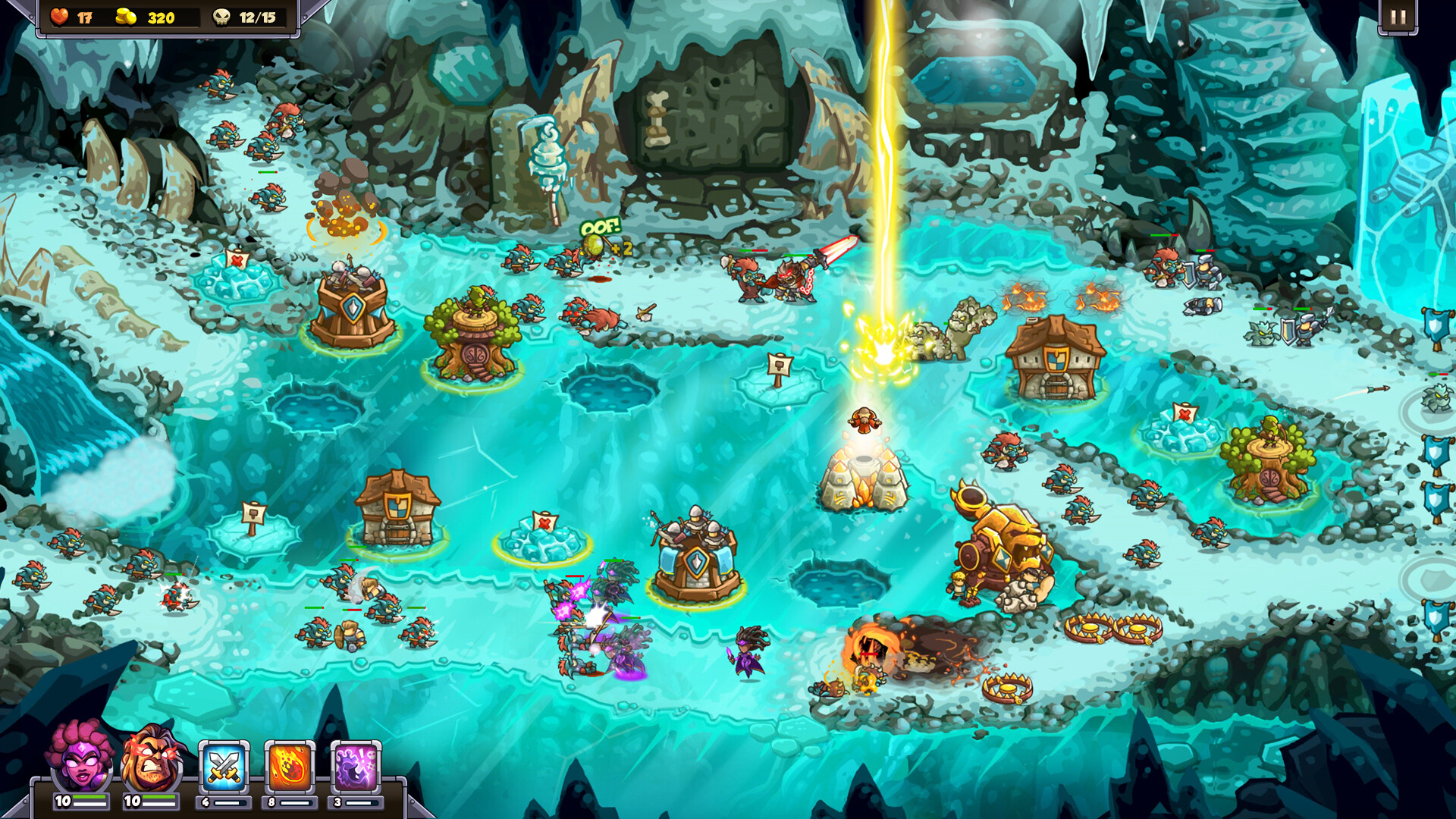
For completionists there are 50+ achievements, harder difficulty modes, and a second mode Ironhide has been showing separately under the name Classic Rush. The studio is also leaning on the thing it has never dropped: the series' lighthearted humour and the easter eggs buried in the maps.
What the mobile build actually is
The App Store listing is the most concrete document available right now. Genesis requires iOS 13.0 or later, weighs roughly 460MB, and carries a 9+ rating. Most importantly for a genre built on short sessions in bad signal, the listing states plainly that the game runs offline with no connection required — you can play the full campaign on a plane or an underground train.
Ironhide has not published a price for Genesis on either mobile storefront yet; the listings are sitting in pre-order state with no figure attached. The studio's recent history is premium and paid up front — Kingdom Rush 5: Alliance launched at $6.99 on iOS in 2024, and Kingdom Rush Vengeance at $4.99 before it — so a one-time purchase in that neighbourhood is the shape the series has consistently taken rather than a free-to-play conversion.
The PC version ships the same day on Steam, developed and published by Ironhide itself, with support for ten languages including full audio in English. Steam Cloud, Steam Achievements and partial controller support are listed.
You can play part of it right now
The most actionable piece of this is the Steam demo, which is live today and gives you a real slice of the game two days before launch. If you want to know whether the two-hero system and the rebuilt upgrade trees change the feel of a Kingdom Rush stage enough to matter, that is the place to find out — and it costs nothing to check before Thursday. Mobile pre-registration is open on both storefronts for anyone who would rather have it appear on the home screen at 07:00 UTC on September 24 and be done with it.