BeXide's voxel merge puzzler NAMCO LEGENDARY Mountains is out on phones today. The iOS version went live on the App Store on September 24 at $8.99, with an Android release announced for the same day. It's the same game that has been on Steam since June 24, where it sells for $19.99, now with touch controls. The pitch is simple. Pac-Man, Dig Dug, Xevious, Mappy and The Tower of Druaga have been rebuilt as chunky 3D "Voxels", and your job is to throw them into a bowl and merge them before the pile spills over the rim.
How it plays
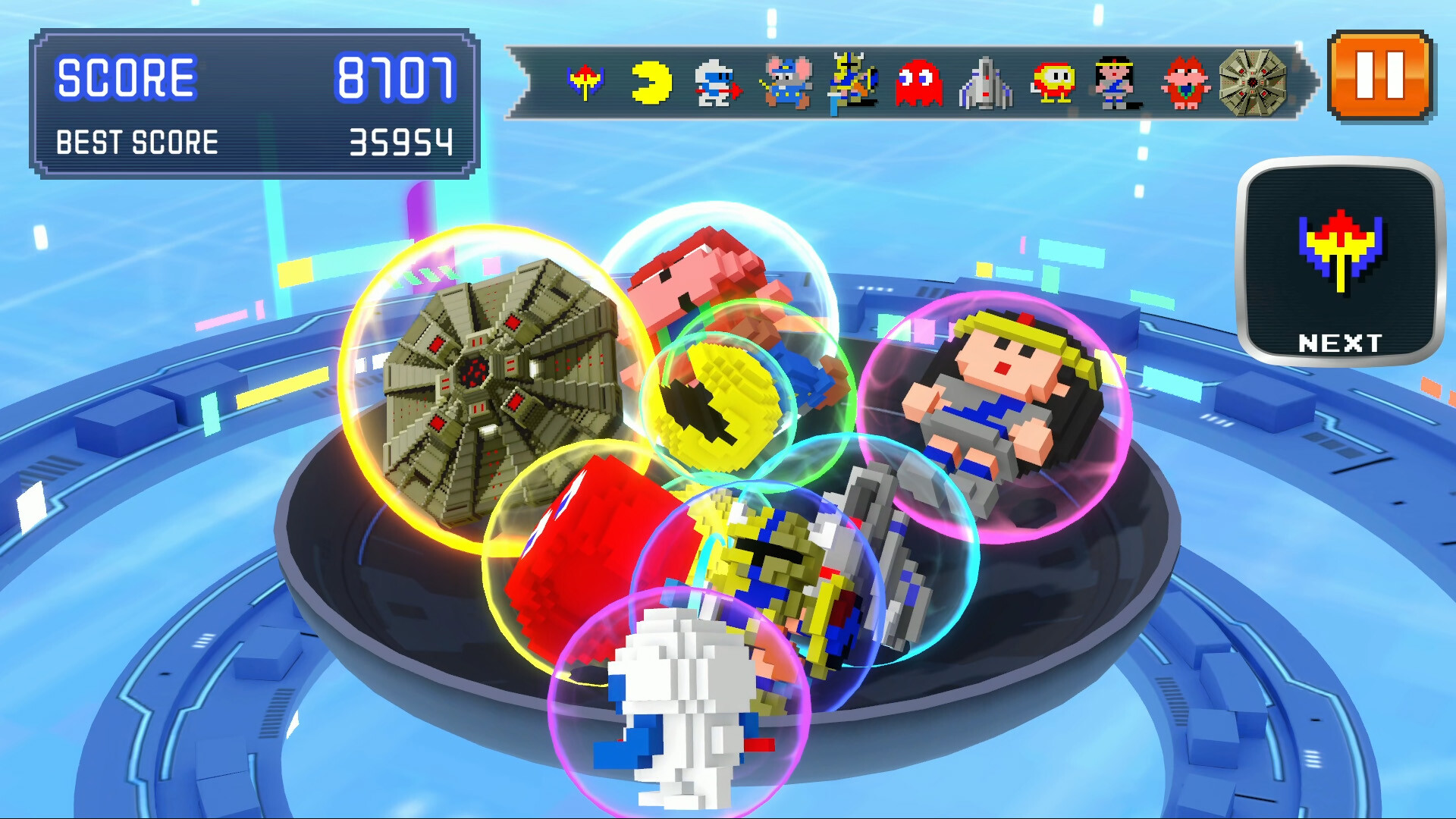
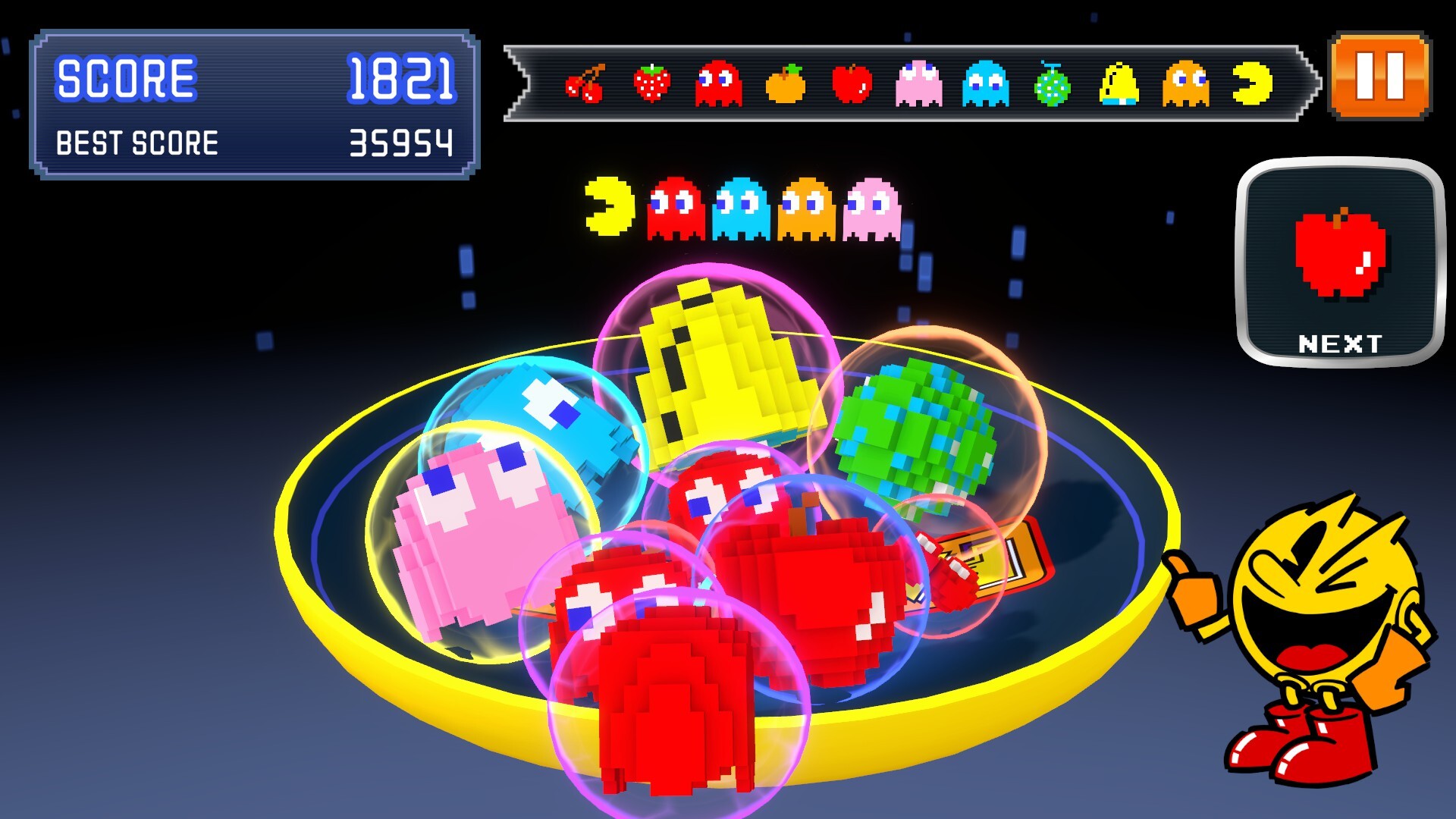
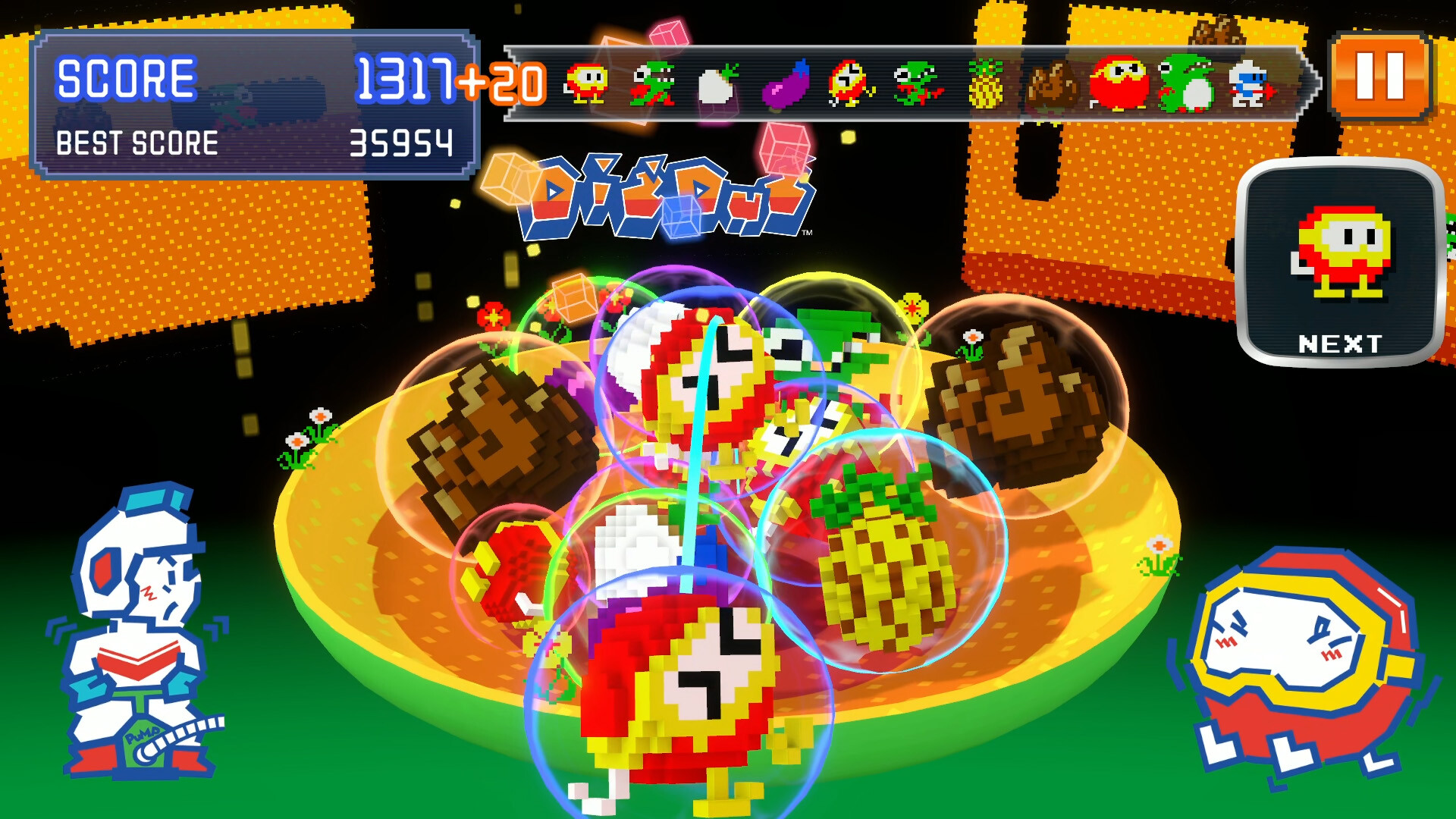
If you've played a fruit-merge game, you already know the loop. Each turn you get a capsule holding one Voxel character and toss it into the field. When two Voxels of the same kind touch, they fuse into the next, larger one on that stage's ladder. A "Next" window in the corner shows what's coming, and a strip along the top of the screen lays out the full merge chain, so you always know what a combination will produce. The round ends when the bowl overflows.
What changes things is that the field is a real 3D bowl, not a flat box. The capsules roll, stack and settle against each other in depth. Where a piece lands depends on the angle you throw it at as much as where you aim. The larger Voxels are awkward, blocky shapes, not tidy circles, so a well-built pile can shift badly when one oversized piece drops in. The main stage mixes characters from all five games in a single chain, so Pac-Man, Dig Dug's Taizo Hori, Mappy and the Andor Genesis fortress from Xevious all end up in the same bowl.
Five stages, five arcade classics
Beside the mixed main stage, each of the five games gets its own stage with its own chain, backdrop and music. The Pac-Man stage sits against the black maze from the 1980 original, with the ghost parade running along the top. The Xevious stage puts the bowl on the green scrolling terrain from Namco's 1983 shooter, and its pieces are the game's grey enemy craft. Dig Dug's stage is set in the layered orange dirt of the 1982 original, with Pookas, Fygars, vegetables and rocks as the pieces.
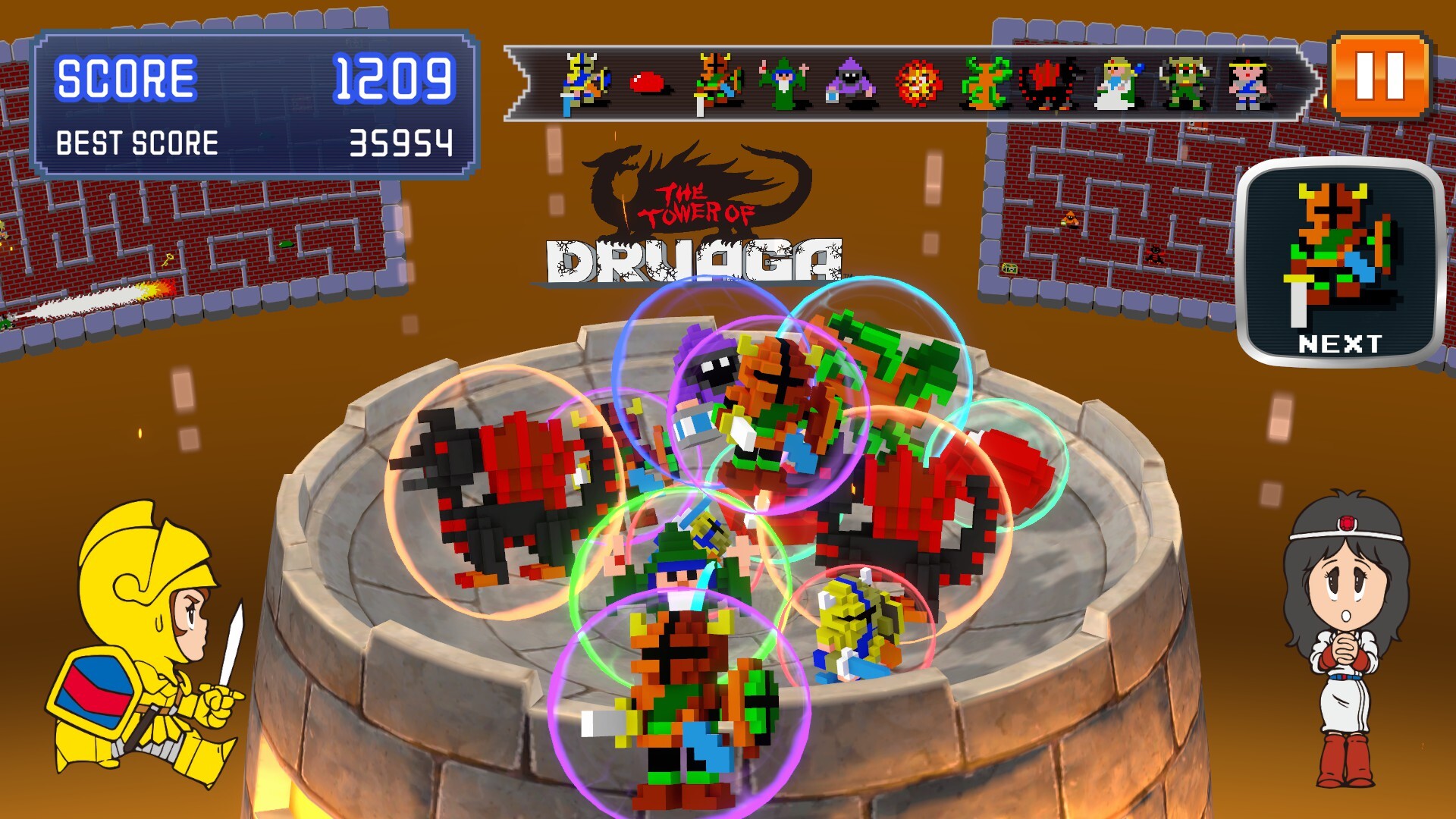
Mappy, the 1983 police-mouse platformer, and The Tower of Druaga, the 1984 maze game that later grew into a whole fantasy franchise in Japan, round out the set. Druaga is the most striking of the five. Its bowl is the stone top of the tower itself, flanked by maze walls, with Gilgamesh and Ki drawn at either side. It's also the least familiar name outside Japan, and the stage works as a quick tour of its cast of knights, slimes, mages and dragons.
More than 100 Voxels to collect
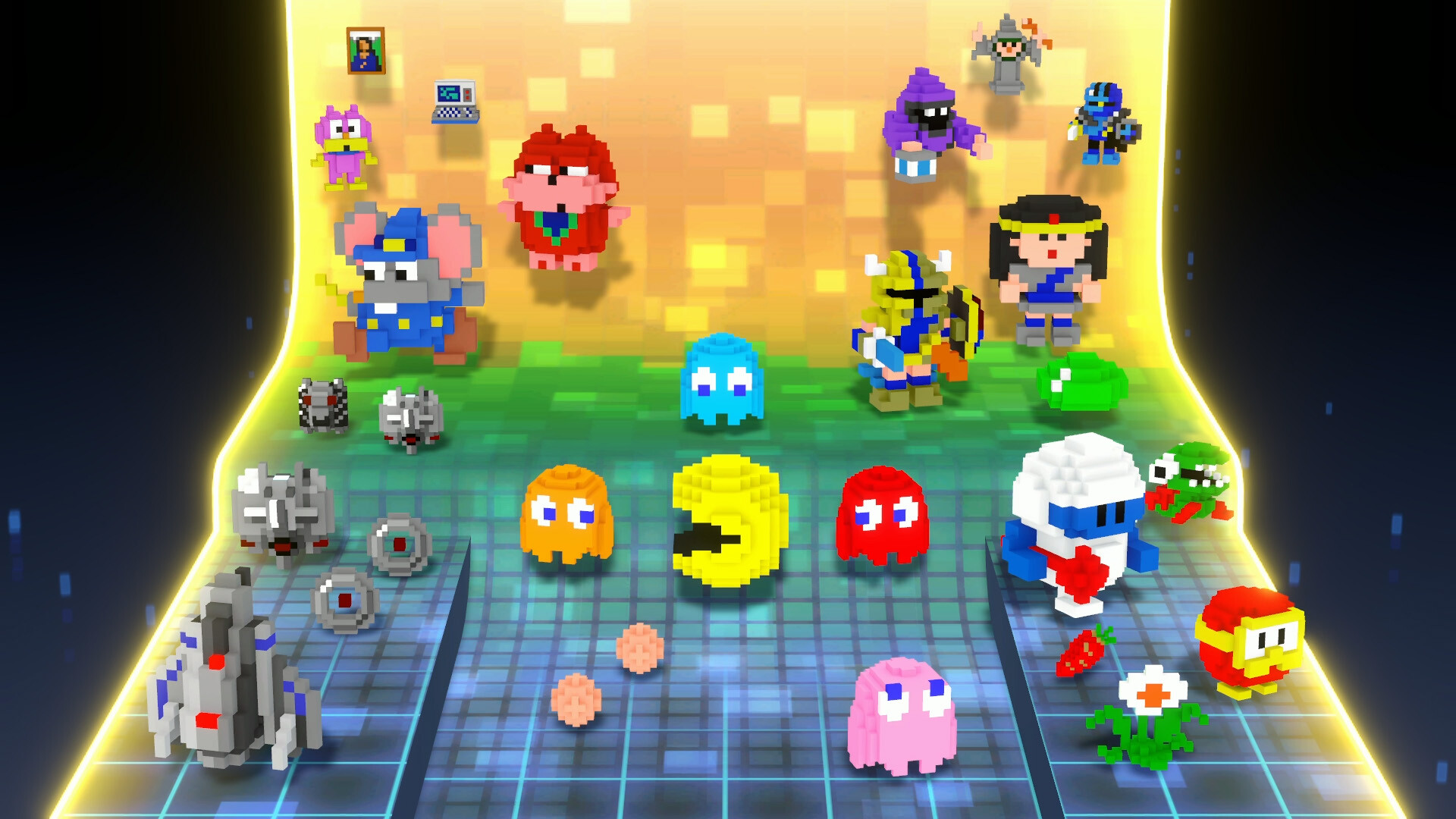
The long-term hook is collecting. BeXide says the game has more than 100 unique Voxels, unlocked by clearing challenges. You can arrange them in a Collection Room, a diorama space where you place characters from different games side by side. Pac-Man's ghosts can share a shelf with Mappy's cats, or a Xevious fleet can line up behind Gilgamesh. Because the room places no limits on what goes where, crossover scenes are the whole point.
For players who want competition, there's a Score Attack mode with online leaderboards shared with players worldwide. BeXide explicitly pitches it as the modern version of putting your initials on an arcade cabinet's high-score table.
Price, platforms and requirements
The iOS version is a premium release. It costs $8.99 up front and runs on iPhone and iPad with iOS 16 or later. The download is a little over 500MB, and the game is rated 4+. That's less than half the $19.99 Steam price for what BeXide describes as the same feature set: the main stage, the five dedicated stages, the Voxel collection, the Collection Room and online rankings. The Steam version, released June 24 for Windows and Mac, stays on sale alongside it.
For BeXide, a Japanese studio, this is another turn with Bandai Namco's back catalogue. For the licence, it's a different kind of revival from the straight emulation of the Arcade Archives line or the full remakes Bandai Namco has put out over the years. Instead of preserving these games, Mountains turns their sprites into toys and builds a phone-friendly puzzle loop around them. That loop has short sessions, a single input and a score to beat, which is exactly the format that suits a phone. Whether that works for you probably depends on how much you like seeing a Pooka in three dimensions.