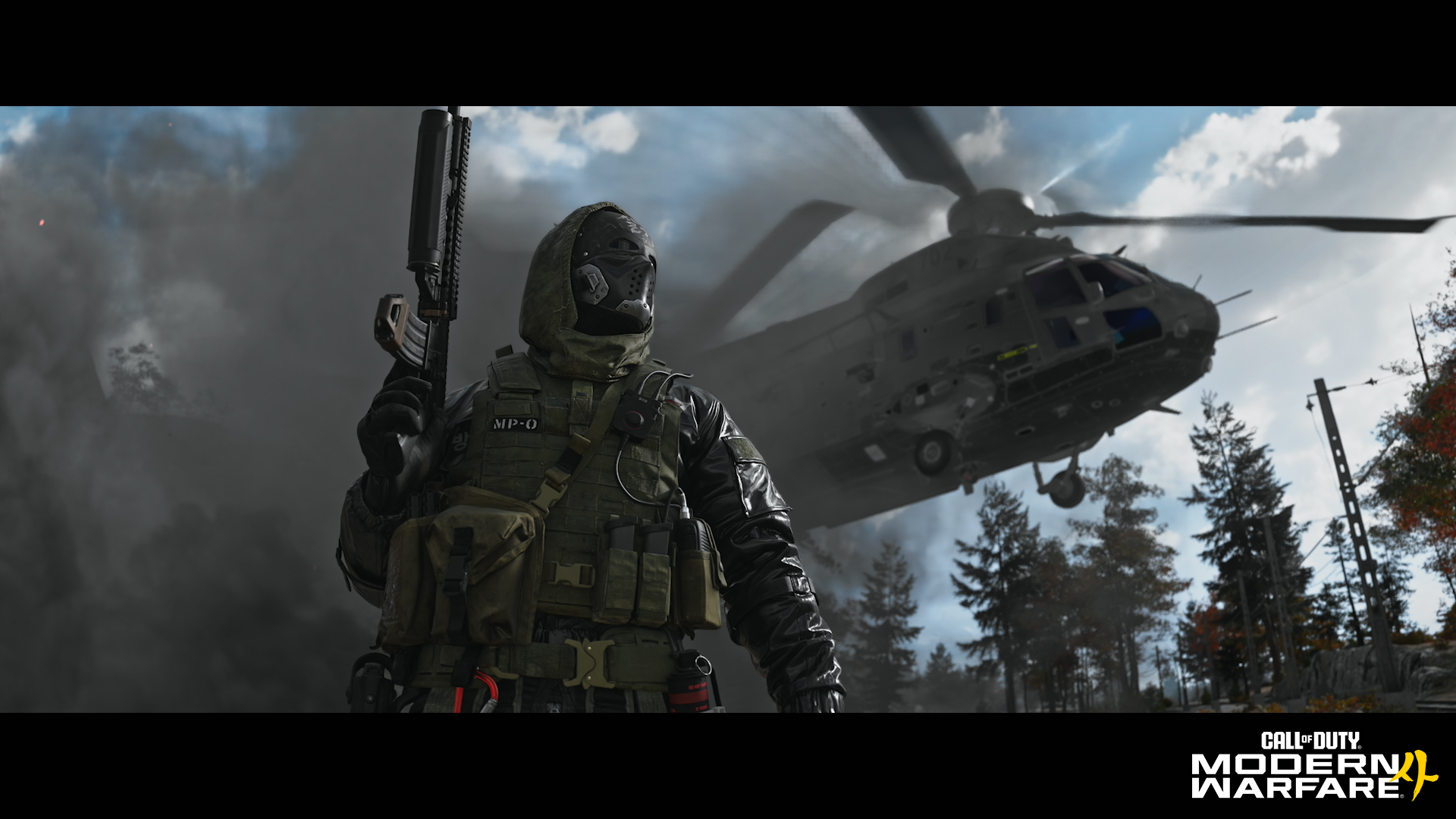
Activision has published the full PC picture for Call of Duty: Modern Warfare 4, three and a half weeks before the game launches on October 23. The post covers three tiers of system requirements, a list of upscalers, a built-in benchmark and the preload schedule. It also reveals a new round-based multiplayer mode that will be very familiar to Search and Destroy players. Beenox, the long-time Call of Duty PC partner studio, is handling the port with Infinity Ward. The headline number is a target of 90 frames per second at the Recommended spec, in multiplayer on High settings, without the player touching a slider.
The system requirements
The floor is low for a 2026 shooter. The Minimum tier asks for Windows 10, an AMD Ryzen 5 1400 or Intel Core i5-6600, 8GB of RAM and a GPU with 3GB of video memory: a GeForce GTX 970 or 1060, a Radeon RX 470 or an Intel Arc A580. The NVIDIA and AMD cards there date from 2014 to 2016, so a lot of older gaming PCs should at least boot the game.
Recommended, the tier Activision says delivers 90fps in multiplayer at High settings, moves up to Windows 11, a Ryzen 5 3600 or Core i7-8700K, 16GB of RAM and 8GB of video memory. The GPUs listed are a GeForce RTX 3060 Ti, Radeon RX 6600 XT or Intel Arc B580. The top tier is built for high-quality ray tracing at an upscaled 4K. It calls for a Ryzen 7 3700X or Core i7-10700K, 32GB of RAM, and a GeForce RTX 5070 Ti or Radeon RX 9070 XT with 16GB of video memory.
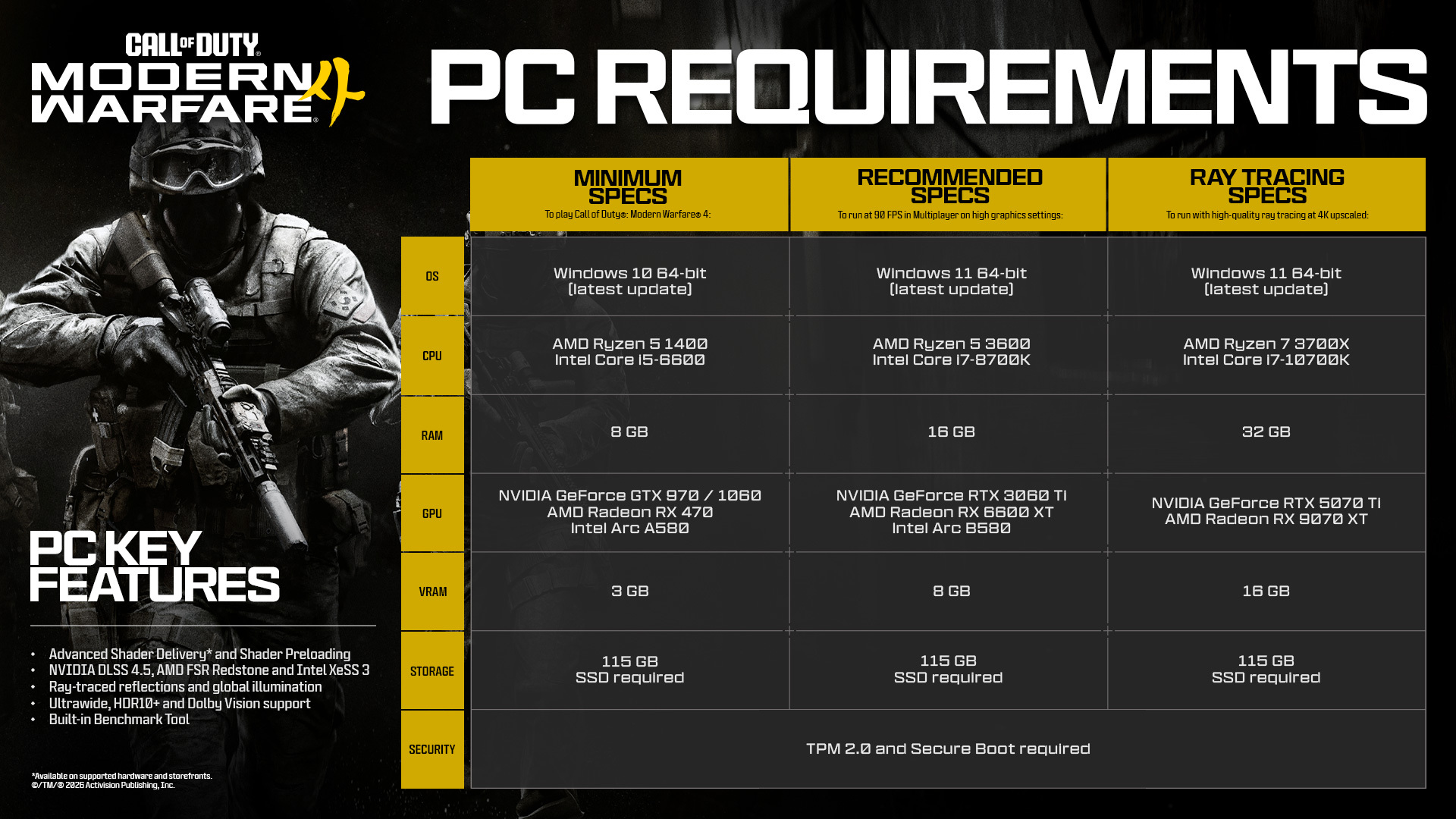
Two lines apply to every tier. First, the game needs 115GB of free space, and that space has to be on an SSD. Second, TPM 2.0 and Secure Boot are required. Both are part of the RICOCHET anti-cheat's hardware-level protection, which Activision describes as server-side detection backed by hardware checks, investigations and legal action. Most PCs sold with Windows 11 already meet this, but older self-built machines may need a trip into the BIOS before launch day. Activision also lists recommended driver versions: AMD 26.7.1, Intel 32.0.101.8974 and NVIDIA 616.56. NVIDIA will release a driver that supports Advanced Shader Delivery on October 21.
Upscaling, ray tracing and display support
All four major resolution-scaling options are included: NVIDIA DLSS 4.5, AMD FSR Redstone, Intel XeSS 3 and the game's own Filmic SMAA T2X, which is the default. The frame-generation options come with the vendor upscalers. Ray tracing is available in all three modes (Campaign, Multiplayer and DMZ), not just the story. The display list covers 1080p through 4K, ultrawide monitors, and HDR10+ and Dolby Vision. With HDR10+, the game reads the screen's brightness in real time instead of relying on manual calibration sliders.
Across graphics, gameplay, input devices and interface, the PC version has more than 800 settings, and it picks a starting configuration from the detected hardware. New additions include a global sharpness slider that works with any upscaler, a shading quality setting, and a split depth-of-field option. With the split option, players can keep the world sharp while still getting blur when aiming down sights. Mouse input is polled more than once per frame for finer aim. A PC-only Enhanced FOV option uses a lens-style distortion to widen the view at the edges of the screen while leaving the centre untouched, which suits players who like a tight field of view but still want to see peripheral movement.
Changes that reach every platform
Some of the changes Infinity Ward and Beenox list are not PC-specific. Weapon bloom, the random scatter of shots within a cone, is gone. Bullets now leave from wherever the barrel is actually pointing, whether the player is aiming down sights or firing from the hip, and a laser attachment can show where rounds will land. Muzzle flash is also masked at the point of aim, so targets stay visible through heavy firing.
A built-in benchmark runs a simulated multiplayer sequence. It reports average FPS, CPU and GPU load, ping and input latency, then breaks results down zone by zone with suggested setting changes. Advanced Shader Delivery, which replaces what used to be called shader preloading, sends precompiled shaders at install time so the game skips the long first-boot compile. To use it on a supported storefront, players need the Xbox PC app installed, whichever store they bought from. Patches will also no longer force a restart at boot; players already in a match when an update lands will be prompted between games.
Collateral: a round-based buy mode
The post also reveals Collateral, a new multiplayer mode aimed squarely at the Search and Destroy crowd. Teams swap between attacking and defending two bomb sites. Everyone starts each match with only a pistol, and cash earned from kills and objective play is spent between rounds. The shop includes armor and perks, equipment such as flashbangs, Molotovs, a smoke wall and a riot shield, a range of pistols, and two rifle tiers topped by a sniper rifle. There is also a team purchase for a UAV.
Dying costs you your loadout, but your money carries over between rounds. Respawns, killstreaks, health regeneration and custom loadouts are all switched off. That structure puts it closer to tactical shooters like Counter-Strike and Valorant than to anything Call of Duty has shipped before. Activision says more details will arrive closer to launch.
Preload and launch dates
PC players who pre-purchase digitally can start preloading on October 15 at 9am PT. Campaign early access for digital pre-orders opens on October 16, a full week before the full launch at midnight local time on October 23. On PC, the game will be sold through the Xbox PC app, Battle.net and Steam.