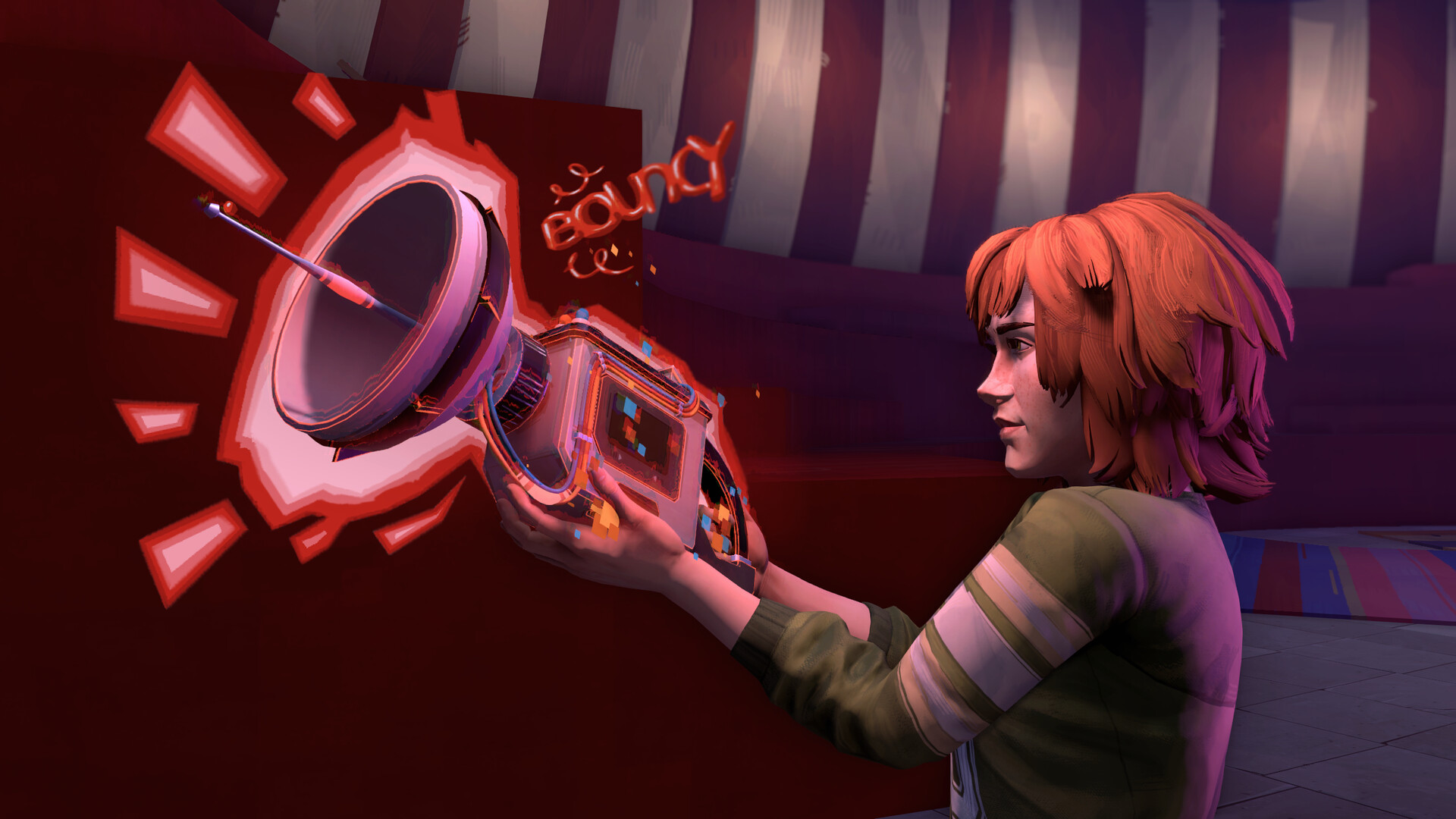
Focus Entertainment and Berlin-based developer Mad About Pandas have launched Yerba Buena worldwide today, May 26, 2026, putting their surreal 1970s-flavored puzzle-platformer up for sale on PS5, Xbox Series X|S, and PC via Steam after a couple of months of demo feedback and a Galaxies Spring Showcase preview tour. The publisher dropped a fresh launch trailer alongside the release to anchor the marketing push - a roughly two-minute reel that finally puts the game's full Copy and Paste mechanic on display in motion, with the surreal abandoned-arcade aesthetic that has been the project's hook from its first announcement.
You play as Barb, a young woman who exists as an NPC inside an abandoned 1970s video game that has been quietly decaying for decades. The world Barb inhabits is a surreal, glitch-riddled San Francisco - cable cars frozen mid-route, fog banks rolled in and stuck, neighbours stuck in conversation loops that never finish - and Barb's job, once she figures out she has agency at all, is to fix the glitches before the whole simulation collapses on top of her. The whole framing reads like Pleasantville crossed with The Witness, with a dash of Manifold Garden's reality-warping geometry baked in.
The Oscillator and the Copy and Paste mechanic
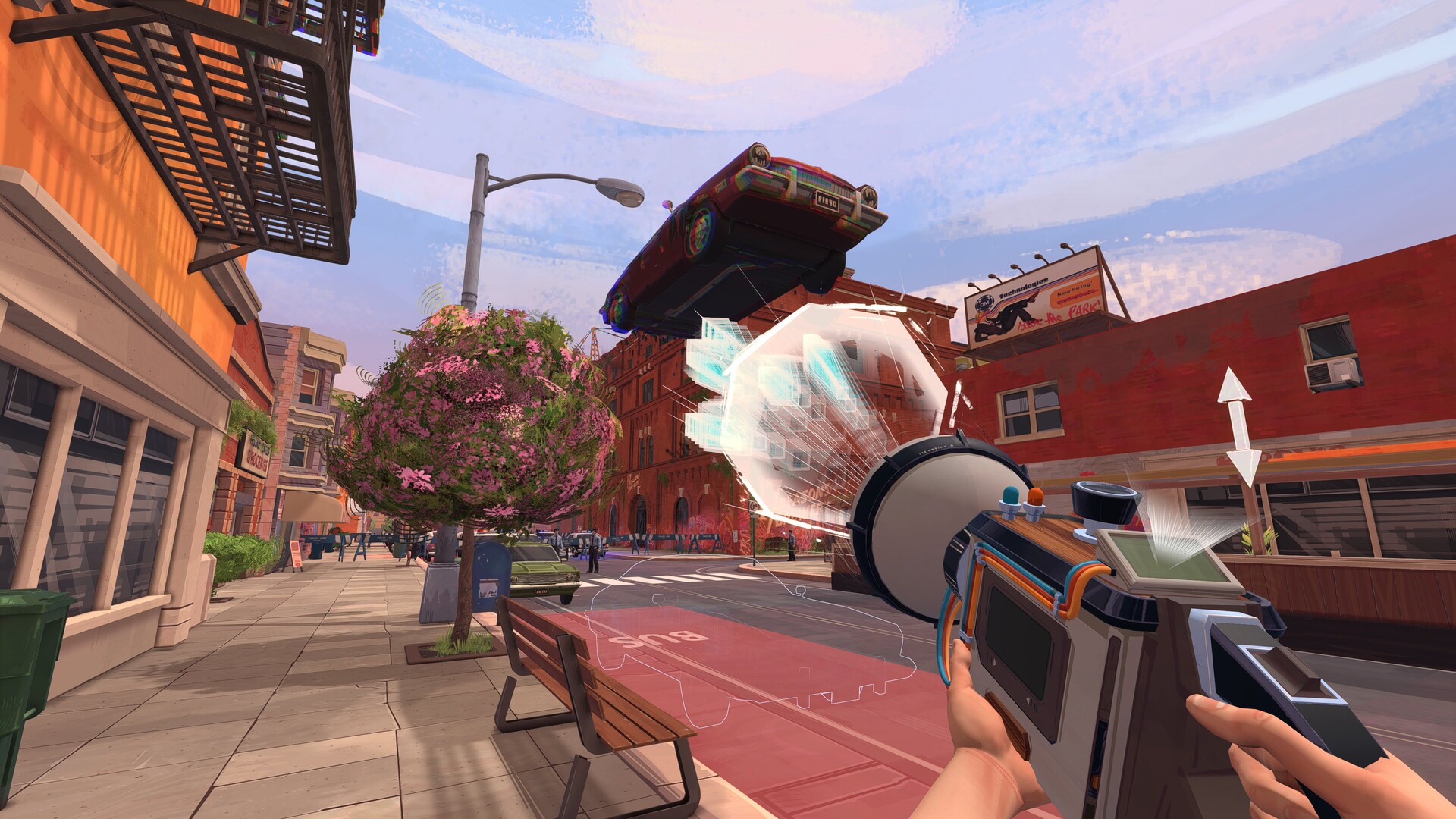
The headline gameplay system is the Oscillator, a tool Barb picks up early in the campaign that lets her copy specific properties from objects in the world and paste them onto other objects. A heavy crate's weight can be cloned onto a feather. A bouncing ball's momentum can be applied to a stuck door. A patrol guard's movement vector can be lifted and pasted onto a stalled tram so the tram now does the guard's patrol while the guard stands still. Each puzzle - and there are over a hundred of them across the campaign - is built around the question of which physical trait, in which order, applied to which object, will let Barb advance to the next chapter of the broken arcade.
Mad About Pandas has been careful in the marketing to position Copy and Paste as a single, scalable mechanic rather than a sprawling toolset. There are no ability unlocks, no upgrade tree, no progression-gated tools. You learn the Oscillator in the first ten minutes; the rest of the runtime is about progressively more creative applications of the same verb. That design discipline echoes Patrick's Parabox, Stephen's Sausage Roll, and the other one-mechanic puzzle games that have become the genre's most respected anchors over the last decade. Yerba Buena is bigger and louder than those - it has a story, voiced characters, full-3D environments, and an audio-driven score by Stelios Roussos - but it shares their conviction that one well-tuned idea, repeated across a hundred contexts, is enough.
A surreal 1970s San Francisco, frozen in glitch
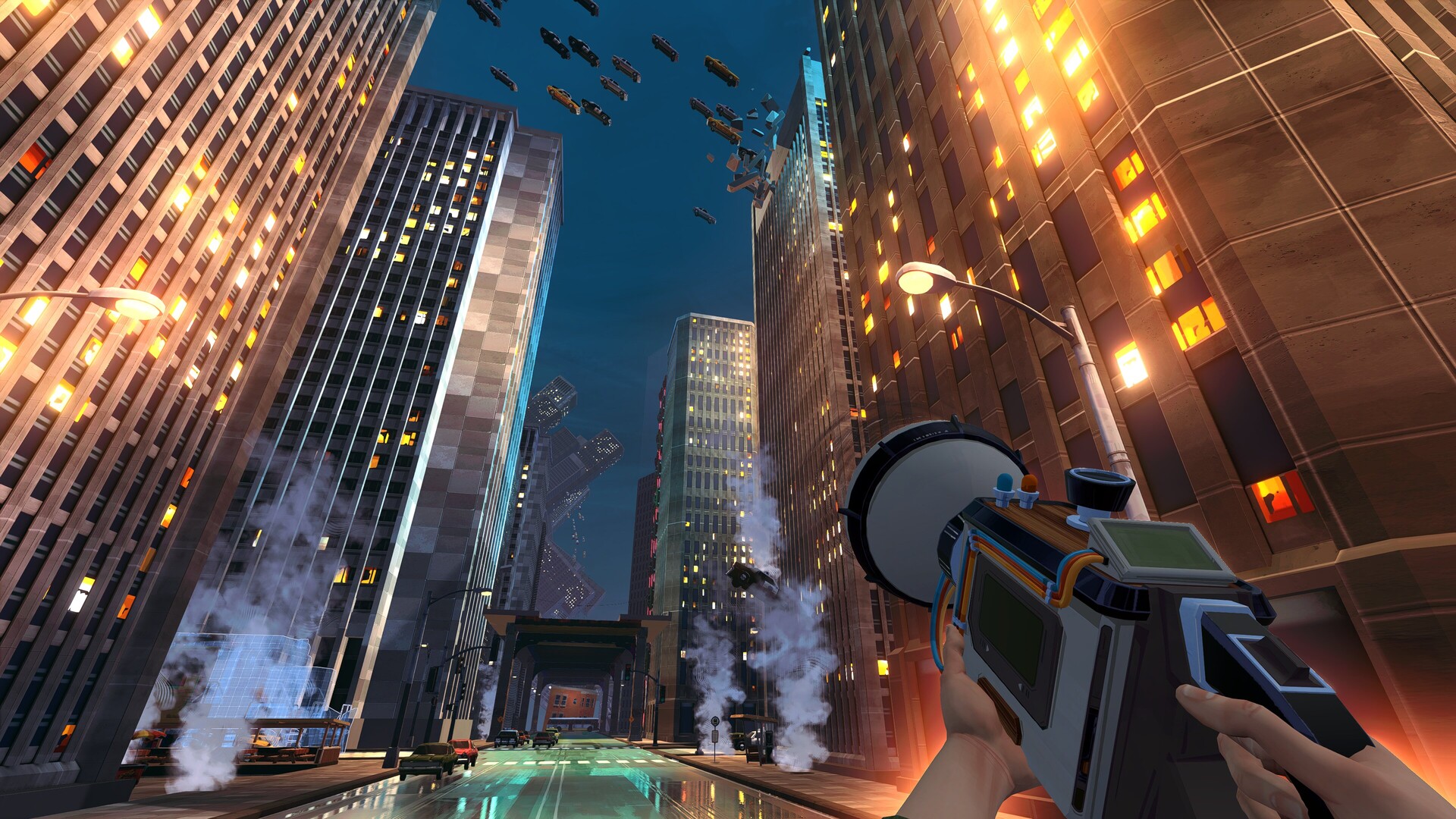
The art direction is the other half of why the game has been getting attention. Yerba Buena is set in an abandoned 1970s-styled gameworld based loosely on San Francisco - cable cars, hilly neighbourhoods, foggy waterfront, Painted Lady Victorian houses - and the entire palette leans into the muted oranges, browns, and burnt yellows that defined the era's actual movies and television. The glitch aesthetic layers on top of that base palette in deliberate, contained ways: chunks of geometry torn out of buildings and replaced with debug grids, NPCs frozen mid-gesture with floating dialogue tooltips above their heads, audio loops that cut and restart in increasingly aggressive patterns as Barb gets closer to whatever the underlying problem is.
The 1970s San Francisco framing is not just decoration. Mad About Pandas has hinted in interviews that the game's underlying narrative is about specific real-world moments in the city's history - the Summer of Love hangover, the post-Manson cultural drift, the early countercultural music scenes - filtered through the lens of a 1970s arcade developer trying and failing to translate that texture into a playable game. Whether that thematic ambition pays off across a fifteen-hour campaign or collapses into mood-piece pastiche is exactly the question the launch reviews will be trying to answer over the next two weeks.
What's in the box
The standard edition ships with the full campaign - estimated at twelve to fifteen hours for a critical-path run, more for completionists hunting the optional collectibles. There is no season pass, no day-one DLC, no microtransaction layer. The Steam demo that has been live since mid-April carries progress forward into the full game for players who want to start with it. Console performance targets are 60 frames per second on PS5 and Series X with dynamic resolution; the Series S target is 60 at a slightly lower base resolution. Steam Deck Verified status was confirmed in the launch-day announcement, which puts Yerba Buena on a short list of strategy-and-puzzle games genuinely suited to handheld play.
Pre-orders ran with a 10 percent launch discount through the early weekend, and Focus Entertainment has confirmed the discount carries through the first week of release on all storefronts. The publisher hasn't given a hard date for the Switch 2 version - which was strongly rumored at the Galaxies Spring Showcase - but multiple outlets are reporting an autumn 2026 window once Mad About Pandas finishes its current console support cycle.
Yerba Buena is available now on PS5, Xbox Series X|S, and Steam. Reviews have been trickling in across the embargo window, with early coverage emphasizing the elegance of the Copy and Paste mechanic and the consistency of the 1970s aesthetic, while flagging occasional puzzle difficulty spikes in the mid-campaign chapters that will likely get re-tuned in patches over the next month.