Available on PS5, Xbox Series X|S, Nintendo Switch 2, PC (Steam, Epic Games Store, GOG). Day one on Xbox Game Pass and PC Game Pass.
Call of the Sea was one of those small games that earned more affection than reach. Out of the Blue Games' 2020 debut put you on a single tropical island, gave you a husband to find, walked you through about ten hours of pointed Lovecraft-by-way-of-color. Call of the Elder Gods does something almost no Lovecraft adaptation has the appetite to attempt: it widens out instead of doubling down. Where Call of the Sea was insular by design, Call of the Elder Gods plants a flag on five different continents, swaps a soft-spoken solo protagonist for a duet across two characters, and reframes the cosmic-horror language from a personal mystery into a much bigger one. It's a bigger game in every measurable way, and it's better for it.
It's also a noisier release in a much louder year. Subnautica 2 launched two days later, and Forza Horizon 6 the week after. Out of the Blue Games doesn't have Playground Games' budget or Unknown Worlds' viral kinetic energy. What it has is the most cohesive, most thoughtful adventure-puzzler this side of The Witness, and a story that finally treats Lovecraft as source material to be wrestled with rather than a vibe to be cosplayed. The result is a generous, often beautiful, occasionally over-extended adventure that's almost certainly going to be remembered as one of 2026's quiet recommendations.
A bigger map, a tighter focus
The opening hour is the one place where Call of the Elder Gods feels overtly familiar. You wake into the warm light of a Connecticut bedroom in 1937, you find a desk full of letters and a wife who is too patient to ask the right questions, and you spend forty minutes establishing that Professor Harry Everhart - Yuri Lowenthal in fine, troubled form - has been losing entire weeks to fugue states he cannot account for. He is sleepwalking through his Miskatonic University office; he is writing in handwriting that is not his; he is, in the words of his colleague, "remembering things that have not happened yet." The Lovecraft adapt is unmistakable. The novella the game is mining is "The Shadow Out of Time," the 1936 piece that gave us the Great Race of Yith and the idea that consciousness could be a substance unpacked, copied, and routed across deep time.
What Out of the Blue Games does with that source material is the first real surprise. The novella is famously interior, almost claustrophobic - it spends a hundred pages inside one man's increasingly unreliable head. The game externalises the conceit by giving you a second protagonist, twenty years younger, whose timeline runs in parallel and whose chapters slot in between Harry's. Evangeline "Evie" Drayton (Cissy Jones, also from the previous game and from Firewatch) is a postgraduate student at Miskatonic who is investigating Harry's wartime expedition - the one to which the game keeps returning - and her chapters take the player to Sri Lanka, Argentinian Patagonia, the Hokkaido coast, and one of the strangest cities ever rendered in a video game. Hers is the globetrotting half. Harry's is the interior half.
The structure works because it lets each character carry a different gameplay temperature. Harry's chapters are slow, archive-heavy, and locally constrained: you spend long stretches in his university office, in a half-flooded New England chapel, in an upstate hospital ward, sorting through letters, decoding lecture notes, and reconstructing the shape of an expedition he doesn't fully remember leading. Evie's chapters are bigger and more kinetic: she scales a temple complex, ropes down into a sea cave on Hokkaido, and at one extraordinary point walks the breath-fogged streets of a city whose architecture refuses to settle into Euclidean geometry. The pacing of the cuts between them is one of the game's clearest improvements over Call of the Sea, which sometimes felt like one long uninterrupted Norah-monologue and lost variety as a result.
Two protagonists, one mystery
The biggest concern with a dual-protagonist structure is always that one half will become the half people endure. Out of the Blue Games sidesteps that by writing both characters to want the same answer but for almost opposite reasons. Harry wants to know what is happening to him, and is terrified by the prospect that he is the answer. Evie wants to know what happened to him, because she is convinced - correctly, as it turns out - that the events of 1917 are about to repeat. The two protagonists never meet on-screen in the present day, but the game's letter-and-diary connective tissue means they're constantly in conversation across years. By the end of the game, the moments where one character solves a problem the other one was stuck on three chapters earlier feel like genuine craft rather than parlor tricks.
Lowenthal's Harry is the better-realised half on a sentence-by-sentence basis. The performance leans into the wreck of a man who has been waking up unsure if he is the one inhabiting his own body. Lowenthal is one of those video game leads who can do small panic without ever overplaying it, and the game gives him long, lonely interior monologues to work with - the kind of writing that ends a confessional letter with "I do not believe I am the one writing this" without sounding overwrought. Jones's Evie is more recognisable as a continuation of her previous work: bright, curious, occasionally arch, and the closer the game gets to its endgame the more it asks her to register the cost of what she's finding. The reveal in the Antarctic chapter is sold almost entirely by a single line read.
The supporting cast does heavy work too. Harry's wife Helen is given more agency than she initially looks like she'll get - her late-game letters are quietly the emotional engine of the entire third act - and Evie's expedition partner, an Argentinian linguist named Ruth Carballo, is the rare RPG-adjacent companion who keeps pulling the narrative toward questions about ethnographic responsibility rather than just supplying exposition. There's a scene in the middle of the Hokkaido chapter where Ruth refuses to translate a local fisherman's account because she thinks Evie's framing of it is colonising, and the game treats that disagreement as a real one rather than a teaching-moment beat. Lovecraft adaptations tend to have a default mode of treating non-Western settings as eldritch backdrop, and Call of the Elder Gods is consistently more interested in undermining that habit than indulging it.
Puzzle craft is the star
The puzzles are where this game most decisively surpasses its predecessor. Call of the Sea's set-pieces were strong but cosmetic - they served the location and the vibe, and only occasionally felt like they were testing the player on logic the player had actually been taught. Call of the Elder Gods builds its puzzle library around a small set of recurring mechanical vocabularies and then varies them across environments. You learn to read a particular kind of glyph in chapter one and you'll still be reading it in chapter eight, but the surface it appears on - paper, stone, ice, refracted through water, smeared across a wall in luminous fungus - keeps changing what the act of reading actually means.
The best puzzle of the game is in the Patagonian chapter, and it concerns a rotating astrolabe in an underground chamber that you have to align against constellations whose positions only resolve in the chamber's reflection on a still pool. The trick is that the constellations are partly your own memory: the game has been teaching you these patterns since chapter two through environmental detail - tile mosaics, stained glass, the spine of a book in Harry's office - and the late-game payoff is realising that none of those decorative motifs were decorative. It's the kind of moment The Witness pioneered and almost nobody since has executed cleanly, and Out of the Blue Games pulls it off about four times across the runtime.
The second-best puzzle is in the Hokkaido chapter, where Evie has to time the swell of an underground sea cavern against a tidal chart she's only seen referenced obliquely in a passage in chapter five. That one rewards careful note-taking and punishes nothing. There is no time limit, the swell pattern is fully observable from a single safe vantage point, and if you sit and watch long enough you can solve the whole sequence purely by attention. The game is constantly betting that the player will choose to look rather than skip.
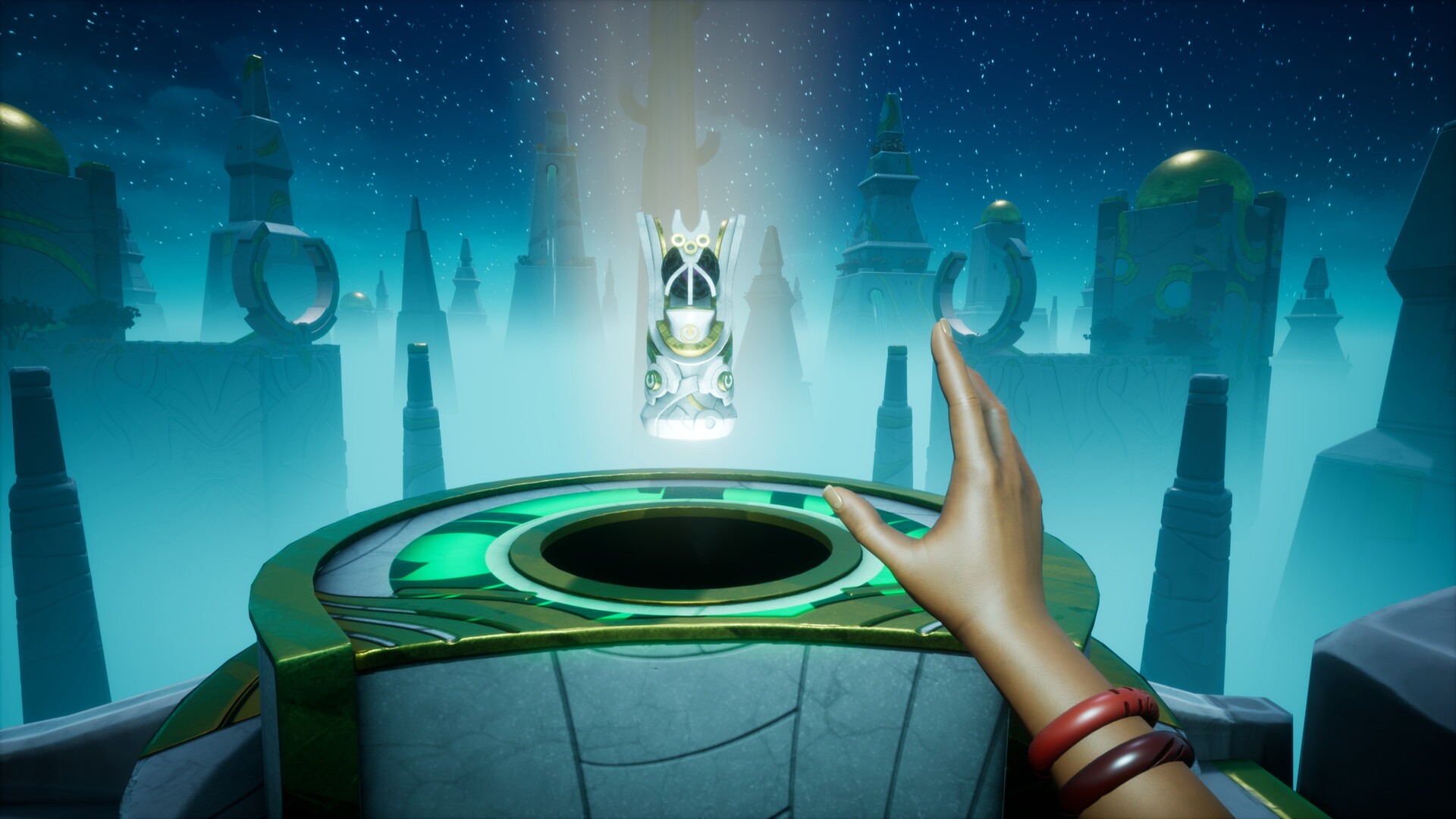
That confidence is the thing that separates this puzzler from most of its peers. Modern adventure design is built around the assumption that the player will get stuck and rage-quit, and so most puzzles ship with a hint cascade that effectively solves itself if you wait two minutes. Call of the Elder Gods has hints - we'll get to those - but the default design assumption is that you will pause, you will go back through Harry's letters and Evie's journals, you will write down the symbols on a piece of paper, and you will be rewarded for that effort with a click of recognition that doesn't feel manufactured.
The Lovecraft problem - and how this game solves it
Any adaptation of Lovecraft has to negotiate with the man's politics, and most adaptations either pretend the negotiation isn't necessary or stage it as a single virtue-signal beat and then return to the usual postures. Call of the Elder Gods is more thoughtful than that. The game makes its source material visible - "The Shadow Out of Time" is cited by name in Harry's office, multiple chapters quote real passages, and a wall of his study is covered in correspondence with editors at Weird Tales - and then uses the apparatus of the game's design to interrogate those passages. The Sri Lankan chapter is the clearest example: a colonial archaeological dig is the setting, and the puzzles are organised around correcting the historical record that Harry's 1917 expedition deliberately falsified to support a racial-anthropology thesis Lovecraft himself would have endorsed.
Out of the Blue Games is Spanish, not Anglo-American, and the game's relationship to Lovecraft is consistently the relationship of an outside reader picking up an inheritance. The cosmic-horror elements still work on the genre's own terms - there is a giant unspeakable thing in the deep, there is a city of impossible angles, there are characters whose consciousness has been overwritten by entities older than mountain ranges - but the human characters consistently ask questions Lovecraft never thought to ask his own protagonists. What did the colonial governor in Sri Lanka stand to gain by suppressing this dig? What is owed to the Hokkaido fisherman whose family has been carrying this knowledge for four generations? Who profits when an academic publishes the wrong account of an expedition? The answers aren't tidy. The narrative doesn't punish Lovecraft, exactly, but it does what every good adaptation of contested source material has to do: it reads him carefully and then puts a thumb on the parts that need recalibration.
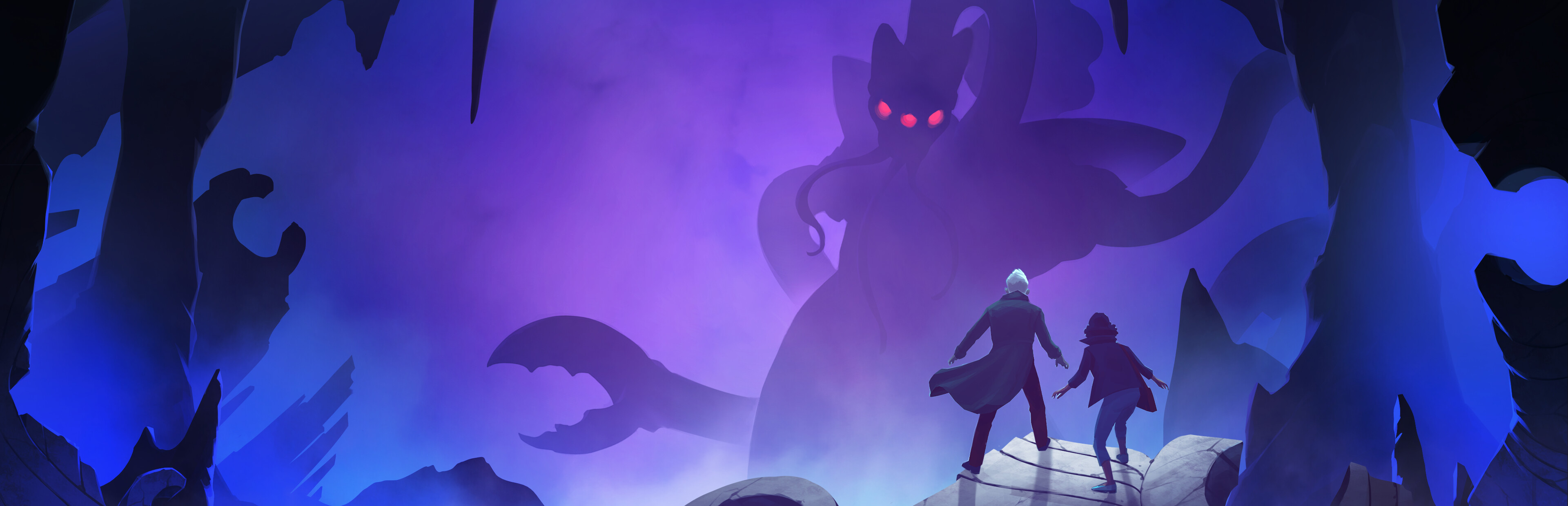
The game also remembers to be scary. The Lovecraft-pure horror moments are some of the strongest in any first-person adventure since Soma. The Hokkaido sea-cavern climb-down ends with one of the best uses of off-screen sound design in any game this year - a single sustained note that becomes a chord, then a layered chorus, then a sentence in a language you don't know but can almost parse. The Antarctic chapter has the city-of-impossible-angles set piece, and Out of the Blue Games has the engineering chops to render geometry that genuinely doesn't behave. None of these moments are jump scares. They are slow, considered, and they land harder for it.
Audio is doing the work
The score is the secret weapon. Eduardo de la Iglesia returns from Call of the Sea, and where the first game's music was a lush, atmospheric layer that mostly stayed out of the way, the soundtrack for Call of the Elder Gods is genuinely doing dramaturgical work. Each chapter has its own theme rooted in the regional instrumental palette - the Sri Lanka chapter is built around an esraj sample treated through long reverb tails, the Hokkaido chapter uses a single shakuhachi flute that slowly gets joined and then drowned by synthesised strings, the Antarctic chapter is mostly silence punctuated by what sounds like a choir recorded inside a very large pipe. The recurring "Yithian" motif - a four-note descending figure that first appears as a music-box jingle in Harry's office in chapter one - shows up in increasingly distorted forms across the runtime, and by the time it returns in the final chapter as a corrupted choir-and-organ cacophony, it carries the weight the game needs it to carry.
The voice acting is uneven only in the supporting cast. Lowenthal and Jones are doing top-of-the-industry work, and the main supporting players - Ruth Carballo, Helen Everhart, the unnamed Antarctic radio operator - are excellent. The smaller speaking roles (the colonial governor in Sri Lanka, a couple of the Miskatonic faculty, the fishing-village interpreter in Hokkaido) range from competent to occasionally stilted, and there's one specific Sri Lankan accent in chapter three that is so obviously a non-Sri Lankan reader doing their best with phonetic notes that it pulls you out of the chapter for a moment. These are minor sins in the larger context.
The ambient design is just as important as the music. The Hokkaido cave system has water-drop and wave foam and distant whale song built into the audio bed at three different distances, and the change between chapters where you are above-water versus below is rendered through a careful low-pass filter that you don't notice until you surface from a dive and the world re-clarifies around you. The Patagonian astrolabe room has a very particular kind of bass rumble that is almost subsonic - it's not a jump-scare bass drop, it's just there, throughout, and your body works out before your head does that the room is not quite stable.
Where the seams show
This is not a perfect game. Out of the Blue Games is still a small studio - the credits list about 40 names - and a project of this ambition is going to show its budget seams. The most obvious place is character animation. The faces are improved over Call of the Sea, and the eye-line and blink-rate work is significantly more natural, but under direct light the lip sync slips out of alignment on long monologues, and the character hands have a slightly waxy quality during the close-up letter-reading sequences. None of this breaks the experience - the camera direction is consistently smart enough to either frame these moments well or move past them - but if your tolerance for that specific bracket of mid-tier production value is low, you will notice.
The other obvious seam is the stealth interlude in the Antarctic chapter. It's the only chunk of the game that asks the player to do something other than think, look, walk, and read, and it is the worst-designed twenty minutes in the whole runtime. You sneak around a small camp avoiding cult patrols, with rules that are not quite explained, line-of-sight that doesn't quite match what's on screen, and a checkpoint system that's stingier than the rest of the game's. The section's payoff in the next room is good enough that I wish Out of the Blue had either committed to it as a real stealth system across the whole game or thrown it out entirely. The current implementation feels like a half-baked answer to the perennial review-board question of "what about variety?", and it's the only place in the game where the player is working against the design rather than with it.
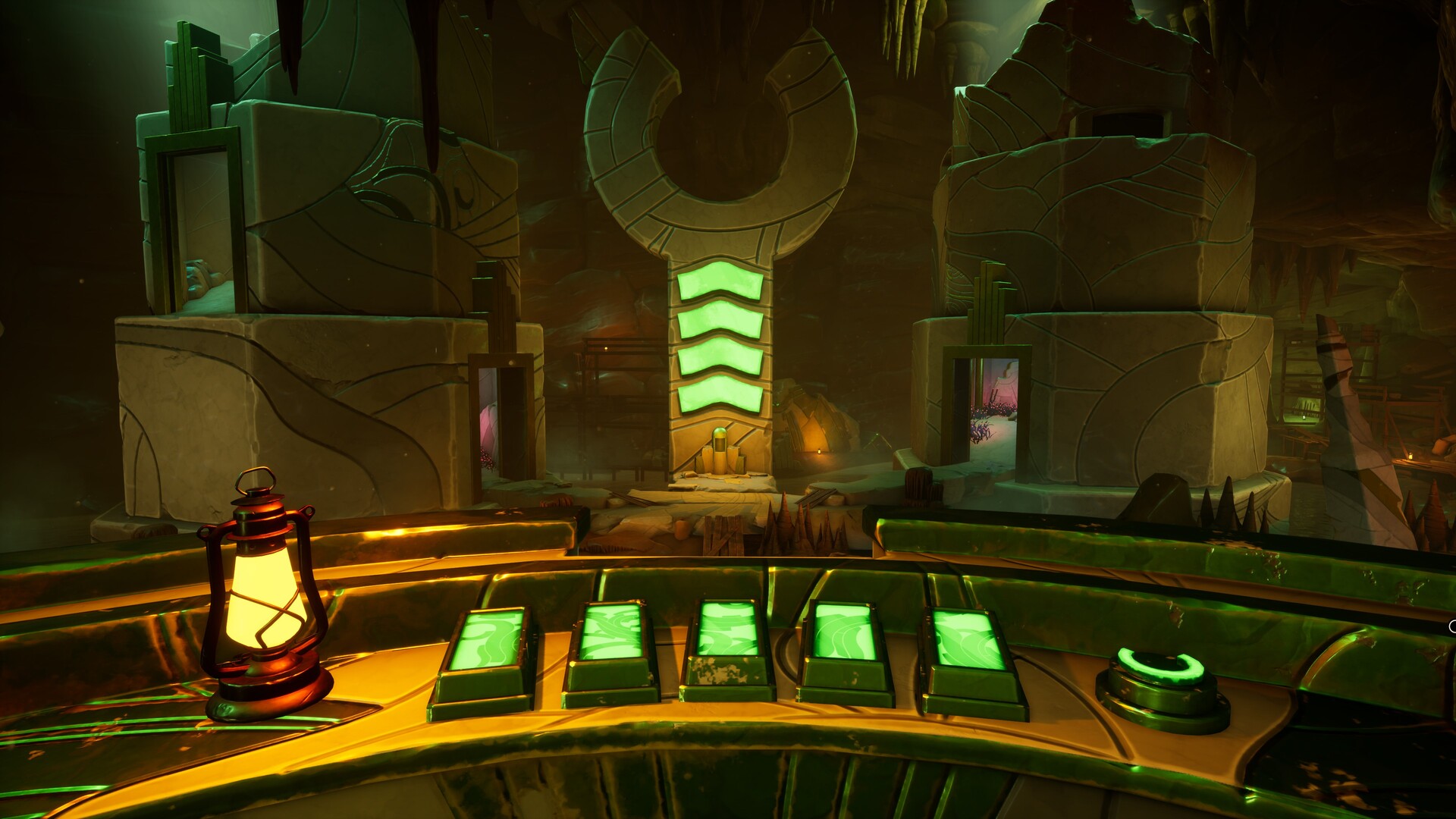
The third issue, and the one most likely to bite players individually, is that the game does not allow mid-puzzle saves. Each chapter has a single autosave at its start and another at the chapter's end. If you quit in the middle of a puzzle, you lose the puzzle's working state when you boot back in - the room is back to its start, your in-game notebook is preserved, but the rotational positions of dials, the alignment of constellations, the orientation of the astrolabe, all reset. Most of the time this isn't a problem; the puzzles are designed to be solvable in fifteen minutes or so, and the game is generally telegraphed about when a chapter is reaching its set-piece. But the late-game chapters, where the puzzle solutions are interdependent, are the worst places for an interrupted session to happen.
Pacing, and the middle act
Call of the Elder Gods is fourteen hours long for an attentive player on a first run, give or take an hour either side depending on how much time you spend with the supplementary documents. That's almost exactly right for the structure the game is using. The problem - and this is the bullet-point I have the hardest time getting around in the review's verdict - is that the back half of act two, roughly the South Pacific stretch between chapters five and six, runs about two hours longer than it should. The puzzle quality dips, the location is the most visually monotonous in the game (a sequence of similar-looking jungle clearings and one cave system), and the narrative beats are mostly retreads of what Sri Lanka established earlier. There's a particular sequence with a translation puzzle on a totem array that's a clear repeat of the chapter-two glyph-reading mechanic, and where the chapter-two version felt fresh and discovery-driven, the chapter-five version felt like the game padding out its hours.
Once act three kicks in - the Antarctic chapter and the long final ascent to the inevitable cosmic-horror payoff - the pacing snaps back into focus. The final three hours of the game are some of the best three hours of any adventure-puzzler this generation, and the closer the game gets to its endgame the more confident it becomes about taking risks. There is a sequence in the second-to-last chapter that essentially gives up on representational geometry for an extended stretch, and the game continues to be playable through that section because Out of the Blue Games has been laying the groundwork for it since chapter one. By the end, the pacing problem in the middle is forgotten, and the game's lasting impression is of its strong opening and its even stronger close.
Two endings ship in the box, and they diverge based on a small number of cumulative choices the player makes across the runtime - mostly about how Harry chooses to respond to his fugue-state experiences, and how Evie chooses to publish the truth about her grandfather's expedition. The two endings are not "good vs evil" in any meaningful sense - they're both bittersweet, both interrogating the question of what survival in the wake of cosmic-horror revelation actually looks like - but they are meaningfully different in tone and in their final scenes. The "open ocean" ending in particular is one of the better narrative payoffs of the year, and the "Yithian" ending is unsettling in a way that lingers. A New Game Plus mode called "Cult of the Shadow" remixes the chapter order and adds a layer of cult-correspondence documents to read; it's a generous bonus, especially given the game's relatively short main runtime.
Accessibility, options, and quality-of-life
Out of the Blue Games has clearly been studying the post-Returnal generation of accessibility work, and the options menu is one of the most extensive in any small-team release. Subtitles are fully customisable for size, background opacity, and speaker label colour. There are three difficulty modes for the puzzles specifically, and each one is described in plain language ("Some puzzles are skippable," "All puzzles solvable without external notes," "All puzzles solvable but require careful attention to the in-game notebook"). The hint system is opt-in - you have to actively request a hint, the hints are tiered (a nudge, a partial solution, the full solution), and there's no Sword-of-Damocles UI element that subtly shames you for using them.
Motion sickness mitigation is the strongest feature: there's a static-cockpit reference frame option for first-person movement (originally developed for the VR adaptation of Call of the Sea, here translated to flatscreen), variable field-of-view sliders that go significantly higher than the default, and a "stable camera" toggle that limits head-bob and lateral motion during cutscenes. That's the kind of thing that's easy to skip if you don't need it and that changes the playability of the game entirely for some players.
One small quality-of-life addition is worth flagging: there's a built-in commentary mode, unlockable after a single completed run, in which the game's directors talk you through the design of each chapter as you replay it.
Length, replay, and value
At $30 USD on Steam, $40 on console, and free day-one on Game Pass, Call of the Elder Gods is one of the easier value propositions of the year. Fourteen hours of curated puzzle adventure, plus another four to six hours for the second ending and the New Game Plus, plus a further few hours if you bother to listen to the developer commentary on a third pass, comes in well under the dollars-per-hour of any AAA release this year. The Game Pass deal is genuinely the lowest-friction way to start the game - you can be playing inside five minutes of a controller boot - and the Switch 2 release in particular is going to be one of the system's most-recommended early adventures.
Replay is structured around the alternate ending, the commentary mode, and the New Game Plus, and the game is short enough at fourteen hours that a second run actually feels like a small commitment rather than a big one. I'd argue you should not start a second run immediately. The game's atmosphere is meaningfully better when you let the first run breathe for a week or two before going back in.
Call of the Elder Gods is an easy game to recommend to a curious friend who liked the puzzles in Riven or the atmosphere in Soma but who doesn't want to spend forty hours on either.
Comparing it to Call of the Sea
It's worth giving the predecessor its own paragraph, because most of the people who'll be approaching this game will be doing so as fans of the 2020 original. The short version of the comparison is that Call of the Elder Gods retains everything Call of the Sea did well - the soft watercolour-into-photo art direction, the strong central performance, the willingness to let a puzzle take ten minutes of staring to solve - and shores up almost everything Call of the Sea did less well. The first game's puzzle vocabulary was a touch one-note, the second game's is meaningfully varied across the runtime. The first game's story resolved in a beautiful but slightly twist-dependent fashion, the second game's resolution earns its emotional landing across the entire runtime rather than at the last beat. The first game looked great on a screenshot and slightly less great in motion, the second game looks great in both registers.
What Call of the Elder Gods loses, relative to its predecessor, is the close intimacy of Norah's solo voice. The dual-protagonist structure is the right design decision for the bigger story Out of the Blue Games is telling, but you do trade away the focused, lonely, almost diaristic quality that Call of the Sea cultivated in its best chapters. A few of the most affecting moments in the first game came from realising you had been alone with this character for six hours straight, and that companionable solitude isn't on the menu in the sequel. If that mode was the thing you most loved about Call of the Sea, you'll get fragments of it in Harry's chapters, but you won't get a whole game of it. That's a fair trade for what you do get in return - a meaningfully larger and more ambitious story - but it's worth flagging.
For new players the bigger consideration is that you can read Call of the Elder Gods cold. There's no narrative prerequisite, the two games take place in different decades and on different continents, and the few cross-references to Norah's expedition in the sequel are written to function as character-detail flavour rather than as plot points. If you want to play Call of the Sea after this one, the chronology and emotional logic still work in the reverse order.
The supplementary documents
Worth pulling out: Call of the Elder Gods has one of the most generous in-game document archives of any adventure game this generation. By the end of a first run, your in-game journal contains roughly 90 readable items - letters, expedition reports, faculty correspondence, news clippings, two full short stories presented as in-universe Weird Tales submissions, three pages of Yithian glyph reference material, and a small library of academic exchanges between Harry and his colleagues. Most adventure games include this kind of supplementary material as flavour you can mostly ignore. Call of the Elder Gods uses these documents as actual narrative load-bearing material. Several of the puzzles cannot be solved without having read the supporting documents at least once, and the second ending in particular is gated behind small in-document decisions that you make by choosing whether or not to read certain optional letters in full.
The writing in these documents is uniformly strong. The Weird Tales submissions are written in a deliberately pastiched 1930s pulp register that works as gentle homage rather than as parody, and the academic correspondence between Harry and his Miskatonic colleagues has the kind of dry, sniping departmental politics that makes you suspect at least one member of the writing team has worked in a university faculty. The Game Pass version of the game includes all the same documents as the paid version - this isn't a paywalled bonus - and the documents are also accessible from the main menu after a completed run, so if you finish the game and find yourself wishing you'd paid more attention to one of the chapter-five letters, you can go back and read it without replaying the whole chapter.
Verdict
Call of the Elder Gods is the most generous adventure-puzzler of 2026 so far. It is bigger than Call of the Sea in every direction that matters - the world map, the protagonist count, the puzzle ambition, the willingness to negotiate seriously with its source material - and the places where it falters are nearly all in the middle of the runtime rather than at the start or the end. The South Pacific drag, the stealth interlude, and the lip-sync seams under direct light are real complaints, and they are the reason the score is in the high 70s rather than the mid-80s. Everything else about this game - the writing, the puzzles, the score, the dual-protagonist structure, the accessibility work, the value proposition on Game Pass - is at or near the top of its weight class.
If you played Call of the Sea and liked it, you will like this more. If you've never touched the previous game, you don't need to - Call of the Elder Gods is structured to be readable as a stand-alone, and Out of the Blue Games has been careful to seed enough context that the few callbacks to the original land without prerequisites. If you're a Lovecraft sceptic who has been put off by the genre's politics, this is the rare adaptation that has clearly thought about that problem and has solutions you may find satisfying. And if you're just looking for fourteen hours of careful, considered, often beautiful single-player game on a Tuesday evening, this is the one to download.
This is the first great Lovecraft game of 2026, and it's almost certainly the first great mid-budget adventure of the year. Recommended without reservation, with the small note that the South Pacific chapter is one to push through rather than savour, and that the Antarctic chapter rewards being played with the lights off and the headphones on.