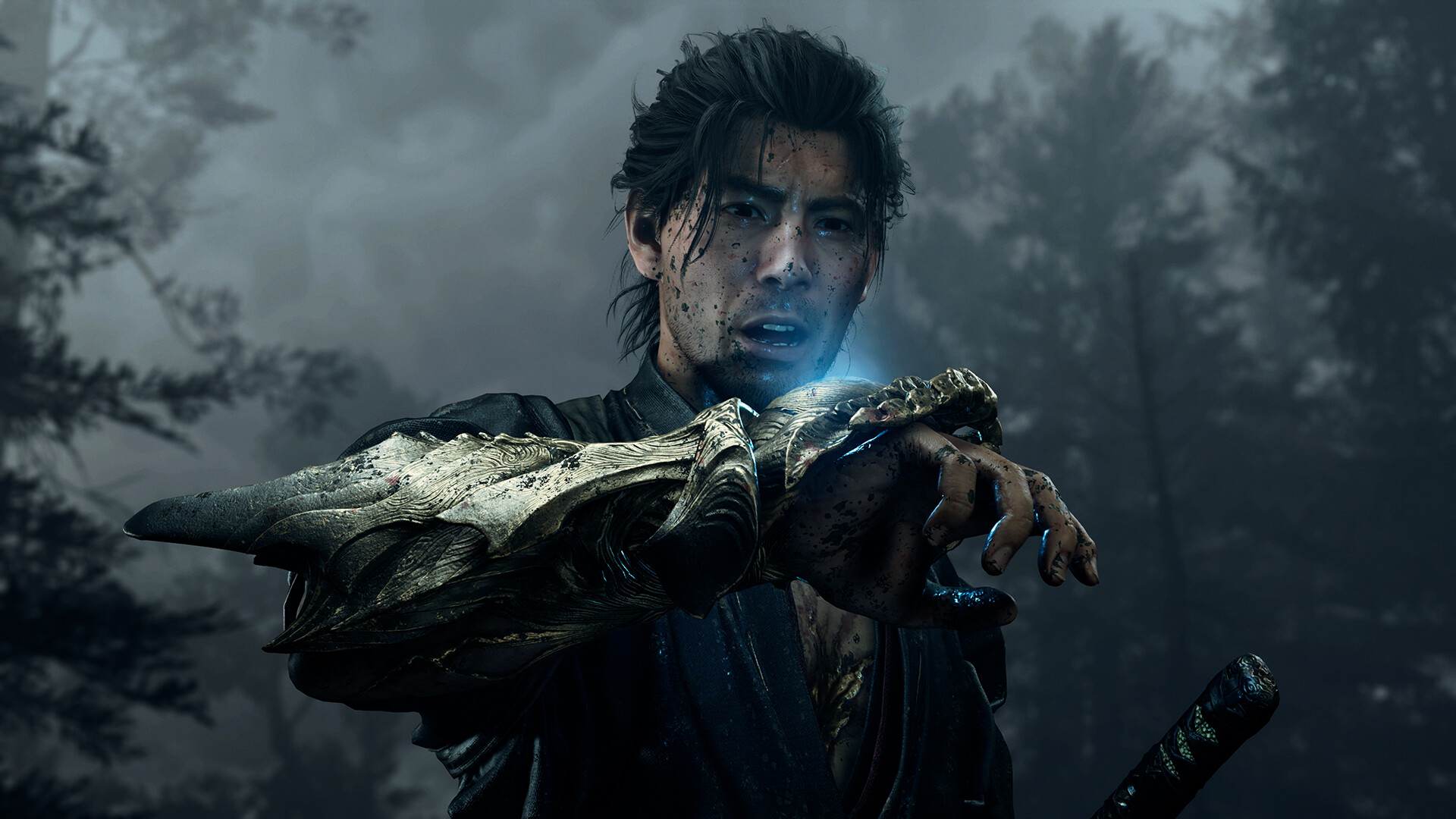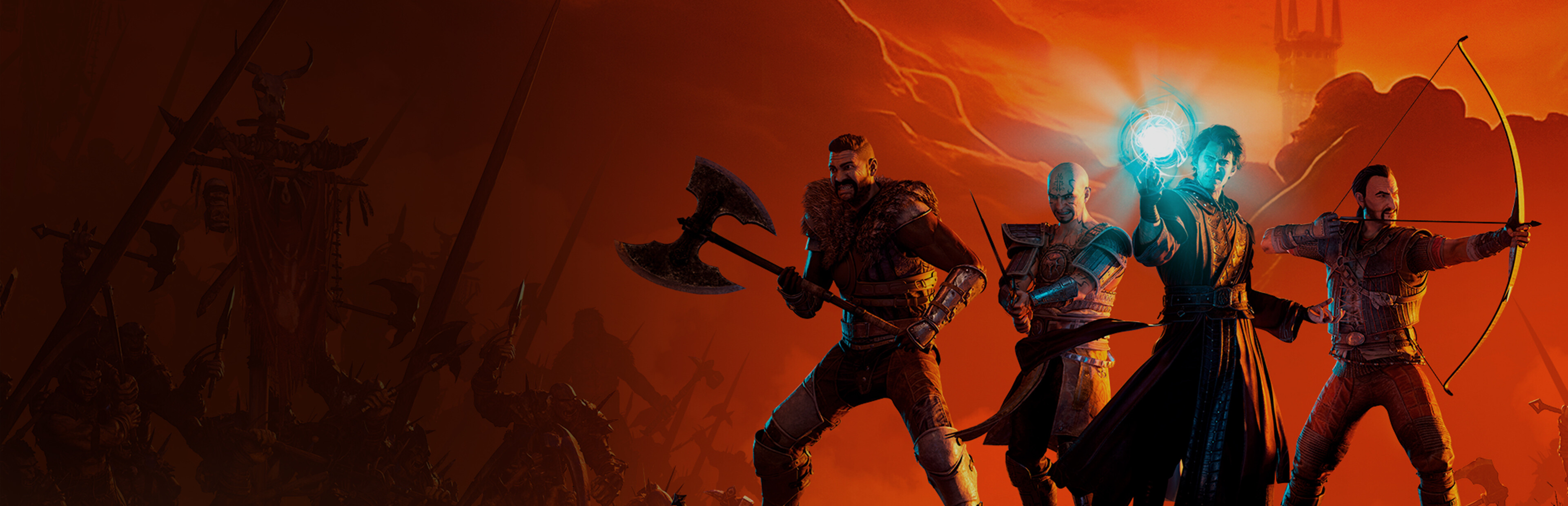
There are remakes that exist to smooth the wrinkles out of an old favorite, to file down the awkward edges until what's left is comfortable, modern and frictionless. Gothic 1 Remake is emphatically not one of them. Alkimia Interactive's rebuild of the 2001 Piranha Bytes cult classic is a remake that understood the assignment in the most literal sense possible: it has gone to extraordinary lengths to preserve the very qualities that made the original so divisive, so frustrating and, to a particular kind of player, so unforgettable. This is a game that still wants you to feel small, lost and outmatched. It still wants the world to ignore you until you earn its attention. And it largely succeeds — even as a rough technical launch keeps it from being the unqualified triumph its most devoted fans have waited two decades for.
Released June 5, 2026 on PC, PlayStation 5 and Xbox Series X|S, Gothic 1 Remake arrives carrying an almost absurd weight of expectation. The original Gothic is one of the most influential European RPGs ever made, a foundational text for the immersive open-world design that studios are still chasing today. Getting this wrong was never an option that fans would forgive. So the real question isn't whether the Colony looks prettier in Unreal Engine 5 — it obviously does — but whether Alkimia understood why people loved this strange, stubborn game in the first place. For the most part, they did.
A remake that almost never happened
The road here was long and genuinely uncertain. THQ Nordic acquired the Gothic IP from the wreckage of the franchise's troubled middle years, and rather than hand it back to original developer Piranha Bytes, the publisher spun up a brand-new internal studio in Barcelona — Alkimia Interactive — built specifically to bring the first game back. The project announced itself with a 2019 'playable teaser,' a vertical slice that THQ Nordic released as a community litmus test. The studio retooled its approach, and then went quiet for a long stretch as the scope ballooned and the timeline slipped.
That history matters because it shapes the finished product. Alkimia clearly treated the original as scripture to be interpreted rather than source code to be rewritten. The studio rebuilt every camp, every cave and every NPC schedule from the ground up in Unreal Engine 5, but the bones of the design are unmistakably, faithfully Gothic. Where so many remakes use the original as a loose mood board, this one feels like it was made by people terrified of betraying it — and that caution is both its greatest strength and, occasionally, its limitation. There are moments where you wish Alkimia had been a little braver about modernizing a genuinely archaic system, and other moments where you're grateful beyond words that they didn't touch a thing.
Welcome back to the Colony
For the uninitiated, Gothic's setup remains one of the all-time great RPG premises. The kingdom of Myrtana is at war with the orcs, and the king needs magical ore to forge his weapons. That ore is mined in a penal colony, where convicts are sent to dig. To keep the prisoners contained, a circle of mages attempts to raise a magical barrier around the valley — but the ritual goes catastrophically wrong, and the dome expands far beyond its intended size, sealing the mages inside along with the criminals. With the guards now trapped on the wrong side of an impenetrable wall, the prisoners realize a simple, intoxicating truth: there are no wardens anymore. The Colony runs itself.
Into this lawless valley you are thrown — literally, hurled over the barrier from the outside world as the Nameless Hero, a prisoner with no backstory, no allies and nothing but the rags on his back and a letter to deliver. What follows is not a power fantasy. It's a story about reading a society from the bottom up, figuring out who holds power and why, and clawing your way from the absolute lowest rung toward something resembling agency. The brilliance of Gothic was always that its narrative is inseparable from its systems: you don't get told the Colony is brutal and hierarchical, you experience it the first time a low-level digger laughs in your face and a camp guard threatens to break your legs for stepping somewhere you shouldn't.
The remake preserves this opening beat for beat, and it lands. The early hours are deliberately disorienting. NPCs talk past you, doors are closed to you, and the valley sprawls in every direction with no glowing markers to herd you along. It is, by the standards of modern game design, almost confrontationally unwelcoming — and that's the point. The Colony isn't a theme park built for your enjoyment. It's a place that existed before you arrived and will keep existing whether you thrive or die in a ditch. Restoring that feeling in 2026, when so much of the genre has drifted toward frictionless convenience, is the single most impressive thing Alkimia has done here.
A world that refuses to hold your hand
The defining decision of this remake — the one that will start arguments — is that there is no minimap. None. There's a map you can open, but it doesn't track your position with a helpful dot, and there are no quest markers nudging you toward your next objective. If an NPC tells you the Old Camp is up the hill past the swamp, you'd better remember that, because nothing on your HUD is going to draw you a line. This is faithful to the original to a fault, and it transforms how you engage with the space.
What it produces is the increasingly rare sensation of actually learning a place. Landmarks do the work that waypoints usually do, and because you've had to internalize the geography yourself, the world feels solid and persistent in a way that marker-driven open worlds rarely manage. When you finally take a hard-won shortcut you discovered on your own, it's a small, genuine thrill.
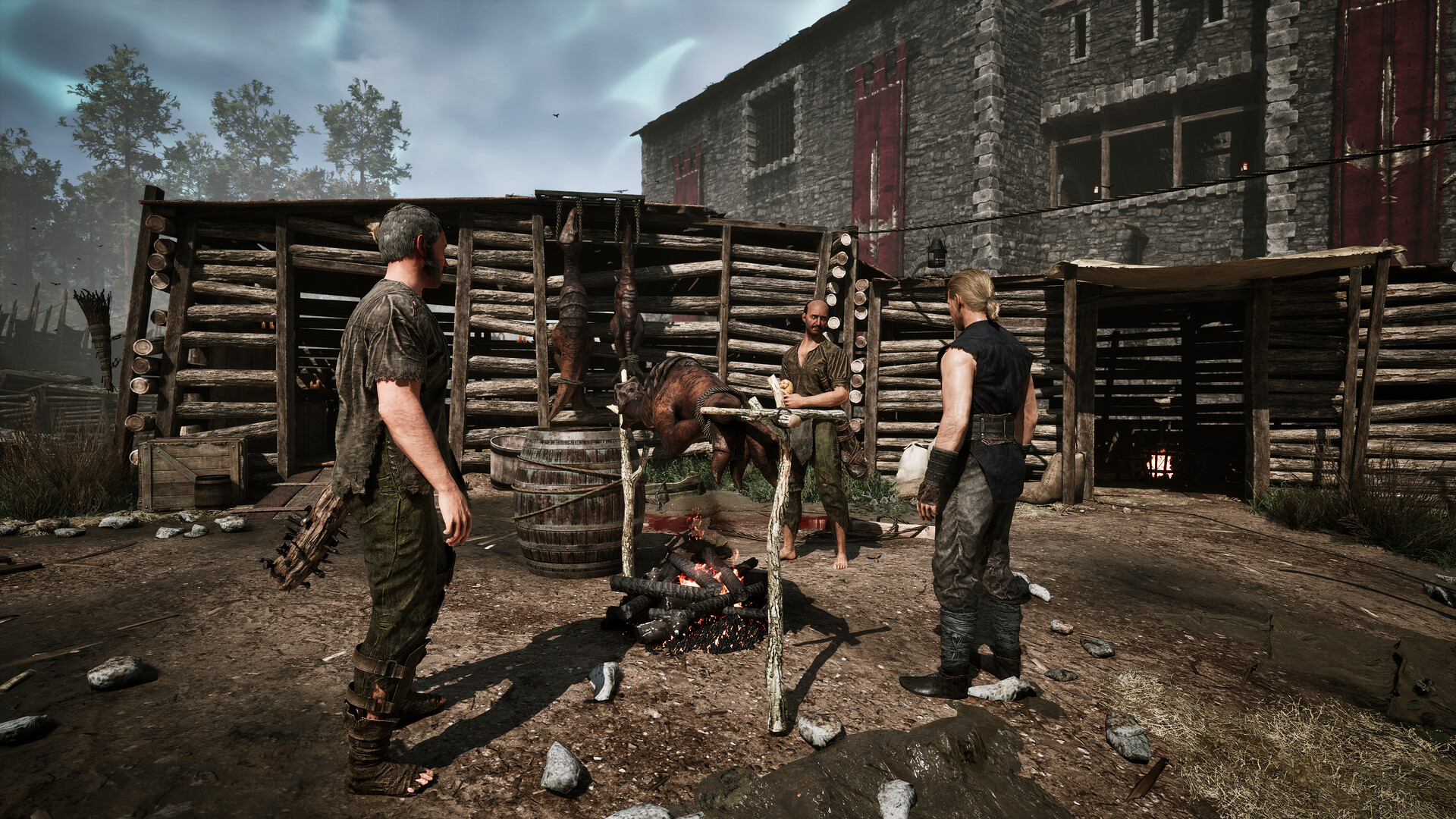
The NPCs reinforce this living-world illusion. Characters follow daily routines — they wake, work, eat, drink in the tavern at night and sleep. You can watch a camp's social order play out simply by following someone around for a day. This was groundbreaking in 2001 and it's still effective now, even if the AI occasionally betrays its scripted seams. The flip side of all this immersion is friction: getting lost is common, backtracking is real, and the absence of fast travel for the opening chapters means you'll walk the same paths many, many times. Veterans will call that pacing; some newcomers will call it tedium. Both will be a little bit right.
Learning to fight all over again
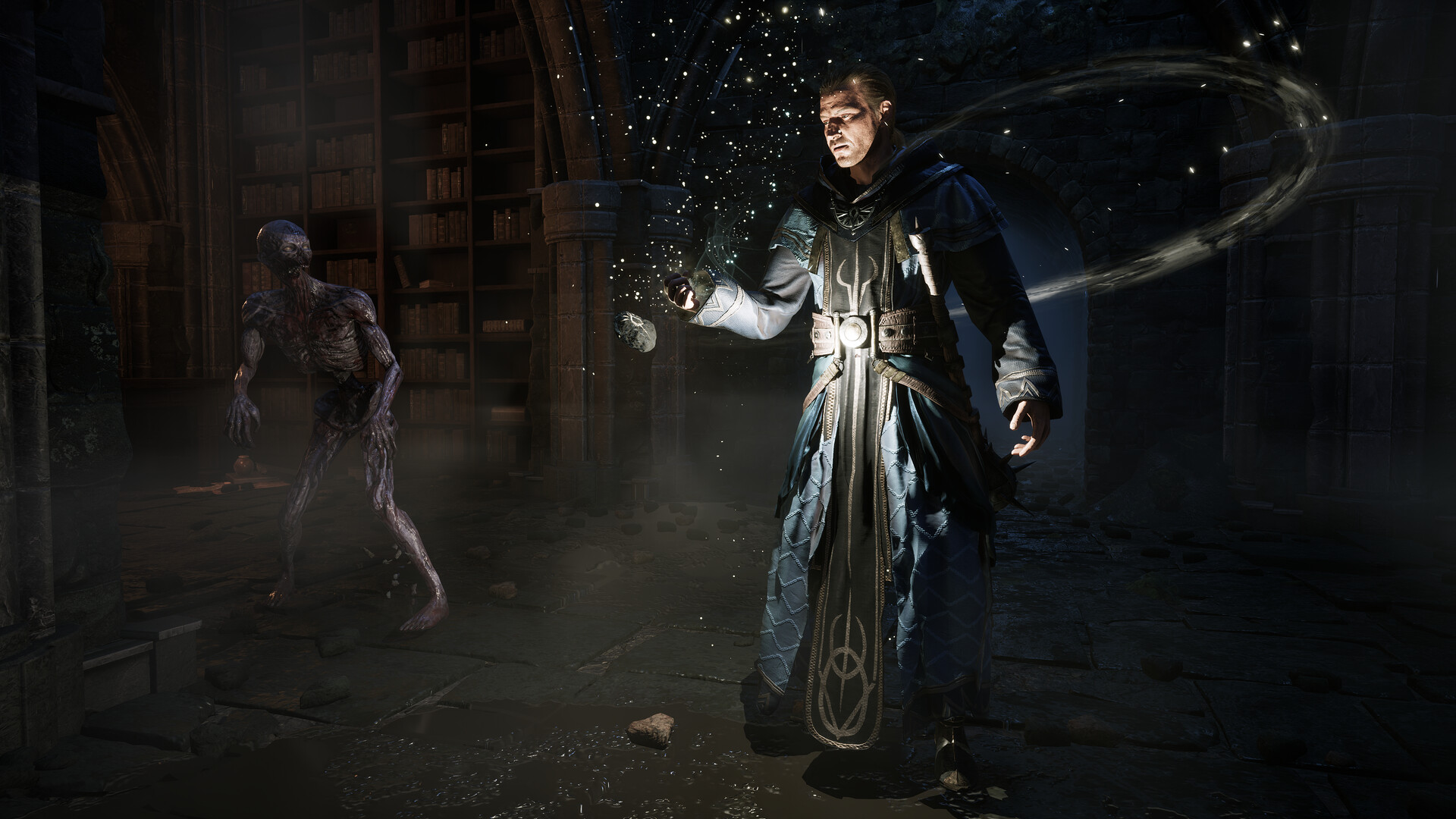
If the world design is where the remake is most confidently faithful, combat is where Alkimia had to make the hardest calls — and the results are more mixed. The original Gothic's combat was notoriously clunky, built on a tank-control system and a directional attack scheme that asked players to climb a steep, unintuitive learning curve. The remake reworks the moment-to-moment feel into something far more legible: attacks have weight and readable wind-ups, blocking and dodging are more responsive, and the camera behaves itself the way a modern action game's should.
And yet — crucially — the remake refuses to make you powerful before you've earned it. Early combat is hard, sometimes brutally so. A single scavenger can end your run in the first hour. A pack of wolves is a death sentence. This is not the game being broken; this is the game communicating, through your repeated and humbling deaths, exactly how far down the food chain you currently sit. The intended lesson is that you are not supposed to win these fights yet. You're supposed to run, to avoid, to pick your battles, and to come back later when you've trained your skills and upgraded your gear. Players who understand that contract will find the difficulty exhilarating. Players expecting the gentle on-ramp of a typical modern RPG are going to bounce hard, and some of them will quit before the systems open up.
That said, the combat isn't flawless even on its own terms. Against single enemies it feels good — deliberate, tense, rewarding. Against groups it can still get finicky, with target-switching that doesn't always read your intent and the occasional sense that you're fighting the lock-on as much as the monster. Magic and ranged combat fare better than they did in 2001 but still feel like secondary options rather than fully realized build paths in the early game. The bones are dramatically improved over the original; the polish isn't quite all the way there.
Three camps and the weight of choosing one
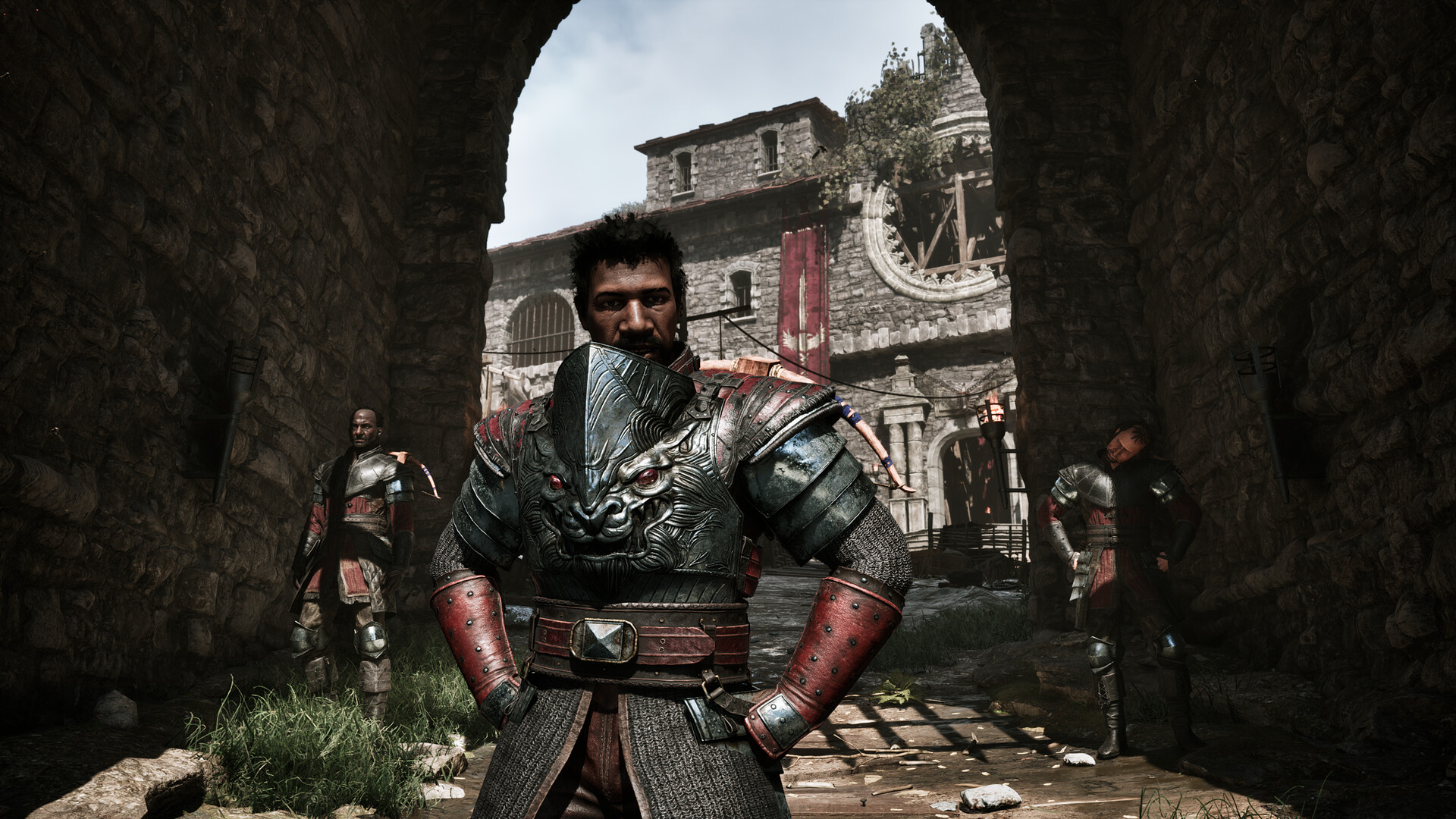
The structural heart of Gothic is its faction system, and the remake honors it completely. The Colony is divided between three powers, and a meaningful chunk of the campaign is about choosing which to align with. The Old Camp is the establishment: a feudal, ore-baron society ruled by Gomez, trading ore to the outside world for goods and running the valley like a kingdom. The New Camp is the rebel faction, a collective of free miners and mercenaries scheming to use magic to bring down the barrier and escape, refusing to hand their ore to anyone. The Sect Camp — the Swamp Camp — is a drug-addled religious commune worshipping a slumbering entity called the Sleeper, growing swampweed and waiting for deliverance.
What makes these factions sing is that joining one isn't a menu choice; it's a process of proving yourself through quests, favors and reputation, and your allegiance reshapes how the rest of the valley treats you. Each path has its own questlines, its own gear progression, its own flavor of social climbing. The remake doesn't dilute any of this. Picking a camp still feels like committing to an identity, and the role-playing texture that flows from it — the way a New Camp mercenary moves through the world differently than an Old Camp shadow — is exactly the kind of player-authored storytelling the genre keeps trying to recapture.
The chapter structure that frames all this remains intact, too. Gothic doles out its story in distinct chapters, each one shifting the state of the Colony and escalating the stakes as the threat beneath the valley stirs. There's a real sense of momentum to the back half once the central mystery kicks into gear, and the late-game turn — which I won't spoil for newcomers — still delivers a memorable swing from grounded survival into something far stranger and more mythic.
Progression with teeth
Gothic's character growth has always been distinctive, and the remake keeps its idiosyncrasies. You earn experience and level up, but levelling doesn't directly inflate your stats. Instead it grants learning points, which you spend with trainers scattered across the camps — a master swordsman to raise your one-handed skill, a hunter to teach you to skin beasts for profit, a fence to teach you to pick locks and pockets. The result is that progression is gated not just by experience but by access: you have to find the right teacher, often by ingratiating yourself with the right faction, before you can grow in a given direction.
This ties character building back into the social fabric of the Colony and keeps the whole thing feeling cohesive. It also means there's no level scaling whatsoever. The world's dangers are fixed; a region that slaughtered you at level five will still be there, unchanged, when you return at level twenty strong enough to clear it. That fixed difficulty is enormously satisfying over a full playthrough because your growth is measured against a constant yardstick. The monster that once represented certain death becomes, hours later, a satisfying speed bump — and you feel every increment of that change because the world never moved the goalposts to flatter you.
The Colony has never looked like this
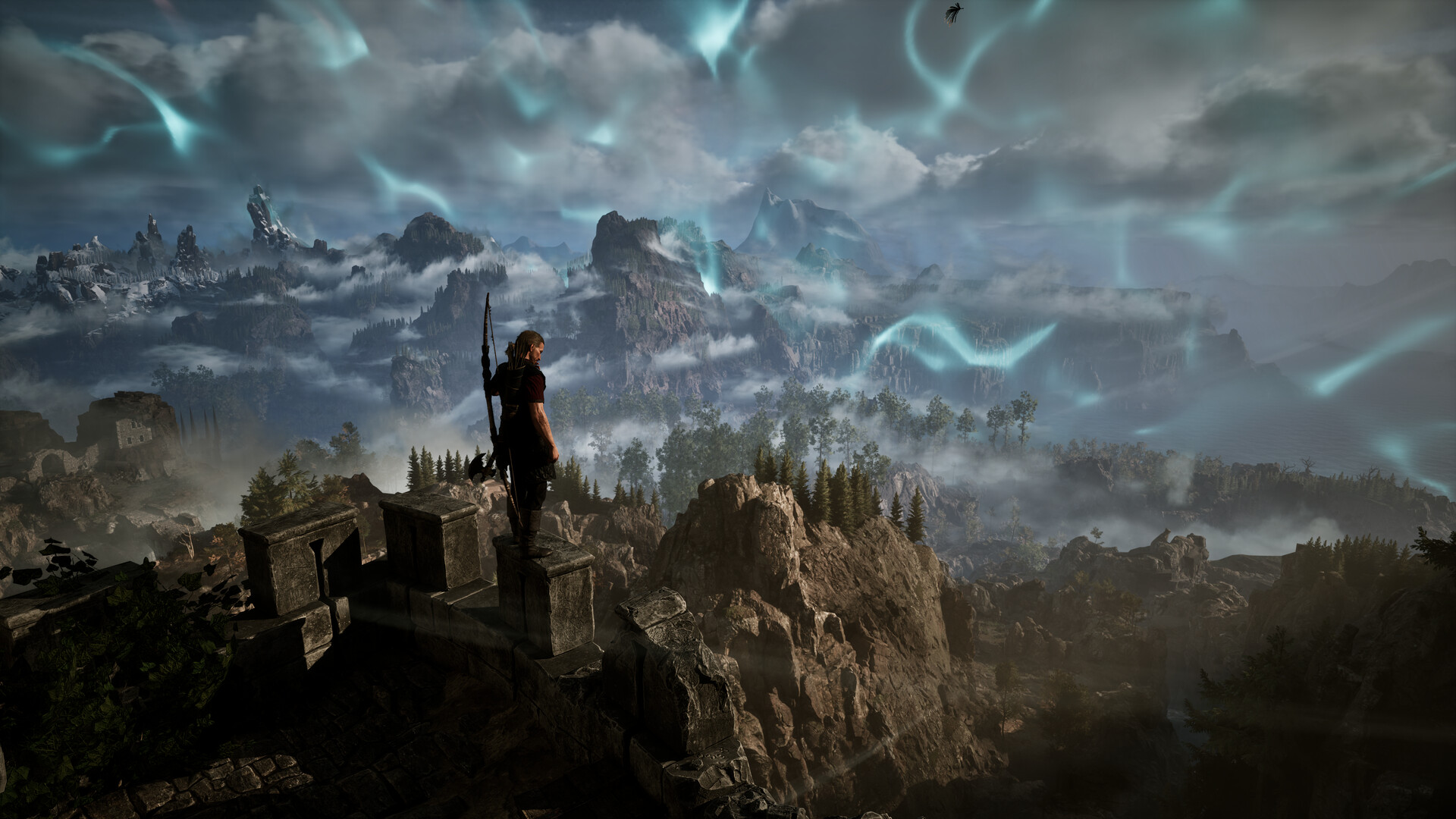
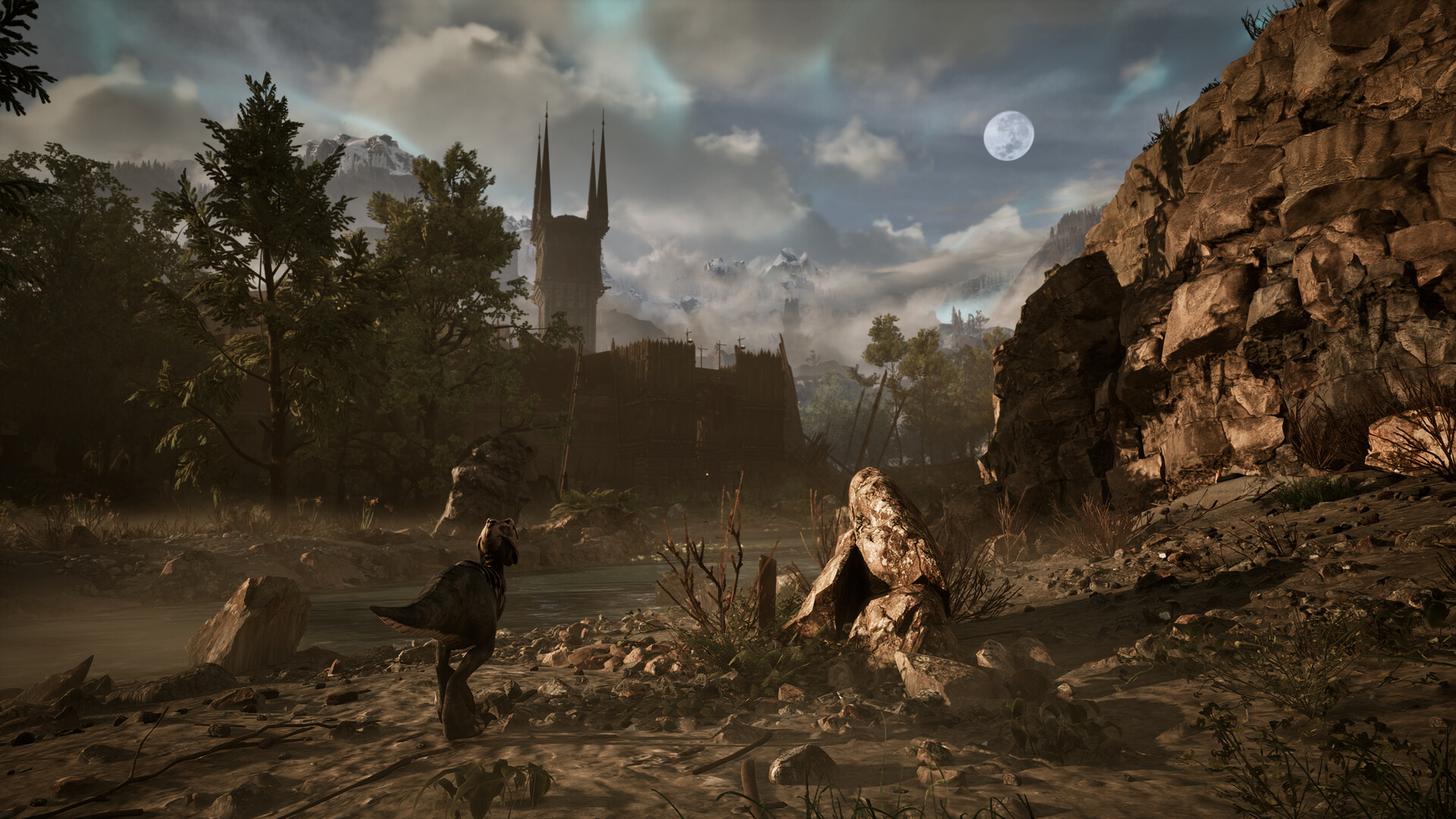
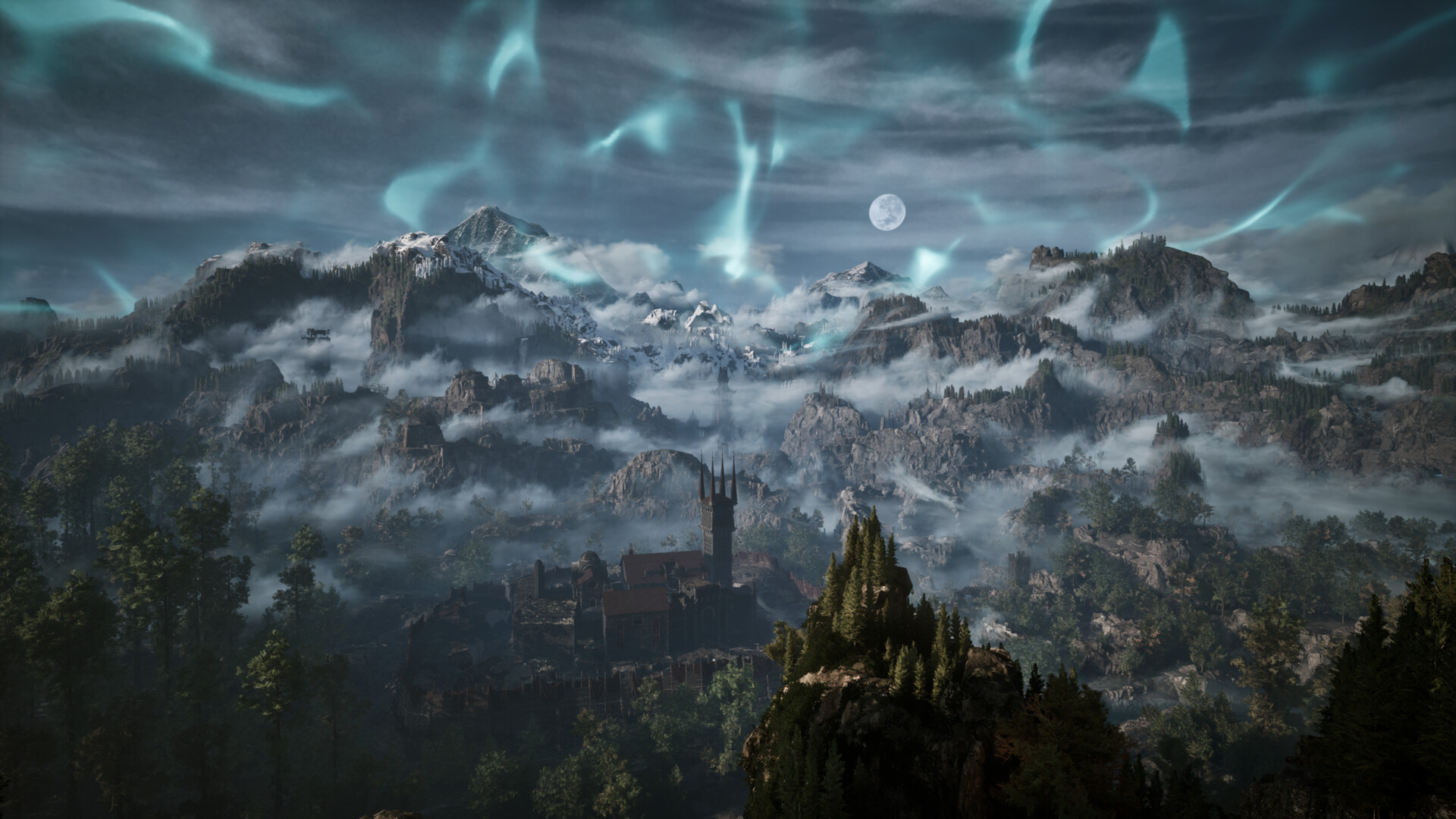
Visually, this is where the remake gets to flex, and it does so beautifully. Built in Unreal Engine 5 with Nanite geometry and modern lighting, the valley is dense, craggy and atmospheric in a way the 2001 original could only gesture at. The Old Camp's stone keep looms with real menace; the swamp drips and glows with sickly bioluminescence; shafts of light cut through the canopy as you pick your way along a cliff trail with the barrier shimmering ominously on the horizon. Alkimia has resisted the temptation to over-prettify — this is still a grimy, oppressive penal valley, not a tourist brochure — and the art direction's commitment to grit pays off in mood.
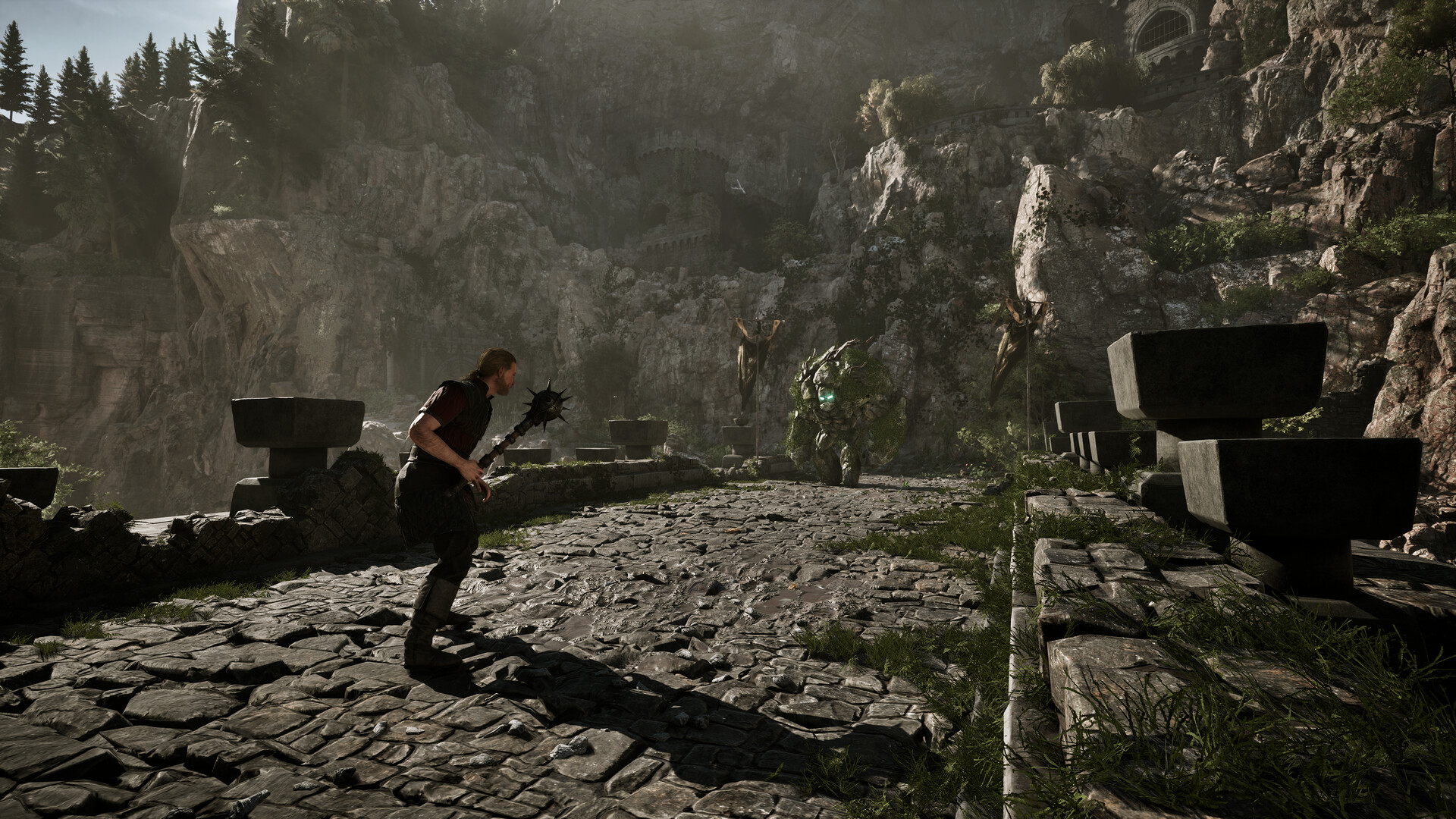
The environmental storytelling benefits enormously from the upgrade. You can read the history and hierarchy of a camp just by looking at how it's built and who's standing where, and the increased fidelity makes the world's many hand-placed details legible in a way that deepens the sense of a real, lived-in place. When the remake is running well and you crest a ridge to see the whole valley spread out beneath you, it absolutely delivers the 'I can't believe this is Gothic' moment the project was chasing.
The rough edges are real
Here's where I have to be honest, because a review that gushes about atmosphere while glossing over the launch state would be doing you a disservice. Gothic 1 Remake arrived with technical problems. On PC that means crashes, stuttering when streaming into denser areas, and the usual grab-bag of remake jank, from NPCs clipping through geometry to the odd animation hitch. None of it is catastrophic, but it punctures the immersion the rest of the game works so hard to build.
The PlayStation 5 version is the bigger concern. Performance there is noticeably shakier — frame pacing wobbles, load-ins are rougher, and the overall presentation feels less stable than on capable PC hardware. If you have a choice of platform right now, PC is the one to play on; the PS5 version feels like it needs a patch cycle or two to reach the smoothness this kind of demanding game deserves. It's a real shame, because the underlying experience is strong enough that performance issues are exactly the wrong thing to be fighting against when the game's intended friction is already so high.
To be clear, this is the sort of thing that patches tend to address, and I'd expect the rough edges to be sanded down meaningfully in the months ahead. But a review has to judge the game as it stands, and at launch its technical state asks for patience on PC and genuine caution on PS5.
The sound of a place that wants you gone
Audio is one of the remake's quiet triumphs. The ambient soundscape of the Colony — the clink of pickaxes in the ore mines, the murmur of the tavern, the unsettling stillness of the swamp at night — does an enormous amount of work selling the world as a real, functioning society. The score leans on the brooding, understated themes that longtime fans associate with the series, swelling at the right moments without ever tipping into bombast. It understands that Gothic's atmosphere is built on dread and isolation, not heroic fanfare.
The voice acting is solid and, importantly, captures the dry, world-weary, often darkly funny tone of Gothic's dialogue. The Colony is full of thugs, schemers and burnouts, and the performances lean into that texture without winking at the camera. It's the kind of writing and delivery that makes you want to exhaust every dialogue branch, not because there's a reward icon attached, but because the characters are entertaining company in their gruff, untrustworthy way.
The modern touches that do sneak in
For all its faithfulness, the remake isn't a museum piece, and Alkimia has made a number of sensible quality-of-life concessions to keep the experience playable for a 2026 audience. The control scheme is thoroughly modernized and works comfortably on both keyboard-and-mouse and controller, which is no small feat for a game whose original input design is the stuff of legend. The inventory and crafting interfaces are cleaner and more navigable. Combat feedback is clearer. There are difficulty options for those who want to take the edge off the punishing curve without abandoning the game's character entirely.
The trick Alkimia is trying to pull off is making the game readable without making it easy, and for the most part the line is well judged. The conveniences smooth out the genuinely archaic friction — obtuse menus, unreadable feedback, control jank — while leaving the intentional friction, the stuff that defines Gothic's identity, fully intact. If anything I'd argue a few of the conveniences arrive later than they should; the opening hours could use one or two more gentle affordances to keep newcomers from washing out before the hooks sink in. But the philosophy is right. This is a remake that knows the difference between the friction that's the point and the friction that's just an old game showing its age.
So who is this remake actually for?
Let's be clear-eyed about it. Gothic 1 Remake is not trying to be everything to everyone, and that focus is precisely why it's worth caring about. If you adored the original, this is close to a dream scenario: the world, the systems and the merciless spirit you loved, rebuilt with the fidelity and the comforts the 2001 release could never offer. You should play it, with the caveat to favor PC and brace for some launch-window roughness.
If you're a newcomer with a taste for demanding, systems-driven RPGs — if you enjoy games that make you earn your competence and respect your intelligence enough to withhold the hand-holding — this is a fantastic entry point into one of the genre's most important works, and arguably the best version of it ever made. But if your idea of a good RPG is a generous, welcoming power curve with clear markers and frictionless convenience, go in with your eyes open. Gothic will not bend to meet you. It expects you to bend to it, and it makes that demand within the first thirty minutes.
Why Gothic still matters
It's worth pausing to explain why a 2001 German RPG warranted this kind of ground-up resurrection in the first place, because the answer is the whole reason the remake's faithfulness is a virtue rather than a liability. When Gothic launched, the open-world RPG was still finding its shape. Most games of its era handed you a hub, a quest log and a clear sense of your own importance. Gothic did the opposite. It dropped you into a contiguous, seamless valley with no loading zones between regions, populated it with characters who had lives and schedules of their own, and made your standing in that world something you had to negotiate rather than something the game granted you by default.
That design DNA — the believable, reactive world; the bottom-of-the-ladder power fantasy; the refusal to flatter the player — rippled outward through two decades of game design. You can draw a line from Gothic's living Colony to the systemic ambitions of countless immersive sims and open-world RPGs that followed. Preserving that influence intact, rather than sanding it into something more conventional, is exactly what a Gothic remake should do. Alkimia clearly understood that the 'archaic' parts of Gothic weren't bugs to be fixed; many of them were the entire point, and they're features the modern genre has spent years trying to rediscover.
An ecosystem, not an encounter table
One of the subtler joys of returning to the Colony is how alive its wilderness feels. Gothic's creatures aren't arranged like a difficulty-scaled encounter table waiting politely for you to walk up; they behave like an ecosystem with its own pecking order, and you slot into it near the bottom. Scavengers scrap over carrion. Molerats swarm in packs that will overwhelm an unprepared digger. Higher up the chain, shadowbeasts and trolls prowl territories you simply have no business entering early, and the valley's orc presence looms as a late-game threat that reframes the whole map.
Because none of this scales to your level, the wildlife becomes a kind of natural gating system that teaches you the geography of danger. You learn which paths are safe at dawn and which are death traps; you learn to read the silhouette of a distant creature and decide, in a heartbeat, whether to engage or to quietly find another way around. Hunting also feeds the economy — pelts, claws and teeth are worth trading, and a hunter who learns to skin his kills turns the valley's menagerie into a livelihood. It's a loop that ties combat, exploration, progression and economy together into one coherent survival fantasy, and the remake preserves it with real care.
Ore is everything
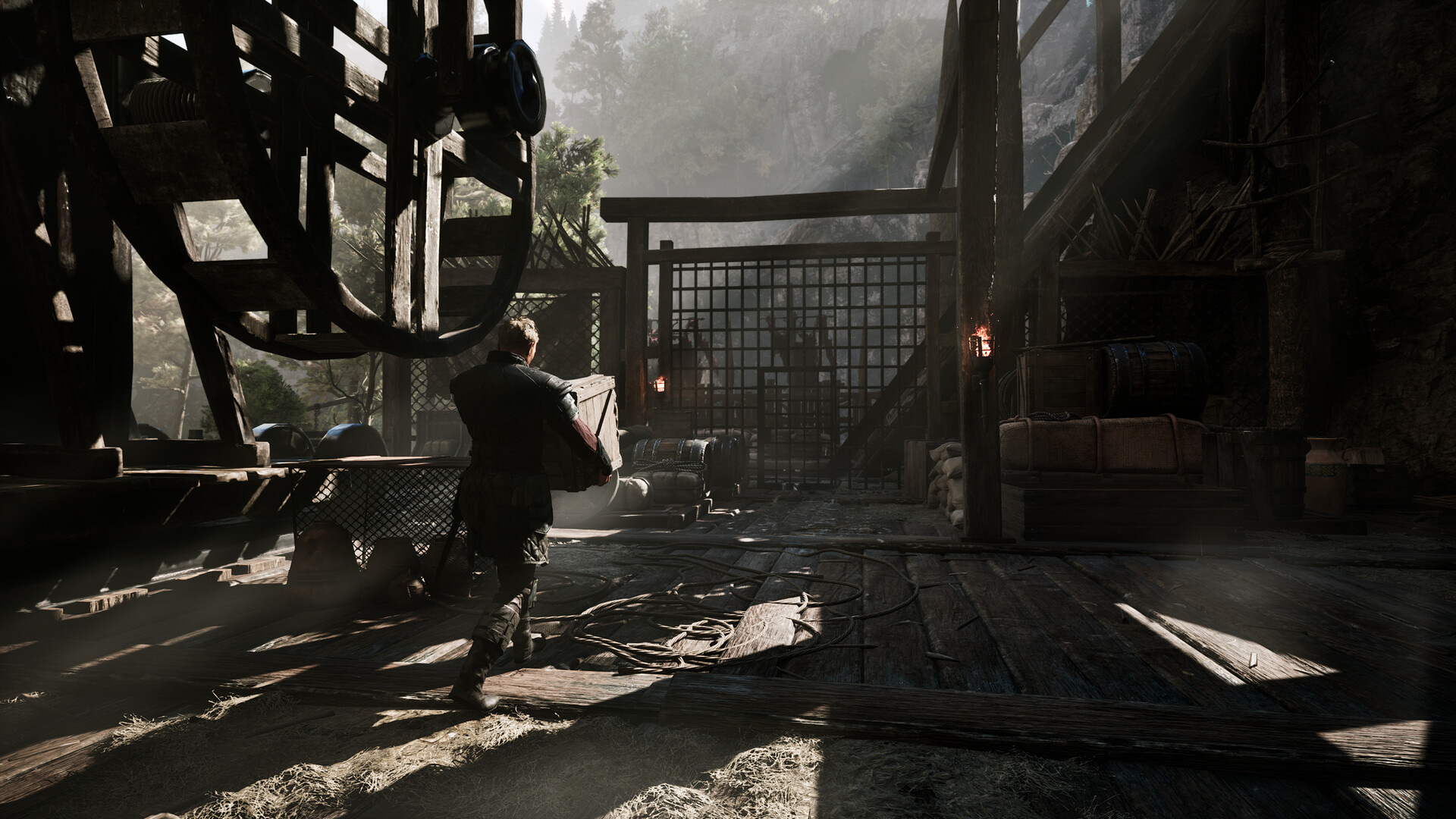
Gothic's economy is one of its sneakiest pieces of worldbuilding, and it survives the transition cleanly. Inside the barrier, the outside kingdom's coin is worthless; what circulates instead are chunks of magic ore, the very substance the colony exists to mine. Every loaf of bread, every weapon, every favor is priced in ore, which means the thing you're imprisoned to dig is also the currency that runs your daily life. It's a tidy bit of thematic design — your freedom and your survival are literally made of the same rock — and it keeps the act of trading grounded in the fiction rather than abstracted behind a generic gold counter.
That scarcity gives every purchase weight in the early game. Do you spend your hard-won ore on a better blade, on training, or on the consumables that might keep you alive on the road to the next camp? These are real decisions when you're poor, and the slow accumulation of wealth maps neatly onto your rising status. By the time ore feels plentiful, you've usually climbed far enough up the social ladder that the change in your spending power feels like a tangible reward rather than a number ticking up.
Thievery, trespass and consequence
The remake also keeps Gothic's wonderfully tense relationship with property and personal space. Camps have areas you're not allowed into, and NPCs will warn you off, escalate, and ultimately come to blows if you push your luck. Picking a lock or rifling through someone's chest is a genuine gamble, because getting caught has consequences — a beating that knocks you out and costs you, or a brawl that turns a useful contact into an enemy. Stealing is possible, even lucrative, but it's never consequence-free, and that tension makes the simple act of walking through a camp feel charged in a way few RPGs manage.
Non-lethal resolution is part of the texture, too. Many of the Colony's disputes are settled with fists rather than steel, and beating someone unconscious to rob them — rather than killing them outright — is both a practical option and a tonal choice that fits the world's rough, lived-in code of conduct. It all feeds back into the central theme: this is a society with its own rules, and learning to read and bend those rules without getting yourself stomped is half the game.
What's changed from 2001 — and what hasn't
For returning players, the most useful thing I can say is that the remake's changes are almost entirely additive or qualitative rather than structural. The map is the same map. The camps are the same camps. The quests, the characters, the chapter beats and the central mystery are all faithfully here. What's changed is the texture: the visuals are obviously transformed, the combat is rebuilt to be readable and responsive, the controls are modernized for contemporary hardware, and the interfaces have been dragged into the present. The remake adds clarity and comfort without rewriting the script.
The things that haven't changed are precisely the things that define the experience, and Alkimia deserves credit for holding the line on them under what must have been enormous pressure to soften the edges. No quest markers. No minimap. No level scaling. No fast travel for the opening stretch. A brutal early curve that expects you to run from fights you can't win. In an era where remakes routinely strip out exactly this kind of friction in the name of accessibility, Alkimia's restraint is the boldest thing about the project. It would have been so easy — and so wrong — to make this game more convenient than it should be.
How it stacks up against the great remakes
It's tempting to measure Gothic 1 Remake against the modern remakes that have set the bar — Capcom's Resident Evil revivals, Bluepoint's Demon's Souls, the Final Fantasy VII project. Against that company, Alkimia's effort sits at the purist end of the spectrum. Where Demon's Souls reimagined its source as a technical showcase and the RE remakes felt free to redesign whole sections, Gothic 1 Remake is closer to a high-fidelity restoration: a painstaking effort to make the original playable and beautiful for a new generation without reinterpreting its soul.
That approach has a ceiling and a floor. The floor is high, because the underlying design is a genuine classic and faithfully preserving it guarantees a worthwhile experience. The ceiling is capped slightly by that same caution — this isn't a remake that will surprise veterans with bold reinventions, and it inherits a few of the original's structural quirks along with its strengths. But given how badly a 'modernized,' watered-down Gothic could have gone, erring on the side of reverence was unquestionably the right call. This is the version of Gothic you hand to a curious friend in 2026, full stop.
A note on difficulty and accessibility
Because the difficulty is going to dominate the conversation around this game, it's worth being precise. The remake does include difficulty options, and they can take some of the sharpest edges off the early hours for players who want the world, the story and the role-playing without quite so many deaths to scavengers. That's a welcome addition, and I'd genuinely encourage newcomers who feel themselves bouncing to use it rather than abandon the game entirely — the systems are worth the price of admission.
But I'd also gently push back on the instinct to neutralize the challenge completely. So much of what makes Gothic special is the arc from helplessness to competence, and that arc only resonates if the early helplessness is real. The difficulty isn't sadism for its own sake; it's the setup for one of the most satisfying power curves in the genre. Tune it if you must, but tune it as little as you can stand, because the reward scales with the risk you were willing to sit with.
Verdict
Gothic 1 Remake is a bold, deeply respectful resurrection of one of the PC RPG's most influential cult classics — a remake confident enough to preserve the very things that make it difficult to love. The hand-crafted valley, the mapless exploration, the merciless early hours and the role-defining camp factions are all here, sharpened by Unreal Engine 5 and a thoughtful layer of modern convenience that knows exactly which friction to keep. When it clicks, it delivers something almost no contemporary open-world game even attempts: the feeling of being a nobody in a world that doesn't care, slowly, painfully earning your place in it.
What holds it back from greatness is squarely the launch state. A punishing opening that will turn away the impatient is by design; the crashes, the bugs and especially the shaky PlayStation 5 performance are not. Those issues are fixable, and I suspect a few patches will lift this game considerably. As it stands today, it's a remarkable achievement asking for a little patience — and for the right player, willing to meet the Colony on its own uncompromising terms, it's one of the most rewarding RPGs of the year.