There is a specific feeling that only Hell Let Loose produces, and no other shooter has managed to counterfeit it. You are prone in a ditch. You have not fired your rifle in four minutes. Somewhere to your left, a squad leader you have never met is calmly telling a commander you will never see that the northern approach is compromised. Then a machine gun opens up two hundred metres away, someone screams into proximity chat, and the next thirty seconds decide whether your team holds a strongpoint it has been grinding toward for a quarter of an hour. Nothing about it is fast. Everything about it matters.
Hell Let Loose: Vietnam takes that feeling and drops it into the worst possible terrain for it, which turns out to be exactly the right idea. Expression Games and Team17 launched it on August 13 for PC, PlayStation 5 and Xbox Series X|S at $39.99, and it is already clear this is both the most atmospheric thing the series has produced and the least finished. Those two statements are not in tension. They are the whole review.
Fifty against fifty, and the jungle in between
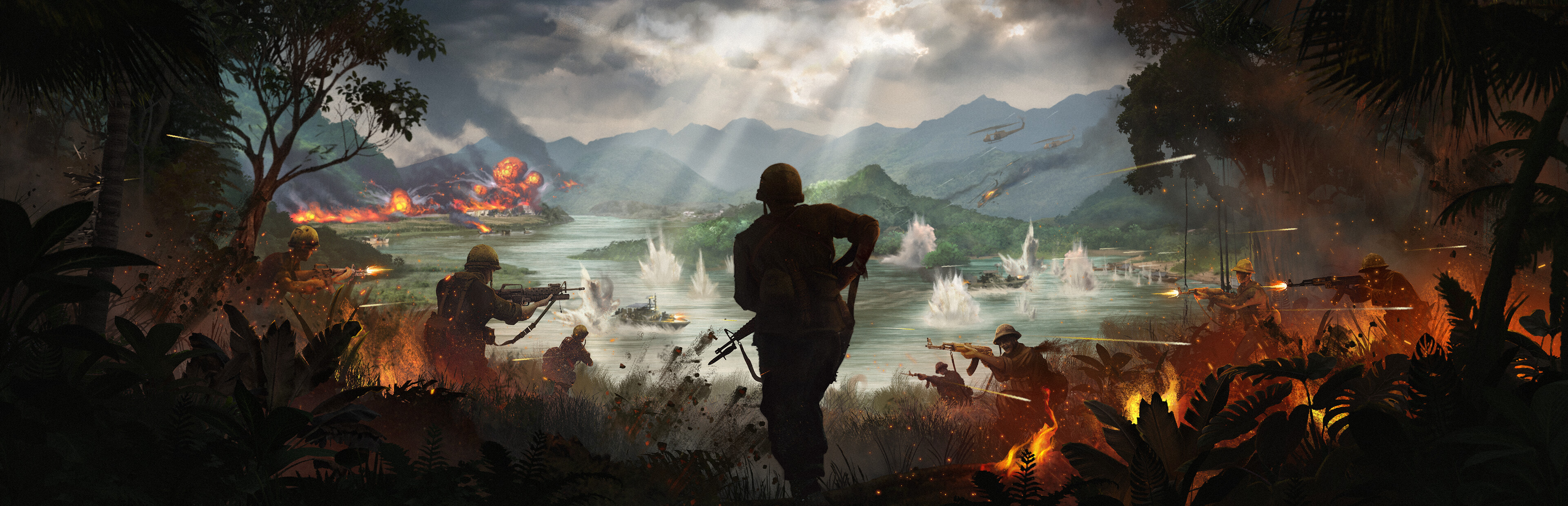
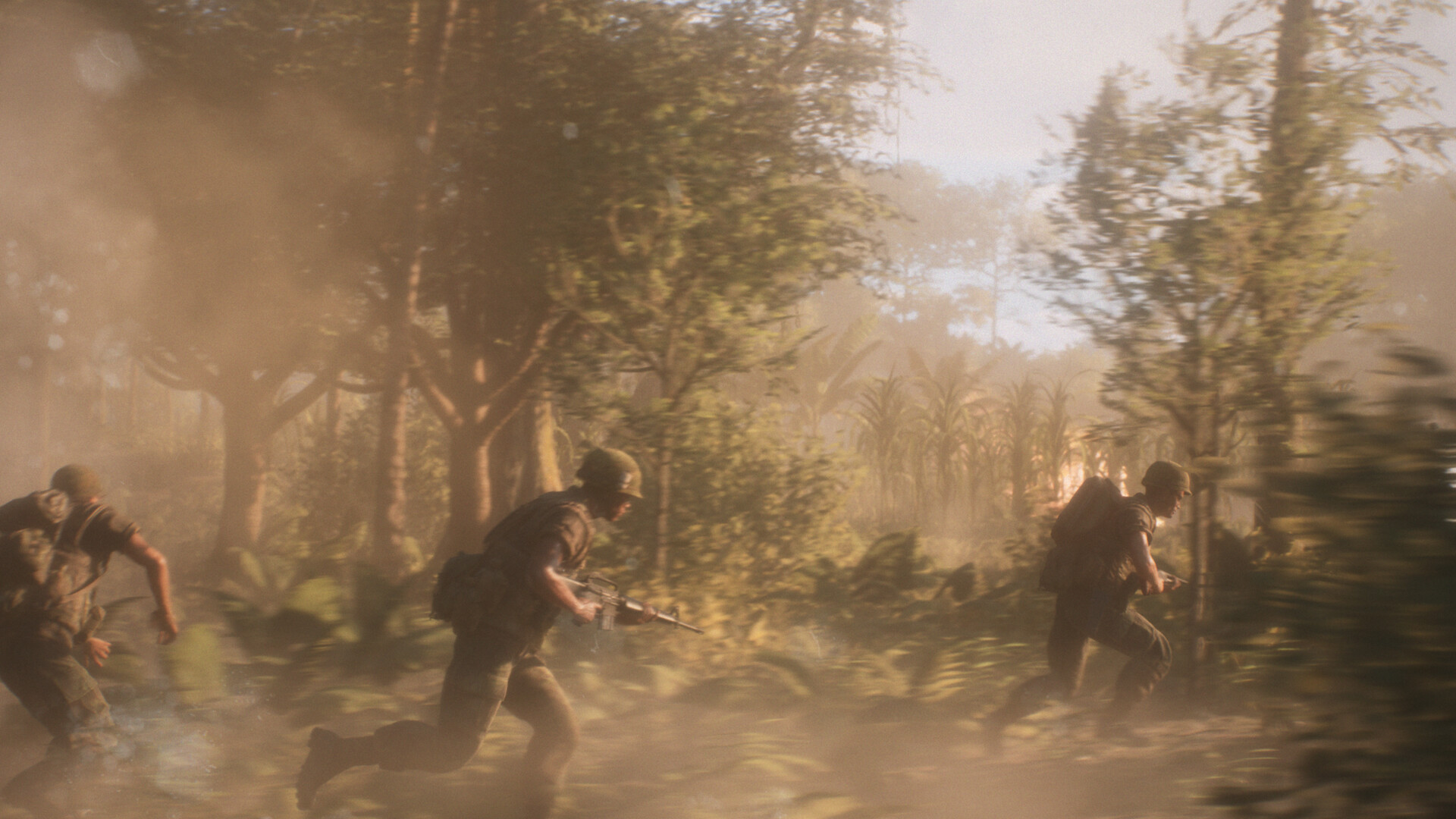
Structurally, this is the same machine as before. One hundred players split into two teams of fifty. Each team is broken into squads, each squad has a leader, and above them sits a single Commander with access to the team's shared resource pool and the map-wide abilities it buys. There are seventeen roles across six unit types - Command, Infantry, Recon, Armour, Helicopter and Mortar - and the game expects you to actually inhabit one rather than treat class selection as a loadout menu. Warfare and Offensive return as the primary modes, contesting sectors across maps large enough that walking somewhere is a decision with consequences.
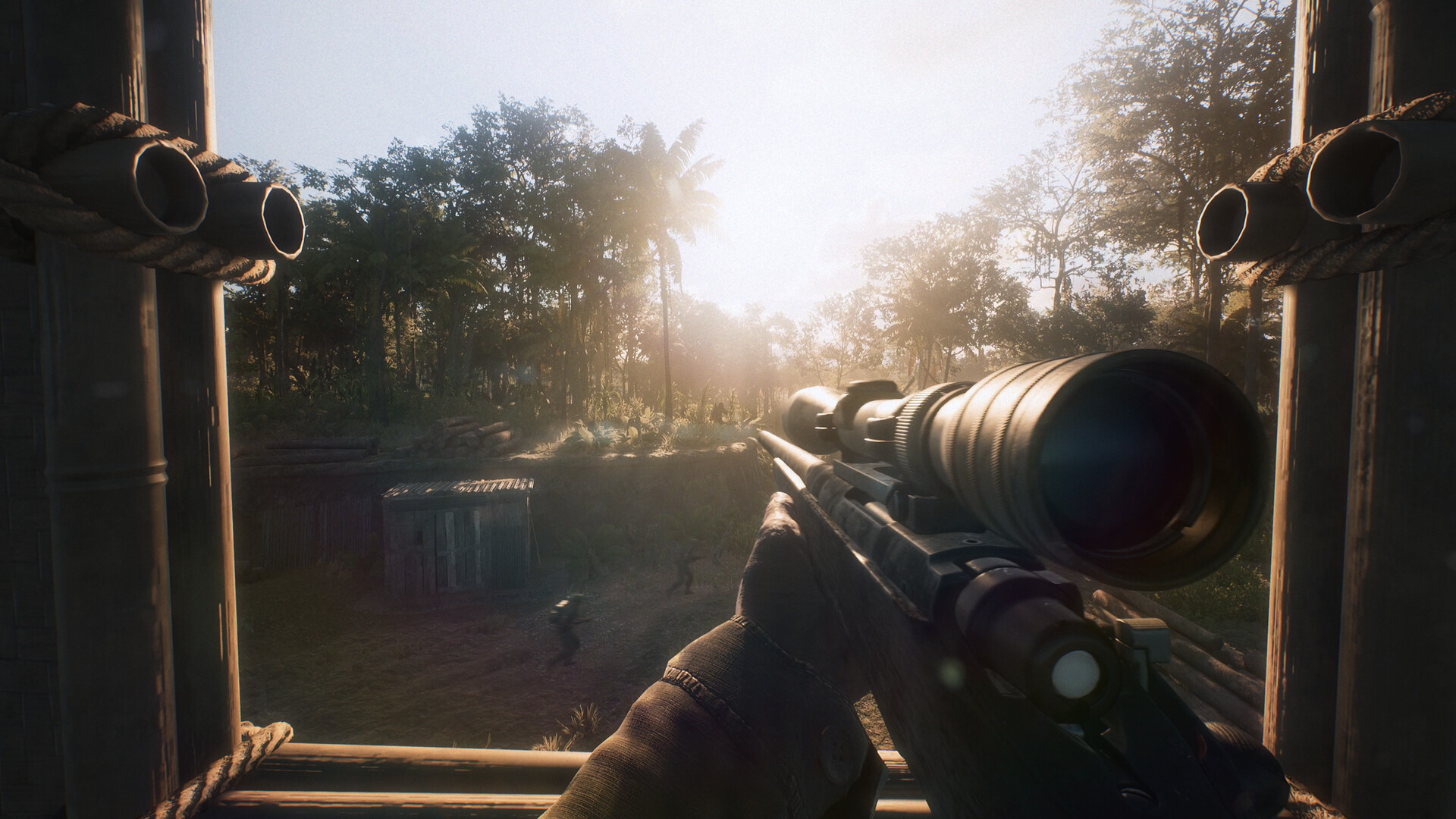
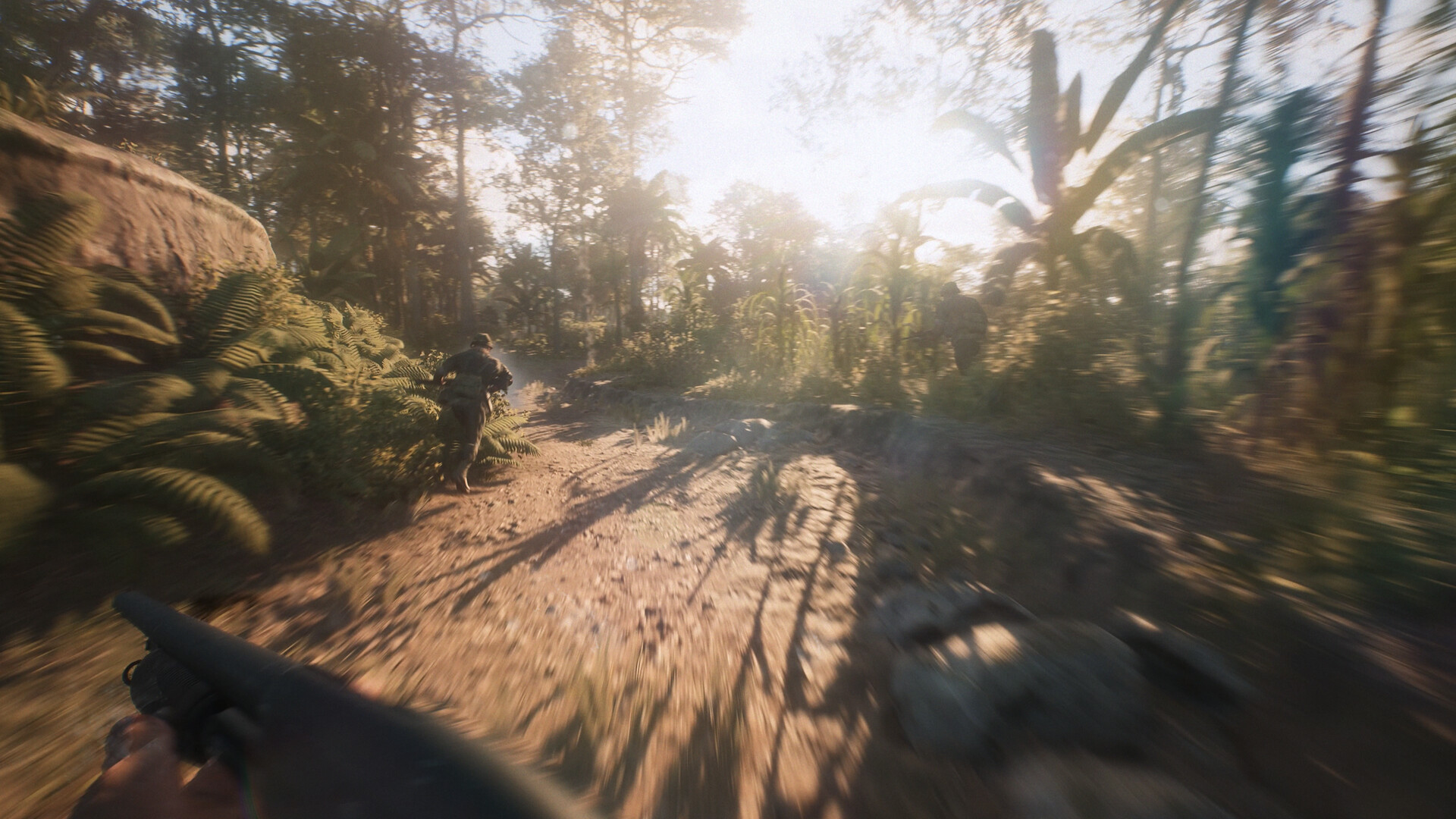
What has changed is everything you can see, which is to say: much less than before. The six maps are drawn from real Vietnamese geography - river deltas, plantation rows, mountain gorges, a coastal port - and they are dense in a way the European fields of the original never were. In Hell Let Loose proper, a hedgerow was cover. Here, the entire map is cover. Sightlines collapse from four hundred metres to forty. The result is a shooter where you spend a genuinely uncomfortable proportion of your time shooting at foliage on the theory that something is behind it.

Whether that reads as brilliant or infuriating depends almost entirely on what you wanted. Visibility scarcity is the design. It is why an ambush works, why a tunnel exit is terrifying, why the loudest weapon in the game is a rifle you cannot locate. The original game asked you to fear open ground. This one asks you to fear the twenty metres directly in front of your face, permanently, and it sustains that for forty-minute matches without ever really letting up.
Asymmetry that finally means something
The single best decision in Vietnam is that the two factions are not mirrors. The US Armed Forces get helicopters - troop transport, fire support, supply drops - and the vertical mobility that comes with them. The North Vietnamese Army gets the ground itself: a tunnel network system that lets the team build subterranean routes and pop infantry out somewhere the enemy has already cleared and stopped watching.
It works. A well-run NVA team turns a lost sector into a slow-motion horror film, because the front line stops being a line at all. A well-run US team uses helicopter insertion to skip terrain that would otherwise cost five minutes of walking and land a squad behind a garrison. Both are extremely strong and, at launch, one of them is probably too strong - tunnels can be oppressive on the tighter maps, where there is nowhere for a defending team to establish depth.
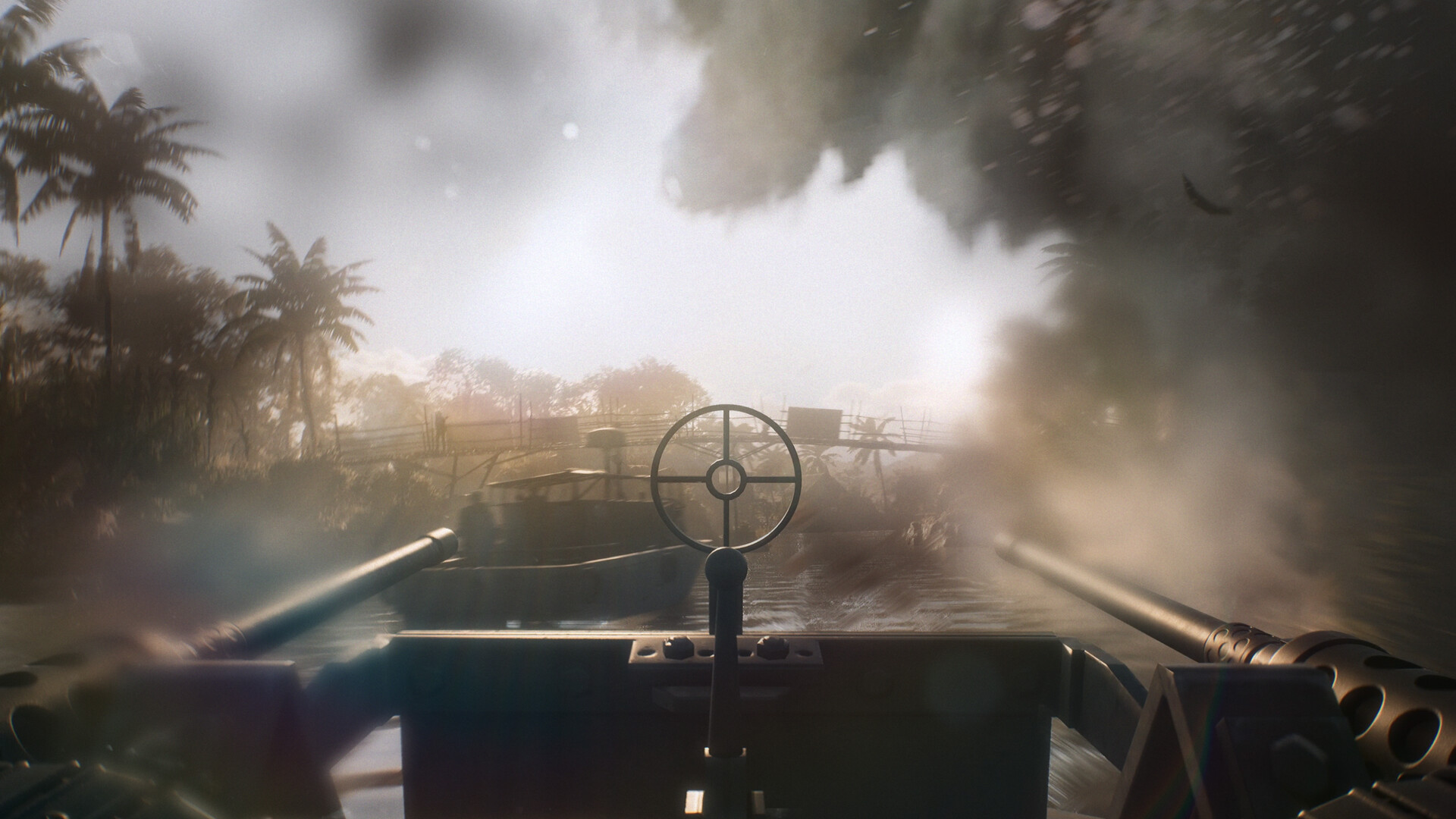
The riverine patrol boats deserve a specific mention because they produce the most memorable minutes in the game. Sitting behind a mounted gun as a boat runs a delta channel, palms going past on both sides, smoke drifting across the water and a bridge somewhere ahead that may or may not have an RPG team on it - that is a scenario no other multiplayer shooter currently offers, and Vietnam offers it routinely. The handling is floaty and the physics are not convincing. It is still the thing I would show someone first.
The command layer is still the point
Nothing about the series' fundamental social contract has changed: the team with functioning squad leaders wins, and the team without them loses regardless of individual skill. Squad leaders place garrisons and outposts that determine where the whole team spawns. The Commander spends resources on supply drops, reconnaissance and bombardment. Everyone else exists to make those decisions viable. When it works, the coordination is unlike anything else in the genre - a hundred strangers running an actual military hierarchy for forty minutes because the alternative is losing.
When it does not work, you get a leadership vacuum: nobody takes lead, no garrisons go down, the team spawns two kilometres from the fight and the match is decided before the twelve-minute mark. Vietnam has not solved this, and one of its launch decisions actively aggravates it - more on that shortly.
What's new under the hood
Beyond the setting, the meaningful additions are movement and loadouts. You can swim now, and you can climb, and both matter enormously on maps built around water and elevation - the original's inability to traverse a waist-high obstacle was a running joke and it is gone. Loadouts are customisable within a weight system, so a rifleman decides between ammunition, utility and speed rather than accepting a fixed kit. There is a party system for playing with friends, which the original lacked entirely.
Movement in general feels better, with improvements to traversal, vehicle control and responsiveness. It is recognisably the same game with the same bones, though, and if you disliked the original's pace, nothing here will convert you.
The launch, which is the problem
The launch has been rough in a way that is difficult to defend at a $39.99 price point.
Servers and the VIP wall
Access to matches was a major launch problem. The server population at launch was concentrated across a limited pool, and a large share of community servers reserve slots for VIP donors, which means a server showing free space frequently rejects you anyway. Queue slots fill independently of server slots. Parties get split or rejected outright when there is not room for everyone at once.
This is a solvable, temporary problem.
Performance, and specifically AMD
PC performance is inconsistent, with stuttering, texture pop-in and crashes affecting the launch experience. FSR was absent at launch, leaving an additional gap for AMD hardware.
The recommended specification is an RTX 3060 Ti class card at 16GB of system RAM. If you are on AMD, wait for the patch notes.
Audio, which should have been the strongest thing here
The sound mix is a substantial weakness. Gunfire lacks punch. There is no convincing bullet snap when rounds pass close. Explosions land soft. Ambient battlefield noise frequently fails to match what is actually happening nearby, so the distant war that should be constantly audible in a map this size simply is not there. Proximity voice chat, which is load-bearing infrastructure in this series rather than a nice extra, has been buggy: choppy, occasionally silent, sometimes routing nobody to anybody.
For a game whose entire pitch is immersion in a war, that is the deepest wound in the package. It is also, mercifully, the most fixable - mixes get remastered, and Expression Games has acknowledged audio feedback. But the version shipped on August 13 sounds thinner than a nine-year-old competitor.
The tutorial gate
One restrictive design decision stands out: specialist roles - Squad Leader, Engineer, Armour and others - are locked behind mandatory tutorials. Veterans with hundreds of hours in those exact roles in the original game must sit through an hour of instruction to unlock them. The intent is presumably to raise the floor on squad leadership quality, which is a real problem worth solving. The gate also collides awkwardly with Steam's two-hour refund window.
Content at launch
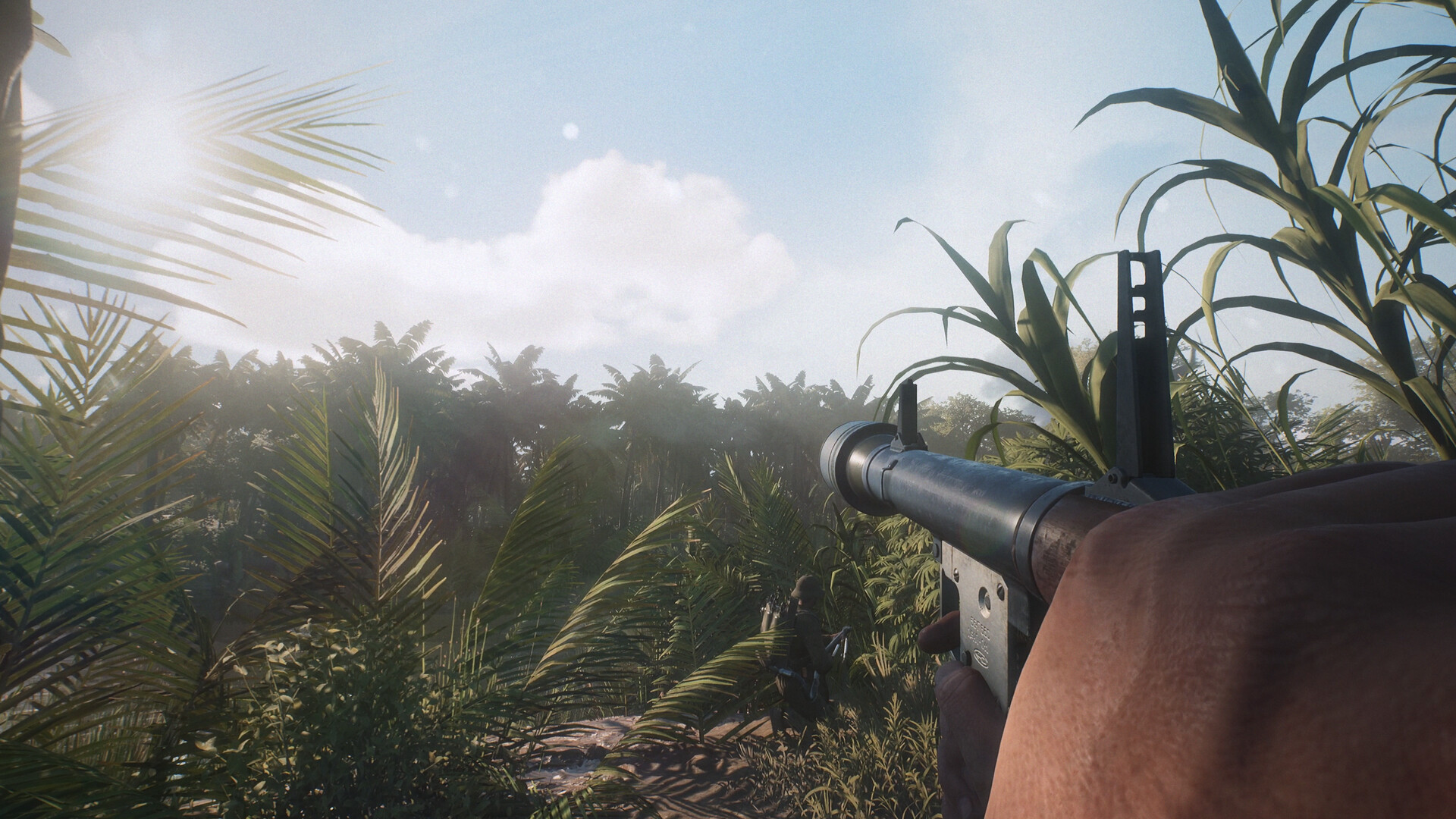
Six maps is a reasonable launch count. The weapon pool is not. The base Rifleman has a single primary weapon. For a game built on hundreds of hours of repetition, that is thin, and it is the problem most likely to persist after the technical issues are patched out. Roadmap content will address it. It does not address it today.
So who is this for?
If you have played Hell Let Loose and liked it, this is more of it, in better terrain, with better movement and worse sound, and you already know whether the launch-week friction is worth it to you. Buy it now if you want to be there while the community figures out tunnel counterplay; wait two months if you would rather arrive after the audio patch and the weapon additions.
If you have never played a 50v50 milsim, understand what you are buying. This is a game where you will walk for three minutes, die to someone you never saw, and consider that a normal and even good outcome. There is no killstreak dopamine here. The reward loop is positional and collective: a garrison placed in the right patch of jungle is worth more than any ten kills, and if that sentence sounds appealing rather than exhausting, you are the audience.
If you are on AMD hardware, or you have a low tolerance for launch-window server problems, wait. Not forever - just until the patch notes stop being about crashes.
The Commander's economy, and why matches feel slow
The resource economy explains how a match actually resolves. Each team generates three resources - manpower, munitions and fuel - continuously, at a rate tied to how many strongpoints it holds. The Commander spends them. Manpower buys the supplies that squad leaders convert into garrisons, which are the only reason anyone spawns anywhere near the fighting. Munitions buy strafing runs, bombardments and precision strikes. Fuel buys armour and aircraft.
The consequence is that territory is not a scoreboard, it is an income stream. Losing a sector does not just move a line on the map; it slows the rate at which your team can afford to exist near the front. This is why matches have that characteristic Hell Let Loose shape - twenty minutes of apparent stalemate followed by a five-minute collapse. The collapse was being paid for the entire time. In Vietnam, tunnels distort this in interesting ways: an NVA team that is being pushed off the map can still bank a spawn network behind enemy lines, meaning a losing team's income problem does not immediately become a positioning problem. It is the most novel wrinkle the series has added to its economy, and it is the main reason tunnel balance matters beyond individual firefights.
How it sits next to Rising Storm 2 and the original
A useful comparison is Rising Storm 2: Vietnam, and it is a fair one to make and an unfair one to lean on. Rising Storm 2 is nine years old, it is a faster and more arcade-adjacent shooter, and its sound design remains extraordinary - the mix, the voice barks, the screaming Huey rotors.
But they are not the same genre of experience. Rising Storm 2 is 64 players and quick engagements; Vietnam is 100 players, forty-minute matches and a command hierarchy that has to function for anything to happen. The closest comparison is really the original Hell Let Loose, and against that benchmark the new game wins on terrain, traversal, vehicles and quality-of-life, and loses on audio, weapon variety and stability. A veteran with a thousand hours in Normandy will find everything where they left it. Someone who bounced off the original's pace will bounce off this one harder, because the jungle removes the long sightlines that at least gave the old maps some visual clarity.
Consoles, crossplay and aim assist
The PS5 and Xbox Series X|S versions ship alongside PC and share servers, which helps population health in a game that needs a hundred players for a full match. Controller players get three levels of aim assist. In a shooter built around spotting partially concealed targets, assistance changes how aiming feels across input methods, so it is worth considering which controls you are most comfortable with.
Console open-mic behaviour has been the other predictable side effect. Proximity chat is central to the design and it is now carrying a substantially larger and less filtered population than the original ever did. Your mileage will vary enormously by server and by squad; the community-run servers with active moderation remain the best experience in the game, which is also part of why the VIP-slot situation stung so much at launch.
What to watch over the next three months
Three things will determine whether this is remembered as a rocky launch or a bad game. First, the audio pass - if the mix gets the punch and the bullet snap it is missing, one of the game's biggest weaknesses disappears. Second, weapons: the roadmap needs to widen a pool that currently empties in an afternoon, and it needs to do it without selling the fix. Third, stability and the AMD situation, including FSR support, which is table stakes in 2026 and conspicuously absent.
Balance will sort itself out more organically. Tunnels are probably overtuned, and Expression Games has a track record of responding to balance problems even where it has been slower on feature requests. The tutorial gate is the one design decision I would expect to be walked back entirely, because it is producing the opposite of its intended effect and it costs the studio nothing to relax it.
The verdict
Hell Let Loose: Vietnam is the most atmospheric game this series has made and the most compromised version of it yet shipped. The jungle is a genuinely transformative setting for a shooter built on visibility and patience; the asymmetry between helicopters and tunnels is the smartest thing Expression Games has ever done with the formula; and the boats, the swimming, the climbing and the party system are all overdue improvements that make the moment-to-moment better than the original. Underneath all of that sits a launch that needed another season: a soft audio mix in a game about sound, a server setup that made getting into a match a struggle, inconsistent performance with a specific AMD hole in it, a thin weapon pool, and a tutorial gate that made the leadership problem worse at exactly the wrong moment.
None of that is fatal, and most of it is scheduled to be fixed. But a review has to score the game that shipped, and the game that shipped is a very good shooter wearing a bad first week. Give it three months and this could be the definitive Vietnam multiplayer experience. At launch, its technical problems and limited weapon pool make waiting the more sensible option.