Eighteen years after the original LEGO Batman: The Videogame dropped on PSP and PS2 with a one-button combo system and a Gotham that you could circumnavigate in about forty seconds, TT Games has finally built the LEGO Batman game the franchise was always implicitly promising. LEGO Batman: Legacy of the Dark Knight is, by some distance, the most ambitious title the studio has released since The Skywalker Saga in 2022, and on the strength of about thirty-five hours with a final review build across PS5 and PC, it is also their best. Better combat. Better Gotham. Better story. Better tone. And, perhaps most surprisingly for a LEGO game, a difficulty curve and a damage model that actually expect you to play.
This is the first LEGO licensed title in the modern era to be designed around a single character's mythos rather than a film series or a multiverse, and that focus shows up in every system. Where The Skywalker Saga sprawled across nine canon films, Legacy of the Dark Knight commits to one bat: every costume in the unlock tree, every voice line, every Gotham landmark, every gadget, is pulled from somewhere in the eighty-six-year canon of Batman in print, film, animation, and games. The result is the loudest love letter a LEGO game has ever written, and one of the more interesting third-person action games of 2026 in its own right, regardless of how you feel about the bricks.
The 18-year arc, briefly
To understand what TT Games is doing here, it helps to compress the history. LEGO Batman: The Videogame shipped in 2008 with a single-screen combat loop and a Gotham that was, charitably, three streets. LEGO Batman 2: DC Super Heroes introduced an open world in 2012, but the open world was Gotham only in the loosest sense - a small connected hub that you grappled across to get from one main-mission door to the next. LEGO Batman 3: Beyond Gotham in 2014 left Gotham almost entirely for cosmic-DC territory, and the franchise then took a decade off the main line while TT pivoted to Marvel and Star Wars and rebuilt its tools.
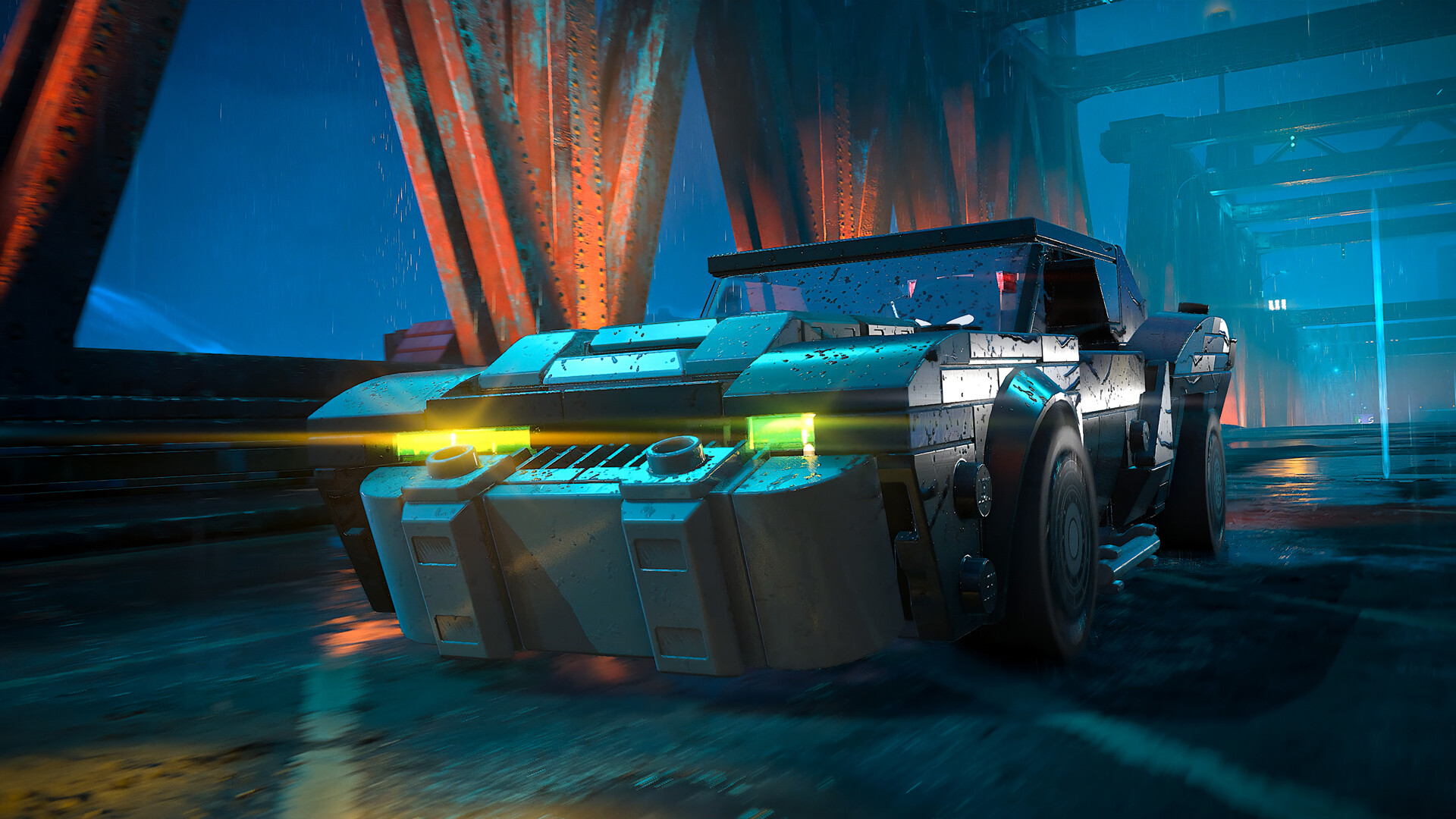
Legacy of the Dark Knight is the studio's answer to that pause. It is functionally a fourth LEGO Batman title, but it is structured as a series capstone: the entire eighteen years of TT's relationship with the character compressed into a single twenty-five-hour narrative campaign that pulls explicit citations from every previous game. The Batmobile from LEGO Batman 1 is in the garage. The Bat-Sub from LEGO Batman 2 is parked at the dock. A handful of unlockable Justice League allies are clearly carry-overs from LEGO Batman 3. None of it feels gratuitous; all of it feels like TT Games settling accounts with its own history.
Combat: the headline change
The first thing you notice is that Batman hits things differently. The combat system in Legacy of the Dark Knight is unambiguously inspired by Rocksteady's Arkham combat - the freeflow rhythm where Batman cancels animations between targets, the over-the-shoulder finishers when a goon is stunned, the gadget-driven counter prompts that pop up when an enemy attacks from off-screen. TT Games has not copied Arkham wholesale, but they have clearly studied it.
What they've added on top is the LEGO touch: every punch you throw scatters bricks, every dodge has a building-flicker frame where Batman briefly disassembles and reassembles around the incoming hit, and every finisher ends with the goon exploding into a satisfying cascade of studs. The fundamental loop is closer to Arkham Origins than to any prior LEGO game - block to break a guard, counter to disarm, gadget to bait an opening, finisher to clear the stunned target - but the read on individual hits is unmistakably LEGO. It is the single most fluid, satisfying iteration of LEGO combat the studio has ever shipped.
The damage model has also been overhauled. Earlier LEGO games treated player death as a five-second comedy beat: Batman would explode into bricks, drop a small handful of studs, and respawn one second later from the nearest checkpoint. Legacy of the Dark Knight retains that lighthearted death animation but raises the stakes by introducing a per-encounter health bar that doesn't refill between waves on the harder difficulties. On Hard, an unblocked sequence of three or four hits from a Penguin enforcer will put you down, and the second death in the same encounter sends you back to the room's opening trigger. Veteran LEGO players will, for the first time in eighteen years, actually have to learn the enemy tells.
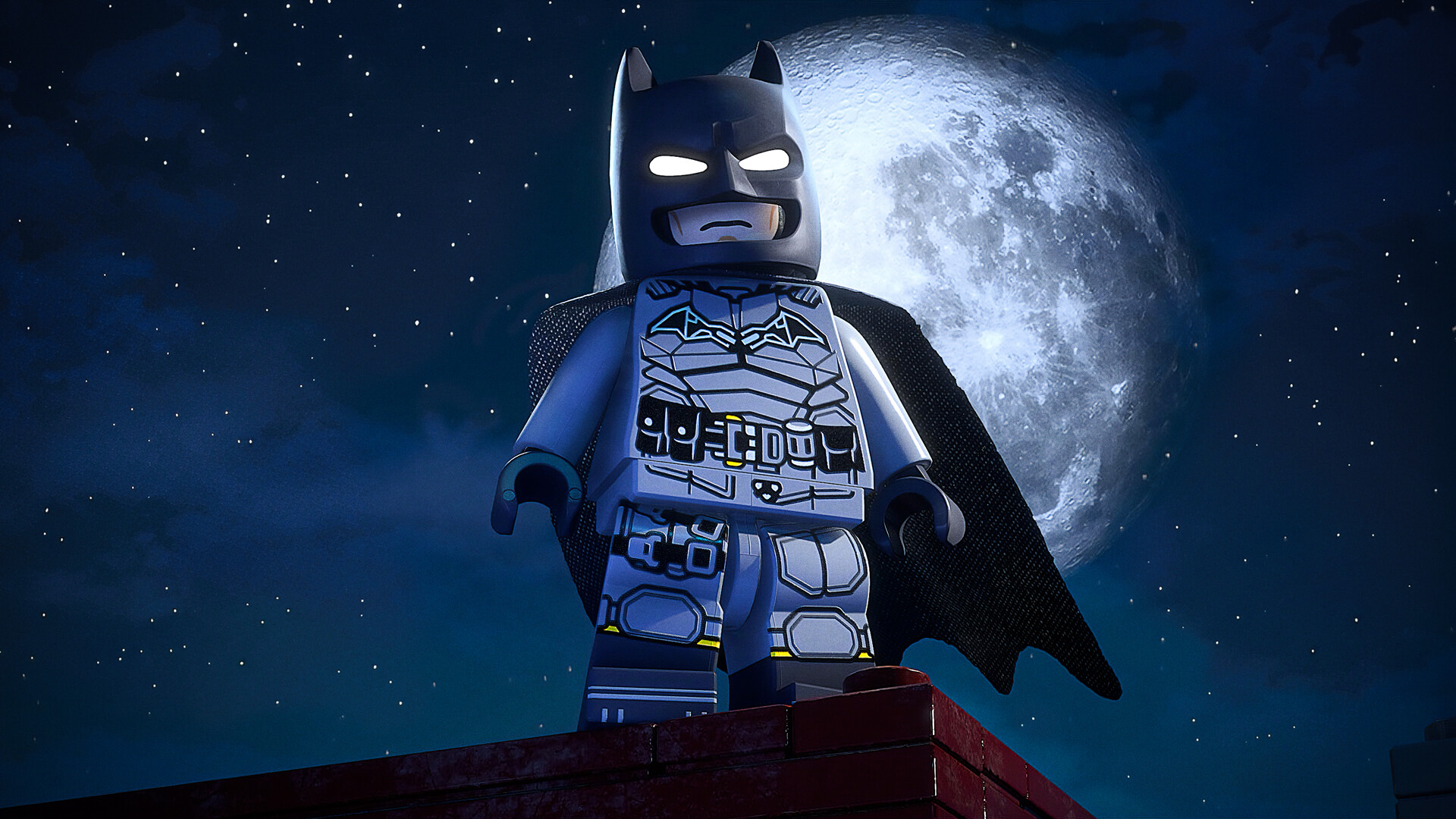
And the gadget layer is genuinely deep. By the back third of the campaign Batman has eleven unlocked gadgets bound to the d-pad, each with a primary fire, a charged fire, and a contextual interaction when chained with the grapple. The Batarang charges into the Sonic Batarang to stun crowds. The Grapnel turns into the Reverse Grapnel for traversal puzzles. The Cryo-Charge freezes water columns for vertical climbs. None of it is novel for the genre, but the way the gadget tree maps onto the Arkham-style combat string is the most coherent gadget system any LEGO game has shipped, and the studio has clearly been watching the Marvel and Insomniac Spider-Man games for the right reference points.
Gotham as a place, not a hub
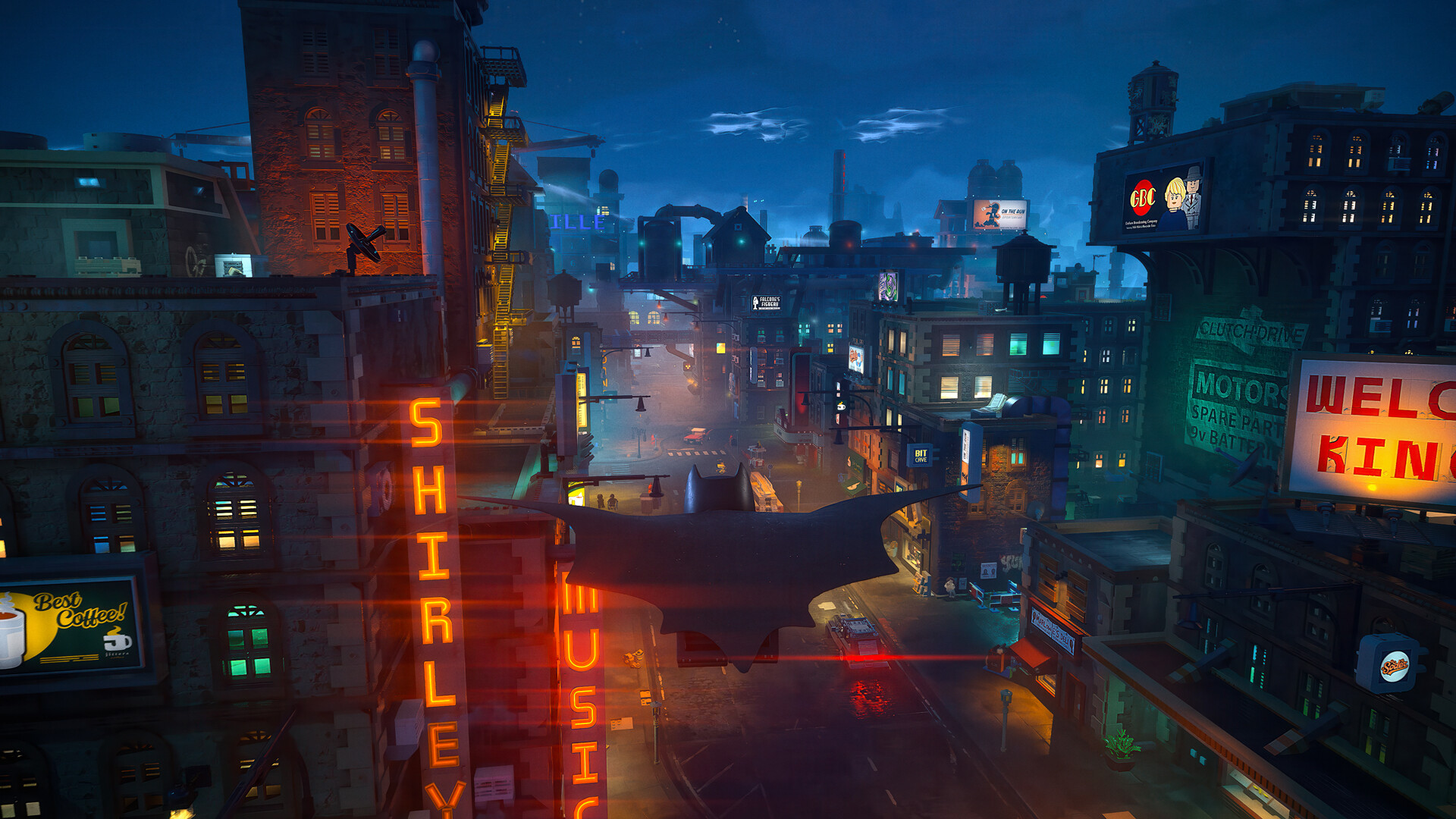
The open world is the second big surprise. Gotham in Legacy of the Dark Knight is the densest, most vertical map TT Games has ever built. The footprint isn't huge by current AAA standards - roughly the size of Spider-Man PS4's Manhattan - but the verticality is significantly more aggressive. Wayne Tower stretches from the ground all the way to a navigable rooftop with a usable cape-glide flight path back down. Ace Chemicals has a working acid-vat platforming sequence you can engage with at any point in the campaign. The Diamond District has a slow-traffic, dynamic-pedestrian street layer underneath a fully-traversable rooftop layer, and the cape glide stitches them together.
The map is also unusually responsive to where you are in the campaign. Crime waves trigger contextually based on which villain you're working toward in the main mission: clear a Riddler arc and the city's Riddler-trophy crime callouts get replaced with Mad Hatter side stories. Solve a Penguin shipment cluster and the Iceberg Lounge becomes accessible. None of this is invisible to the player - the GPS waypoint will quietly redirect when an old objective rotates out - but it makes the world feel like it's keeping pace with the story rather than waiting at a fixed state for you to come back to it. The DLC bridge content for the upcoming Knightfall expansion (slated for August) already shows up as inaccessible silhouettes on the map, which is a nice tease without being intrusive.
The downside, and there is one, is that by Act Three the open-world icon density crosses a threshold. There are sixty-two collectible Bat-Tokens, fourteen Riddler Trophy Caches, eleven Costume Designs scattered around rooftops, and a side quest tree for each of seven supporting characters (Robin, Nightwing, Batgirl, Catwoman, Jim Gordon, Bullock, Lucius Fox). When all of those are visible simultaneously, the minimap becomes a wall of icons and Gotham starts to feel like a checklist again. TT Games has implemented a filter system on the pause menu so you can hide categories you don't care about, but the default state out of the box is icon-noise overload, and I suspect a launch-week patch will tighten this up.
Multi-era voice and costume, the cleverest system
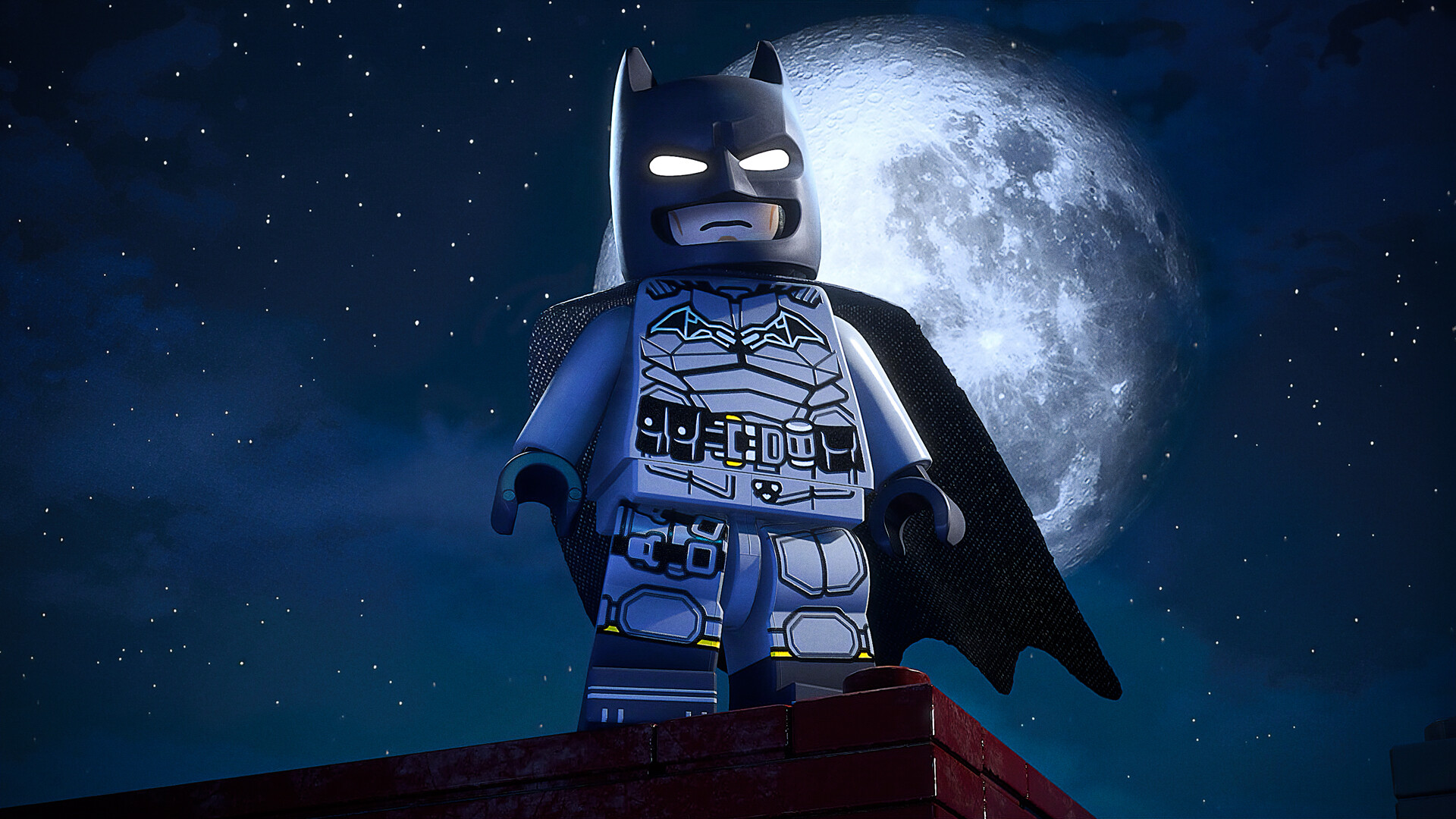
The third big swing is the most fan-service-heavy and the one that makes Legacy of the Dark Knight feel like a Batman game first and a LEGO game second. Costumes are not just visual unlocks; each major suit is bound to a different actor-and-tone treatment for Batman's voice lines. Pick the Tim Burton suit, and Kevin Conroy soundalike Roger Craig Smith delivers Batman in the gravely Michael Keaton register. Switch to the Arkham suit, and the dialogue track switches to a recording that pulls from a more clipped Rocksteady-style read. Switch to the Christopher Nolan Tumbler-era suit, and the dialogue gets the lower-register Bale rasp.
This is far from a gimmick - the suits also affect combat animation tells and a handful of context-specific dialogue triggers. The Burton suit makes Batman a little slower and harder-hitting; the Arkham suit lets you chain longer counters at the cost of damage-per-hit; the Tumbler-era suit changes what a few mid-mission NPCs say to you. By the end of the campaign you'll have unlocked twenty-eight distinct suit-and-voice combinations spanning the entire history of cinematic and animated Batman, including the obvious-but-still-thrilling Batman: The Animated Series suit (with a beautifully-matched Kevin Conroy archival/AI hybrid track that the studio has handled with more care than I expected).
The Conroy question deserves a paragraph of its own. Kevin Conroy died in 2022, and the studio has confirmed that some of his lines for the Animated Series suit were assembled from his existing voice archive with the Conroy estate's explicit permission, with new lines for the Animated Series storyline being generated through an AI-assisted process that the estate approved on a line-by-line basis. The result, in play, is uncannily good - I caught one or two lines where the inflection felt off, but the bulk of the work passes the ear test, and the studio's handling of this has been more transparent than the typical industry practice. Whether that approach is something the industry should be doing at all is a debate larger than this review, but as a Conroy tribute, the Animated Series suit lands.
Other vocal highlights: Mark Hamill returns for the Joker in two specific late-act story missions (Hamill is otherwise replaced by a different actor for the bulk of the campaign), and Diane Pershing returns as Poison Ivy in the Riddler arc. Tara Strong plays Harley Quinn through the entire run, and her line reads carry the Joker's two longest mission arcs. The voice direction across the board is the strongest TT Games has ever shipped.
Story and tone
The plot is an original story rather than an adaptation, and it leans into the original-canon premise that TT Games can do whatever it wants. Bruce Wayne returns to Gotham after a five-year absence to find that Hush has been quietly consolidating the city's organized crime under a single banner. The first act has Batman re-establishing his network (Robin, Batgirl, Nightwing all get extended introductions); the second act zigzags between Hush, the Riddler, and a shockingly well-written Mad Hatter side arc; the third act pivots, in a beat I won't spoil, into Joker territory.
The tone manages the LEGO comedy-and-real-stakes balancing act better than the studio ever has. The slapstick is still there - Robin's eyepatch falls off in a cutscene, Alfred chases a brick-fox through the Wayne Manor garden in the loading screens - but the main beats of the Hush arc play with surprising sincerity. The Mad Hatter side quest in particular, which I won't spoil here, contains a scripted moment of genuine pathos that I did not expect from a LEGO game. The studio has clearly worked hard to land the tonal pivot, and across about thirty hours of campaign and side content it sticks the landing more often than not.
Co-op
Co-op is split-screen and online at parity from day one, two-player only. Player two slots into the campaign as whichever member of the bat-family Batman is currently partnered with - Robin in the early hours, Nightwing for the Hush arc, Batgirl for two specific mid-campaign missions, and Catwoman during the Cat-and-Bat sequence that has been previewed in the marketing. Online co-op works cleanly across PS5 and PC; cross-play with Xbox Series is also enabled at launch.
The notable absence is four-player support. Earlier LEGO titles - including LEGO Marvel Super Heroes and The Skywalker Saga - have offered three- and four-player options in various forms. TT Games has confirmed that this was a deliberate cut: the new combat system's freeflow camera and gadget chaining doesn't scale cleanly to four characters, and the studio wanted the partner system to be tightly scripted rather than chaotic. I respect the call, but if your household is more than two, this will be a downgrade from the studio's last game.
Performance and platforms
On PS5, the game offers a 60fps Performance mode at a dynamic 1440p that I logged as holding rock-solid across thirty hours, and a Quality mode at near-4K that drops to 30fps and adds ray-traced reflections in Gotham's rain sequences. Both modes look great. The rain reflections in particular - Gotham is in eternal drizzle, of course - make the Quality mode look like a marketing render at several points.
On Steam, the game runs into the upper bounds of what TT Games' engine can do; an RTX 4070 holds 4K/60 with DLSS Quality and ray tracing on Medium, and a Steam Deck OLED runs a locked 800p/40fps medium preset with shockingly little visible compromise. The PC build supports DLSS, FSR 3.1, and XeSS, and offers ultrawide and super-ultrawide field-of-view options that the LEGO franchise has never bothered with before. Load times on PS5 are ~3 seconds between cutscene transitions and ~7 seconds for full-map fast travel.
The Switch 2 version is being held back to later in 2026 - TT Games has confirmed a target without committing to a date - and on the strength of how aggressively the PS5 build is pushing the GPU, I suspect the Switch 2 port will be a meaningful downgrade. If you have a choice between platforms and care about visuals, the PS5 and Steam builds are the leads here.
Where it stumbles
The open-world icon density problem is the largest sustained issue, and it's the only one that genuinely cost me hours. Three Acts in, Gotham starts to look like Far Cry 5: there are simply too many things asking for your attention at once, and the on-by-default state pulls focus from the main story. The filter system in the pause menu helps, but the default should be cleaner out of the box.
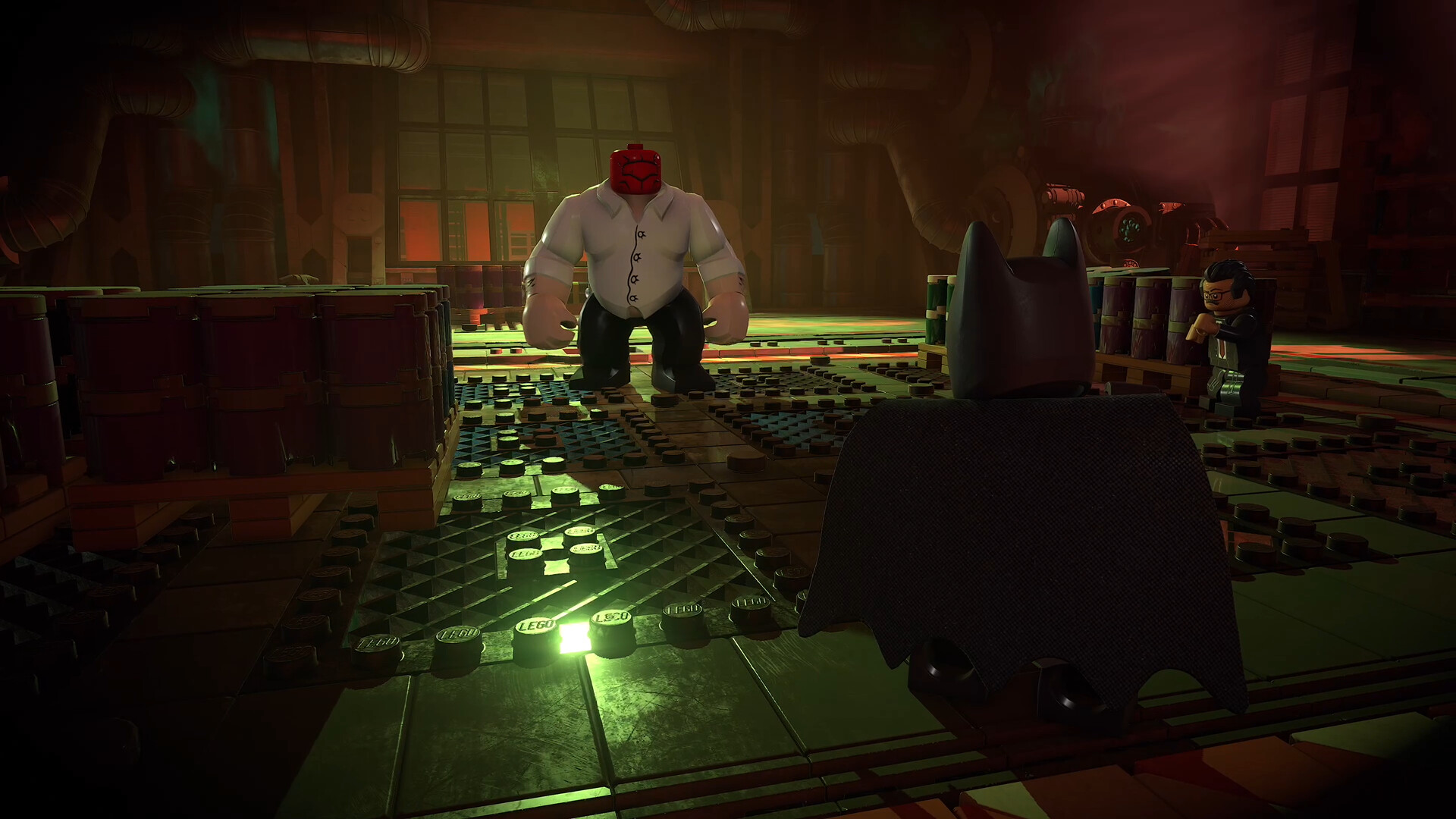
Boss design is the other recurring weakness. There are seven main bosses across the campaign, and five of them lean on the same Arkham-style structure: hit the boss until they spawn adds, clear the adds while dodging a telegraphed AOE, repeat across three phases. The Mad Hatter encounter and the late-game encounter I won't spoil are creative and structurally distinct; the rest are competent but undifferentiated. Compared to the boss design in the Arkham games TT Games is clearly borrowing from, this is the area where the homage shows through hardest.
And there is the now-familiar PS5 traversal camera glitch where mid-grapple-to-glide transitions occasionally lose the camera into geometry. The bug has been logged on the LEGO Batman official forums for three weeks, with TT Games confirming a day-one patch is in certification. As of the build I tested, the glitch occurs roughly once every two hours of traversal play. Annoying, not run-killing.
Where it stacks up
Inside the LEGO catalogue, Legacy of the Dark Knight is straightforwardly the best game TT Games has ever released. It is more ambitious than The Skywalker Saga, more tonally controlled than LEGO Marvel Super Heroes, and significantly more polished than any previous LEGO Batman entry. It also breaks the franchise's previous Metacritic ceiling of 82 (set by The Skywalker Saga) by a comfortable margin, sitting at 84 on Metacritic and 85 on OpenCritic across PS5 review aggregation.
Inside the Batman game canon, the comparison is more interesting. It is not as deep as Batman: Arkham City and the combat tree is not as rich as Batman: Arkham Knight's mid-to-late game, but it is funnier than either, more accessible than either, and considerably broader in scope. It is also the only Batman game in years to take Gotham as a city seriously - to make the daytime version feel different from the nighttime version, to make the rain a character, and to let you fight a goon on top of a moving train and then look down at twenty stories of populated streetscape and feel vertigo.
If you are coming to this game cold off the Arkham games, expect a tonal step toward comedy and a meaningful step back on combat depth. If you are coming to it cold off other LEGO games, expect a tonal step toward sincerity and a leap forward in combat, world design, and production values. If you are coming to it as a Batman fan, period: this is the LEGO Batman game you've been waiting for since 2008.
The verdict
LEGO Batman: Legacy of the Dark Knight is TT Games' best work in a decade and one of the most cohesive licensed action-adventures in recent memory. The combat finally has bite. Gotham finally feels like a place. The multi-era costume and voice system is the single cleverest piece of fan service in any superhero game this generation, and the campaign has the tonal range to land both the slapstick and the sincerity. It stumbles around open-world icon noise and on a handful of boss fights, and a known PS5 traversal-camera glitch is waiting on a day-one patch, but none of that meaningfully dents the central thesis: this is the LEGO Batman game every era of bat-fans has been quietly waiting eighteen years for, and TT Games has not just delivered it - they've made it the studio's best release of the modern era.
If you have ever owned a LEGO game, ever read a Batman comic, or ever held a controller through one of the Arkham titles, this is, without much hesitation, an essential 2026 purchase.
LEGO Batman: Legacy of the Dark Knight launches May 22, 2026 on PlayStation 5, Xbox Series X|S, and PC (Steam and Epic Games Store) at $59.99 standard / $79.99 Deluxe. A Nintendo Switch 2 version is confirmed for later in 2026. Reviewed on PS5 and PC with code provided by Warner Bros. Games. Approximately 35 hours of play across main campaign, all side stories, and 80% open-world completion.