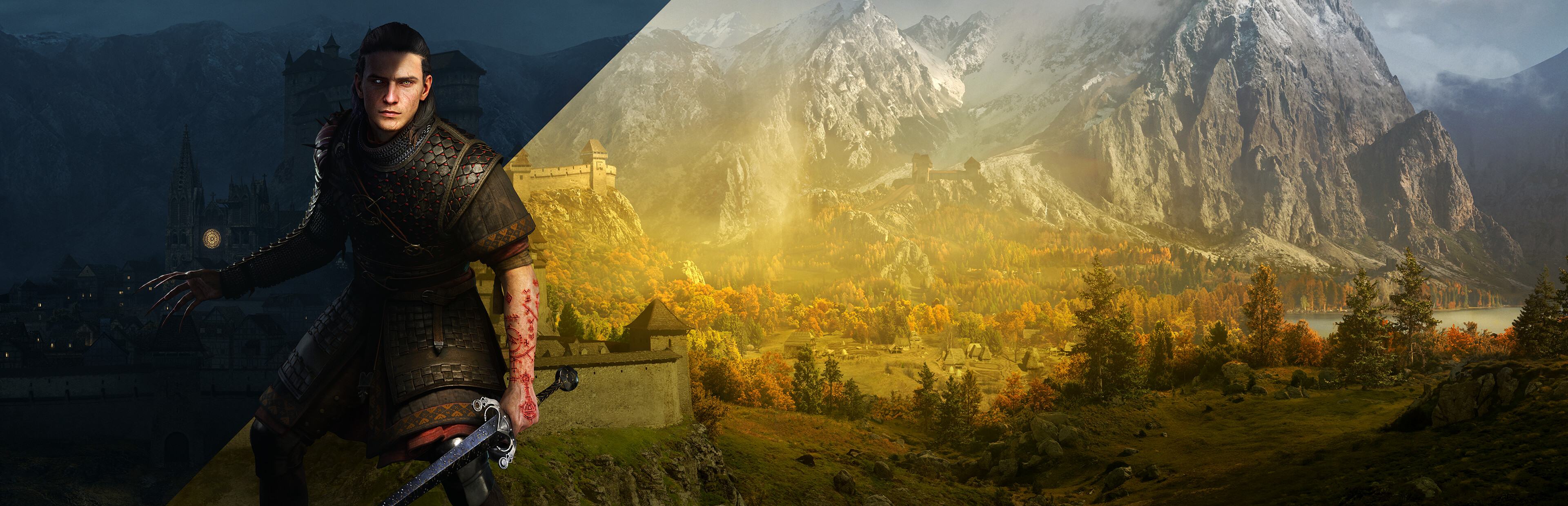
Thirty days. That is what The Blood of Dawnwalker gives you, and it tells you so within the first hour. Brencis — the century-old vampire who has just razed your village and dragged your sister and father off into the dark — will be crowned in thirty days. After the coronation, your family is gone. Not missing. Gone.
It is the boldest thing Rebel Wolves could have built its debut around. The studio is stacked with people who made The Witcher 3, and their first game outside CD Projekt is not a bigger open world or a longer questline. It is a smaller one with a clock attached. Whether that clock is the most interesting structural idea in a big-budget RPG this decade or an anxiety machine bolted onto a game that did not need it depends almost entirely on what kind of player you are — and Rebel Wolves, to its credit, seems to have known that going in.
A peasant, a plague, and two kinds of monster
You play Coen of Laslea, and the game is careful to establish that he is nobody. He works the land in a village in the Vale of Sangora, a valley in 1300s Romania where the Black Death is doing to the population what the local aristocracy has been doing more slowly for generations.
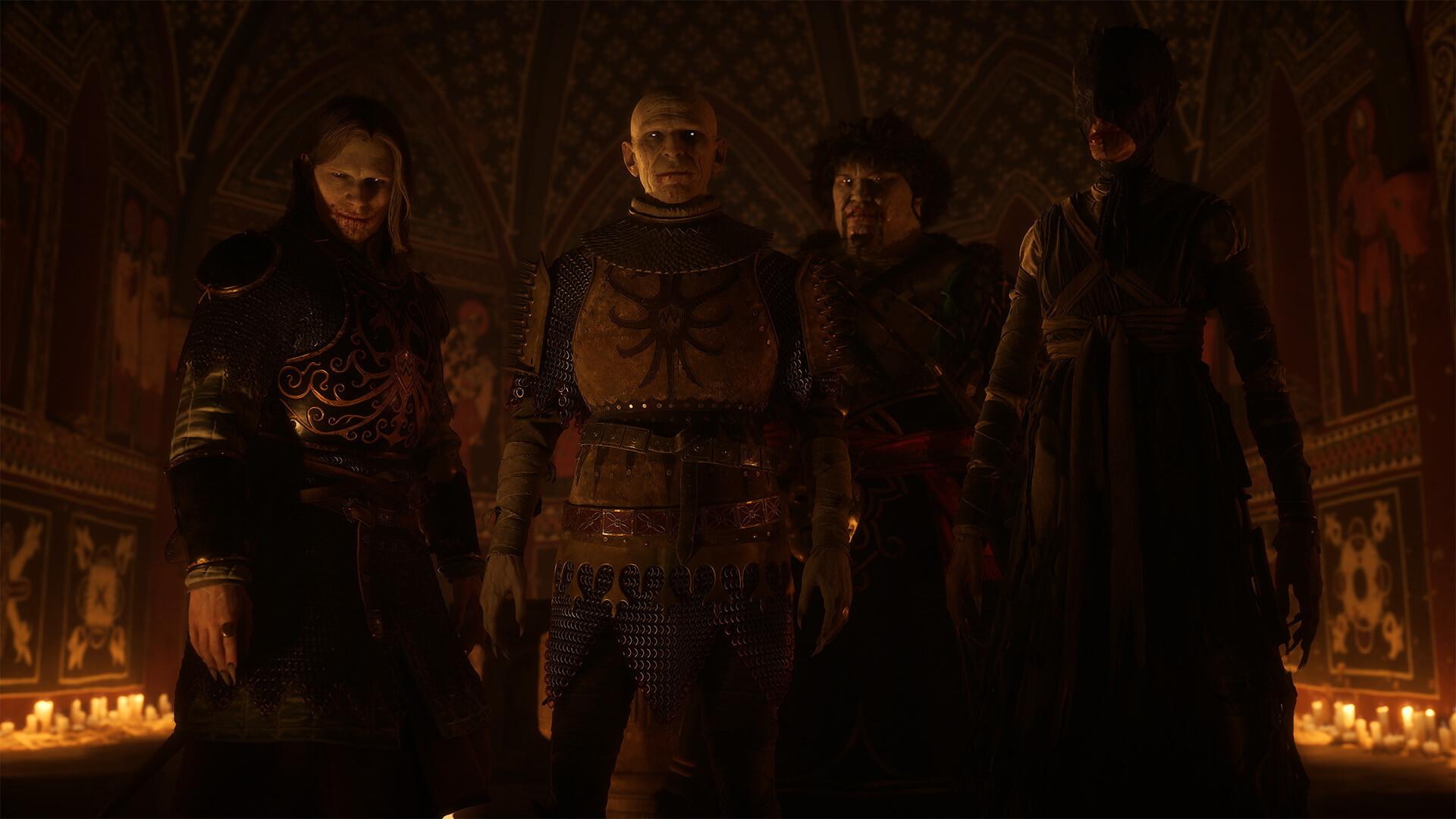
The political setup is the game's sharpest piece of writing, and it lands in the first twenty minutes. Skender Dragosti, the murderous lord who ruled Sangora, was conquered and killed by Brencis, a vrakhir — a vampire — who took one look at feudal Europe bleeding out from plague and saw waste. Brencis offers vampire blood as a cure for the pestilence. It works. The price is that you belong to him afterwards. He has industrialised the harvesting of peasant blood, and here is the part that matters: not everyone in Sangora thinks that is a bad trade. Brencis killed the tyrant. He stopped the dying. Some of the people you meet would rather be livestock for a monster than free under Skender.
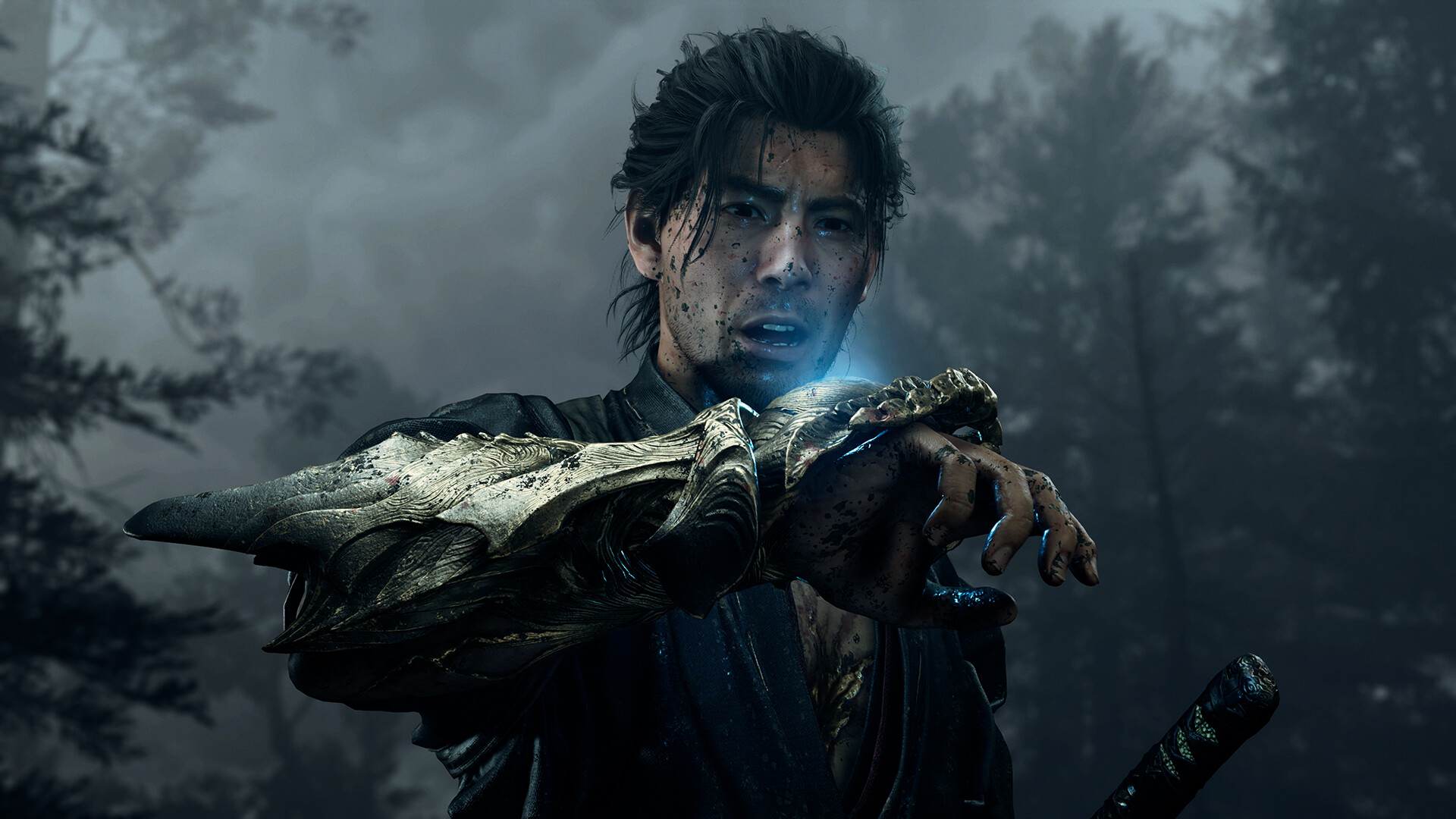
That is the moral floor the whole game is built on, and it never rises. When Laslea shows the faintest sign of resistance, Brencis's men burn it and take Coen's family. Coen, dying, is dragged into a ritual by a witch and comes out the other side as a Dawnwalker: human by day, vrakhir by night.
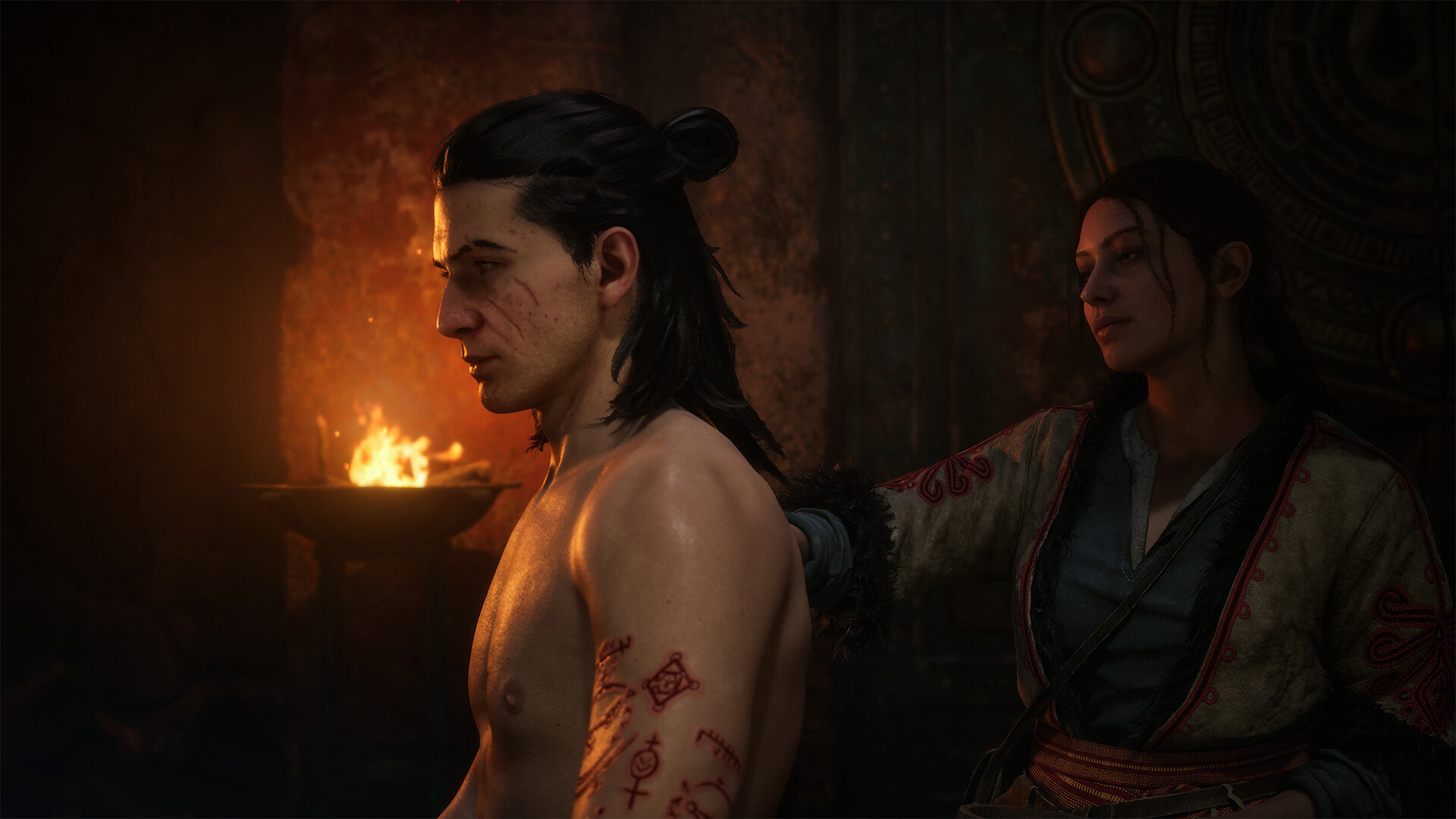
It is a clean bit of design work disguised as lore. Rebel Wolves gets to have the vampire fantasy — the powers, the predation, the ceilings and the rooftops — without ever forcing you into the "avoid sunlight" straitjacket that has strangled most vampire games since Bloodlines. Coen carries a sword around the clock. What changes is what else he can reach for: witchcraft by day, vrakhir abilities by night. He is not cowering in cellars waiting for dusk. He is simply a different kind of dangerous depending on where the sun is.
The clock is the game, and the clock is the fight
Here is how it actually works. Each of Coen's days is divided into sixteen units of time. Almost everything meaningful spends at least one: advancing a major quest, doing a side job, unlocking a fast travel point, and putting points into your skill trees.
The design intent is legible and, on paper, excellent. Urgency is normally something big RPGs put in their scripts and then contradict with their systems. Every one of these games tells you the world is ending and then hands you a fishing minigame. Dawnwalker makes the urgency structural: you cannot save everyone, help everyone and see everything, so you have to decide what Coen is actually going to do with the last month of his family's life. Do you spend a week assassinating Brencis's three vassals to weaken the regime before the confrontation? Do you run errands for Anca, the local witch, because she can teach you things — and because you may want her for reasons that have nothing to do with tactics? Some tasks only exist by day; some only by night. You end up sitting in the quest journal doing logistics, which is not a sentence I expected to write approvingly about an action RPG.
The clock is punishing enough to make a completionist miserable and loose enough to leave a systems player unsatisfied. The people it works perfectly for are in the middle: players willing to accept that this is a single, specific run through a story rather than an exhaustive tour of a map.
Two pieces of implementation deserve real credit. You are always warned before an action spends time, and idle exploration is genuinely free — you can spend as many real hours as you like walking the valley and picking St John's-wort without the sun moving. Time only passes when you knowingly trigger it. And if you fail to reach your family in thirty days, the game does not end; it becomes a revenge story instead. There is a branch there, not a fail state.
Human by day, monster by night
The dual-form structure is the best-executed idea in the game, and the one I would most like to see other developers steal.
By day Coen is a man with a sword and a small amount of borrowed witchcraft. Shops are open, so you buy skill manuals from vendors who keep daylight hours. NPCs behave like people. The valley looks like a place where farming happens.
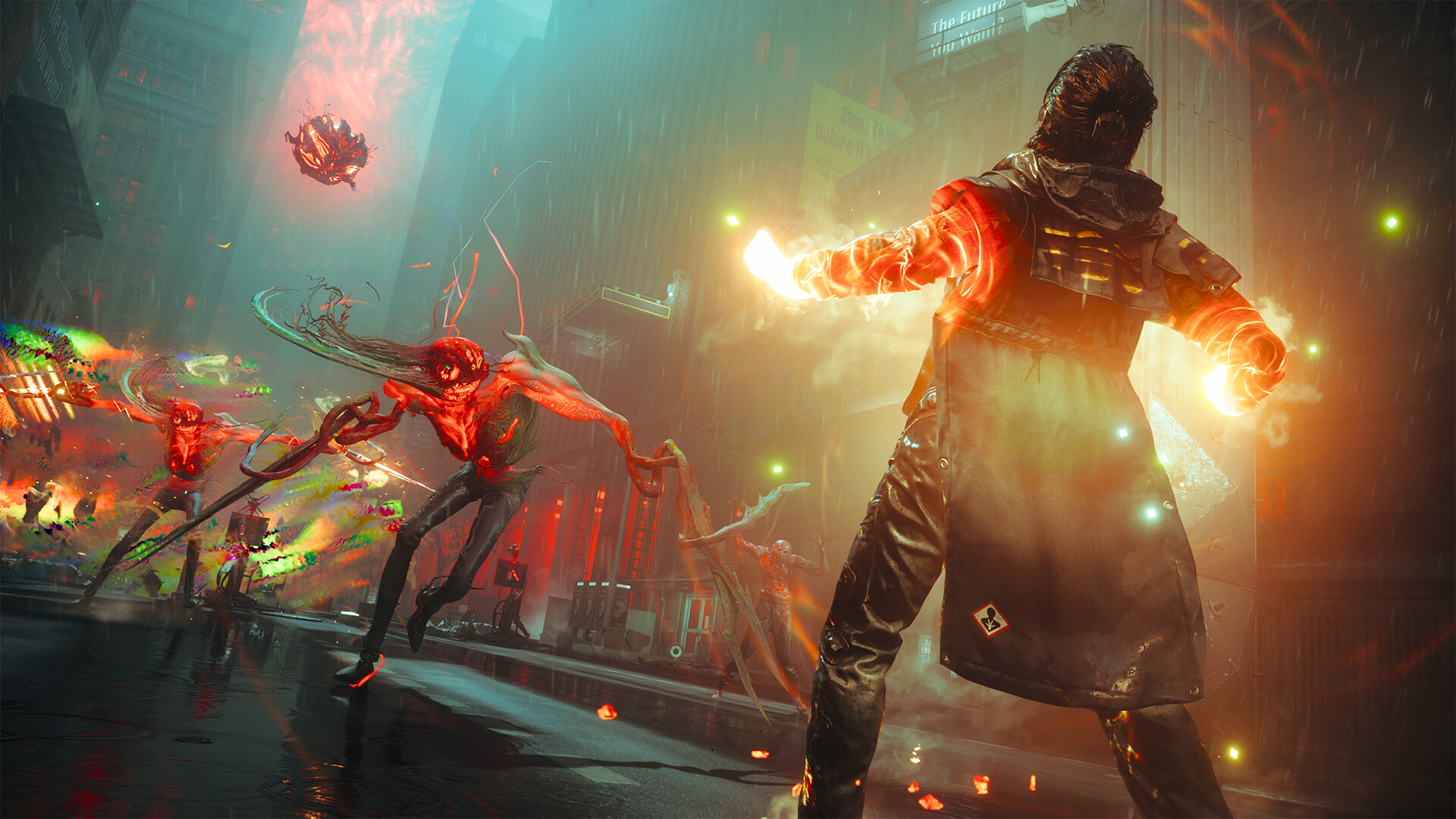
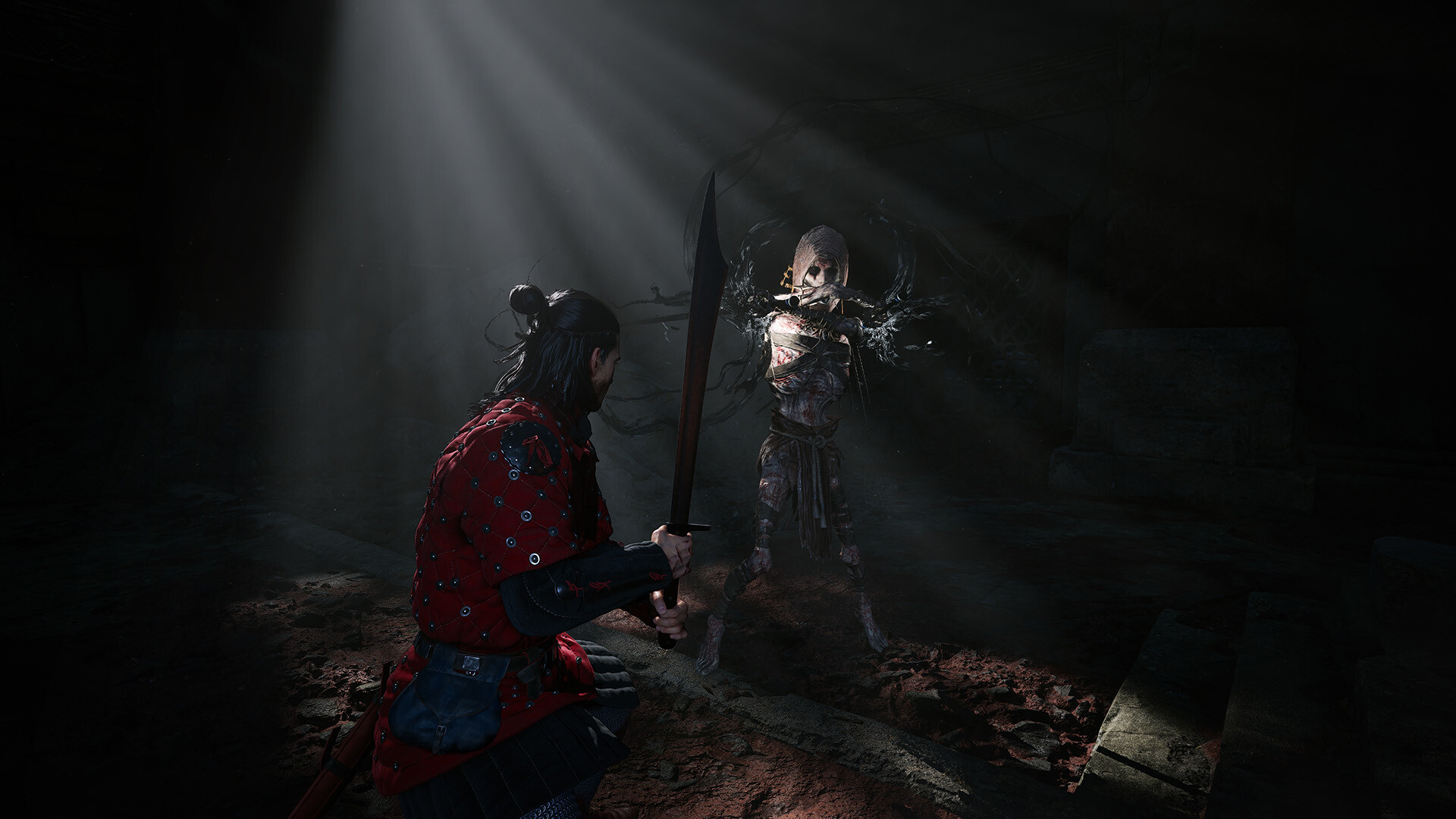
By night, the toolkit opens up and the level design quietly changes shape. Coen can shadowstep, which means rooftops, cliff shelves and ledges that no mortal can reach become routes. He can walk on ceilings. He can turn into a wolf and cover ground at a gallop. In a fight he can summon hectic waves of spectral crows between sword strikes, warp behind an enemy and drain them to top his own health back up, boil a man's blood inside him, temporarily rip a soul out, scream loudly enough to freeze a group in place, or possess an enemy outright and turn him on his friends.
What makes this more than a power fantasy is that it interacts with the clock. A quest that is a grinding slog by daylight might be trivial after dark, and vice versa, so "when do I do this" becomes a real question with a real answer. The three skill trees are also riddled with things that are frankly overpowered once you find them — which is part of why the game's difficulty curve collapses somewhere around day 20.
Combat: strong powers, unreliable targeting
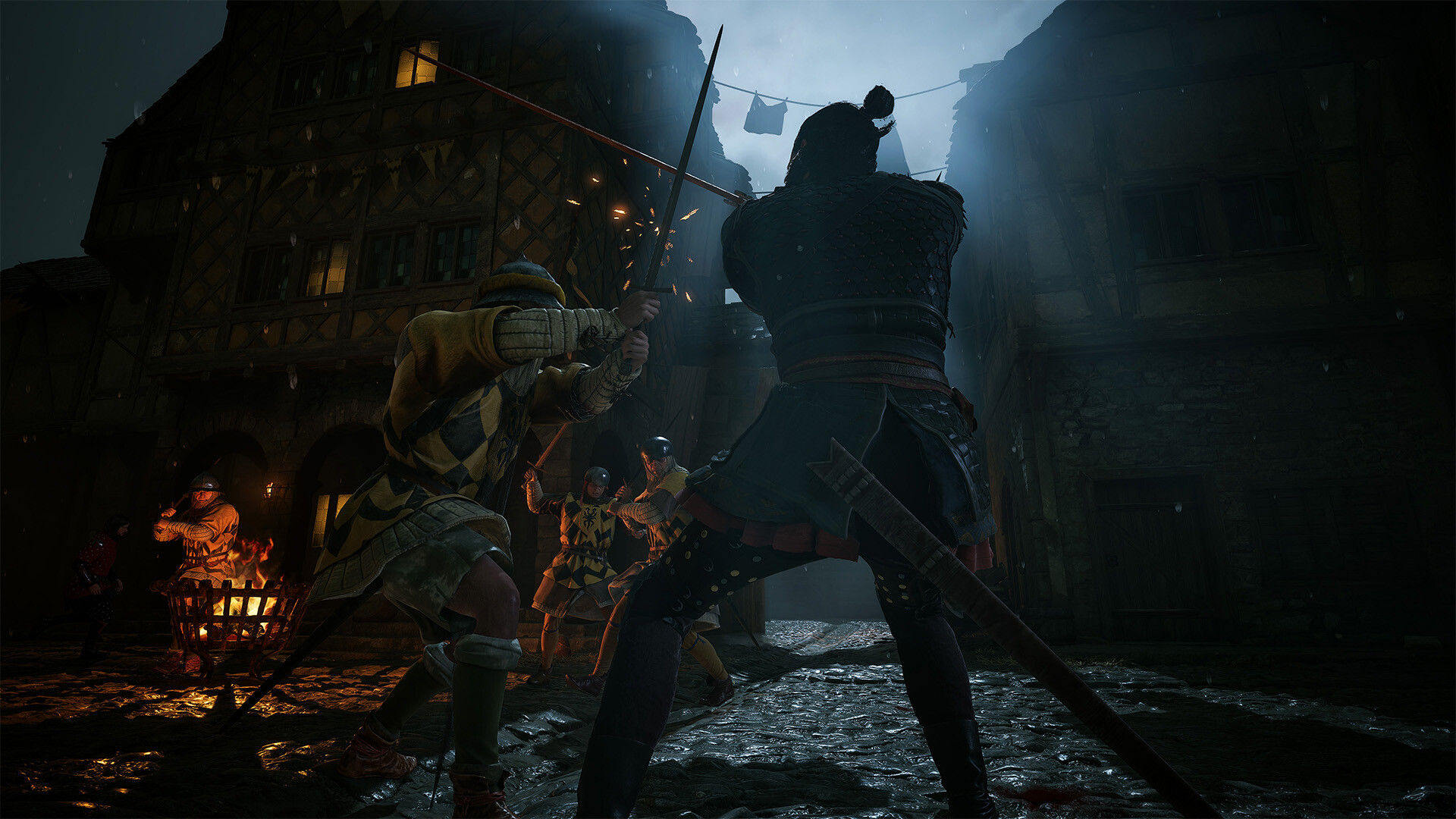
Swordplay borrows its skeleton from Kingdom Come: Deliverance. Enemies telegraph the direction of an incoming swing and you block in that direction, which opens them up. Dawnwalker makes this dramatically more approachable than Warhorse did by putting a clear icon on every incoming attack, readable at any distance — and then lets you switch that icon off at higher difficulties, which is the right way to handle it.
On top of that skeleton it layers something closer to the Batman: Arkham lineage that The Witcher 3 also drew from: Coen sticks to a primary target and circle-strafes it. Where it improves on Geralt is precision — hits land where you aim them, and the sword has real weight.
The lock-on is the weak link. It can select a distant enemy instead of the one in front of you, wasting a counterattack and leaving Coen exposed. The camera struggles with multiple opponents, making directional blocking harder to read. Enemy variety is thin, so the encounters that do work start repeating themselves well before the forty-hour mark.
My read: the foundation is good and the fights are fun early on, and then two things happen at once. Your skill trees make you strong enough that the directional blocking stops mattering, and the enemy roster runs out of new ideas. What is left is a combat system carried by its vampire powers, which are genuinely great, and undermined by targeting that never gets fixed.
The Vale of Sangora is one of the best open worlds in years
This is where the CD Projekt pedigree shows most clearly.
Sangora is not a large map by 2026 standards, and it is better for it. Its fir-forest backroads and alpine highlands give the valley a distinctive visual identity.
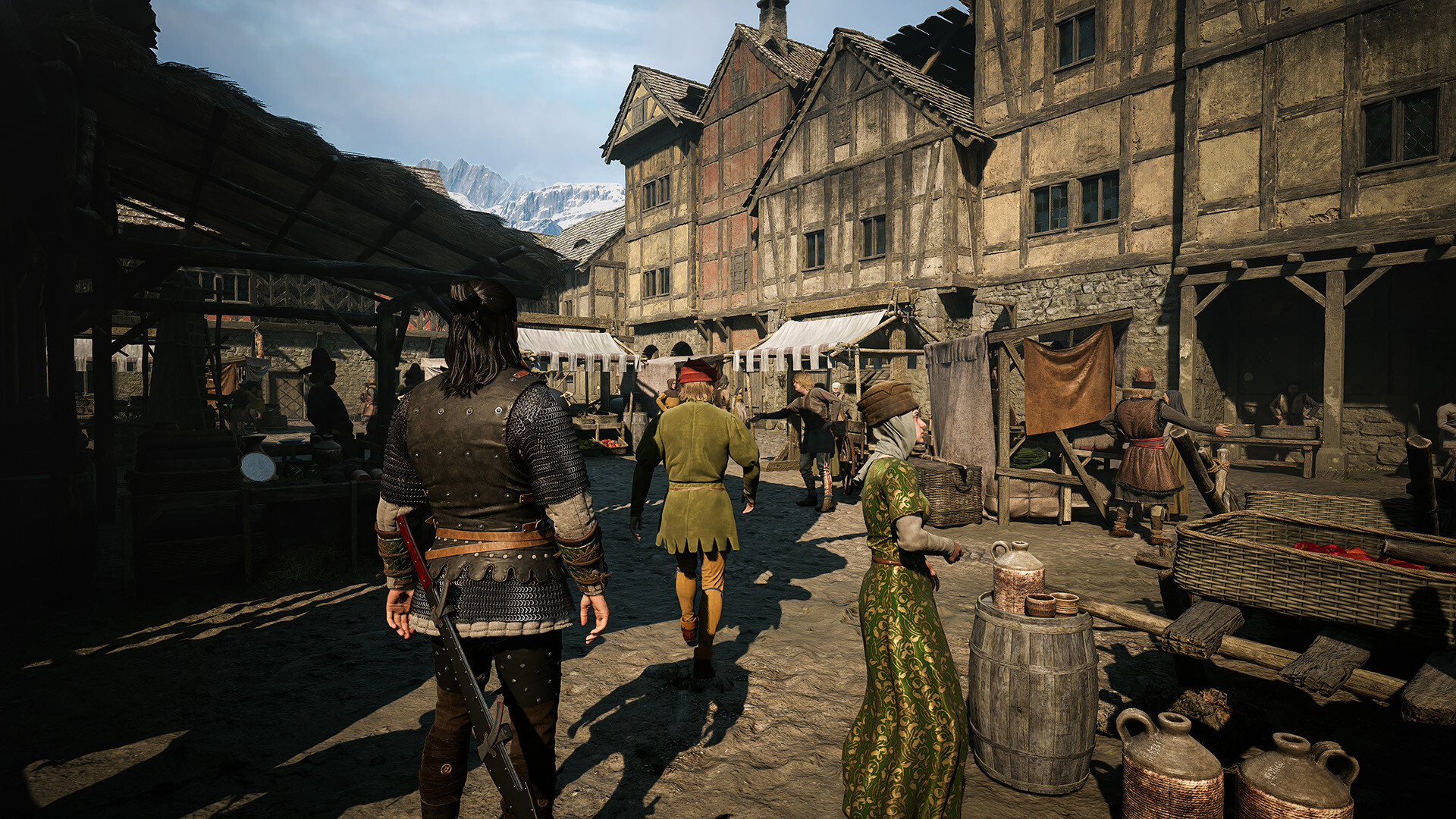
Crucially, it feels like a place rather than a delivery mechanism for content. The fantasy is kept on a short leash: this is a world of hand-to-mouth poverty and materialised superstition, where the supernatural elements read less like magic and more like a symptom of how bad ordinary life is. Villages have economies. The plague is present in the background of scenes rather than announced. Nothing about it is folksy or nostalgic.
It is not free of open-world habit, though. There are icons, and there are a lot of them. Some quests are excellent and winding; others are "kill these men" or "follow the glowing yellow hints." The detective-vision hint trails and the rotate-this-object-to-find-the-interesting-bit puzzles both wear out their welcome. Quest signposting is also genuinely loose in a way that will divide people: it is entirely possible to reach day 21 without ever having found a major companion and their entire questline. That is either thrilling or infuriating, and which one depends on the same personality split as the clock.
Writing that never offers you the good option
Dawnwalker is bleak in a way that big-budget games usually are not permitted to be. Not edgy-bleak. Structurally bleak. Choices are, with real consistency, between two evils. Quests move toward bad or worse outcomes. It is entirely normal to pick a dialogue option without any confidence that it was the decent thing to say.
The cumulative effect is that your sense of who the enemy is keeps shifting. Brencis is a monster who is also demonstrably better than the man he replaced. The resistance has its own body count.
It is also, and this is worth saying plainly, unrelenting to the point of occasional absurdity. There is a sequence involving a vampire pinned to a cave wall and eaten alive by kobalds for two years, kept alive by their own regeneration, that reads more like a challenge than a scene. Whether that is bracing or exhausting is a matter of taste.
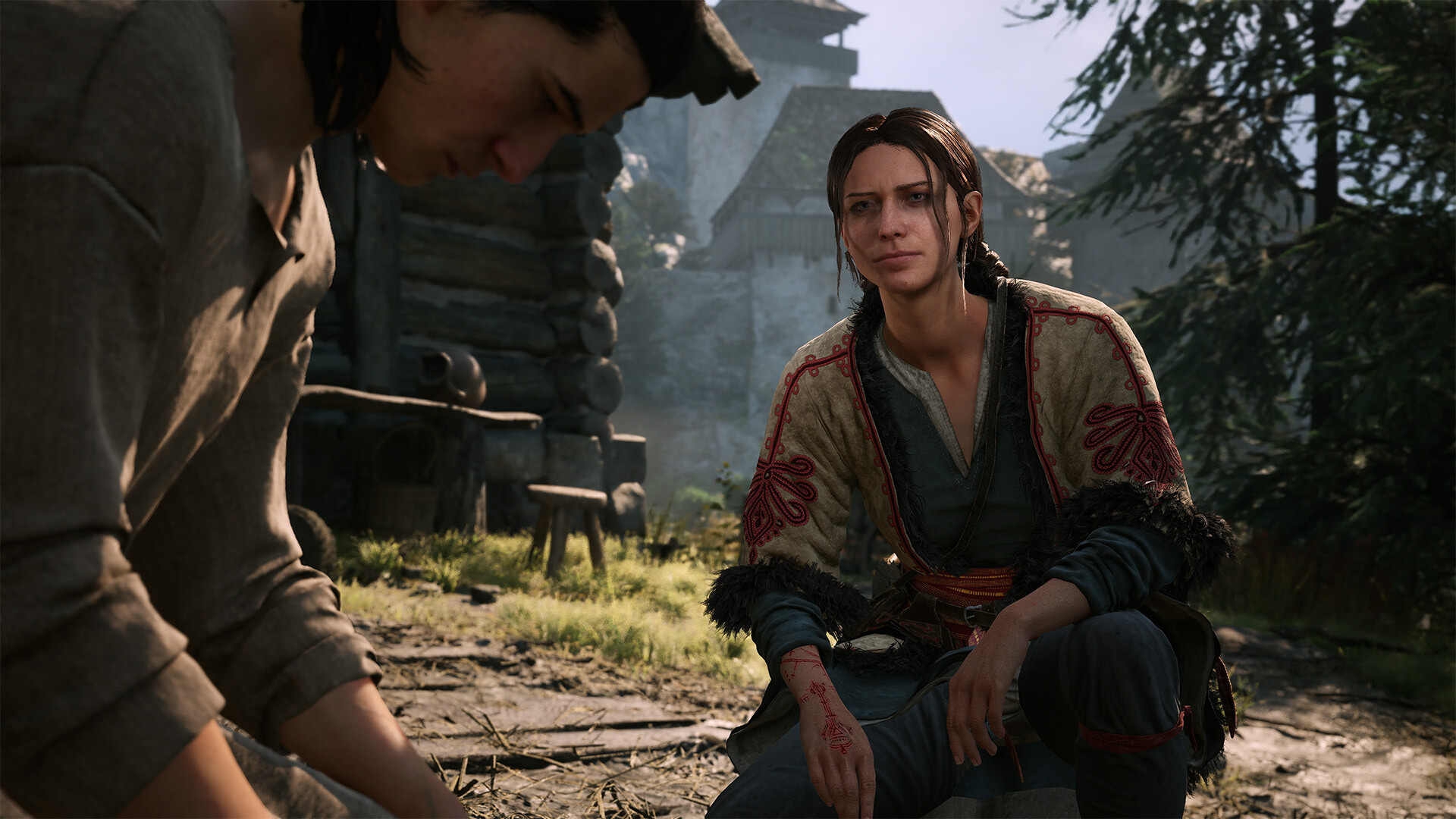
The performances hold it up. Will de Renzy-Martin plays Coen as an ordinary man out of his depth, though the lead can feel flat. The supporting cast and musical score give the story much of its emotional weight. Facial animation is the weak link, with stiff expressions in cutscenes.
PC performance and controller problems
PC performance and controller support are the main reasons to approach the launch version cautiously.
- Controller input. Sprinting randomly drops to a walk and picks back up; input lag further disrupts control. This is especially awkward because the game itself pops up a recommendation to play on a controller.
- Cutscenes locked to 30fps with no ultrawide support, and flickering artifacts along the letterbox bars if frame generation is enabled.
- DLSS frame generation is labelled "experimental" and produces visible artifacts.
- Key rebinding not reliably applying, and no button mapping options at all for PS5 controllers — an omission Rebel Wolves has itself acknowledged.
- Graphics settings stored with the save file and synced through Steam Cloud, so moving between two PCs means reconfiguring every time.
Rebel Wolves has been fast, if not yet comprehensive. Patch 1.0.2 landed the day after release across all platforms. It is small — three specific quest and NPC bugs, plus adjustments to controller dead zones and sprint input on PC — but the studio published workarounds alongside it (run in full-screen to reduce stuttering; update your BIOS if you are crashing) and explicitly named stuttering, crashes and the missing PS5 button mapping as known issues. A second update on September 4 followed with quest progression and AI pathfinding fixes.
One regional caveat worth knowing: the Japanese CERO Z build is censored for blood, dismemberment and nudity, and switching the language in-game does not restore it. That is a Japan-market release rather than something applied globally, but if you are buying on a Japanese account, buy carefully.
Should you play it?
Yes, with one calibration and one timing question.
The calibration: decide now that you are not going to see everything. If you are the kind of player who cannot enjoy an open world without emptying it, the thirty-day clock will fight you for forty hours and you will resent it — and while mods that remove the timer exist, they also remove the single most distinctive thing about the game, which leaves you with a good-looking action RPG with mediocre combat. Dawnwalker is designed to be a run, not a completion.
The timing: if you play on PC with a controller, or you are sensitive to stuttering, waiting a month is a legitimate call. The problems are real, they are specific, and the developer has publicly committed to fixing them.
What you get in return is the best-written big-budget RPG world since The Witcher 3, a day/night structure that genuinely reshapes how you approach a map, a valley worth walking slowly through, and a story with the nerve to refuse you a clean ending. It is a first game, and it plays like one — the combat runs out of ideas, the targeting never gets fixed, and the clock is simultaneously too intrusive for completionists and too forgiving for the systems it was built to support. But almost every one of Dawnwalker's problems is an execution problem, and almost everything it does well is a design and writing problem that most studios never solve at all. That is a very good position for a studio's debut to be in.
Rebel Wolves says this is the first instalment of a saga. On this evidence, they have earned the second one.