Hell Clock, Rogue Snail's dark action RPG built on a supernatural retelling of Brazil's War of Canudos, is now available on Android. It has launched on Google Play as a premium purchase — no ads, no energy timers — and it is also included with a Google Play Pass subscription.
This is a port of a game that already has a reputation. Hell Clock arrived on PC in July 2025, published by Mad Mushroom, and has sat on Very Positive user reviews since. It has since picked up a console release and the Cursed War expansion. The Android version brings the base game to phones and tablets, and there is no iOS date announced yet.
A setting almost nobody else is using
Most action RPGs pick a fantasy register and stay there. Hell Clock instead reaches for a real, specific and genuinely brutal piece of Brazilian history. The War of Canudos was a late-19th-century conflict in the arid sertão of Bahia, in which a settlement founded around the preacher Antônio Conselheiro was besieged and ultimately destroyed by the young Brazilian Republic's army. It is one of the defining traumas of Brazilian nation-building, and it has produced a substantial body of literature.
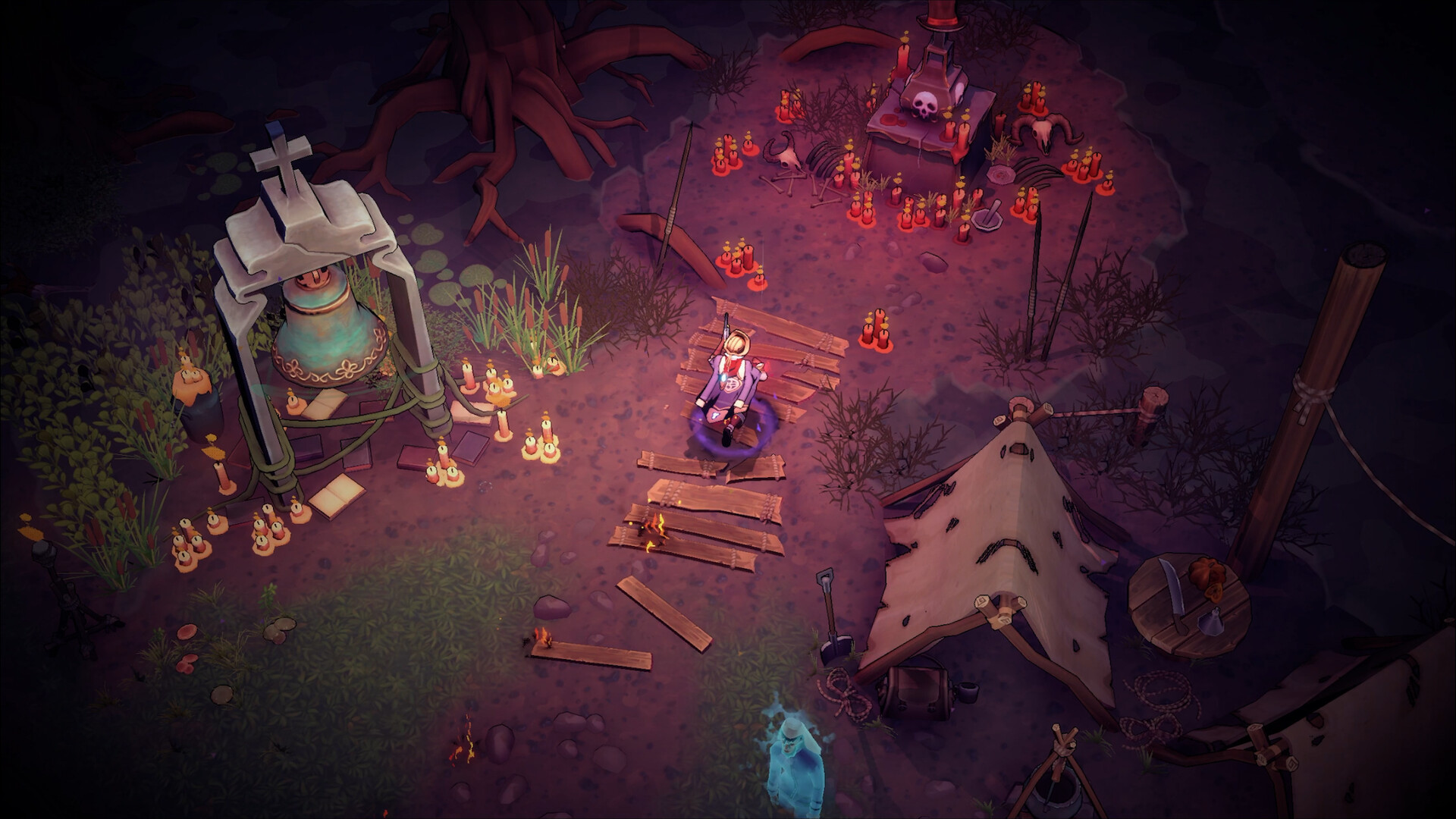
Rogue Snail, a Brazilian studio, uses it as the foundation for a nightmare. You play Pajeú, descending into a supernatural version of Canudos to recover the soul of a fallen mentor while fighting through the undead. The result is an ARPG whose visual language — the timber barricades, the candle-lit shrines, the enormous church bell, the red dust — is drawn from somewhere real rather than assembled from the standard dark-fantasy parts bin.
Roguelike runs, ARPG builds
Structurally, Hell Clock sits on the increasingly popular seam between roguelike and action RPG. Runs are short and repeatable; progression is permanent and build-focused. The two systems that carry that are Ancient Relics and Blessings, which combine into character builds that can get properly silly by the end of a good run.
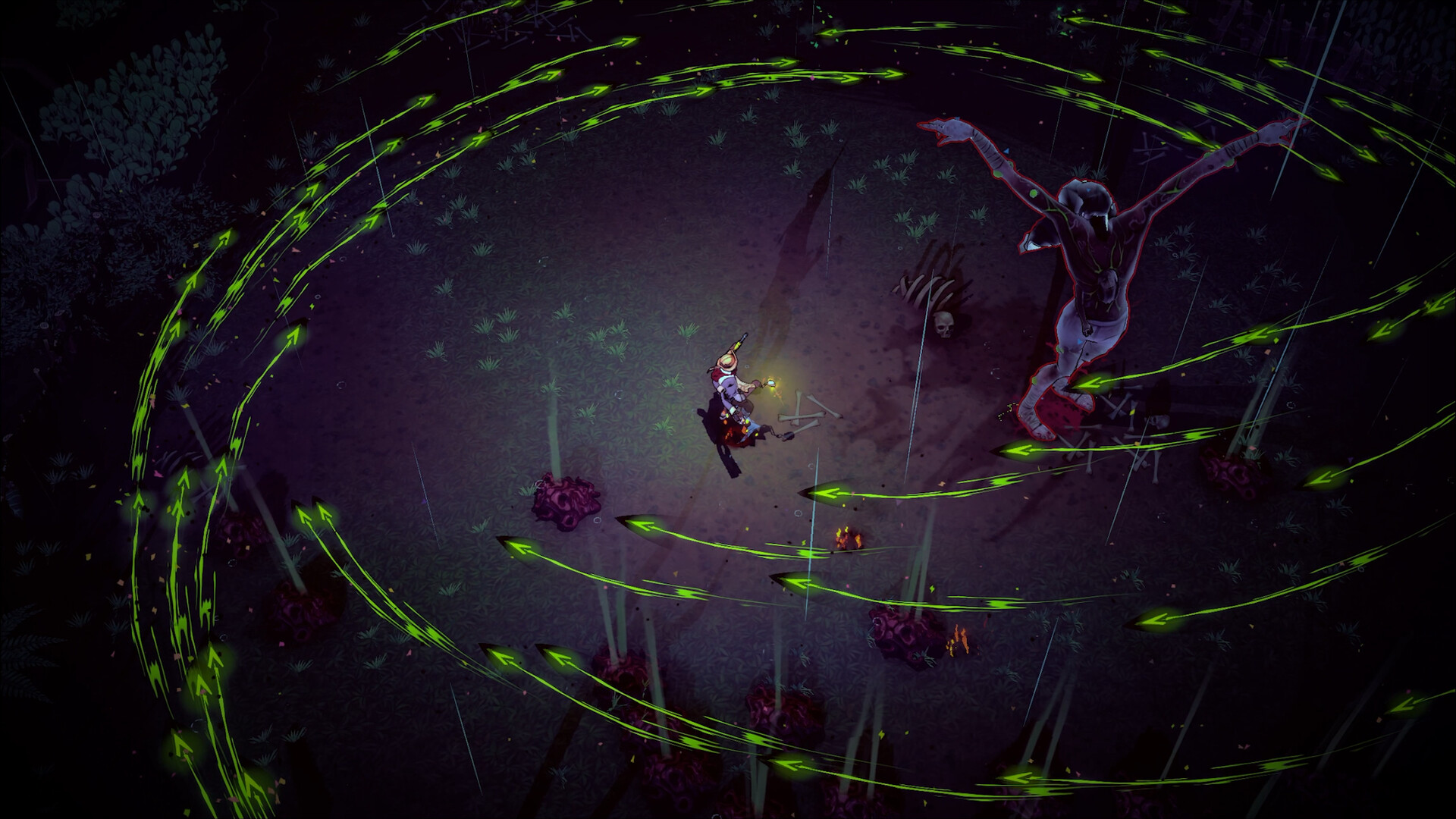
The combat toolkit is deliberately varied rather than deep in one direction: fast knife attacks for close work, a genuinely enormous bell-crushing attack for crowds, and a rapid-fire sidearm for ranged pressure. The screen-filling ability effects you can see in the footage are not decoration — this is a game that expects you to be reading dense projectile patterns while managing cooldowns.
Content-wise there is a three-act story campaign followed by an Endgame Ascension system for the players who want the numbers to keep going up, plus multiple difficulty tiers including a Hell Mode for anyone who found the standard curve too accommodating.
Why the run structure suits a phone
The roguelike framing is what makes this port make sense, and it is worth being explicit about why. Traditional ARPGs are bad phone games: they assume long uninterrupted sessions, deep inventory management and a mouse. Hell Clock's runs are naturally bounded, its progression is banked between attempts, and its build decisions happen at discrete choice points rather than through constant micro-management.
That means you can play one run on a commute and stop, and the game does not punish you for it. It is the same structural reason games like Hades and Slay the Spire translated well to touchscreens, and it is a much better fit than the alternative approach of stripping a full ARPG down until it fits.
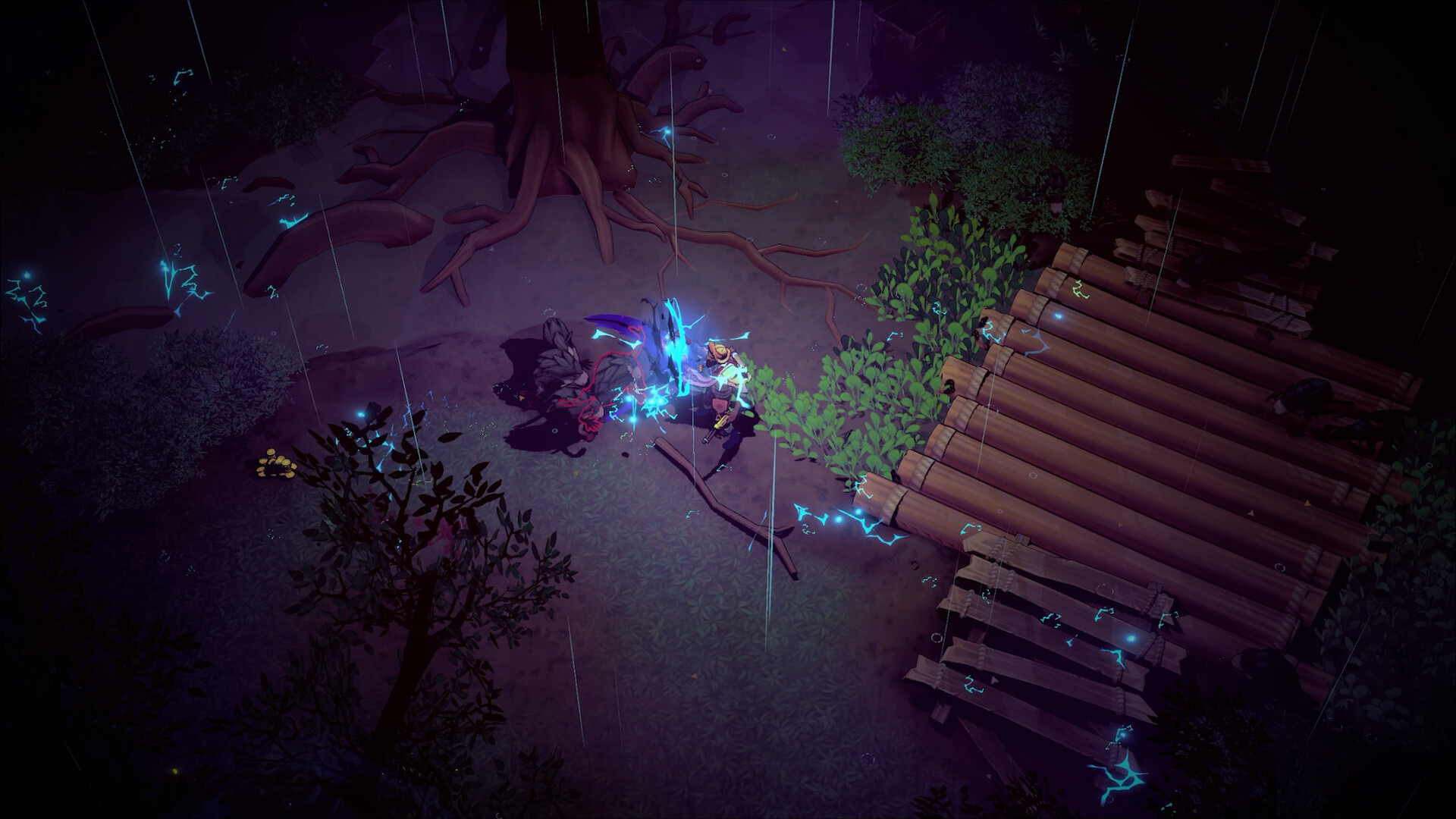
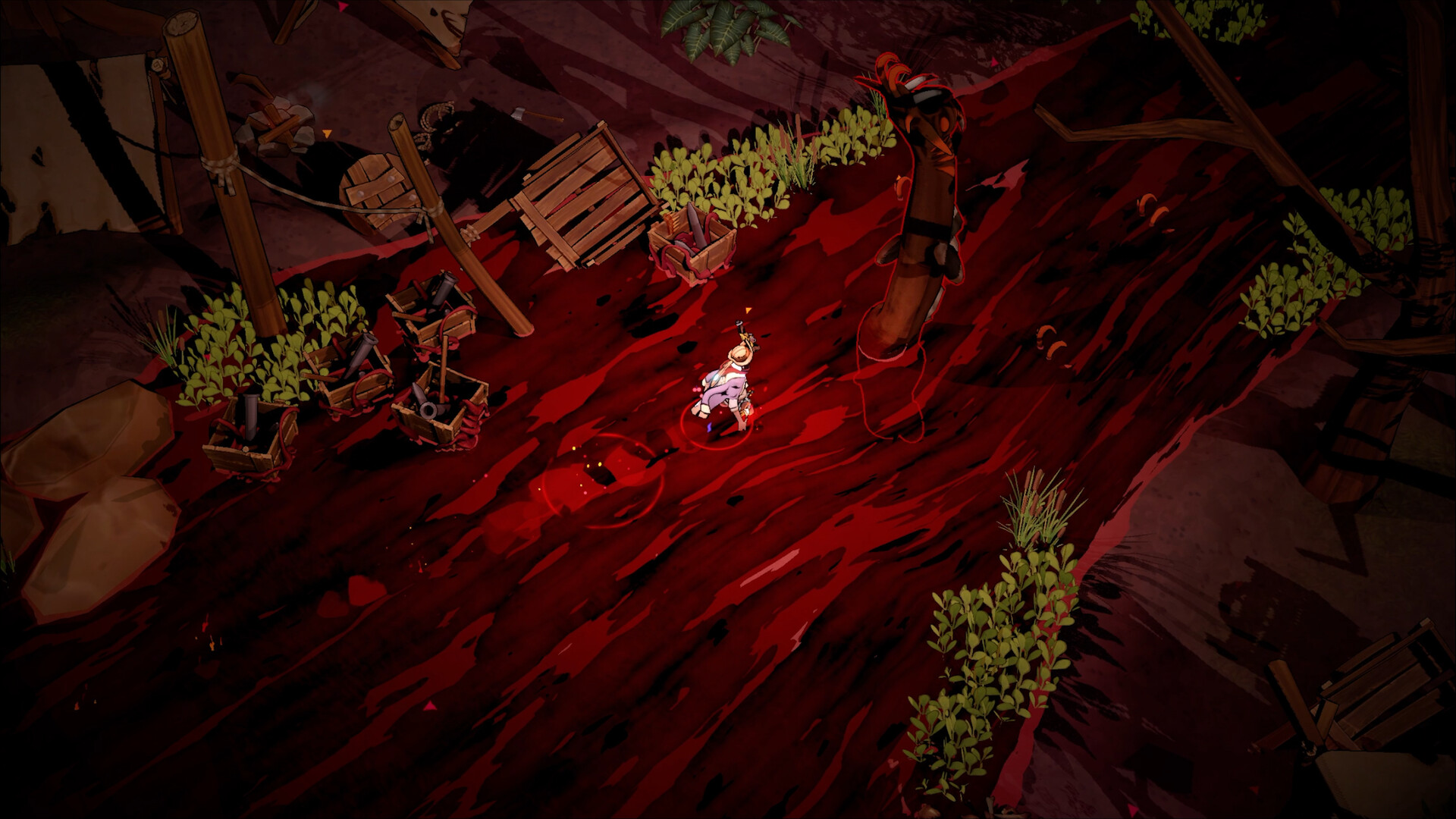
The visual style helps too. Hell Clock's isometric camera keeps the character reasonably central and readable, and its palette relies on strong colour separation — acid greens, electric blues, deep reds against near-black backgrounds — which survives a small, bright, outdoors-in-daylight screen far better than a muddier art direction would.
Premium, and on Play Pass
The monetisation deserves a paragraph on its own, because this is a mobile action RPG shipping without the usual apparatus. It is a one-time purchase. There is no gacha layer, no stamina system, no battle pass. For a genre that on mobile has been almost entirely colonised by free-to-play loot economies, a premium ARPG with a finite price is a straightforwardly different proposition.
Its inclusion in Google Play Pass is the more interesting distribution note. Play Pass has become a reasonably reliable route for premium mobile ports to find an audience that would otherwise never risk a paid download, and it removes the single biggest barrier for a game whose pitch — "19th-century Brazilian religious siege as a roguelike ARPG" — takes a sentence or two to land. If you already subscribe, this is a free install of a well-reviewed game.
The catch: no iOS, and touch controls are the open question
Two caveats. First, there is no iOS release information at all right now, so iPhone and iPad owners are waiting with no announced timeline. Second, and more practically: Hell Clock's PC version rewards precise positioning and dodge timing against dense projectile patterns, and that is exactly the kind of thing touch controls historically struggle with. Rogue Snail has not detailed how the mobile input scheme handles it, and controller support on Android would be the safest bet for anyone planning to push into Hell Mode.
That said, a Brazilian studio putting a Brazilian historical tragedy on Android as a premium game — in a storefront region where mobile is overwhelmingly the dominant platform — is a genuinely good bit of alignment between subject, studio and audience.
Hell Clock is available now on Google Play as a premium purchase and via Google Play Pass. It is also on PC, PlayStation and Xbox, where the Cursed War expansion is available.