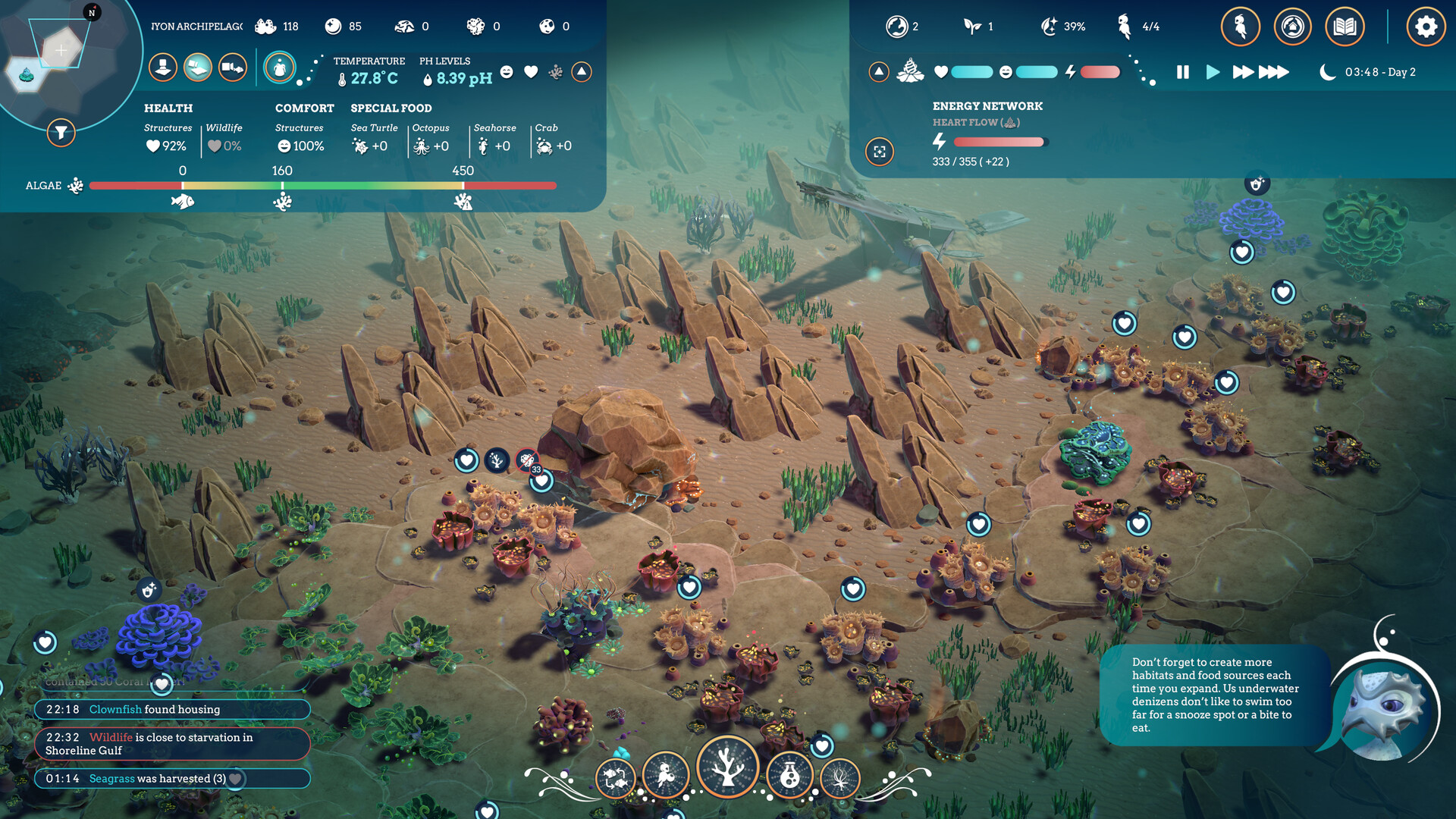
Norwegian studio Megapop and Kasedo Games launch Life Below on Steam today, May 26, 2026, putting their underwater city-builder up for sale worldwide on PC after roughly a year of trailer drops, beta feedback, and marine-biologist consults. The game went live alongside a fresh launch-day push from Kasedo, anchored by a behind-the-scenes narrative overview that frames the entire campaign as a kind of climate-adjacent fable - a coral reef ecosystem teetering on collapse, and a protagonist named Thalassa tasked with bringing it back from the brink.
The hook is unusual for a city-builder: rather than dropping zoning grids on dry land, Life Below has you cultivate a living coral reef on the ocean floor. Players harvest resources, craft lures to attract more than 40 wildlife species, and use those species' unique abilities to overcome environmental challenges - coral bleaching events, invasive species blooms, jellyfish swarms, and pollution waves that shift the local conditions over the course of a run. Expand too aggressively and the whole ecosystem destabilizes; expand too slowly and you run out of the energy-channeling coral structures needed to keep production lines moving.
The story side is led by Rhianna Pratchett, the BAFTA-winning writer best known for the 2013 Tomb Raider reboot and Mirror's Edge. Pratchett's script anchors Thalassa's journey through the campaign mode, with additional freeplay challenges layered on top once you've cleared the narrative arc. Megapop has been pretty open about the research process, too: a panel of marine biologists shaped the game's species behaviors, biodiversity scoring, and the way conditions like ocean acidification cascade through the simulation. Authentic underwater audio captured for the project shows up across every biome, and the developer has framed those touches as a deliberate departure from the more abstract systems most builders lean on.
Reef-building beats city-building
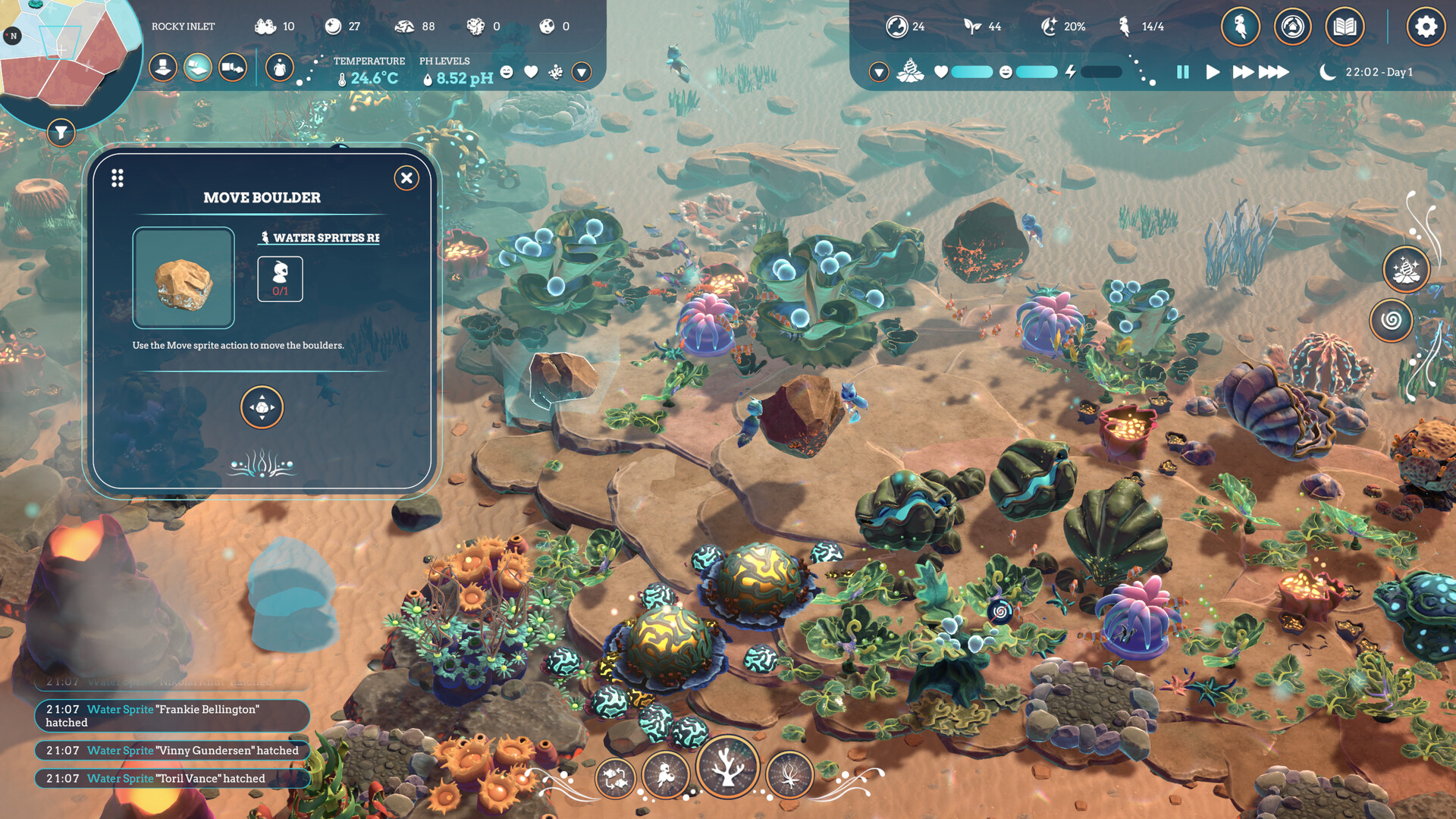
Mechanically, Life Below cribs the production-chain DNA of every modern colony builder and applies it to vertical reef ecosystems. Coral species act as both buildings and conduits: certain types channel energy from currents and thermal vents to power lures and processing stations, while others provide habitat conditions that draw in higher-tier wildlife. Each animal that settles in your reef contributes back to the ecosystem in some way - cleaner fish removing parasites, predators keeping nuisance populations in check, filter-feeders cycling nutrients - and unlocking the more exotic species is usually the gate to surviving the campaign's later disasters.
The Hazards Trailer that Kasedo dropped in April spelled out how spiky the late game gets. Crown-of-thorns starfish outbreaks can chew through entire coral stretches in minutes. Pollution waves from offshore industrial activity force you to invest in cleanup infrastructure or watch biodiversity scores tank. Bleaching events tied to warming pulses target the most temperature-sensitive species first, which is usually the ones doing the heaviest lifting in your production loop. Megapop's pitch is that none of this is purely punitive - it's the game's way of pushing players toward genuinely resilient reef designs rather than monoculture min-maxing.
Conservation partnership built into the storefront
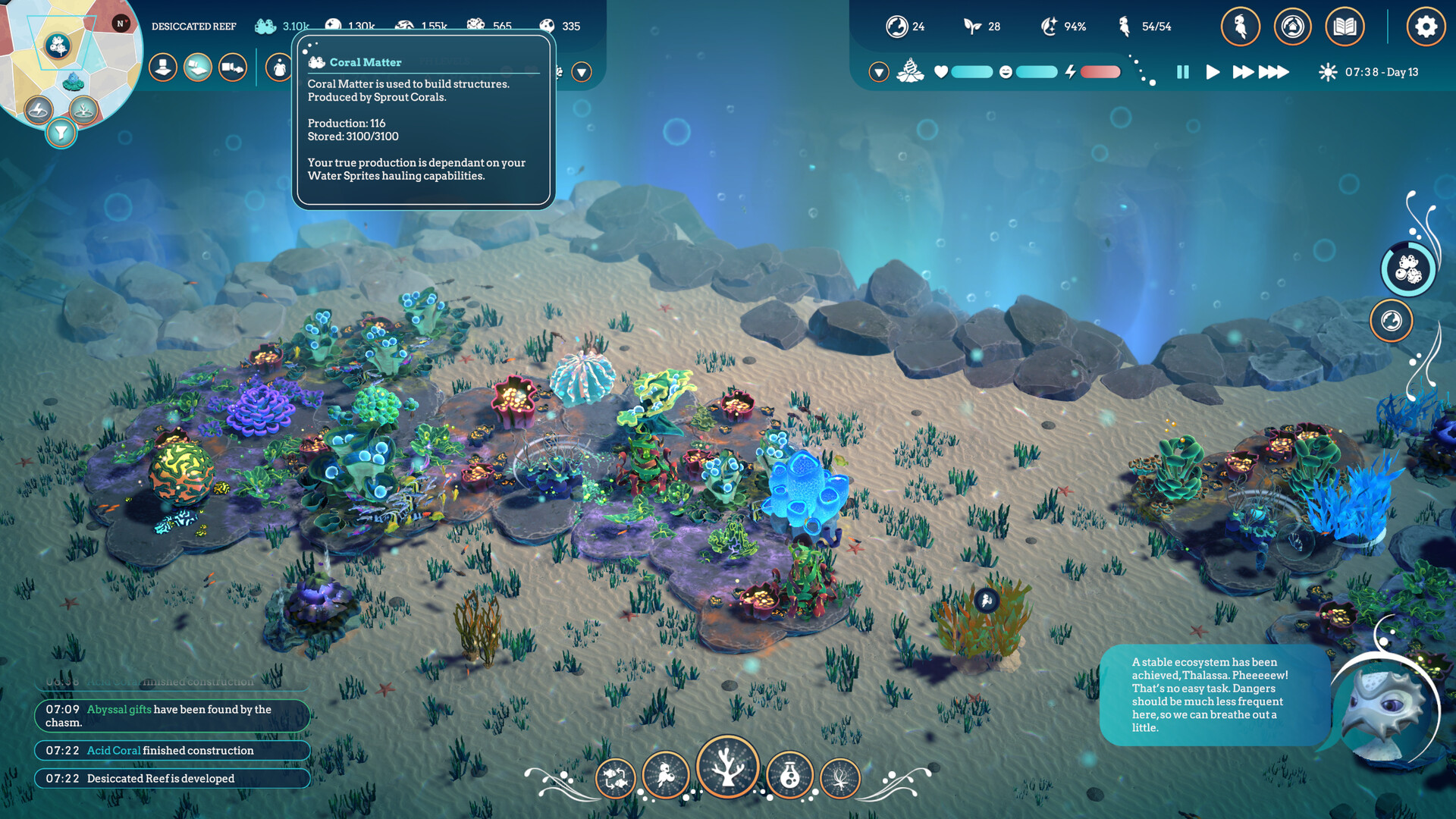
One element worth flagging for anyone picking the game up today: a supporter pack co-produced with Whale and Dolphin Conservation (WDC). One hundred percent of net revenue from that pack goes to WDC, and in exchange players get three additional marine species in-game - common bottlenose dolphins, Atlantic spotted dolphins, and harbour porpoises - that each plug into the reef ecosystem in their own way. It's a small DLC by industry standards, and the developer is treating it as an ongoing collaboration rather than a launch-week stunt.
Life Below is available now on Steam, with Megapop as developer and Kasedo Games as publisher. Reviews have been trickling in from the embargo window, with most coverage flagging the sim's gentler pacing and educational framing as standout differentiators in a year already packed with louder strategy launches. For builder fans burned out on the standard medieval-village or sci-fi-colony templates, the underwater angle is at least a genuine pivot - and the May 26 launch lands the game right at the front of a busy summer release calendar.