Capcom has been running a very quiet, very disciplined marketing drip for Monster Hunter Wilds: Ascendance, and on September 11, 2026 it reached the weapon that always causes the most arguments. The official Monster Hunter channel published the Hunting Horn Boosted Action Breakdown, the tenth entry in a daily series that has been working through all fourteen weapons one at a time since September 2.
The pitch in Capcom's own words is short enough to fit in a tweet: "crushing, monster dropping beats," "aerial & multihit strikes," and "aggressive Echo Bubble doots." That last one is the tell. Echo Bubbles were the Hunting Horn's signature contribution in base Wilds — area-of-effect zones you drop on the ground that buff anyone standing inside them. Making them aggressive suggests Capcom is pushing the Horn away from its old identity as the party's walking buff dispenser and toward something that hits hard on its own terms.
What a "Boosted Action" actually is
Every Monster Hunter expansion has a mechanical hook that justifies the Master Rank grind. World had the Clutch Claw. Rise had Switch Skills and Wirebugs. Ascendance has Boosted Actions, which Capcom introduced in a separate overview video on September 2 before starting the weapon-by-weapon rollout.
The framing across all ten videos so far has been consistent: these are not replacement movesets. They are additions layered on top of the existing kit, typically extending a combo that previously terminated, or handing a weapon an answer to a situation it could not previously deal with. For the Hunting Horn, "aerial & multihit strikes" reads as a fix for the weapon's oldest structural weakness — it has always been slow to reposition, and slow to cash in on a downed monster before it gets back up.
Ten down, four to go — and the timing is not an accident
Here is the full running order of the Boosted Action series so far, straight off the official channel:
- September 2 — Boosted Action Overview, then Great Sword
- September 3 — Bow (alongside the expansion's first full trailer)
- September 4 — Dual Blades
- September 5 — Hammer
- September 6 — Light Bowgun
- September 7 — Charge Blade
- September 8 — Sword & Shield
- September 9 — Gunlance
- September 10 — Insect Glaive
- September 11 — Hunting Horn
That leaves four weapons unaccounted for: Long Sword, Switch Axe, Lance and Heavy Bowgun. And there are exactly four days between now and September 16, the date Capcom has set for its 40-minute Tokyo Game Show Spotlight broadcast. One video a day puts the last weapon out on the eve of the show, which is about as neat a piece of scheduling as a publisher can manage.
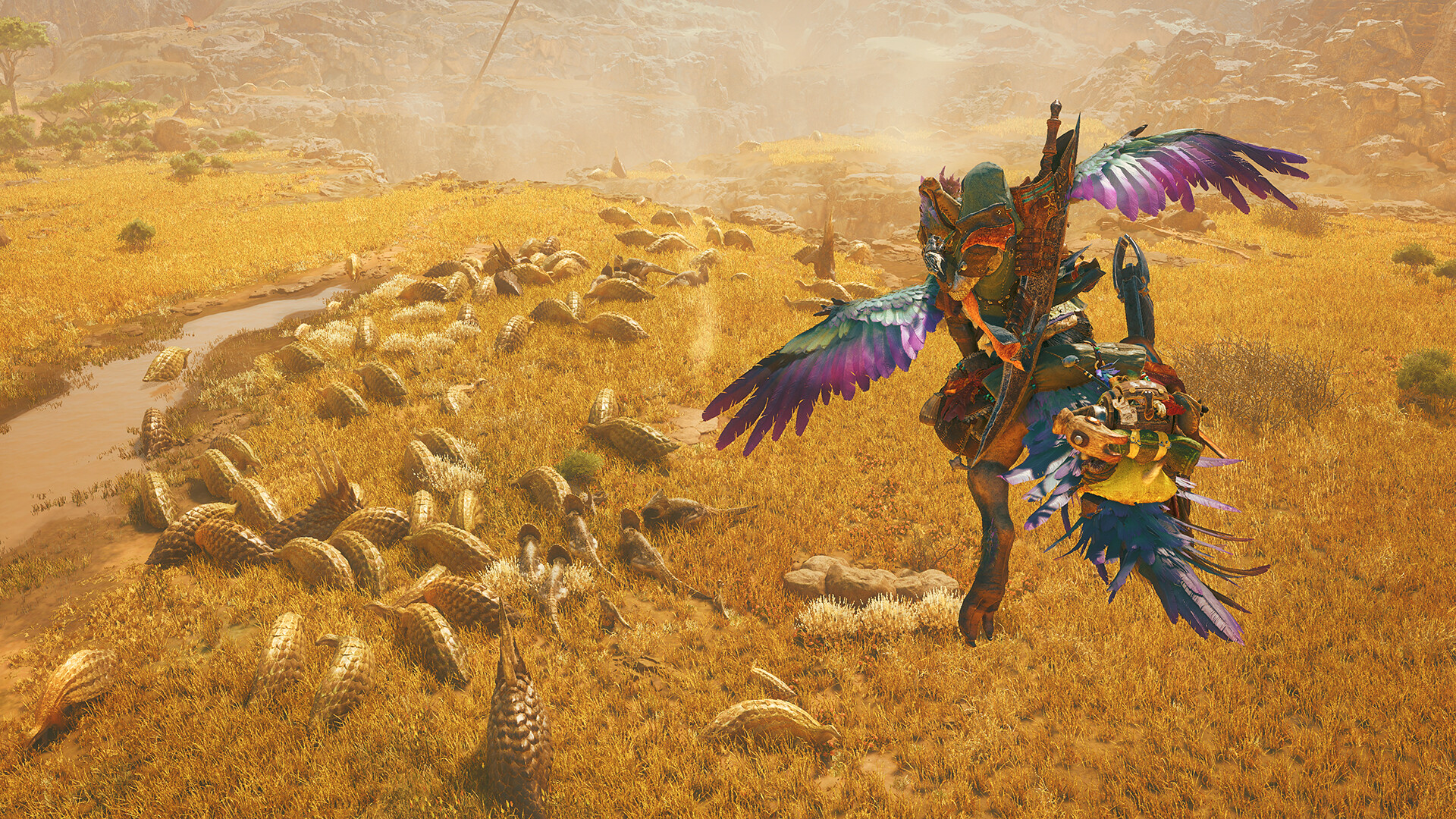
What Ascendance is, in Capcom's own words
The boilerplate Capcom appends to every one of these videos is worth quoting directly, because it is still the most concrete description of the expansion the company has published:
"Monster Hunter Wilds: Ascendance takes the hunt to new heights in Master Rank. New monsters and challenges, evolved hunting actions and mechanics, a new locale, and the next chapter in the Expedition Team's story await in 2027."
So: Master Rank, a new locale, new monsters, a story continuation, and a release window of 2027 on PS5, Xbox Series X|S, PC and Nintendo Switch 2. The base game is required — this is an expansion, not a standalone release. Capcom also still flags that all footage "represents a game still in development," which is the usual hedge, but a meaningful one when a weapon showcase is the entire marketing beat.
The Switch 2 version has a date, and it lands first
Two days before the Hunting Horn video, on September 9, the same channel posted the Monster Hunter Wilds Nintendo Switch 2 Official Reveal Trailer. The end card is unambiguous: the base game arrives on Switch 2 on December 4, 2026.

That sequencing matters more than it looks. Switch 2 owners get roughly a year with base Wilds before Ascendance arrives in 2027, which is enough runway to climb from Low Rank through High Rank and be Master Rank-ready when the expansion drops. It also means Capcom is shipping a demanding open-world RE Engine title onto Nintendo hardware well ahead of the expansion rather than trying to launch both at once — a lesson this industry has learned the hard way more than once.
Why the Hunting Horn entry is the interesting one
The Hunting Horn occupies a strange position in Monster Hunter. Mechanically it is one of the deepest weapons in the game: you play notes by attacking, notes combine into songs, songs grant party-wide buffs, and a good Horn user is doing two jobs at once. Socially, it has spent most of its existence being the weapon nobody picks in solo play, because buffing yourself alone is a weaker proposition than simply killing the monster faster.
Wilds already moved the needle by making Echo Bubbles a zone you actively fight inside rather than a buff you passively maintain. If Ascendance's Boosted Actions add aerial mobility and multi-hit damage on top of "aggressive" bubbles, the Horn stops being a support pick that happens to deal damage and starts being a damage pick that happens to support. That is a genuine identity shift, and it is the kind of change that only really lands in an expansion, where Capcom has room to rebalance without disturbing a live base game.
What to watch for on September 16
The Capcom Spotlight runs 40 minutes, and Capcom has already confirmed Ascendance goes playable worldwide around Tokyo Game Show. The open questions are precisely the ones the weapon videos deliberately do not answer: what the new locale looks like, which flagship monster headlines the expansion, and whether "2027" narrows into an actual month. Ten weapons in, Capcom has told us a great deal about how Ascendance plays and almost nothing about what is in it. That is usually deliberate, and it usually means the answers are being held back for a stage.